Showing posts with label Woody Allen. Show all posts

Friday, September 19, 2014

Retro Trio - a Whit (Still)man Sampler: Metropolitan (1990), Barcelona (1994), and The Last Days of Disco (1998)

Metropolitan (1990)


Director: Whit Stillman

For the first fifteen minutes, I was close to turning this one off. By the half-hour mark, it had done just enough to keep me interested. By the end, I felt it was decent.

In a style drawing some rather clear tones from Woody Allen, Metropolitan focuses wholly on coming-of-age yuppies in Manhattan of the 1980s. I know, I know. It sounds pretty horrible. And honestly, during those aforementioned initial fifteen minutes, it was really demanding. The only thing to carry it through was the story of the protagonist, Tom - an idealist lower-middle class guy who finds himself dragged into the summer routine of the far wealthier class. He goes along initially as an observational experiment, to witness first-hand the "evils" that such classes embody. Conflicts start to arise, though, when he begins to fall for one of the girls who is part of the group - the sweet, pretty, and unassuming Audrey.

It's this conflict that provides nearly all of the watch-ability of the film. That, and the performance of Chris Eigeman as Nick, a cynical and self-confident yet affable motormouth who befriends Tom and attempts to guide him through the minefield of protocols that the upper class walks along. If it weren't for Tom's story and Nick, the movie would have fallen very flat.

Some of the dullness comes from the theme of the "snob" class itself. It's just far too difficult to get very wrapped up in their little plights and concerns. Although Stillman is mostly mocking them, the mockery isn't often all that funny. The more glaring weakness, though, is the performances. Several of the actors are simply not very good. The most obvious one is Taylor Nichols, who plays the annoyingly pedantic and self-righteous Charlie. Nichols completely overplays how neurotic and obsessive Charlie is, to the point that I could barely take his presence on the screen by the end of the film. Fortunately, he doesn't get a great amount of screen time, until the very end.

It's a decent movie. The fact that it was Stillman's first was enough to urge me to watch his next effort...

Barcelona (1994)

It's a better film than Metropolitan, if still not exactly a masterpiece. Following the relationship of two cousins - Ted, a stuffy salesman, and Fred, a shallow military diplomat - the movie details their dysfunctional interactions with each other and the women with whom they fall in love and lust. Everything is set in the titular city in Spain, where anti-American sentiment and ultra-sensitivity to fascism go hand-in-hand, much to the chagrin of Fred. The two cousins intermittently grow annoyed with each other, come to love the same woman, and generally get in each others' way, as they have since they were very young boys growing up in the U.S.

The movie is more consistently funny than Stillman's first movie, with the jokes being a bit sharper, and the characters being more consistently engaging. There is also the far more vibrant setting of Barcelona itself, which provides flashier locales and characters for Ted and Fred to interact with.

The movie is far from a home run, though. The writing, like Metropolitan, often seems a little more fit for the stage than for cinema, lacking the organic naturalism that one should expect to get in the medium. Detracting further from any feel of authenticity is the casting of Taylor Nichols as the main protagonist. As annoying and stilted as his performance in Metropolitan was, it is amplified in Barcelona, seeing as how he plays the main character Ted. I honestly do not know what Stillman saw in Nichols that he cast him in such a major part, but his performance was distracting in its weakness. Fortunately, Stillman also saw fit to give the second biggest role to Chris Eigeman, who once again carries the movie by playing the self-absorbed, fast-talking, and ever-contradictory Fred.

Barcelona is a step up from Metropolitan, though I didn't find it to be any sort of "breakout" film. It still smacks very heavily of being a Woody Allen movie clone, though a slightly watered down one.

The Last Days of Disco (1998)

The Last Days of Disco is probably the strongest of the three films, even if I don't find it a work of excellence.

My lack of full praise is probably due to my tempered interest in the central character type - the yuppie. Even with some decent dialogue, dramatic episodes, and an atmospheric setting, I can only care so much about the yuppie class of the 1980s. Ultimately, it is a self-absorbed type who wear on my viewing patience, not unlike the wealthy types who are the focus of the screwball comedy genre of the '30s and '40s.

The Last Days of Disco chronicle the relationships and professional woes of a handful of young people in Manhattan in, as the film states with an introductory caption, "the very early 80s." This, of course, was just when the death knell for the disco era was pealing, and the glamour that went with the disco club scene was fading out. This all sets up some fairly amusing scenarios, as those desperate to cling to the waning fashions and glamorous hedonism of the previous decade are forced to mingle with ad executives and other yuppie white collar types who were attempting to mark many of the chic areas of Manhattan as their domain. The blending of different types is fairly comical at times.

What is hard to get past is just how unlikable most of the characters are. Stillman tries to make them humorous by letting them air their views, which are usually shallow, callous, or just plain mean-spirited. Sometimes it was humorous, but often it was merely despicable, leading to my complete understanding of the late-'80s catchphrase, "Die, yuppie scum."

So I've given Whit Stillman more than a fair shake, and I think I'm done with him. Over the course of his first three films, I saw a bit of progress in the technical aspects of the movie, but the topics and characters never did enough for me to completely buy in. 

Monday, June 25, 2012

Film # 83: The Purple Rose of Cairo (1985)


Director: Woody Allen

Initial Release Country: United States

Times Previously Seen: once (about 2 years ago)

Teaser Summary (No spoilers)

Depression-era dame escapes from the drudgery of her life at the movie theater, only to have one of the screen characters come to life and pursue her.

Extended Summary (More detailed synopsis, including spoilers. Fair warning.)

New Jersey, the Great Depression. Cecilia (Mia Farrow) is feeling the full brunt of the economic malaise that the country is in. She lives in a tiny, run-down apartment and struggles to maintain a monotonous waitressing job at a local diner. To make matter much worse, her husband Monk (Danny Aiello) is a complete leech. He wastes his time gambling with friends and cavorting with other women rather than looking hard for a job. He also drinks too much and abuses the meek Cecilia regularly.

Cecilia’s only real pleasure in life is watching movies. She is a regular at the local theater and voraciously watches everything that plays. She knows all of the films’ stories, actors, and actresses, and she adores the romantic personalities and stories on the screen. Even though no one around her, including her sister and her husband, shares or understands her passion, Cecilia is perpetually enthralled by movies.

Cecilia (in the front), slogging through her waitress job. Her sister, like everyone else close to her, dismisses Cecilia as a flighty dreamer.

One day, Cecilia goes to see the latest film release – The Purple Rose of Cairo – which is a standard 1930s adventure/screwball comedy/romance picture. She loves the film, especially the character Tom Baxter (Jeff Daniels), who is a handsome, well-spoken and well-mannered explorer from a rich family. Cecilia tries to explain her love of the picture to her sister at her job the next day, but gets distracted, drops several plates (something she has done several times before), and she gets fired. She returns home to find Monk drinking and joking with another woman, both of whom drunkenly stagger out into the night. Cecilia decides to go back to the movie theater.

Over the next few days, Cecilia continues to watch The Purple Rose of Cairo repeatedly. Suddenly, in the middle of her fifth viewing, the Tom Baxter character on the screen turns and makes eye contact with Cecilia. He then begins to address her directly. Cecilia, stunned at first, then replies. They talk briefly about how much Cecilia must love the movie, and then Tom Baxter literally walks out of the movie – from the black and white screen to full-color “real” life with Cecilia. All of the theater-goers witness the same thing, but before they can do anything more than stammer, Tom and Cecilia leave the theater.

Through the evening, Tom and Cecilia stroll around town and talk. It becomes clear that Tom, though now in the real world, is still very much a fictional construct. He is brave and adventurous, and he has highly romantic notions about love, sex, and the world around him. Cecilia is highly captivated by Tom, and she almost seems to be falling in love with him; however, she pulls away on account of her being married. They part ways, but Cecilia promises to return the next evening.

Cecilia and Tom get to know one another, despite the massive divide of one being a real human and the other being a fictional character come to life.

Back at the movie theater, The Purple Rose of Cairo is still showing, sans Tom Baxter. The rest of the characters in the movie, rather than continuing on with their parts, have stopped what they were doing and are directly addressing the audience. It seems that they cannot continue the movie until Tom returns. Word of this gets out and makes it all the way back to Hollywood, where the movie studio that produced The Purple Rose of Cairo begins to panic about possible ramifications of a rogue movie character that has entered reality. On top of this, other “Toms” in other movie theaters around the country have begun trying to “escape” the screen.

The studio goes into action. They contact the actor who plays Tom Baxter, Gil Shepherd (Jeff Daniels). Shepherd is a self-involved rising star in Hollywood, and he is interested only in advancing his career. When he hears about the escaped Tom Baxter and the potential fallout for his career, he jumps on a plane to New Jersey.

The next day, Tom Baxter explores the city, unintentionally ending up in a brothel. There, his naivete and charm woo the prostitutes, though he has no intentions of sleeping with any of them, due to his impossibly pure sense of nobility and honor. Elsewhere, Cecilia accidentally runs into Gil Shepherd, who has arrived to track down Tom. The two men looking exactly alike, Cecilia first mistakes him for Tom, but soon realizes that she is talking to Gil, an actor whose work she has admired for years. The two pair up to seek out Tom and sort out the entire situation.

Through the day, Cecilia and Gil seem to grow close. As they roam the town searching for Tom, Cecilia shares her love of movies with Gil. Gil, completely egoistic and narcissistic, is all too happy to soak up her admiration. In a moment of seemingly true affection, the two end up in a music shop and play several songs together, Cecilia playing a ukulele and Gil singing. A real romance seems to be budding, and this forces them to find some sort of solution to their strange dilemma.

In the middle of their search for Tom, Cecilia and Gil seem to find the beginnings of a legitimate romance. Little does Cecilia expect the awful truth.

Eventually, Cecilia and Gil find Tom back at the movie theater, where the screen characters of The Purple Rose of Cairo still wait impatiently for Tom to rejoin them. Tom and Gil both engage in a war or words for Cecilia’s affection, with Gil eventually convincing Cecilia to let Tom return to the screen, so that she can join him. Gil tells her to return to Hollywood with him, where they can be together. Cecilia chooses Gil, and Tom reluctantly reassumes his place on the silver screen.

Gil returns to his hotel, with a promise to meet Cecilia so they can go back to Hollywood together. Cecilia goes to her own rickety home, packs her bags, and bids a very short farewell to her befuddled and angered husband, Monk. When Cecilia gets to Gil’s hotel, though, she is told that he has already left. We briefly see that this is true, with Gil on a plane already headed back to California. Apparently, his “love” for Cecilia was mostly a ruse to get her help in forcing his Tom character back to the screen. Though Gil does seem somewhat guilty over his machinations, he does not return for Cecilia.

Back in New Jersey, Cecilia is now without a lover, home, job, or husband. She returns to her one place of refuge – the movie theater. There, she loses herself in the latest film – Top Hat, starring Fred Astaire and Ginger Rogers, who gleefully dance about the screen, possessed of a joy that Cecilia may never come close to knowing.

Take 1: My Gut Reaction (Done after this most recent viewing, before any further research)

I enjoyed this movie a bit more than the first time I watched it, and I can see why it is widely considered Woody Allen’s best and most accessible movie.

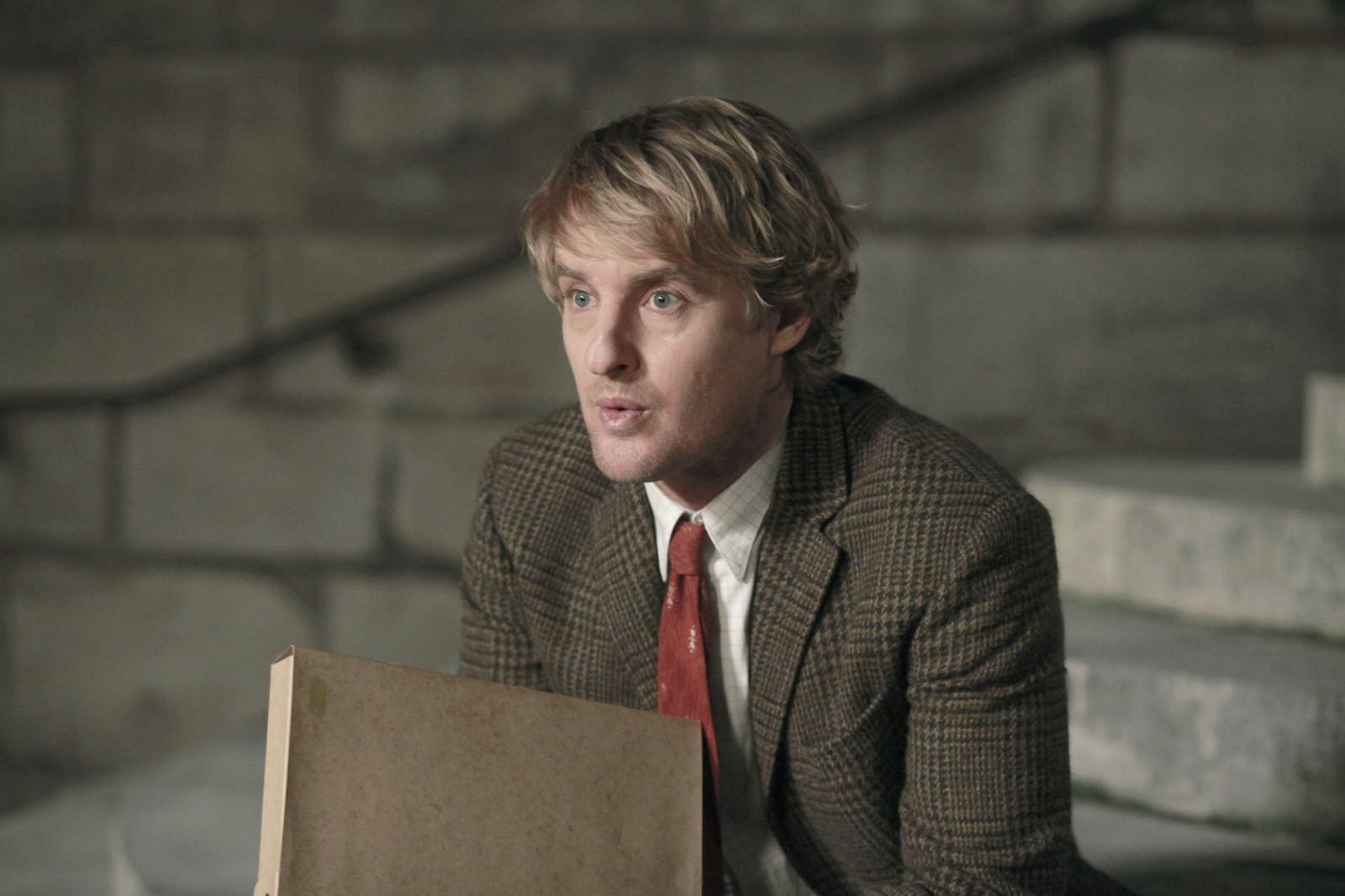
For people who either don’t know or don’t like Woody Allen movies, The Purple Rose of Cairo is one of the least “Woody Allen” of them. By this, I mean that it is the very rare Allen movie in which Allen himself does not appear and there is no “Woody Allen” proxy, as we find in films like Bullets Over Broadway, Celebrity, or Midnight in Paris, in which the “Woody” is played by another actor like John Cusack, Kenneth Brannagh, or Owen Wilson, respectively. For anyone who finds Allen’s ever-neurotic intellectual persona annoying, this is a major merit in favor of The Purple Rose of Cairo.

Owen Wilson, the de facto "Woody Allen" in Midnight in Paris. For those who don't care for these characters, Purple Rose  is blessedly absent of them and their predictable neuroses.

Another feature that often shows up in Allen’s movies is the intellectual vibe, which is something that the Purple Rose of Cairo mostly lacks. This is a good thing. Often, Allen’s movies feature jokes that require a viewer’s knowledge of literary or cinematic history. This is easily seen in his most recent film, Midnight in Paris, in which most of the gags are lost if you don’t have some background knowledge of Ernest Hemingway, F. Scott Fitzgerald, and the like. While I personally enjoyed the jokes in that film, I find them somewhat exclusionary at times. The Purple Rose of Cairo is a movie that requires no such prior knowledge on the part of the viewer. It is self-contained, and thus can be enjoyed by nearly anyone.

Purple Rose does, however, bear certain other hallmarks of Woody Allen storytelling. The entire concept of a movie character literally coming to life shows some of the zaniness that you get in some of his other films, again most notable in Midnight in Paris, in which the protagonist is able to cavort with various literary figures from the past. Similarly, The Purple Rose of Cairo is a flight of fancy that sets up some really humorous and thought-provoking interactions and conversations.

This brings up what, to me, is the strength of the film, though one that doesn’t quite go far enough – the study of we viewers’ relationships to films and the film industry. All of us who watch fictional movies are, to some degree, escapists. We seek to escape into some other world and dwell there as passive observers for a time. The character Cecilia is far more dedicated (one could say “addicted”) than most, and with good reason, given that her reality is so miserable. For her, films are the one place where things make sense and are pleasurable. However, this far from tells the whole tale.

The hopelessly transfixed Cecilia, whose attraction to film goes beyond affection and well into the realm of dependency. There are probably far more Cecilias out there than we care to acknowledge these days.

Once Tom jumps off of the screen and Gil becomes involved, the tale begins to approach a criticism of movie magic and the film industry in general. One can start to see Cecilia as a dupe who has been lured by the carefully crafted, artificial glitz and glamour of Hollywood. Not just the films themselves, but also the entire culture surrounding movie stars. This is typified by the Gil Shepherd character. While it becomes clear early on that Gil is totally self-obsessed with becoming a film star, we and Cecilia are led down a romantic path of “true love”, only to be left high and dry at the end. I can’t help but see Cecilia as being the eternal mark for various con artists – her deadbeat husband, the fantasy world of popular movies, and the movie business itself. All of these elements in her life, exemplified in the film by Monk, The Purple Rose of Cairo, and Gil Shepherd, extort her for everything she has. While I felt that Woody Allen was making these criticisms, I think he eased up just a tad, so as not to make the film overly depressing or to rob it of its oft-comic tone.

It is this “going half way” feeling that I have that prevents me from considering this movie an absolute great. There were a few too many topics that were either half-baked or incompletely explored. For instance, the Tom Baxter character often explains his actions as “being written into his character”, as if they were set in stone and unchangeable, such as his duty to defend Cecilia by getting into a fist fight with Monk. Yet, there are certain moments when he makes realizations about the “real” world and starts to adapt, such as when he insists on running out on an expensive dinner check. These conflicts of innate character could have been delved into a bit more and given an even-more thorough treatment. If we’re going to start mashing up fiction and reality, let’s see what the ramifications will be, especially on people like Tom and Cecilia.

On the technical side, The Purple Rose of Cairo is all but flawless. It’s a great film to look at, hear, and just take in, especially for film lovers. Woody Allen’s affection for cinema is very clear, despite an implied condemnation of its overall effect on certain people. The film paints an evocative portrait of the Depression in the U.S., even though it only covers a handful of geographic areas. Anyone who enjoys 1930s styles and attitudes would certainly love the aesthetic of The Purple Rose of Cairo.

It's not hard to bask in the look and feel of many of the scenes in the film. Especially in the movie theater, the Art Deco style does a great job of transporting us back to a time when very few of us were alive.

For a fairly light-hearted movie like this, I often ask myself “Would I watch it again?” My answer is “Yes,” which speaks to its staying power. However, I wouldn’t go quite so far as calling it a “great” film. I don’t know that it broke any barriers or showed any particular mastery of the medium. I find it to be a clever, imaginative, and well-told story, but not one that I feel compelled to return to again and again.

Take 2: Why Film Geeks Love this Movie (Done after some further research.)

Since The Purple Rose of Cairo is not some epic, laborious task of a film, there’s not a ton of insight to be found in researching it. This is not a film with the combative release history of Brazil, or a film that was the target of hardcore blacklisting like Citizen Kane. Thus, analysis and criticism of it is somewhat limited and narrow. Also, none of it adds much that one can’t see upon viewing the movie for oneself. There are a few interesting thoughts, though:

One is the point that the movie ends on such a down note. This is something that may very well take a first-time viewer aback, given the otherwise playful tone of the rest of the film. In fact, the distributor Orion Studios wanted Allen to change it (here we go again, with the U.S. film industry wanting the “happy ending” to beef up the bottom line). Like other filmmakers with integrity before him, Allen absolutely refused. This truly did make for a much more poignant and thoughtful film. Had Cecilia been able to fulfill her dream of escaping her sad life with either Gil or Tom, the deepest and most meaningful points of the movie would have been lost.

On these deeper points, uber-critic Roger Ebert did a nice job of summing it up in his original review. Ebert does a good job of explaining its understated strengths, and signs off on his critique with the great sentence, “The more you think about "The Purple Rose of Cairo", and about the movies, and about why you go to the movies, the deeper the damned thing gets.”

I can’t say it better myself.

That’s a wrap. 83 shows down. 22 to go.*

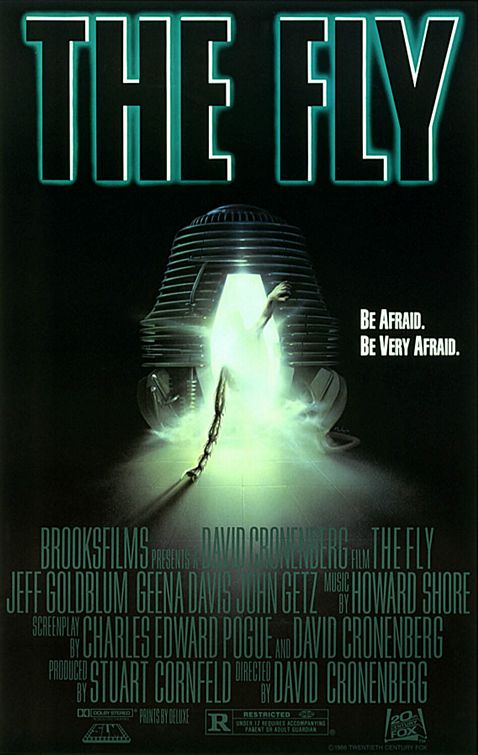
Coming Soon: The Fly (1986)


 This movie scared the absolute hell out of me when I was 11 years old. All the same, I watched it no less than half a dozen times. Why would I do that to myself? Maybe I’ll figure it out when I watch it again.

Please be sure to pick up all empties on the way out.

*It has come to my attention that a mere few weeks ago, the main film critic at TIME magazine, Roger Corliss, has thrown a curve ball. Corliss helped compose the original “100 Great Movies” List that I have been using for this blog, but he has just added 20 films to the list, ranging the entire chronological spectrum from 1923 to 2011. I may try to add what I can, but here are his additions, if you’re curious.

Wednesday, January 6, 2010

Film #1: Sherlock, Jr. (1924)

A Few Thoughts on Silent Film. I'm not a fanatic for silent movies, but they hold a place in my heart. Film school students and historians point to the innovations made by filmmakers from the early 20th century and appreciate them for their technical merits. Most of us, however, don't. Most of us, myself included, mainly want entertainment. And, let's face it, we are now a culture of endless stimuli. The simple combination of visuals and music doesn't quite cut it. The thing that we forget is that film gains most of its power from visuals. The other elements: dialogue, narration, and music, were elements of literature and theater, and simply enhance the visual story being told in films. Before Al Jolson broke the "sound barrier" with The Jazz Singer in 1929, films were all about visual storytelling. Once dialogue was made possible, the gradual de-emphasis on visuals began. These days, the art of telling the story without the aid of words is all but lost. A few major filmmakers of the present and recent past still show this skill. Sergio Leone was a great, Quentin Tarantino is quite an adept, and the Coen Brothers are true masters of it. In a way, the total reliance on facial expressions, body language, prop positioning, camera shots & angles, and choreography to tell the story is pure cinema. With this in mind, let's have a look at one of the earliest icons of silent film:


Times Previously Viewed: 1 (about 10 years ago)

My Thoughts
At 45 minutes, Sherlock, Jr. is not much of a time commitment, and I enjoyed it. As with most silent films, the story is simple: a young projection operator (Keaton) has daydreams of being a world-class detective. Most of the film is given over to an extended fantasy that he has while he falls asleep in the projection booth. He dreams himself into the middle of a case of stolen pearls, outwits the bad guys through a combination of luck and skill, and makes many a narrow escape throughout.

Basically, Buster Keaton was awesome. He seemed to understand, even back then, a universal truth about physical and silly humor - the goofier you're going to be, the straighter you have to play it. Throughout every gag, both obvious and subtle alike, he maintains a stone deadpan that makes for the perfect counterpart to his casual agility, grace and athleticism. This "stone-face" approach still lives today: think very early Woody Allen, Leslie Nielsen in the Airplane and Naked Gun movies, or Ricky Gervais. The thing that makes those bits funny is that the guys pulling them act as if absolutely nothing's amiss. Keaton was way ahead of the curve on this one. I had more than one honest-to-goodness laugh during this short flick.

The diminutive Keaton did all of his own stunts, some of which are pretty astounding when you keep in mind the time period. Here's a montage of some of the hits. Keaton severely fractured his neck doing the one from the train at the beginning. Unfortunately, a few of my favorites were left out (the best bits start at about 5:00 into the video):


Overall, it was a fun watch. Had it been longer, I may have grown a bit tired of the simplicity of the plot and the way that everything is manipulated towards the stunts. As it was, however, I enjoyed it. I may not watch it again any time soon, but it's a great introduction to someone looking for one of the great silent films. I actually think a young kid would still really love this one, too. I mean, what young'un doesn't want to see a goofy little guy nearly getting shot, punched out, run over by trains, and hurled off of motorcycles? Not this one!

Why Film Geeks Love This Film

The answer, like the stories of Keaton's films, is simple: pretty much the same reason the common person liked it - the visual gags and the impeccable orchestration of the stunts. Also, the scene in which Keaton "jumps" into a rolling movie on a projection screen was seen as a major innovation (it's in the middle of the posted visual clip). By today's special effects standards, it seems grossly outdated. At the time, however, it was quite the eye-opener. Here's the complete review by one of the list compilers.

Side Note

On the same DVD as Sherlock, Jr. was an earlier Keaton flick, Our Hospitality (1923). This one was longer, but I actually liked it more. The sight gags were even better, and the story cleverly wove together disparate plot elements, a la the very best episodes of Seinfeld.

Coming Soon...Film # 2 on the list: Metropolis (1927)


This one is considered one of, if not the first great cinematic science fiction masterpiece. Come back in a few days to see what I think of the unblinking stare of that metal chick in the poster. She's going to keep looking at and thinking about you until you come back. Sleep tight.