Showing posts with label cartoon shows. Show all posts

Saturday, March 14, 2020

Star Wars TV: The Mandalorian, season 1 (2019); The Clone Wars, seasons 1 through 3 (2008-20011)

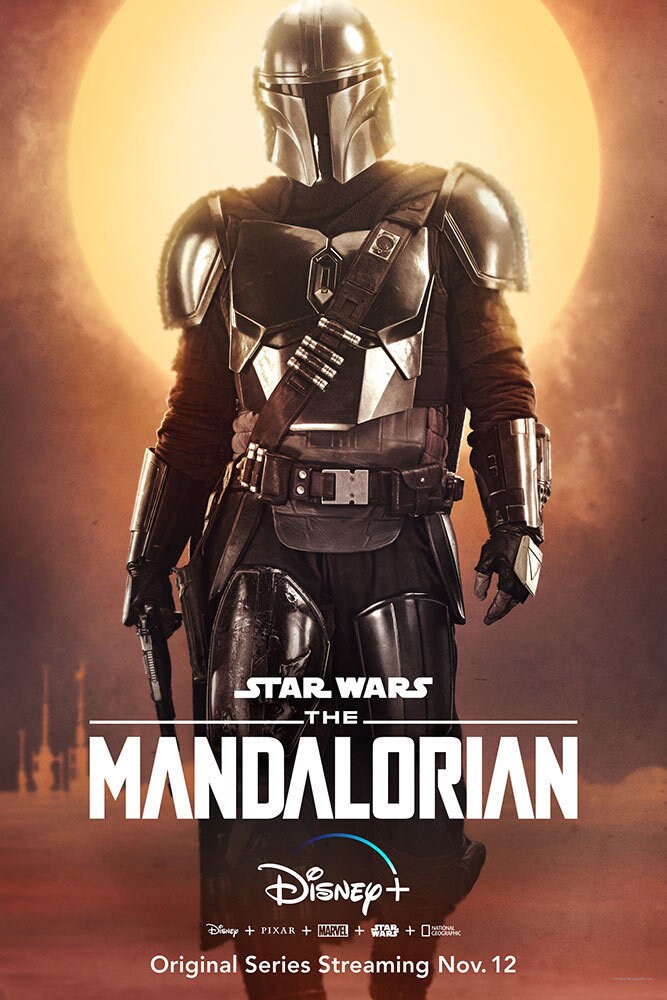
The Mandalorian, season 1 (2019)

A highly entertaining show that, while having a few lulls, was a fun realization of oft-untapped potential in the massive Star Wars universe.

Like many, when I heard about The Mandalorian, it was the final nudge I needed to sign up for Disney's new streaming service, Disney+. It paid off, as both my wife and I enjoyed so much of what the show had to offer.

The show, helmed by Jon Favreau, takes place shortly after the events of Return of the Jedi, in which the Empire has been defeated by the Rebels, led by Luke Skywalker and his companions Leia, Han Solo, and others. Now that the Empire has dissolved, a certain amount of lawlessness has increased throughout the galaxy, opening up opportunities for some while making life more difficult for others. Operating in these tight and shadowy places is the titular Mandalorian, a bounty hunter whose name we don't know and is only referred to by the nickname "Mando," a call towards his cultural tribe. In the first episode, Mando takes on a sizeable bounty to acquire a mysterious person and return them to the client, who is apparently a former Imperial official. Once Mando finds the target, though, things grow exponentially more complicated.

The premise and set up of the show are brilliant, in that they offer so much of what any fan would want - fans of both Star Wars or just fun, lively television. The entire first season is a very manageable eight episodes, each ranging between 35 minutes to an hour, with most clocking in towards the shorter end. While the main story is Mando figuring out how to evade various pursuers, stemming from the initial bounty-gone-wrong in the first episode, several episodes in the middle are fairly stand-alone. On the whole, the series is solid, though one or two of those middle episodes are weaker than the others.

The show finished really strong, with plenty of crowd-pleasing moments that didn't devolve into pure Star Wars fan service. Though the show is very clearly set in the Star Wars universe, it tells its own tale, with its own characters, never relying on cameos by better-known characters from the movies. And this first season did a great job of taking any lose narrative threads left from the first two episoed and tying them all back together in the final two. The title role is done well, if not exactly requiring a great range of skills, especially since his head is covered the entire time. All the same, the writing is solid and the over-arcing story is compelling.

The final episode - the best of this first season - set up the already-confirmed follow-up season very nicely. I look forward to it with plenty of anticipation. Looks like creator, writer, and director Jon Favreau has another really solid hit on his hands.
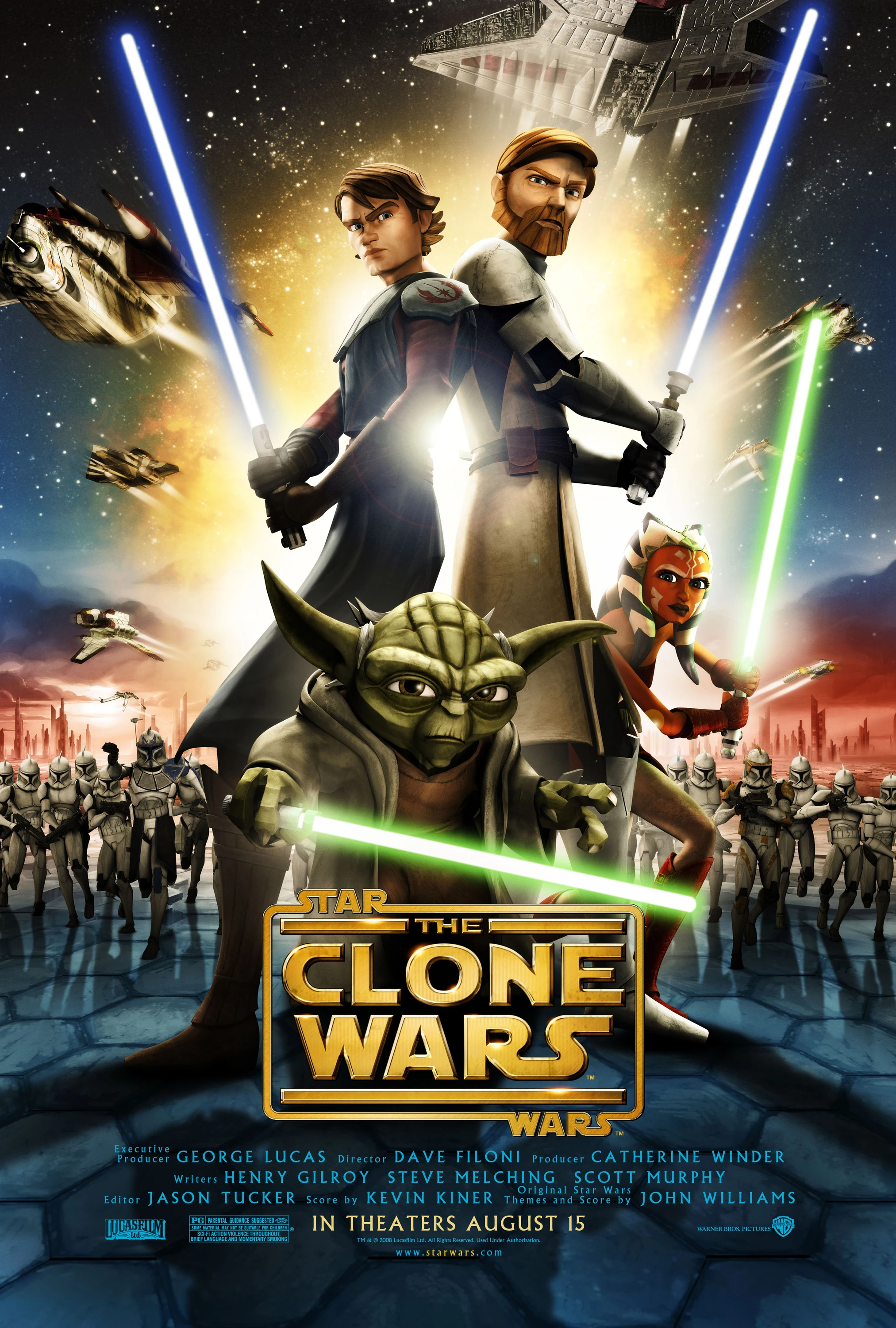

The Clone Wars, seasons 1 through 3 (2008-2011)

A rather impressive TV series aimed at young adult fans of Star Wars that I had never bothered with until recently. It's clearly meant for a younger audience, but it also offers some decent narrative "glue" for some of us (much) older fans.

Being a Gen X person who grew up in the suburbs, I was as into Star Wars as any such kid of that demographic, and that remained the case well after my teen years. Then came the prequels, which were...underwhelming. Since then, I started to see the entire Star Wars behemoth for what it was - a fun, well-conceived and well-executed PG-rated fantasy tale aimed mostly at viewers between the ages of 5 and 15. But there has always remained that kid in me that has fun watching what the series has to offer, without ever going overboard about it. Hence, I never sought out The Clone Wars, which was a series kicked off with a feature film back in 2008 and telling tales between 2002's Attack of the Clones and 2005's Revenge of the Sith. These are the years during which Jedi Master Obi-Wan Kenobi, Knight Anakin Skywalker (still years before he was turned to the dark side), and Skywalker's apprentice Ahsoka Tano serve as peace-keepers during the long military struggle between the Galactic Republic and a faction of separatist systems headed by former Jedi master Count Dooku.

These first three seasons, while uneven, certainly have their moments. And by the third season, I was impressed at the depth a some of the themes, given that it is a show geared towards younger fans. Like many animated series from the 1980s and '90s, the show offers a mix of one-off, stand-alone episodes and some two- and three-episode story arcs. Typically, it is the arcs that are the strongest tales, and these are often where you find the strongest connections to the feature Star Wars films. The primary addition in terms of characters is Ahsoka Tano, a young apprentice under the tutelage of Anakin Skywalker. The dynamic between the two isn't terribly surprising, with Ahsoka being a tenacious, precicious, and headstrong apprentice, very much like Anakin was under the instruction of Obi-Wan Kenobi. It is the episodes which focus on those three - Tano, Skywalker, and Kenobi, which are the most reliably entertaining.

There are certainly other characters who merit attention and pique one's interest. New Jedi Masters like Kit Fisto (the names are hilarious, if you couldn't tell), Plo Koon, and others are fun. And new Sith apprentice Assage Ventress and bounty hunters like Cad Bane are also entertaining additions.

Of course, it's easy to be reminded when watching that this show's target audience is viewers between, say, 12 and 16. Especially through these first three seasons, very few characters are more than one-dimensional. The heroes are almost always heroic, and the villains are especially villainous. However, there are a few moments where the story shows a bit of nuance and depth, as do certain characters at times. The dialogue isn't going to impress anyone with a discerning ear, often locked into cliche and noted lines from the source movies, but it's passable if one accepts it as it is.

Since I started writing this, I've also worked my way through all of Season 4 and have started Season 5, and the improvements are notable. I'll be sharing my thoughts on those seasons soon. 

Sunday, August 25, 2019

Idiot Boxing, FX Edition: Legion, season 3 (2019); Archer, season 10 (2019)

No Spoilers for either show. Read away!!

Two great shows, one which seems to be nearing its long run, and the other coming to the pre-determined end of its short but amazing run.

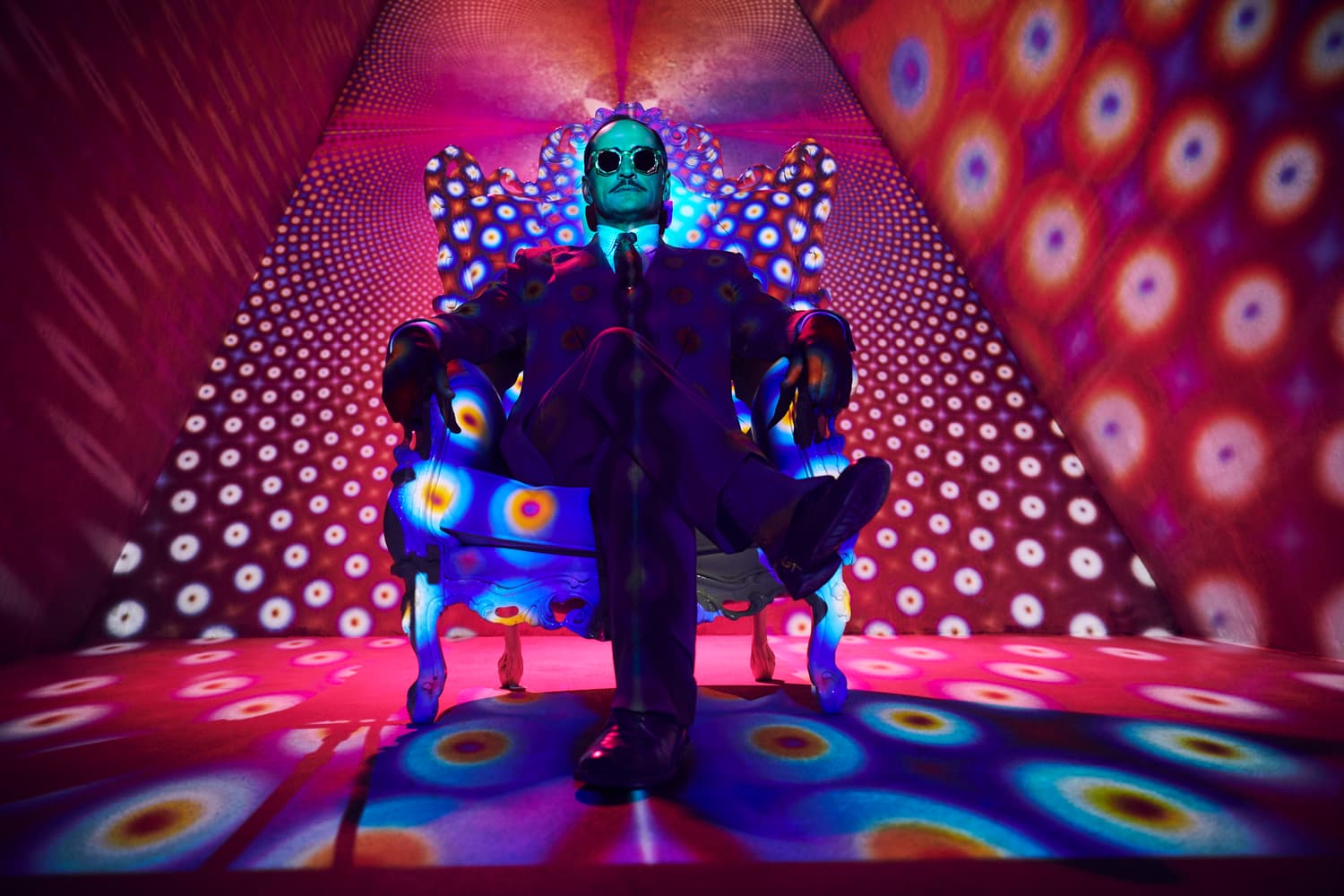
The season poster gives you some idea of just how trippy this
show, and particularly this season, can be. 
Legion, season 3 (2019)

One of the most amazing TV shows I've seen in years, and easily the very best show or movie inspired by comic book "superhero" characters.

At this point, virtually every human on earth is aware of Marvel Studio's total domination of the box office, via the Marvel Cinematic Universe (MCU) and, until recently, the X-Men series. Even smaller properties like Deadpool have raked in cash. When it's come to their TV shows, however, there hasn't been nearly as much success. The handful of shows on Netflix, such as Daredevil and Jessica Jones, have been mixed bags. They've also focused a few shows on even lesser-known characters, such as Cloak and Dagger and Runaways. But no greater leap was taken than when they greenlit a show about a somewhat obscure character from the X-Men comic books of the 1980s and '90s: David Haller. David, also known as "Legion," was the son of immensely powerful telepath Charles "Professor X" Xavier. David was also an incredibly powerful telepath, as well as being a telekinetic of such strength that he could essentially alter nearly all of reality. The terrifying part of all of this is that, in addition to his awesome powers, David was also wildly schizophrenic.

David Haller is hardly the type of character around whom Marvel Studios had built commercial success, so it seemed like an odd longshot to be any sort of winning show. But when the show was given to Noah Hawley and the FX network, magic happened. Hawley, who had won over my massive skepticism with the dazzling work on the TV show Fargo, has done something with Legion that will be extremely difficult, if not impossible, for other "comic book" shows to equal or top. He has utilized so many aspects of the audio-visual medium of television and crafted a dazzling, poetic, and often beautifully artistic story that is as touching as it is fantastic.

Amahl "The Shadow King" Farouk returns, though whether
he is an ally or arch-enemy to humanity remains unclear
right up until the final moments of the entire series.
With this third and final season of Legion, we get the completion of the bold and emotionally powerful tale of David, as imagined by Hawley. Through the first two seasons, we see David learn of his immense powers, as well as the fact that he has been harboring the psychic manifestation of Amal Farhouk, an entity known as "The Shadow King" - another mutant with abilities on par with David's. We have also seen Farhouk's "exorcism" from David, and their race for Farhouk's long-buried body. This final season follows David's erratic and reality-bending attempts to undo the damage which he and Farhouk's battles have caused, all while Farhouk constantly turns the tables and plays multiple sides against each other to aims uncertain to everyone, including us viewers. The primary addition to this season was that of the character Switch - a time traveler whom David recruits to help him in his quest to right past wrongs. As you can imagine, this begins to further complicate matters, and it all comes to a complex resolution.

This being a spoiler-free review, I will not get into any details. It would be a great disservice to this show to give anything away, as I felt that one of the great joys of it was waiting to see how its many enigmas and knots revealed and untangled themselves. And make no mistake - this show demands patience and close attention; probably more than nearly any prime-time show out there, and definitely far more than any comic book show has every dared. Certain images appear and actions take place which will leave one baffled; that is, until one, two, or several episodes later when the connections are made clear. And there are more than a few visual and cinematic flights of fancy that are part of the proceedings. These include vibrant, psychedelic dream sequences and even a couple of song-and-dance numbers. I'm normally not one for the latter, but my musical sensibilities seem to align with Noah Hawley well enough, so I was happy to drink in these sequences.

Like previous seasons, this one shows dazzling creativity in terms of narrative structure and horror concepts. Without giving anything away, I can simply say that the Time Eaters are some of the most visually creative, terrifying things I've seen on a TV show in ages. And while using time travel is a tired sci-fi plot device in nearly every case at this point, Legion actually does more than a few wonderfully novel things with it. Things that actually make artistic use of the audio-visual medium of television in ways that I've never seen before.

But the thing that put the show completely over the top for me - the thing that had me getting choked up multiple times during the final episode - is the resolution and how daring it was. Again, no spoilers here, but I cannot think of any comic book-inspired film or TV show, or many TV dramas for that matter, which have shown the guts and heart that Legion did in its finale. Far too many shows take the easy route of offering resolutions that don't challenge us viewers with something different and thought-provoking. Legion does just that, and it is an infinitely greater show for it.

And so ends what may go down as the very best comic book show in history. If any show or movie manages to top it, I only hope that I'm around to see it.


Archer, season 10 (2019)

Another amusing "fantasy" season of Archer, though one that I'm happy to say seems to be the last in the "Archer Coma Dream" arc of seasons.

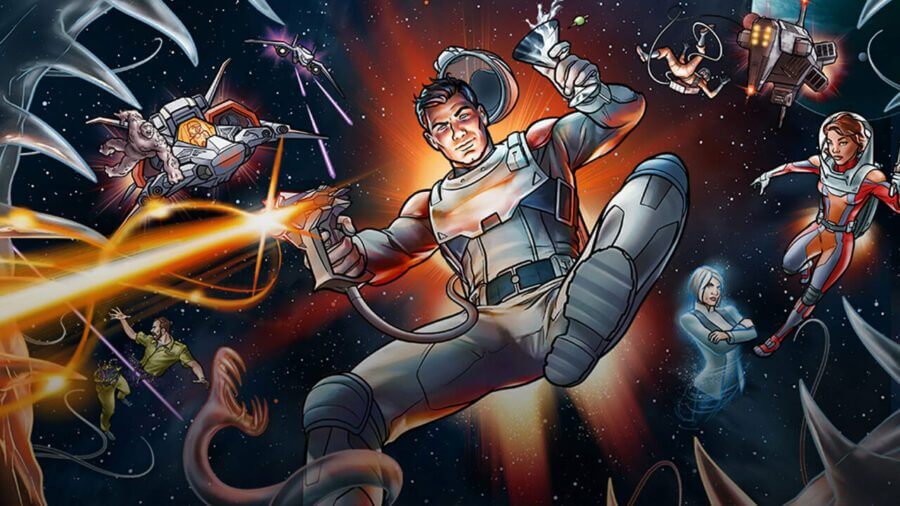
At the end of season 7, Archer was sent into a coma, thus kicking off a series of seasons which take place completely inside Sterling Archer's coma-imprisoned brain. Season 8 saw all of the characters placed in a world of film and literature noir of the 1940s and '50s, and season 9 took its setting and plot elements from the exotic action/adventure tales popular in the 1920s and '30s. In this season, the gang is sent into a completely different genre - that of science-fiction. Dubbed "Archer 1999," it uses many of the elements seen in popular sci-fi action movies, most obviously Alien, but also including tons from other well-known and lesser-well-known sci-fi TV shows and films such as Battlestar Galactica, The Herculoids, Forbidden Planet, and tons of others. A bit more in keeping with the earlier, "real" seasons, this season doesn't have a single plot thread that runs through all episodes, being rather a collection of self-contained episodes.

This season was pretty fun. Moreso, I found, than the previous "Danger Island" or "Dreamland" seasons. Those was were amusing, to be sure, but I found 1999 to be a bit more consistently funny and even more creative from episode to episode. These "coma" seasons have always had fun in taking regular cast members and thrusting them into new roles of varying zaniness, but 1999 probably had the most entertaining and spot-on re-imaginings of everyone, whether it was Ray Gillette taking on the "courtesan" role as inspired by Firefly or the mad scientist Krieger as an android obviously inspired by Ian Holmes's deranged synthetic in Alien, the writers set themselves up to have a blast.

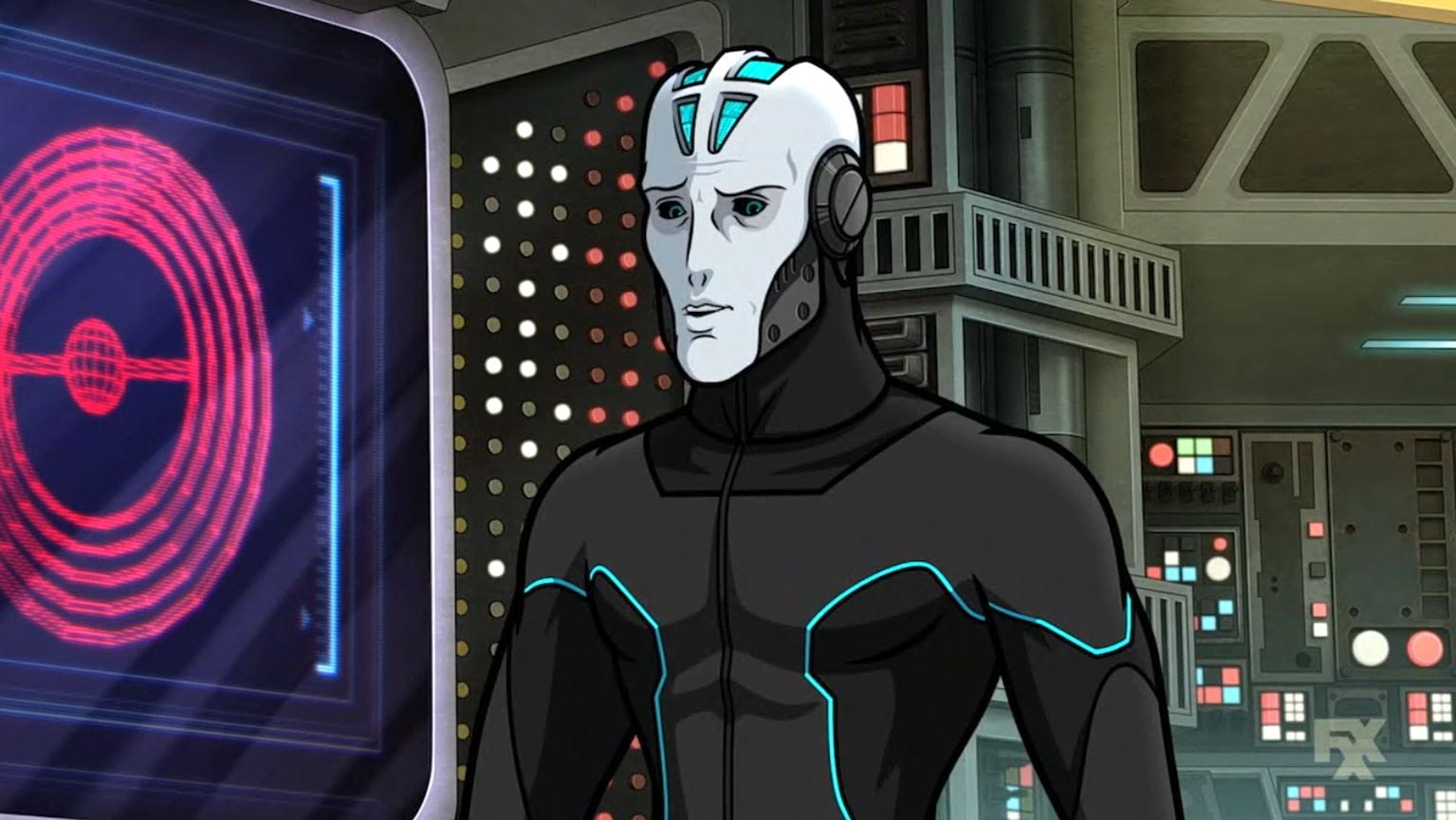
Mr. Deadly - the title character from my favorite episode. With
a combination of great comedy writing and hilarious voice
acting by Matt Berry, this was one of the best
Archer episodes
I had seen in several seasons.
The individual stories, while rarely living up to the best episodes of the first several seasons of the show, are solid. My particular favorite was episode 5, "Mr. Deadly Goes to Town," in which the crew discover a robot which is actually a walking, talking doomsday device voiced brilliantly by Matt Berry, whom I know and love from the What We Do in the Shadows TV series. This was the standout episode for me, but nearly all of the others gave me some good laughs, even if some of the standard gags in the Archer series have long since been a tad played out.

The show has been renewed for an 11th season, beginning this September, which I'm glad to see. But not as glad as knowing that it is finally, after over three years, returning to the "reality" of having Sterling and his cohorts back in the real world, being humans and presumably getting back to their cartoonish approach to being some sort of spy organization. 

Monday, February 5, 2018

Idiot Boxing: Runaways, season 1 (2017); Rick & Morty, seasons 2 and 3 (2015, 2017)

Runaways, season 1 (2017)

A surprisingly solid and entertaining first "YA" entry into the Marvel Cinematic Universe (MCU).

Set within the same fictional universe as better-known films such as Thor and TV shows like Agents of SHIELD, Runaways focuses on a sextet of teenagers in Los Angeles who live in an extremely affluent area and attend a top-flight high school. We join their story about two years after the death of one of their friends, also the older sister to one of the group, an event which fractured the bonds which held them together. Now being adolscents between 13 and 17, each of the six has found different groups or interests: lacrosse, computer science, social causes, a parent's Scientology-like pseudo-religious pop cult, and others. An accidental discovery at one of their houses, though, reveals that all of their highly wealthy and successful parents, through whom they had all met as children, may not be the fine, upstanding citizens they had always assumed. In fact, they may even be murderous villains.

And so kicks off the premise of the show. As the story moves along, it also reveals that a few of the six teens have supernatural powers, while others are exceptionally intelligent. Despite their abilities, they all struggle to cope with their entire social order crumbling around them as they face the very real possibility that their parents are "the bad guys." It's a really novel premise for a story, and it serves to keep the show surprisingly engaging. Sure, nearly every teenager thinks their parents are evil, but what if you actually found out that they were, really and truly, evil? It's a fun concept which is handled well in this show.

Another strength is that, even beyond the basic premise, the plot works well with its mysteries. In the first couple of season's ten episodes, we are offered several odd images and scenes which beg multiple questions. As the season progresses, the questions are addressed in mostly satisfying ways, at a well-measured pace. The kids with supernatural powers begin to discover their abilities. The group also begins to dig up the shadier parts of their parents' past, including certain aspects that puts them more in the realm of the fantastic heroes and villains with whom we are more familiar through the other MCU shows and films. Blessedly, this latter element is done without relying one bit on plotlines or characters from any other shows or movies. Runaways is one of the most self-contained MCU shows created, and its all the stronger for it.

Much of the drama comes from the kids' uncovering and
grappling with the reality that their parents are murderous
villains masquerading as pillars of society.
The performances by the rather large cast are solid, all around. The six teens, each pair of parents, and even the handful of secondary and tertiary characters all hit their marks quite well. For me, it's good to see a show featuring actors whom I had never seen before, allowing them to inhabit their roles so that I only identify them with this show. The dialogue isn't anything particularly special, but it is solid by not trying to be too clever. Rather, it offers a lot of organic verbal exchanges during the many dramatic moments, large and small.

On the subject of the drama, most of it is handled well. I will say, however, that some of the romantic elements felt a bit forced. I understand maybe two or even three of the six "runaways" falling for each other, but the show goes a bit overboard by giving us a weird "love pentagram," where everyone but the youngest member, 13-year old Molly, is pining for one of the others. I can't help but wonder if the writers weren't trying to be overly "inclusive" here. It's great that the cast is very diverse ethnically and in terms of sexual orientation, but there is almost a sense that they were afraid to leave anybody out in terms of openly expressing themselves in this first ten-episode season. The result is a bit of an overload of teen love and lust. It hasn't harmed the show yet, but they'll need to be careful not to be all things to all people, which can ultimately torpedo any fictional tale.

The season doesn't end with quite the sense of closure that one might like, even for what is meant to be only the opening chapter in a longer tale. Rather, some notably large questions remain unanswered, while new ones are raised in the final episode. Such suspense and mystery can work well, but I felt more as if the show simply lost track of the episode limit on its rookie season just a bit.

Nitpicks aside, this was a pleasant surprise. I look forward to the next season.


"Pickle" Rick and his improvised exoskeleton and laser
weapon. This was just one of many episodes featuring writing
brilliant enough to outdo 99% of Hollywood action flicks.
Rick and Morty, seasons 2 and 3 (2015, 2017)

After discovering and falling in love with the first season last year, my wife and I readily dove into the second and third seasons of this outstanding show. We were not disappointed.

Giving a thorough rundown of either ten-episode season would require far more writing that its genius demands. Instead, I'll just mention a few of my favorite episodes from each season. But know that there are no "bad" episodes of Rick and Morty. Sure, some are weirder or darker than others, and some go a bit more "meta" than the rest, but they are all exceedingly intelligent and creative. And every single one of them is hilariously irreverent to delicate sensibilities and the standard tropes of many popular science-fiction tales. A few of my favorites from each season:

In season 2, the season opener "A Rickle in Time" is a masterpiece of fast-paced, intelligent storytelling. Rick, Morty, and Summer end up playing with time in order not to get caught having thrown the massive house party that ended season one. This results in ever-splintering parallel timelines, with different Ricks trying to outthink and even kill one another. The tale is told with ever-multiplying split screens in one of the most uniquely stunning sequences I've seen in a long time. In "The Ricks Must Be Crazy," Rick and Morty shrink themselves down to help jumpstart the miniature universe that powers Rick's spaceship battery. Another hilarious multi-layered tale. My wife offers her seal of approval to "Big Trouble in Little Sanchez," when Rick implants his mind into a smaller, teenage body of himself. Just his infectious teenage enthusiasm and propensity to thrust his arms in the air and proclaim "Tiny Rick!" is worth seeing.

Season 3 had more than a few outstanding offerings. My clear-cut favorite was "Pickle Rick," which sees Rick proudly turn himself into a pickle in order to avoid a family counceling session. Pickle Rick eventually becomes embroiled in a Die Hard-like scenario where he is trapped in a building and has to fight his way out. This episode has some action elements and sequences that were as fun as anything I've seen from nine-figure-budget Hollywood action movies in recent years. "Vindicators 3: The Return of Worldender" was also a personal favorite. Rick and Morty rejoin a galactic superhero group, The Vindicators, who barely tolerate Rick's open derision of their posturing and moral superiority. The oil/water scenario of the sociopathic Rick and a bunch of self-important do-gooders in tights is every bit a hilarious as one would hope. And the opening 3 minutes of "Rest and Ricklaxation" had me and my wife literally crying with laughter. The rest of the episode is great, too, but the setup is award-worthy stuff.

Both the second and third seasons ended with the same tease: oddball character Mister Poopybutthole sending us off and suggesting that the next season probably wouldn't be coming for quite some time. If it results in another ten episodes like we got with these two season, the creators can take whatever time they need, as far as I'm concerned.