Monday, March 16, 2020

Idiot Boxing: Preacher, season 3 (2018); GLOW, season 3 (2019)

The wild and deranged crew of season 3. A good number of
them are done justice, in terms of the spirits of their renditions
in the source comic. Others are slight misfires.
Preacher, season 3 (2018)

As the fourth season of AMC's Preacher was just kicking off this August, I finally caught up and worked through the third season. Like the two before it, it's been just good enough and shown just enough creativity relative to the source material to keep me watching. It's never been a sure thing, though.

As I've explained in my reviews of season 1 and season 2, my history with Preacher runs pretty deep. The short version is that I was an absolutely rabid fan of the comic book series through the mid- and late-1990s, not only buying and reading each of the 70-plus monthly issues the moment they came out, but even writing fan letters and going to comic book conventions to see and listen to the creator and writer, Garth Ennis. So it's always been impossible for me to come to the TV adaptation with any sort of unbiased views. I must admit, though, that the series, despite some obvious weaknesses, has done a nice job in some surprising areas.

This season is almost exclusively in Louisiana, mostly in the fictional Annville, a family compound where Jesse grew up. In order to save Tulip, who was killed at the end of the previous season, Jesse makes a deal with his grandmother, Marie L'Angelle. "Miss Marie" is a powerful but ultimately evil witch who bargains for and consumes souls of desperate people, using them to prolong her life. While she does resurrect Tulip for Jesse, it comes at a great cost which Jesse wrestles with through the season. All the while, Herr Starr continues to keep his sights on Jesse as the "Messiah" whom he hopes to use to kick off an apocalypse. And the vampire Cassidy is also around, though at odds with Jesse for various reasons, so finds himself in New Orleans and making a rather surprising friend.

While there were no grand improvements for me this season compared to the first two, I did find the plotting to be a bit tighter. Not great, mind you, but a bit more streamlined than the looseness of the previous ones. Keeping things mostly focused on Jesse's place of origin and the bizarre and dangerous characters within it allowed a bit more coherence to the tale, allowing for more impact once Starr and his Grail goons show up towards the end of the season. The acting is as good as ever, and the casting of characters newly introduced to the TV series - primarily Jodie and T.C. - was spot-on. Actually, the T.C. character was a perfect example of what, for me, is a great strength of the TV adaptation. Since the very beginning, it has been very clear than the show-runners would not be doing a totally faithful retelling of Garth Ennis's and Steve Dillon's graphic novel. They have made many changes, omissions, and additions - some minor and some major - which gives the show a feeling quite its own. This is most apparent in the narrative, but it is also evident with characters like T.C., played brilliantly by Colin Cunningham. In the comics, T.C. is merely a nasty little redneck with a propensity for bestiality. In the TV series, though, there is more to him, as twisted as it all is. The result is a far more entertaining character than the comic offered, memorable as he was. While I may not have loved all of the changes, I tip my cap to the creators for trying plenty of different things, rather than simply leaning on the popular source material.

My primary issue with the show still remains, however, and that is the lack of a fully logical mythology. I'm all on board with the horror and the wild flights of fancy that are part-and-parcel to the entire story. Vampires? Cool. God, the Devil, and a Saint of Killers? Count me in. A doomsday shadow organization conspiring to trigger the Apocalypse? Right on. But I still need to see some consistent logic behind what these amazing and fantastic characters can and cannot do. Whether it is Jesse's "Voice of God" powers, Cassidy's vampirism, or the supernatural voo-doo of Miss Marie, the writers seem to play very fast and loose with the parameters put in place. One moment, the Saint of Killers is an unstoppable killing machine; the other, he gets knocked over by a car. One moment, Jodie can literally walk bare-handed into a compound guarded by two dozen armed killers and murder them all, and later he loses a relatively simpler fist-fight to a lone, smaller Jesse. The show is bananas anyway, so these things don't hurt the proceedings all that much, but they are little details that irk me a bit.

Word is that the fourth season - about halfway through airing as I write this - will be the final season, as planned by the creators. It's good to see another solid show have the guts to call it quits in the name of the narrative, rather than drag it out. I may or may not ever go back to watch the entire series again, but as a tremendous fan of the comic series, I feel that the show has done it a fair amount of justice.
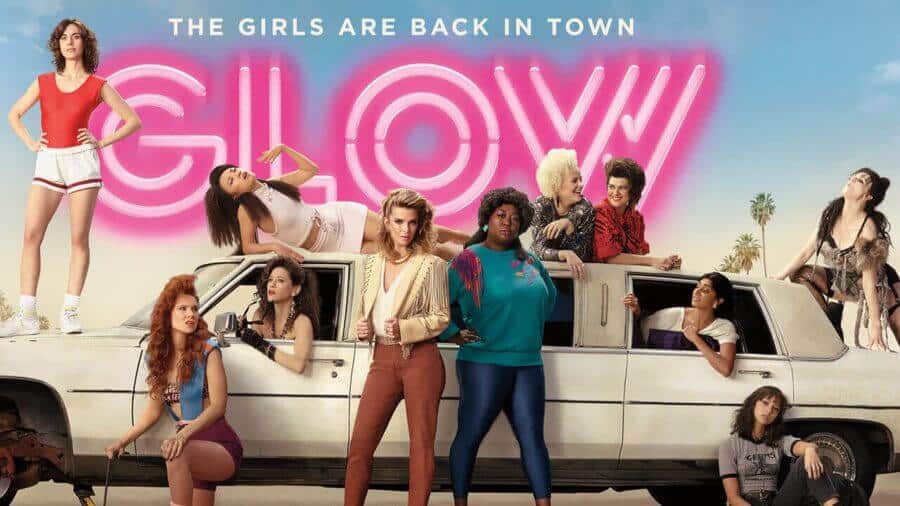

The Gorgeous Ladies bring their act to Vegas. Some handle
the temptations well. Others? Not so much.
GLOW, season 3 (2019)

This show started off strong two years ago, and it just keeps getting better.

At the end of season 2, the Gorgeous Ladies Of Wrestling (GLOW), along with producer Bash and show director Sam, head to Las Vegas. After being cancelled by their network in Los Angeles, they seek to keep their jobs and the show alive with a limited engagement of performances at an old-school casino in Sin City.

Season 3 of GLOW picks up shortly after these events, and we see the gang immerse themselves in Vegas. The show, while not a massive success, certainly does well enough to entertain Vegas tourists, and continues to be a decent gig for everyone involved. Of course, it doesn’t take long before various wrestlers, Bash, and Sam begin to experience tensions and issues of varying types. Some are relationship-related, others professional, and others business-related.

As good as the previous two season were, the third is the best thus far. I suppose that viewers who are more interested in the pro wrestling aspects of the show will disagree, as this season focuses far less on what happens in the ring. That was very much a strength of the show’s first season. That was only ever going to take this show so far, however, and the writers seem to have realized that very early on. The personal struggles and drama feel very real in this season, and we get to dig into several minor characters’ personalities and deeper motivations. Some of these are tackled with humor, while others are more dramatic. In nearly every case, the time spent looking past the garish costumed and into the characters’ inner-workings only adds richness to the series.

There were several engaging individual character developments in this season, including Tamme “Welfare Queen” Dawson’s fight against physical injury and Cherry’s break up with her man Frank. For my part, I was most impressed by the development of Shiela the She-Wolf, as she tries to expand into doing serious dramatic acting. From the very first episodes of the show’s first season, Shiela was immediately the most eccentric and enigmatic character, but this season ensures that she isn’t relegated to simply “humorous weirdo” status. Far from it. Hers and others’ stories are given some serious attention, and the show is all the better for it.

And lest you think that the show has become far more dramatic, rest assured that there is still plenty of humor to go around.  Perhaps not as much as the wilder, unpredictable first season, but my wife and I still had plenty of great laughs throughout the season. All of the actors have excellent comic timing, and once again comedy veteran Marc Maron stands out. His character Sam Silvia doesn’t have as much screen time as in previous seasons, but he makes the most of it.

A fourth and final season has already been confirmed and will release later in 2020, which is great since the show has really hit an amazing stride.

Sunday, March 15, 2020

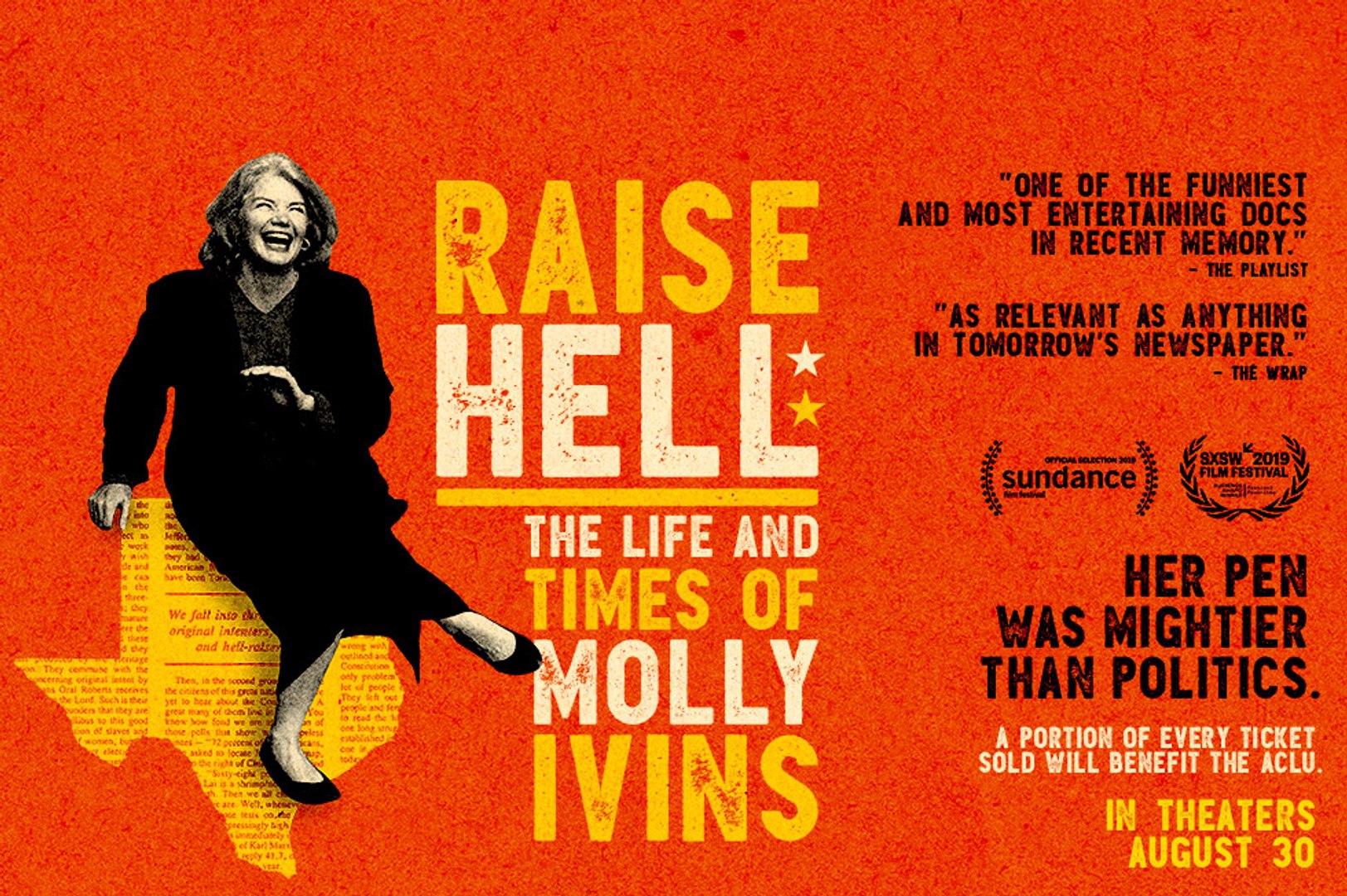
Raise Hell: The Life and Times of Molly Ivins (2019)

Director: Janice Engel

Excellent documentary on a Texan original, political journalist Molly Ivins.

I remember getting acquainted with Molly Ivins back in 1999, when I was working the cash register at the Barnes and Noble bookstore in College Station, Texas. It was a really slow night, and I picked up her book "Shrub," which was her rather scathing reporting on then-Texas governor/soon-to-be president George W. Bush. It was erudite, ruthless, and hilarious. And after watching Raise Hell, I realized that those same three adjectives described Ivins herself.

There are very few people who really are memorable characters and wordsmiths in the great American tradition. Alexander Hamilton. Thomas Jefferson. Mark Twain. And while Molly Ivins may not have quite reached the heights and reach of those titans of the written word, she wasn't far from it. She was big (literally and figuratively), bold, and brash in all of the best ways. So when she settled in Texas, bringing her immense intelligence, acumen, and wit, it was a perfect fit.

This documentary pulls together a ton of great testimonials from friends, colleagues, high-level politicians, and even a few of the adversaries who ended up in her cross-hairs. They all paint the portrait of a person who was scary smart, had firm ideals, and could drink any other three people under the table.

Any description of such a person will always beg the question, "Were they really like that, or are we just embellishing the life of one deceased." Well, since Ivins was around in modern times and was publicly successful, there's plenty of video footage of her so that you can judge for yourself. The video clips of her opining at conferences, on TV news shows, and during interviews makes for a great compilation of her excessively witty, articulate, and sometimes downright vicious manner.

People who didn't grow up in Texas, the Southwest or the South may be less familiar with Ivins. But I guarantee that when they see this, they will be very likely to ask themselves why they hadn't heard of her before this. When you see the figures she boldly (and almost always righteously) skewered and got reactions out of, you'll wish she had lived much longer than she did. And given just how relevant her perspective and notions still are today, hers is a viewpoint and talent that is sorely missed. 

Saturday, March 14, 2020

Star Wars TV: The Mandalorian, season 1 (2019); The Clone Wars, seasons 1 through 3 (2008-20011)

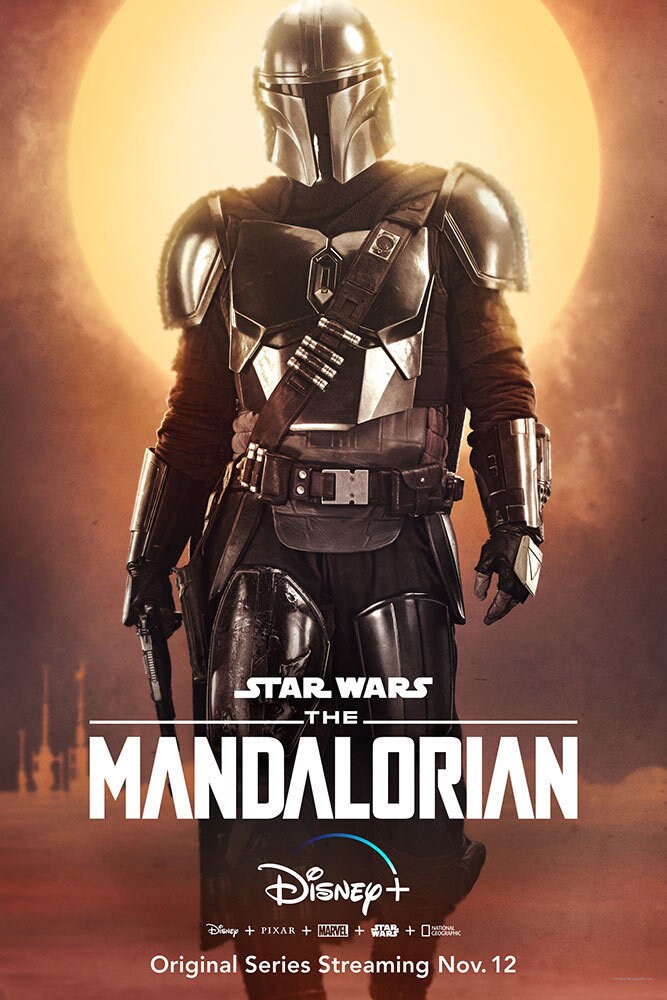
The Mandalorian, season 1 (2019)

A highly entertaining show that, while having a few lulls, was a fun realization of oft-untapped potential in the massive Star Wars universe.

Like many, when I heard about The Mandalorian, it was the final nudge I needed to sign up for Disney's new streaming service, Disney+. It paid off, as both my wife and I enjoyed so much of what the show had to offer.

The show, helmed by Jon Favreau, takes place shortly after the events of Return of the Jedi, in which the Empire has been defeated by the Rebels, led by Luke Skywalker and his companions Leia, Han Solo, and others. Now that the Empire has dissolved, a certain amount of lawlessness has increased throughout the galaxy, opening up opportunities for some while making life more difficult for others. Operating in these tight and shadowy places is the titular Mandalorian, a bounty hunter whose name we don't know and is only referred to by the nickname "Mando," a call towards his cultural tribe. In the first episode, Mando takes on a sizeable bounty to acquire a mysterious person and return them to the client, who is apparently a former Imperial official. Once Mando finds the target, though, things grow exponentially more complicated.

The premise and set up of the show are brilliant, in that they offer so much of what any fan would want - fans of both Star Wars or just fun, lively television. The entire first season is a very manageable eight episodes, each ranging between 35 minutes to an hour, with most clocking in towards the shorter end. While the main story is Mando figuring out how to evade various pursuers, stemming from the initial bounty-gone-wrong in the first episode, several episodes in the middle are fairly stand-alone. On the whole, the series is solid, though one or two of those middle episodes are weaker than the others.

The show finished really strong, with plenty of crowd-pleasing moments that didn't devolve into pure Star Wars fan service. Though the show is very clearly set in the Star Wars universe, it tells its own tale, with its own characters, never relying on cameos by better-known characters from the movies. And this first season did a great job of taking any lose narrative threads left from the first two episoed and tying them all back together in the final two. The title role is done well, if not exactly requiring a great range of skills, especially since his head is covered the entire time. All the same, the writing is solid and the over-arcing story is compelling.

The final episode - the best of this first season - set up the already-confirmed follow-up season very nicely. I look forward to it with plenty of anticipation. Looks like creator, writer, and director Jon Favreau has another really solid hit on his hands.


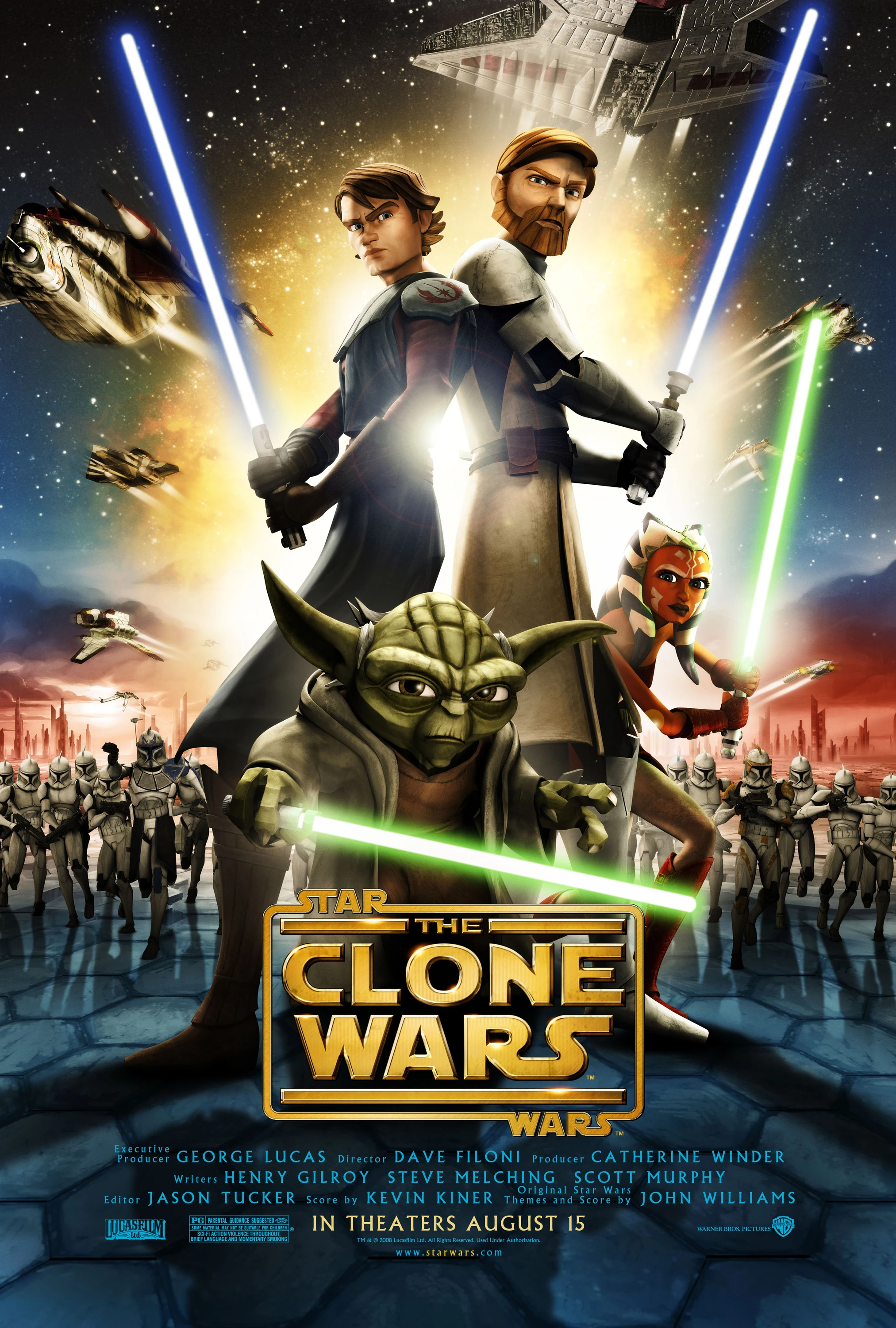
The Clone Wars, seasons 1 through 3 (2008-2011)

A rather impressive TV series aimed at young adult fans of Star Wars that I had never bothered with until recently. It's clearly meant for a younger audience, but it also offers some decent narrative "glue" for some of us (much) older fans.

Being a Gen X person who grew up in the suburbs, I was as into Star Wars as any such kid of that demographic, and that remained the case well after my teen years. Then came the prequels, which were...underwhelming. Since then, I started to see the entire Star Wars behemoth for what it was - a fun, well-conceived and well-executed PG-rated fantasy tale aimed mostly at viewers between the ages of 5 and 15. But there has always remained that kid in me that has fun watching what the series has to offer, without ever going overboard about it. Hence, I never sought out The Clone Wars, which was a series kicked off with a feature film back in 2008 and telling tales between 2002's Attack of the Clones and 2005's Revenge of the Sith. These are the years during which Jedi Master Obi-Wan Kenobi, Knight Anakin Skywalker (still years before he was turned to the dark side), and Skywalker's apprentice Ahsoka Tano serve as peace-keepers during the long military struggle between the Galactic Republic and a faction of separatist systems headed by former Jedi master Count Dooku.

These first three seasons, while uneven, certainly have their moments. And by the third season, I was impressed at the depth a some of the themes, given that it is a show geared towards younger fans. Like many animated series from the 1980s and '90s, the show offers a mix of one-off, stand-alone episodes and some two- and three-episode story arcs. Typically, it is the arcs that are the strongest tales, and these are often where you find the strongest connections to the feature Star Wars films. The primary addition in terms of characters is Ahsoka Tano, a young apprentice under the tutelage of Anakin Skywalker. The dynamic between the two isn't terribly surprising, with Ahsoka being a tenacious, precicious, and headstrong apprentice, very much like Anakin was under the instruction of Obi-Wan Kenobi. It is the episodes which focus on those three - Tano, Skywalker, and Kenobi, which are the most reliably entertaining.

There are certainly other characters who merit attention and pique one's interest. New Jedi Masters like Kit Fisto (the names are hilarious, if you couldn't tell), Plo Koon, and others are fun. And new Sith apprentice Assage Ventress and bounty hunters like Cad Bane are also entertaining additions.

Of course, it's easy to be reminded when watching that this show's target audience is viewers between, say, 12 and 16. Especially through these first three seasons, very few characters are more than one-dimensional. The heroes are almost always heroic, and the villains are especially villainous. However, there are a few moments where the story shows a bit of nuance and depth, as do certain characters at times. The dialogue isn't going to impress anyone with a discerning ear, often locked into cliche and noted lines from the source movies, but it's passable if one accepts it as it is.

Since I started writing this, I've also worked my way through all of Season 4 and have started Season 5, and the improvements are notable. I'll be sharing my thoughts on those seasons soon. 

Tuesday, February 25, 2020

Weathering with You (2019)

Original Japanese Title: Tenki no ko

Director: Makoto Shinkai

A decent and somewhat imaginative enough anime flick, though one that I didn't find quite as good as the same director/writer's Your Name from a couple of years prior.

The movie follows Kotaro, a high-schooler from a small, isolated Japanese island, who runs off to Tokyo to be a part of the big city. Inexplicably, the metropolis has been suffering a months-long rainstorm with no end in sight. After living on the street for a while, Kotaro lands a menial gig doing research for a small-time gossip newspaper for a scruffy but friendly hustler. Kotaro soon runs into Nana, a young girl who seems to be able to manipulate the weather. Specifically, through prayer, Nana can have the storm clouds open and allow the sun to shine through. Kotaro helps her monetize this strange power, but eventually Nana is convinced that she is going to die because of this supernatural gift.

The movie is touching and has some very palpable human drama and humor in it. And like Shinkai's previous film, Your Name, I love that the supernatural elements are never really explained. It allows one to read into them whatever they wish - something that I wish more filmmakers had the courage to do. One may raise an eyebrow or two at the melodrama, especially during the third act, but it doesn't completely ruin the magic of the film.

The voice acting is fairly solid, but it is very much an anime film, meaning that you can expect some pretty over-the-top reads and bombastic emoting. The dialogue itself is fine, but one will have to be ready for a lot of top-of-the-lungs declarations of intentions and feelings. Some of it is typically humorous, but some of it is meant to evoke empathy. It doesn't always work very well, but this is just one of the elements of the genre that a non-Japanese viewer has to accept.

So it's a solid anime flick for those who enjoy the genre when it puts away the absurd superpowers and form-fitting action wear. There are better Japanimation dramas, to be sure, but this one is worth checking out if you like others that you've seen before. I would start with Your Name, though. 

Sunday, February 23, 2020

Retro! The Hills Have Eyes (1977); I, Tonya (2017)

The Hills Have Eyes (1971)

Director: Wes Craven

This was one of a few 1970s, grindhouse-style horror "classics," along with Texas Chainsaw Massacre, that I had never seen. While I've always been able to appreciate a good horror movie, watching this one reminded me that my appreciation only goes so far. Simply put, these grittier, wilder flicks don't do anything for me.

In a short 89 minutes, the movie chronicles a small family; including an elder married couple, their four children and children-in-law, and an infant granddaughter, whose trailer breaks down in the middle of a desert closed to the public. A weathered old man at a worn out service station gives them parts, but also warns against some sort of menace out in the wastelands. Sure enough, a pack of savage cannibals emerges and terrorizes the family over the next 24 hours.

A film like The Hills Have Eyes is really just too sweaty and wild for my tastes. Don't get me wrong - it's an impressive feat that Wes Craven pulled off here. On a razor-thin budget, he created an entire mood of agoraphobic menace amidst a blasted landscape that could be the stuff of nightmares. Still, I only found the movie so compelling. I admire Craven's willingness to not just threaten the innocents in this movie, but to actually kill a few of them, which in my mind is in keeping with true horror. That aside, the film only did so much for me.


I, Tonya (2017)

Director: Craig Gillespie

An entertaining "based on real accounts" telling of the infamous ice skater-on-ice skater crime that was the entire Tonya Harding/Nancy Kerrigan scandal leading up to the 1994 Winter Olympics.

Anyone who grew up in the U.S. and is over the age of 35 almost certainly remembers the Harding/Kerrigan scandal, wherein Kerrigan was infamously bashed in the leg by a man hired by associates of Harding. It was one of the biggest, weirdest stories during the early years of sensational, 24-hour news cycles. Using on-the-record testimony from both Tonya Harding and her former husband Jeff Gillooly, the movie offers their versions of the wild story. There are bizarre characters everywhere in it, and none of them had the smarts or awareness to deal with what they had unleashed.

I knew and remembered a fair bit about the entire affair from when it all broke, since I was in my late-teens at the time. This movie, though, offered plenty of fascinating nuggets about those involved and their more personal stories. While realizing that more than a little of the narrative is coming from Harding's own accounts, I couldn't help but admire and sympathize with her in a few ways. Unlike most stars in the women's figure skating world, she grew up dirt poor. She also had a vile and abusive mother who bullied her daughter constantly. Still, Harding broke into the world of "ice princesses" and became a champion, such was her raw skill and power on the ice. But through bad relationship decisions and an inability to reckon with her dysfunctional husband, Jeff, she ended up the center and the blame of the entire scandal.

Though there are certainly sad elements about Harding's life - and they are depicted as such - the movie manages to balance that with a humorous tone much of the time. The root of most of it is in the breathtaking ineptitude of the dopes who end up orbiting Harding during her time leading up to and through the Winter Olympics in 1992 and 1994 (this was when the reshuffling happened, resulting in the Winter Games occurring only two years apart). Gillooly (Sebastian Stan) and especially his buffoonish friend Shawn Eckardt (Paul Walter Hauser) provide plenty of laughs just for how doltish they are. Then there's Tonya's mother, LaVona, played in an Oscar-nominated, foul-mouthed performance by Alison Janey. The circus of characters keeps things entertaining, despite the strain of darkness that runs through their lives.

There's always something questionable about making a "bio-memoir" about people who are still alive, especially when it's not long after the actions which made them (in)famous. I suppose it's easier to swallow when nobody was killed. But this is the movie's final message and question: since it was Tonya Harding herself who came out of the affair as the primary villain, being banned for life from the sport which was the one thing that she was great at, who are we looking to blame when our collective narratives fall apart? This is what elevates I, Tonya above merely a salacious re-telling of gossip magazine fodder or strange sports trivia. 

Sunday, February 16, 2020

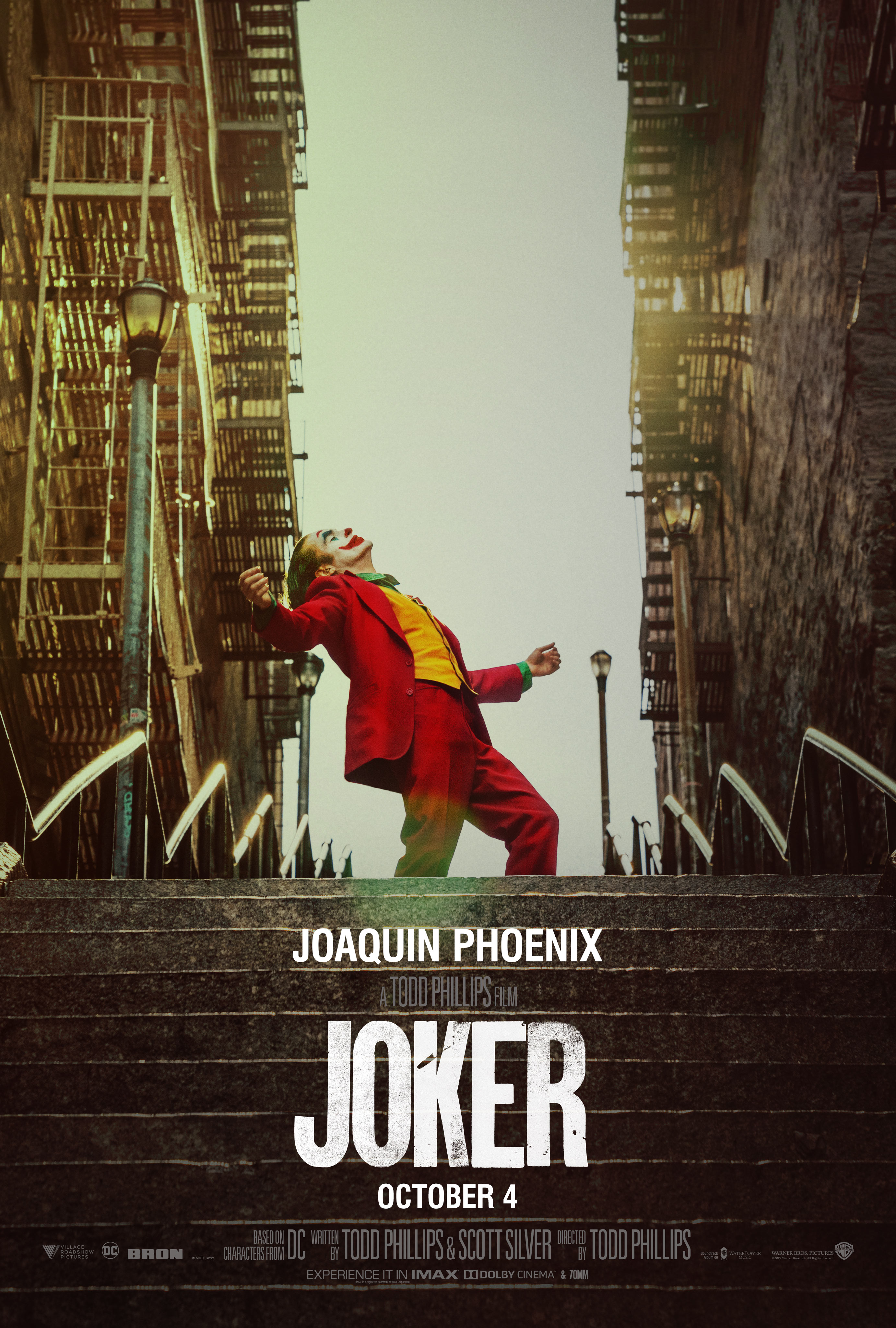
Joker (2019)

Director: Todd Phillips

Extremely well-done film that was compelling but grim enough to not demand a re-watch by me anytime soon.

Ostensibly offering a possible origin story for arch Batman villain "The Joker," Joker tells the story of Arthur Fleck (Joaquin Phoenix), a mentally troubled, severely down-on-his-luck man who is trying to find some place for himself in a grim and deteriorating city. Fleck is an aspiring stand-up comedian who lives at home with and cares for his invalid mother, while trying to make ends meet through menial clowning jobs around the depressed metropolis. In addition to generally being very awkward socially, he suffers from emotional swings and a condition which causes him to laugh hysterically and uncontrollably at random moments. When Fleck is bullied one night on a train, he lashes back and kills his tormentors, setting in motion a spiral into violence and true madness for not only Fleck but also the entire city.

More than any "comic book" movie I've seen, Joker has a very clear vision, and it is exceptionally dark. Writer and director Todd Phillips has himself admitted that he sort of hoodwinked Warner Bros studios by dressing up his movie as an origin story for one of the most famous villains in modern pop culture (in an interview on NPR, Phillips pointed out how the title of the movie is "Joker" and not "The Joker"). What he really offered was a brooding commentary on the state of modern U.S. society and its social ills. Fleck can easily be seen as one of the countless people afflicted with mental illness and carrying the burden of caring for unwell family members, but who have been abandoned by the world around them. Fleck and his mother have no other family, no friends, and early in the movie, Arthur's public assistance and medical care are stripped away from him, leaving him to deal with his myriad difficulties on his own. One doesn't have to look very far in the real world to see much of what is portrayed in Joker. The clarity and commitment to this theme distinguish this film from any other "comic book" movie that I can think of (and I've seen tons of them).

For a better comparison, one need only look at several of the grittier films by Martin Scorsese and Paul Schrader. Todd Phillips doesn't bother disguising the fact that he's drawing heavily from movies like The King of Comedy, Taxi Driver, or even the more recent First Reformed. All of these movies deal with angry men who are already teetering on the edge of sanity, and whom we see pushed off. Arthur Fleck is the latest version of a Rupert Pupkin, Travis Bickle, or Toller - people who are struggling to keep a toehold in society but fail in spectacular or violent fashion. What is impressive is not only that Phillips decided to draw from such dark inspirations for this kind of movie, but that he so clearly succeeded.

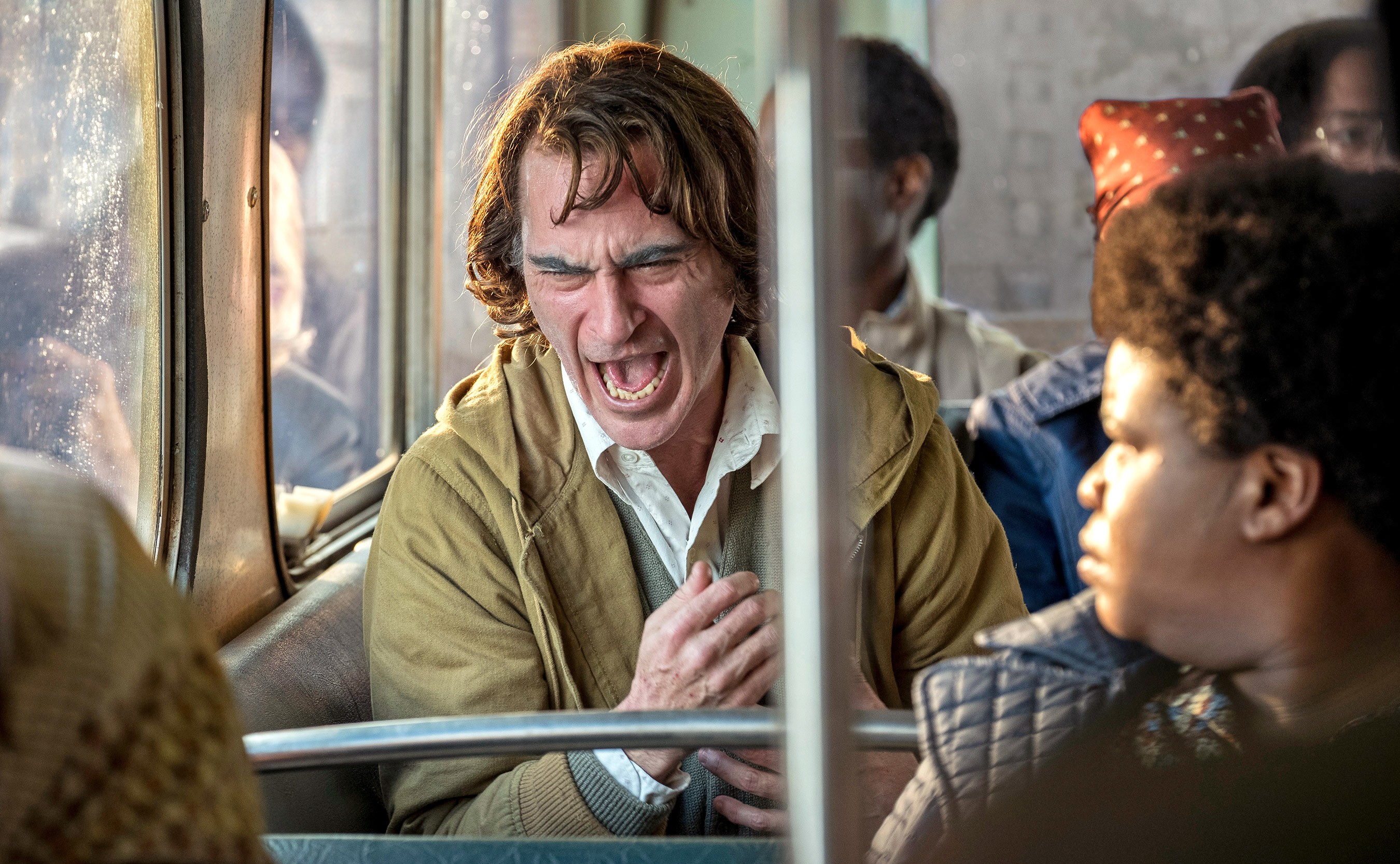
Arthur, in the middle of one of his uncontrollable and often
out-of-place bouts of laughter. As of now, Joaquin Phoenix is
the second actor to win Oscar Best Actor playing the
notorious villain of comic book origins.
By this time, I probably don't need to point out that Joaquin Phoenix's performance is brilliant (I write this only about a week after he won Best Actor for the role). It is truly a marvel, as painful as it is to take in. All of the supporting cast does a fine job as well, including Robert De Niro himself as an echo of the talk show host character played by Jerry Lewis in The King of Comedy. These performances, along with outstanding costume and set design, lighting, cinematography, and an Oscar-winning musical score, shape the story into something that really is a piece of art.

It must be said, though, that the movie is just as depressing as it sounds. Also in keeping with its inspirations and themes, this is not the easiest film to take. Yes, there are a few moments of dark and gallows humor in a few places, but for the most part this movie is one gut punch after another. And just like those aforementioned Scorsese and Schrader films, Joker is a great movie that I find too tough to take more than once in a very rare while. 

Monday, February 10, 2020

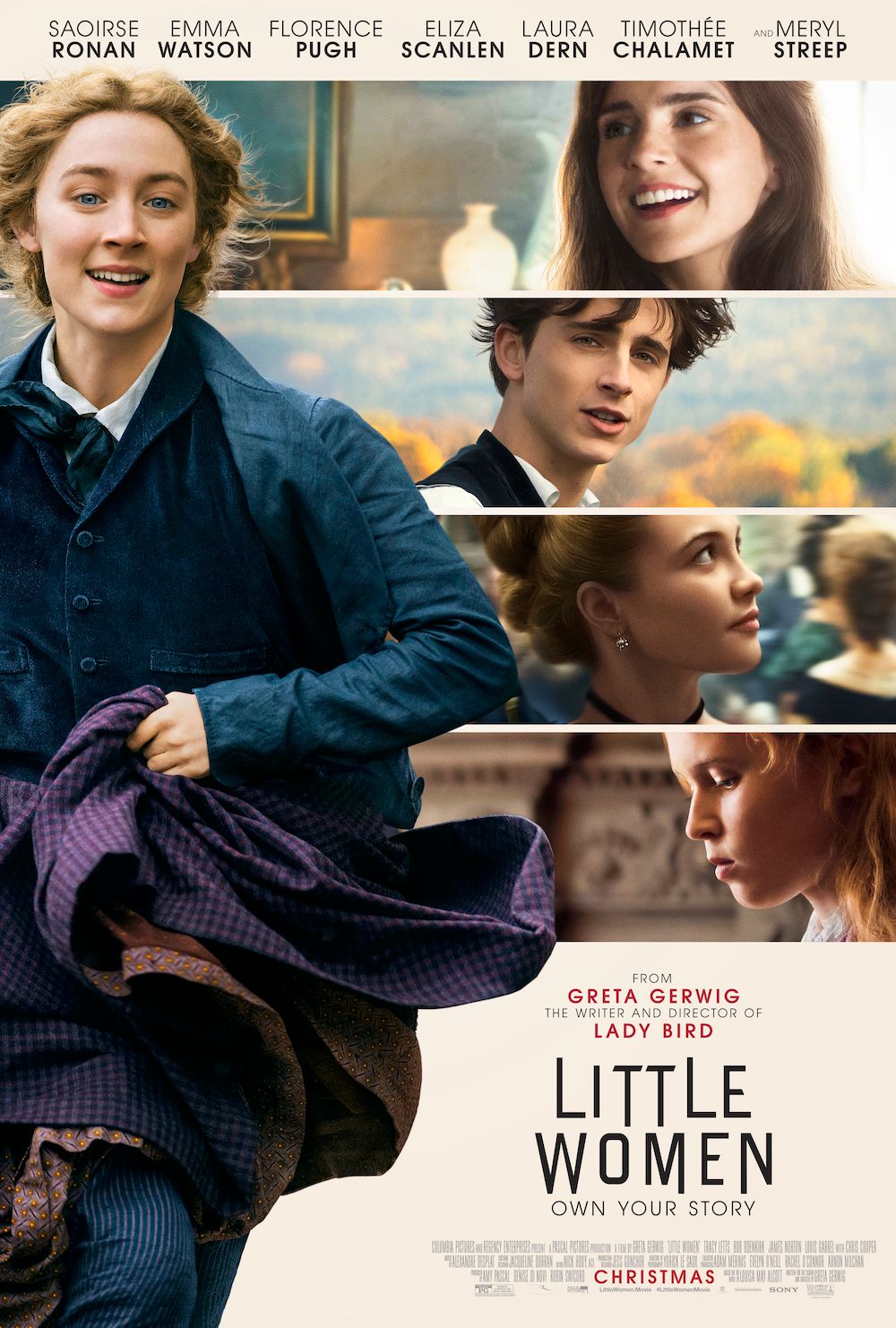
Little Women (2019)

Director: Greta Gerwig

Somewhat surprisingly, I found this movie excellent and highly entertaining.

For a touch of perspective, I'm a mid-forties Gen X dude who thoroughly enjoys sports, Marvel movies, and dirty humor. Like, a lot. But those aren't my only interests, and I'm able to appreciate things outside of my normal comfort zones. Exhibit A: I found Little Women to be a delight.

The movie mostly follows four sisters who live with their parents in Massachusetts during and several years after the American Civil War. As with many families, the four siblings have different attitudes, talents, and temperaments. Jo is a free-spirited rebel; Meg is something of a romantic; Amy has an eye for sophistication and feels rivalry with Jo; and the youngest, Beth, is sickly but possessed of considerable musical ability. Over the course of roughly seven years, the four sisters deal with interpersonal drama and tragedy, as they and their mother deal with their own aspirations, often while their father is away for the war.

The story is based on an immensely popular novel written by Louisa May Alcott, aimed at young female readers and published in the 1870s. Given that, it was no surprise for me to find that the story has a relatively gentle mood, and it never gets terribly dark. It also wasn't surprising that there was a bit of sappiness and sentimentality laced into the overall work. Despite this, though, I found the movie completely enjoyable. It helped that Gerwig made some very smart creative decisions in her changes to Alcott's original story. Melding Jo with Louisa May Alcott herself (whom the character was based upon originally, anyway) was an organic and highly effective choice. It also allowed for a bit more direct commentary on gender biases and a certain amount of progress which bold young women had carved out for themselves during times when such things were far from easy.

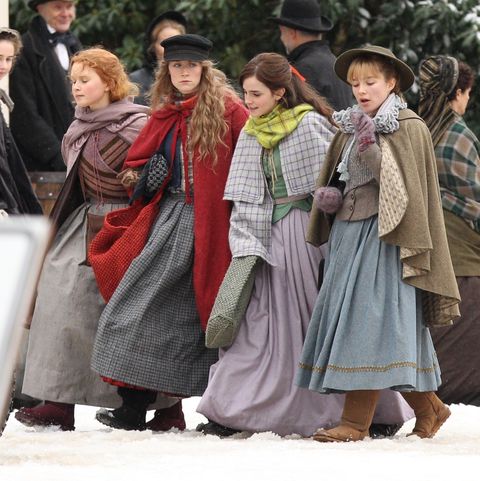
Just one of the many, many shots that is composed and framed
so well that you may not even realize how pleasing it is to
simply look at. There's often a coziness to the film that makes
one feel quite welcome, especially during the "good" times.
Probably the primary reason is just how technically excellent the entire film is. The narrative is laid out in a perfectly-executed, non-linear fashion, often using visual cues to let us know that we have jumped either backwards or forwards in time, drawing poetic connections along the arcs of characters' lives. Beyond that, all of the visual elements are stunning. Thanks to top-notch costume work, set design, lighting, and cinematography, the various tones and moods come right through the screen with every ounce of power that you would hope.

Then there's the acting. It's as good as it gets. Yes, there's the aforementioned sappiness here and there, but that's outweighed by some solid drama and innocent humor executed masterfully by an outstanding cast. Once again, Saoirse Ronan shows why she's one of the best young actors around, nailing the primary role of Jo. Not to be outdone, though, Emma Watson and Florence Pugh are great as Meg and Amy March. The one prominent male character, "Laurie," is played to with impish, self-absorbed charm by the waifish Timothee Chalamet, whom I hadn't seen play a major role before this.

Obviously, all of the elements are there, and it all comes together as well as possible. Yes, the film is geared for a very wide audience, so older and more serious viewers will find themselves rolling their eyes in a few moments. But this is such a well-told story that it's difficult for even a fairly cynical 'Merican fella like me to not appreciate its clear merits.