Showing posts with label documentaries. Show all posts

Sunday, July 26, 2020

Spaceship Earth (2020)

Director: Matt Wolf

A documentary about the then-hyped Biosphere 2 project that ran from 1991 to 1993. It was just OK.

Those of us born before 1980 or so probably remember the Biosphere 2 project, staged in Arizona in the early 1990s. Seven "biospherian" specialists locked themselves in a large, airtight structure for two years, to see if they could survive in a simulation of what might be a life station used to live on and explore other planets in the future. The biosphere was filled with various terrain types, plants, and even animals, to replicate small-scale versions of Earth's real landforms, structures, and ecosystems. It was billed as an exciting leap forward in scientific discovery - one which would provide invaluable data to future scientists who would be designing life-sustaining environments for space explorers. What Biosphere 2 ended up being, though, was mostly a failure that many ultimately saw as a fraud, conceived and executed in bad faith by a controversial, cult-like figure.

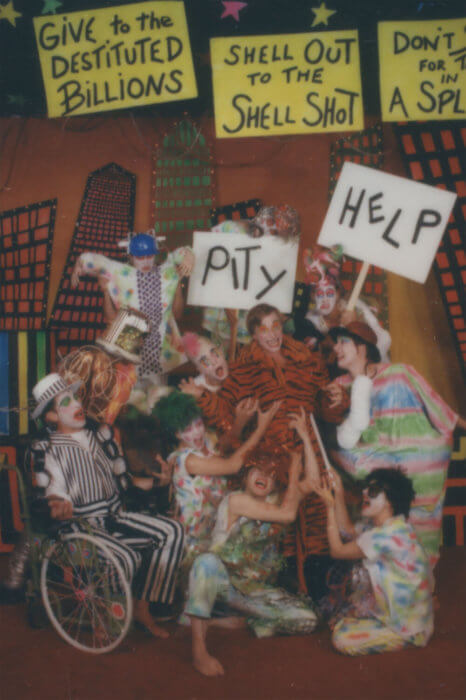
There was actually the material here for a much more fascinating documentary. In going back to trace the origins of Biosphere 2, some intriguing questions are raised. It mostly went back to a man named John Allen, a charismatic, endlessly energetic man who built a community around himself in the late 1960s. Allen, trained as a machinist in the Army Corps of Engineers and educated in anthropology and business in several places including Stanford, had grand ideas about melding multiple scientific and humanistic disciplines in order to create a better society. This society would bring together scientists, tradesmen, and artists to cooperate in order to build whatever they felt they might need to survive, thrive, and fulfil their survival and creative needs as humans. They set up a commune-like area in New Mexico. They actually built their own large ship that successfully launched from a port off the California coast. They traveled to different cities around the world and constructed buildings as contractors. And all the while, they would engage in free-flowing artistic performances, such as original plays, improvisational activities, primal screaming, interpretive dances, or whatever else they dreamed up. All of this was under the eye of founder John Allen. Early on, they had actually come into contact with famed American architect R. Buckminster Fuller. Fuller had conceived of the concept of a "geodome," in which humans could survive without any contact from the outside world. Allen's group toyed with this over the years, and eventually found the financial backing to bring it to life. Hence, Biosphere 2's construction and the media storm around it in the early 1990s.

John Allen's "Merry Pranksters"-style
group of devotees doing one of their stage
productions. This was a rather odd crew
of folks who I had far more questions
about than the film answered.
Again, there's a lot of interesting stuff happening here. The problem for me was twofold: First, there were so many unanswered questions about John Allen, his close associates, and their projects that are never fully or clearly answered. The documentary never fully explains exactly where or how the various members of the commune learned their trades, and we don't know where the funding for their various and sometimes-large-scale projects came from in their early years. Then there are just questions about what life was like on a daily basis. I think most people, upon hearing the description of Allen and his group will inevitably think "cult," and the show doesn't do a whole lot of close analysis on this question. It is raised a bit later in the movie, but not with enough rigor in my view. Secondly, there is an overall lack of outside perspectives on everything about Allen, his group, and their projects, including Biosphere 2. The overwhelming number of the views expressed are from Allen, his friends or associates, or the actual experts who became the biospherians. In other words, almost all people whose bias is going to lean heavily towards defending the project and the group behind it. Getting some sober, objective viewpoints from credible people who were critical of the project would have helped balance things out more, as any good documentary should do.

In a more general sense, I came away from this documentary sort of shrugging my shoulders and almost asking "so what?" By the show's end, it was clear that too many questions were raised about Biosphere 2's scientific legitimacy for it to feel like any massive loss for humans' knowledge. And not enough evidence is presented to contradict the notion that Biosphere 2 was much more than an ego-driven project for Allen and a few wealthy financial backers. In short, while I was curious about several elements covered in the documentary, I'm never given enough information to care all that much about any of them.

Maybe the simple fact is that the subjects themselves - from Allen to the commune to the Biosphere 2 project itself - just weren't nearly as intriguing as we might be led to believe. But I actually felt that there is probably a more fascinating story to be told; it's just that Spaceship Earth didn't do the best job of telling that story. 

Sunday, March 15, 2020

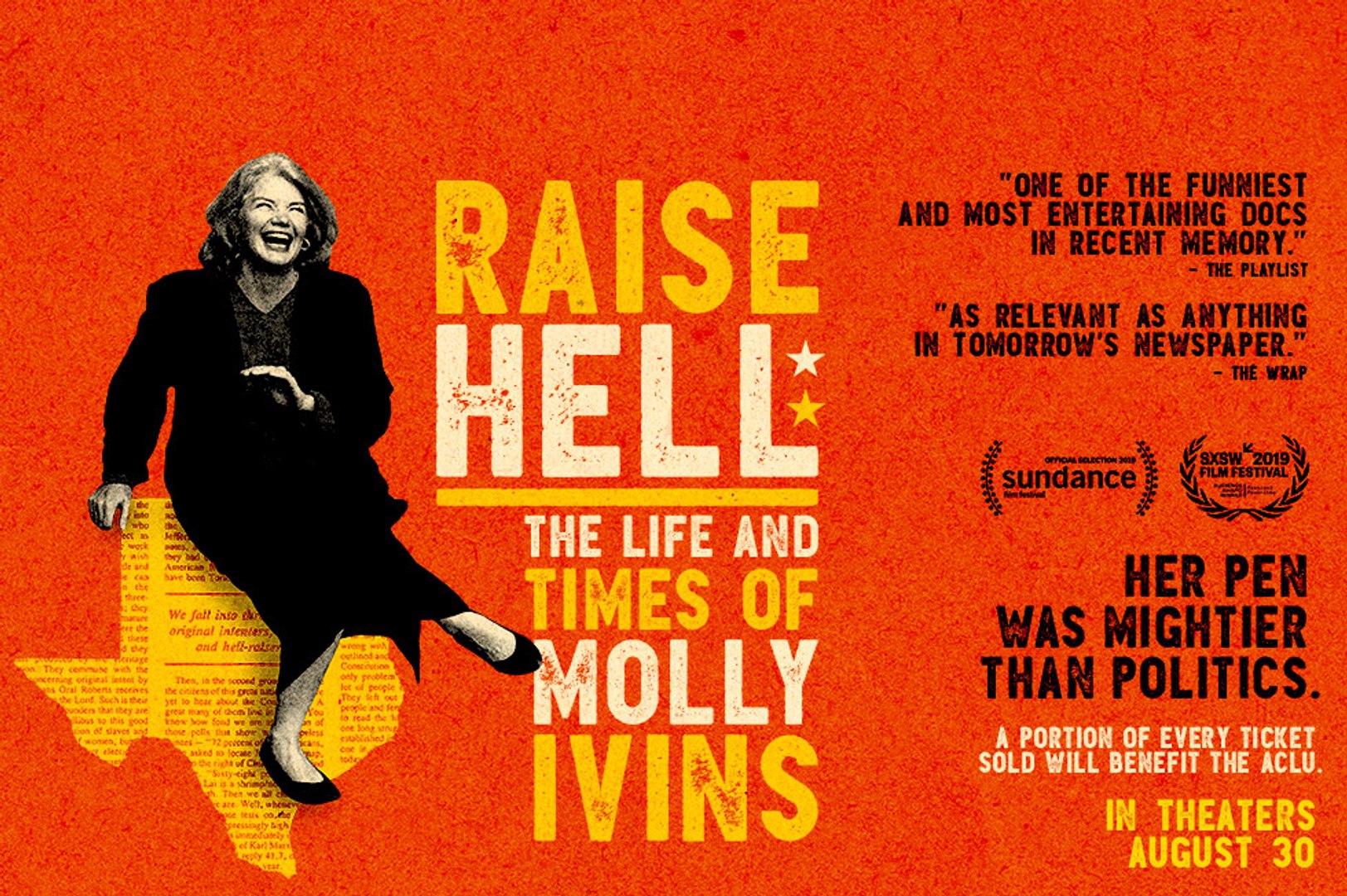
Raise Hell: The Life and Times of Molly Ivins (2019)

Director: Janice Engel

Excellent documentary on a Texan original, political journalist Molly Ivins.

I remember getting acquainted with Molly Ivins back in 1999, when I was working the cash register at the Barnes and Noble bookstore in College Station, Texas. It was a really slow night, and I picked up her book "Shrub," which was her rather scathing reporting on then-Texas governor/soon-to-be president George W. Bush. It was erudite, ruthless, and hilarious. And after watching Raise Hell, I realized that those same three adjectives described Ivins herself.

There are very few people who really are memorable characters and wordsmiths in the great American tradition. Alexander Hamilton. Thomas Jefferson. Mark Twain. And while Molly Ivins may not have quite reached the heights and reach of those titans of the written word, she wasn't far from it. She was big (literally and figuratively), bold, and brash in all of the best ways. So when she settled in Texas, bringing her immense intelligence, acumen, and wit, it was a perfect fit.

This documentary pulls together a ton of great testimonials from friends, colleagues, high-level politicians, and even a few of the adversaries who ended up in her cross-hairs. They all paint the portrait of a person who was scary smart, had firm ideals, and could drink any other three people under the table.

Any description of such a person will always beg the question, "Were they really like that, or are we just embellishing the life of one deceased." Well, since Ivins was around in modern times and was publicly successful, there's plenty of video footage of her so that you can judge for yourself. The video clips of her opining at conferences, on TV news shows, and during interviews makes for a great compilation of her excessively witty, articulate, and sometimes downright vicious manner.

People who didn't grow up in Texas, the Southwest or the South may be less familiar with Ivins. But I guarantee that when they see this, they will be very likely to ask themselves why they hadn't heard of her before this. When you see the figures she boldly (and almost always righteously) skewered and got reactions out of, you'll wish she had lived much longer than she did. And given just how relevant her perspective and notions still are today, hers is a viewpoint and talent that is sorely missed. 

Monday, January 13, 2020

Documentaries! Fyre (2019); Fyre Fraud (2019)

It's happened several times in movie history that there are two films of the same genre, on basically the same subject, released within a few months of each other. Think Dante's Peak and Volcano in 1997. Or The Prestige and The Illusionist in 2006. These things sometimes happen. But I can't recall a time when two documentaries covering the exact same bizarre event were released in such close proximity. But this is exactly what happened when two documentaries detailing the disastrous Fyre Festival, which happened in spring 2017, were both released within four days of each other, earlier in 2019. The wife and I were curious, so we watched one. We only grew more curious, so we went ahead and took in the other the following week.

As you would guess, the topic and a fair number of the details covered are the same in both documentaries. They trace the basic story of the Fyre Festival - a music festival hastily thrown together as a means to lure wealthy, image-obsessed young people to an island in the Bahamas for what was supposed to be "the next Coachella." It aspired be the trendiest, most exclusive festival of the future. The stated, greater purpose of all of this was to promote a new website and phone app - the Fyre app - which would allow people to find and book top-level entertainers for various social functions. What the Festival became was one of the most infamous and poorly-executed scams in recent history.

The basics of how it all devolved into disaster are as follows: a young "entrepreneur" named Billy McFarland had a big idea. McFarland had been making what seemed like massive amounts of money through a specialty credit card in New York City. Several years after the rather short-but-lucrative life of the card, it became clear that it was a scam that not only gave McFarland the appearance of being quite wealthy, but also gave him enough surface credibility to launch the idea for Fyre. Together with hip-hop star Ja Rule and other investors, McFarland had a vision for the grand music festival. While such things normally take years to plan and execute, McFarland and Ja Rule thought they could pull it off in roughly six months. Not only that, but they backed themselves into a major corner by going full steam ahead with an all-too effective marketing ploy on Twitter. The buzz grew at a dizzying rate, as did the number of people - mostly young, party- and image-obsessed millenials - who were paying thousands of dollars to be a part of the spectacle.

As the hype grew, McFarland and the organizers whom he hastily gathered together scrambled to put together all of the countless resources needed to fulfill the promises they had made to their customers. Suffice it to say that not one of their grand promises was met. The greater problem was that they admitted nothing, either to themselves or any of the festival-goers, until the enthusiastic crowds had already flown to the Bahamas, expecting a festival of mind-blowing proportions and ending up in refugee tents, eating two-dollar cheese sandwiches, waiting on promised musical acts who never arrived.

The two documentaries cover mostly the same key plot points in this tale of 21st century, all-American hype and millenial fear of missing out. They do differ, though, on their focus and access to some of the players involved:

Fyre (2019)

Director: Chris Smith

This was Netflix's offering.

Of the two docs, this one does the better job of telling the story of the origins of Fyre and logically walking us viewers through how the disaster unfolded. It also has plenty of self-shot footage of McFarland, Ja Rule, and their gaggle of "organizers" at almost every stage of the preparations, such as they were. It certainly gives you a certain sense of how these guys were going about their business (or not, in several cases), and offers enough for one to form an opinion of their character and approach to business.

I'm certainly glad that I watched this documentary first, as it laid the ground work to better understand the other:

Fyre Fraud (2019)

Director: Jenner Ferst and Julia Willoughby Nason

The strength of Fyre Fraud is the closer access to McFarland, the mastermind behind the entire festival fiasco. Unlike Fyre, the film-makers actually got McFarland to sit down for a one-on-one interview about the entire debacle. It is through this interview that is becomes abundantly clear that McFarland is the classic pathological liar and fast-talking con man who knows exactly how to talk a great game in order to increase his wealth and prestige. That is, as long as nobody is looking too closely at what he's saying or doing. And it is rather clear, from watching both documentaries, that everyone involved with McFarland and the entire Fyre Festival idea was too busy thinking about becoming rich and/or famous to bother truly scrutinizing his pipedream.

While the insight into McFarland's character is the great strength of Fyre Fraud, it is not nearly as coherent as Fyre, in terms of building up the disaster that was the festival. If I had watched this documentary first, I would have had far more questions than I did after watching Netflix's offering.

Final Thoughts

This was really a fascinating moment in modern history, and one that I don't remember hearing about when it unfolded back in early 2017. It is the type of debacle that could only have happened in the current place and time, in the image- and wealth-obsessed culture of the United States, and during the time of unchecked social media pervasiveness. It is honestly such a curious case that both my wife and I still had questions about it all, even after watching over three hours of footage from these two documentaries.

Anyone who thinks they want to dip their toes in the water should do what we did - watch Fyre on Netflix first. If you're still curious, go ahead and watch Fyre Fraud on Hulu. The two, in that order, paint a reasonably clear picture of everything that unfolded and much of the aftermath. It wouldn't surprise me if we get a follow-up documentary in another few years, given that some of the fallout from the entire affair is yet to completely land. 

Wednesday, August 14, 2019

New Release! Maiden (2019)

Director: Alex Holmes

An excellent documentary on something which I knew nothing about - the very first all-woman crew to sail in the Whitbread Round the World yachting race between 1989 and 1990.

The film mostly follows Tracy Edwards, an Englishwoman with a rather turbulent childhood who, at age 24, gathered the world's first all-woman crew for one of the most famous and prestigious boat races in the world. It was a race that takes the better part of a full year, taking the competitors along five "legs," each consisting of anywhere from 10 days up to several months at sea. It's a grueling test of a crew's skills, even in the best of circumstances. But Edwards and her entire crew faced an even stiffer uphill battle just to find funding and respect in a sport that, until that time, had been thoroughly dominated by men and completely all-male crews.

The chronicle of Edwards' family background does a great job of creating the profile of the type of person it might take to accomplish such a feat, though it does not unfold quite how you might expect. There were certain elements in her background that clearly explain how she was able to accomplish what she did, but there are also some massive obstacles and personal demons which she had to overcome to even get into a position to start realistically mustering a crew and a ship for the race. There's plenty of great historical footage of the planning, preparations, and the race itself, but having Tracy Edwards offering her current recollections and reflections on herself and the entire venture is priceless.

Another wonderful thing about the documentary is that nearly every woman who was part of the crew offers current commentary on the entire experience, so you get a great multi-perspective view from everyone. Even better is that the crew was made up of women from various countries: Ireland, England, Wales, the U.S., Germany, and France, and many of them have brilliant personalities that come through in their interviews. While a fair bit of the humor is of a rather dry, British variety, it certainly elicits more than a few solid chuckles and laughs along the way.

Maiden also obliges with plenty of great original footage taken during the preparations and the actual race itself. This coveys some sense of just how arduous the circumnavigation really is, and allows us to see most of those involved, as the story unfolds. The perils of the journey are far more palpable when you're seeing the crew have to forge their way through polar storms and between treacherous icebergs. Ultimately, I was actually left wanting to know more about some of the seafaring aspects of the race, as it is something that I know almost nothing about, but this may have detracted from the primary story of Edwards's and her crew's struggle against the seas and, at times, their own psyches.

Check this one out, if you're at all interested in good documentaries. My wife went in with only a passing interest, but came out fairly amazed at the story and the women involved. 

Saturday, July 28, 2018

New Documentary Releases! RBG; Won't You Be My Neighbor? (2018)

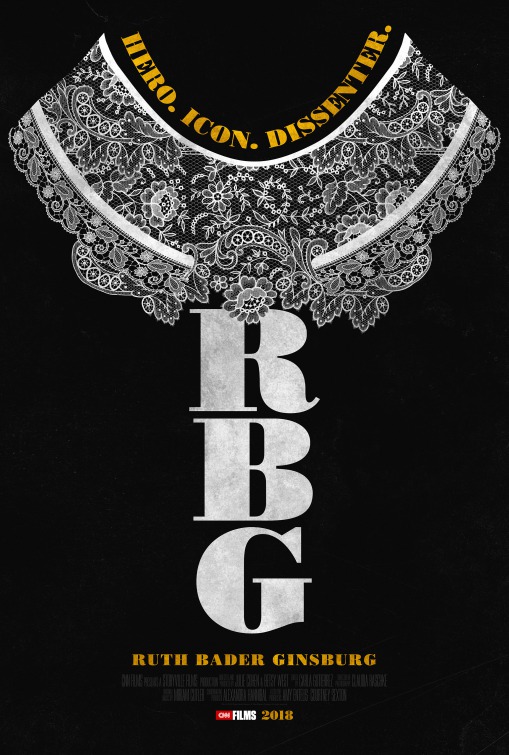
RBG (2018)

A surprisingly engaging and inspiring biopic about Ruth Bader Ginsberg - the now-86-year-old still-sitting Supreme Court Justice.

I went in knowing only so much about Bader Ginsberg. Namely, that she had been on the Supreme Court for a couple of decades, was a champion of equal gender rights, and that she was on the more liberal side of the political spectrum. Little did I know just how impressive her background was, or just how immensely smart and tough the woman has always been.

It would defeat the point for me to list out the fact and details about Bader Ginsberg's life that are fascinating. For that, I would only recommend that you see the movie. Rather, I'll just point out that I had no idea of just how monumental were some of the cases which she brought to the Supreme Court back in the 1970s, or just how intelligent she was, as evidenced in her winning some massive cases that have changed the course of law in the U.S.

Of course, documentaries have to be more than just a list of interesting facts about a person. And RBG has that in spades. By looking at the more recent icon status that Bader Ginsberg has attained and interviewing the many, many powerful political figures who have been her contemporaries, we get a fuller picture of how this relatively quiet, unassuming woman has steadfastly made her strong, thoughtful voice heard over the decades. There are more than a few humorous anecdotes offered, and the pacing and editing of the movie are great.

This is an excellent one, even for those who don't particularly care for documentaries. If you have a shred of curiosity about this country's recent legal history, then RBG should have something for you.


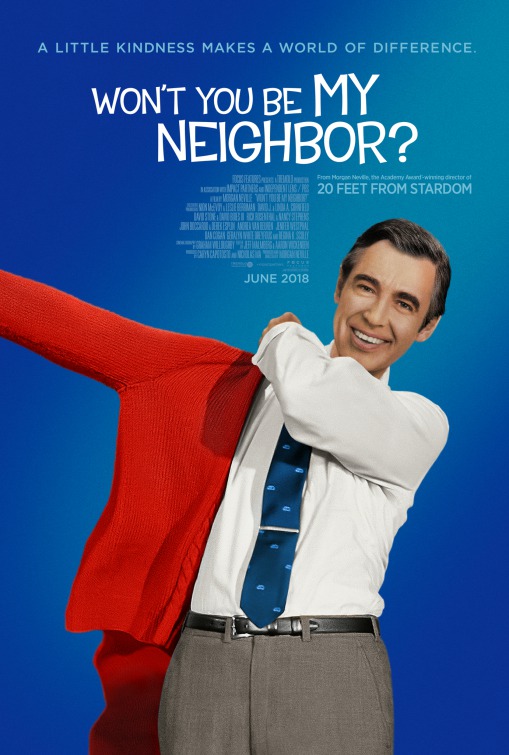
Won't You Be My Neighbor? (2018)

Touching biopic of the unlikely TV icon Fred "Mr." Rogers, whose children show was beloved by children for decades.

I can't speak for Millenials, but I can safely say that anyone in the U.S. over the age of 30 knows all about Mr. Rogers Neighborhood, and it's eponymous and unlikely star Fred Rogers. From its inception in the late 1960s, it was an oasis of calm in a landscape of children's shows which was growing ever more flashy, bombastic, and shallow. In stark contrast to dazzling superhero and rebel cartoon and live action shows, Fred Rogers welcomed children into his fictional house, where the Zen-like figure spoke directly to children about their worries, concerns, and made them feel like someone was listening and understood them. This documentary traces the history of not only the marvelously unique show, but its marvelously unique creator and star.

Just about all of us know the TV show, and Fred Rogers himself has long since become a figure - often esteemed and sometimes mocked and lampooned - of boundless patience and kindness. This documentary certainly covers much of that ground, and the many scenes of Rogers's interactions with other people, especially children, both on and off the show are often amazingly touching. I actually found myself getting choked up several times during the picture, and I'm not one who is quick to tears. Perhaps even more fascinating, though, are a few facts about Rogers and the very early history of the show in the mid and late 1960s. When PBS was facing the possibility of losing much of its funding due to looming federal budge cuts, Rogers single-handedly convinced an extremely hard-nosed congressman to give the public network the millions that they needed. The video of this is worth the price of admission alone. And then there are the socially progressive moves which Rogers made, such as having an African-American man play the mailman character, and going so far as to share a simple foot bath with him - an act that would have little meaning in the 21st century, but was a tremendous gesture in a country where strict segregation was still the rule of the  much of the land. Reminders about such moments on the show help revive my appreciation for Rogers's positive impact on our society.

While I can't say that there were any grand revelations about Rogers or the show, there are certainly some curious and engaging facts about the man and his impact on American culture. This was a solid biopic that documentary fans are certain to enjoy, and those who remember Rogers and his TV show fondly will almost certainly love. 

Wednesday, May 16, 2018

Documentary Fest! The Toys that Made Us, season one Part 1 (2018); Abstract: The Art of Design (2017)

The Toys that Made Us, season 1, Part 1 (2018)

A great trip down memory lane for boys and girls alike who were alive any time between the 1950s and 1990s, but especially Generation Xers like myself.

This Netflix series focuses its documentary lenses on popular, mass-produced toy lines that have had enduring impact on U.S. culture. The plan is for eight episodes, with each one focusing on one particular toy line. In this first part, comprising four episodes, we learn the stories behind the creation and success of the Star Wars, Barbie, He-Man, and G.I. Joe lines. As you might imagine, anyone over the age of 30 or so is likely to have some connection with one or more of these most popular and iconic lines, and these docs each get into the fascinating stories and the minds behind their conception, creation, and their dominance - sometimes very brief and sometimes spanning several decades - of toy sales in the U.S. and sometimes even abroad.

It's a good sign when one even enjoys episodes in a series that one initially thinks will be of little interest to them. For me, the Barbie episode of this series was a perfect example, as were most of the other episodes for my wife. We both watched and thoroughly enjoyed all four episodes. Part of this is due to the fact that, even though we may not have played with every toy covered in the series, were well aware of them. More importantly, the stories behind the toys and the people involved are plenty engaging enough. From the tiny, little-known company Kenner somehow bagging the rights to Star Wars, to the power plays by the women behind the titanic Barbie line, all four episodes contain plenty of fascinating behind-the-curtain looks at what millions upon millions of kids spend countless free hours playing with. My personal favorite episode was that which told the story of He-Man, as the creators were and still are highly amusing characters themselves, on top of the fact that He-Man had an as-yet inexplicable and precipitious drop from the mountaintop of toy line success.

Yes, there's a certain nostalgia factor to this entire series. Still, I feel that it offers plenty beyond the little rush that one gets from recalling their own personal experience and relationships with the various toys covered in the series. I'm highly looking forward to the second part of this initial season, set to release at the end of this month, covering the likes of LEGO, Hello Kitty, Transformers, and Star Trek. I'll be there, to be sure.


Abstract: The Art of Design (2017)

A great series for anyone with the slightest interest in visual arts of any type.

The series contains eight episodes of roughly 45 minutes each, each one focusing on an individual artist who has earned immense respect and success in his or her chosen medium. There is the sneaker designer Tinker Hatfield, graphic artists Christoph Niemann and Paul Scher, care designer Ralph Gilles, and several others from stage and other artistic media. Honestly, I had never heard of any of the eight artists, even though I had seen or was familiar with at least some of their works.

This series is replete with episodes on topics which at first glance may seem uninteresting but which, when you get into them, can dazzle you with the artistry of its subject. The excellence of this series is that, more than focusing on the artist themself - several of whom are quite interesting people - each episode spends much more time on their art. The least interesting topics to me - sneakers and automobiles - were still highly engaging, thanks to direction which brought out the thought, care, and visual artistry that go into the creation of objects which millions upon millions of people greatly value.

One of Christoph Niemann's little weekly
"doodles." They're a small, amusing taste
of a much more immense talent.
My two favorite episodes looked at the works of graphic artist Christoph Niemann and photgrapher Platon. Niemann is a German artist whose works have long been featured as covers of "The New Yorker," along with countless other pieces, large and small, throughout media of the highest prestige. Niemann himself, though a tad subdued, has a sly, wry sense of humor and an absolutely stunning eye for visual creativity. Watching him take the simplest of everyday objects and quickly incorporate them into imaginative forms is incredible. In a different tone, the Greek-British photographer is world famous for his portrait photos - often in black-and-white, and also featured on magazine covers throughout the world. Seeing Platon make genuinely touching connections with his subjects and draw out something essential in their faces is a wonderfully transfixing process. It also illustrates just how much humanity can go into something as seemingly two-dimensional and even remote as a photo.

I can only imagine that there is still an amazing wealth of other visual artists to whom this series' creators could dedicate episodes. As of yet, there has been no announcement that another season will be made, but I truly hope it does. It is a real treat for anyone who has ever dabbled in any visual artform, or even has some sort of appreciation for them. 

Friday, August 18, 2017

Documentary Fest! Lo and Behold (2016); I Am Not Your Negro (2016)

Lo and Behold (2016)

Director: Werner Herzog

A fascinating look at the many aspects and implications of the Internet, though not quite as focused as some of its legendary director's other films and many documentaries.

As he's done with many of his documentaries, Herzog found his muse in his own insatiable curiosity. Wanting to get a better feel for the Internet and its many impacts in today's world, he sought out people involved in its creation and uses, both beneficial and damaging. These include some of the men on the original design team who created the very first servers and connections between California and New Jersey, people whose lives have been crippled by the ubiquity of electronics, people who lay out various doomsday scenarios made possible by our modern world's connectivity, and plenty of other interested parties.

While the width of the net that Herzog casts does manage to catch many people and subjects of interest, it also results in a general lack of any single, driving force or question. One can infer several larger, compelling implications from many of the segments, though there are several that seem more like tangential curiosities. For example, the film will have a section on how a single cyber attack or severe malfunction could essentially wipe out a power grid in much or all of entire countries. Then you will get a segment interviewing a single, addled old programmer rambling on about some wild conspiracy theories that seem to have little bearing on the larger picture. Nearly all of the sections of the documentary are of interest, but to such wildly varying degrees and quality that I felt myself wishing for a bit more cohesion from time to time. It does help that Herzog's unique brand of dry, quirky, dark, and sometimes unintentional humor can lighten the mood from time to time and put his novel stamp on this film as with nearly every other documentary I've seen of his.

Given that the Internet is arguably the single most powerful tool created by humans and that it is not going anywhere in our lifetimes, this is certainly a documentary worth checking out. It doesn't have the focus or power of some Herzog docs like Grizzly Man or Cave of Forgotten Dreams, but it does allow us to follow the man's ever-inquisitive and refreshingly unflinching trains of thought.


I Am Not Your Negro (2016)

Director: Raoul Peck

Captivating look at genius American author James Baldwin and his views on race relations and what it means to be black in the U.S.

The documentary is focused on Baldwin, a gay African-American man who was one of the more influential authors and civil rights critics for most of his life, primarily between the 1950s and 1970s. While Baldwin achieved high praise for his stories and novels at a relatively young age, he was just as talented and passionate a lecturer and debater - skills which he put to work by befriending and helping such civil rights leaders as Medgar Evers, Malcolm X., Martin Luther King, and others.

I Am Not Your Negro traces all of these major elements of Baldwin's life solely through the man's own writings. Instead of commentary from associates, professors, or the filmmaker himself, the documentary lets its subject speak for himself. This was a wise decision for director Raoul Peck, given just how brilliant, articulate, thoughtful, and poetic James Baldwin was. There is a richness to the man's thoughts and words that demands close attention and multiple exposures. There really was nobody else who could have explained his experience as a black man in this country better than Baldwin himself. Enhancing the narrative are the many photos and video clips of Baldwin on late night talk shows, in college lecture halls, or in public debates over the question of race, racial inequality, and the ugly history of African-American abuse in this country. It's one thing to hear the man's moving and impassioned words read to you by a subdued and solemn Samuel L. Jackson (who did a phenomenal job here), but seeing Baldwin's facial expression and physical postures and movements adds a strength to the man that can be missing from mere text or sound bites.

Further elevating this documentary above many of its ilk is how director Raoul Peck regularly intersperses video from modern times to reflect the ways that many of the social ills which Baldwin witnessed are still present in this country today. A segment focusing on Baldwin's writings on the horrors born of racism has equal modern impact when heard over video clips of African-Americans being beaten or killed in the 21st century, making it all the more clear that we are far from beyond such disturbing problems.

Had it not been for the amazing documentary O.J.: Made in America being released last year, I feel that I Am Not Your Negro would have won the Academy Award for best documentary. It is of the highest caliber, and it is one that everyone should watch at least once. 

Sunday, April 30, 2017

Before I Die #600: Citizenfour (2014)

This is the 600th movie that I've now seen out of the 1,187 movies on the "Before You Die" list that I'm gradually working my way through. 

Director: Laura Poitras

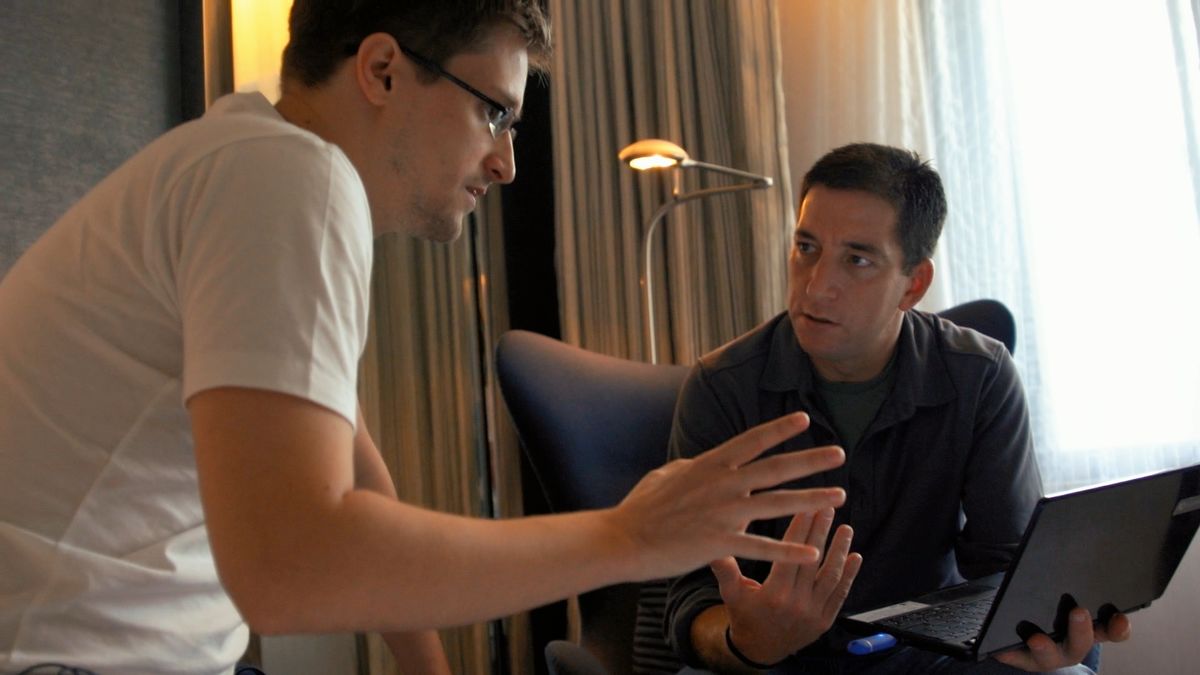
Snowden explains some of his massive secrets to journalist
Glenn Greenwald. The immensity of Snowden's story builds
as the documentary progresses, even if some of the techno-
jargon can be a bit of barrier at times.
An incredible documentary that has the kind of first-hand, in-the-moment access that very few documentaries capture. Of course, the larger issue is the still-highly-relevent subject of U.S. government surveillance of its citizens and the world at large.

Before watching this, I had only a passing knowledge of the entire Edward Snowden affair. I knew he was a whistleblower on the National Security Agency (NSA), that he had revealed just how deeply into citizens' information trails the NSA had been digging, and that he has since been on the run from extradition.

This movie offers an incredibly and possibly unprecedented first-hand, real-time look at a person blowing the whistle on a massive system which he feels is unethical. Imagine if we had actual footage of Woodward interviewing Deepthroat? Or live film of the first time Jeffrey Wigand talked with people from 60 minutes about his inside knowledge of the Phillip Morris tobacco company? Well that's what we get with Citizenfour, in a hotel room where Snowden was holed up and beginning to share his top-secret knowledge to documentarian Laura Poitras and journalist Glenn Greewald, among a few others. This aspect of the movie alone makes it rather gripping, given how personal privacy and security are still, and will continue to be, highly relevent topics.

I must say, however, that director Poitras could have done a better job helping out some of us lay-people a bit more. The film gives some rudimentary information about Snowden, his job, and the other people involved, but it doesn't offer enough. I understand that many of the great documentaries simply let their human subjects speak for themselves, with little to no interference from the filmmakers. However, this should not be the case when the subject matter is a bit more arcane or technical. Such is the case with this film, which covers topics of cryptography, technology of the highest order, and much of the jargon that goes along with such heady topics. We viewers are offered very little in the way of explanations or definitions of some of the slang which Snowden and even the reporting journalists know and understand. On top of that, we get email exchanges between Snowden and Poitras, some of which are relatively clear and engaging, but others of which are difficult ot decipher. I seem to recall that one of the criticisms of this movie when it was released was a sense of self-importance on the part of the filmmakers, and I can see what those critics meant. It can occassionally seem as if Poitras assumes that viewers should already be aware of and familiar with her plight and the issues of privacy and security which Snowden is dealing with. The result is that some aspects of the movie can be vague and frustrating.

Still, it is easy to see the struggle that Snowden is going through. He is still and will probably always be a controversial figure. However, when one watches this movie, one cannot doubt that he knew full well what he was giving up by sharing his secrets with the world. His entire life was turned upside down. He knew it would happen, but his ethics compelled him to action. Seeing this unfold with such grand consequences is a very rare thing, and it is one that is worth watching for everyone.

That's 600 movies down. Only 587 more to go before I can die. 

Tuesday, April 25, 2017

Documentary Fest: Mike Tyson: The Undisputed Truth (2013); OJ: Made in America (2016)

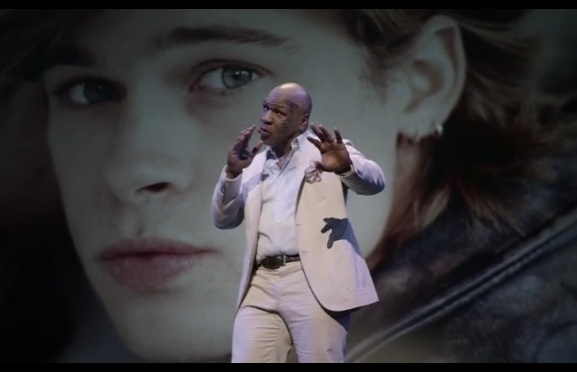
Some of the best moments are when Tyson is recounting his
moments as a boxer- the profession in which he achieved
historic greatness.
Mike Tyson: The Undisputed Truth (2013)

Director: Spike Lee

OK, so technically this isn't a "documentary," but I don't often review recordings of Broadway shows. This category seems to fit as well as any.

Not long ago, I did post on the documentary Tyson, which was released a couple of years before The Undisputed Truth. In that post, I describe how Tyson has always been a  rather fascinating figure to me, as an unstoppable boxing force of nature when I was a kid, right up through all of the troubling and bizarre trials and tribulations that would dog him for the decades following his loss of the heavyweight title. So I was surprised that it took me so long to get around to watching the one-man show that he put on several years ago on Broadway.

The Undisputed Truth can be a somewhat strange viewing experience that is likely to be enjoyable for fans and supporter of Tyson but probably won't win over any new supporters. In fact, there are some segments of the show that emphasize some of the less appealing aspects of Tyson's nature which he seems to still harbor.

The show is built around Tyson giving his autobiography while on stage, with visual images projected behind him onto a large screen. He start with his birth and covers many of the major turning points of his life, both in his historic boxing career and in his infamous and well-documented
When Tyson gets humorous, such as when he recounts his
first meeting with a very young Brad Pitt, the comedy some-
times gets unintentionally awkward.
personal struggles. For much of the show, Tyson doesn't lay blame for his failings anywhere but with himself. There are, however, some moments when he intentionally lapses back into the ultra-macho, street fighter mentality when recounting more barbaric encounters like his admittedlly humorous run-ins with Mitch "Blood" Green. Green was a former heavyweight fighter and notorious meat-head whom Tyson pummeled both inside the ring and outside of the ring, the latter tale is one which Tyson clearly relishes in telling. It's one of a few stories that are meant for pure comic effect, and it does work to an extent. There are times, though, when the humor didn't hit, at least not with me. When he tells of seeing his ex-wife Robin Givens riding around with a very young, up-and-coming actor named Brad Pitt and says that he didn't know whether "to fuck him or fight him," it smacks of the type of unsavory machismo that doesn't appeal to me. In moments like this, he was clearly playing to his crowd, which was composed of no small amount of NYC locals who are obviously in his corner.

Many other segments of the show are more serious in tone, as Tyson speaks of his rape conviction and the accidental, freak death of his young daughter. During these moments, there is a vulnerability to the man that is what has often made him a deeper and sometimes more tragic figure than many people have admitted. Anyone who has really listened to Mike Tyson, going back many years, could see that there was more to him than just a thug who was one of the greatest boxers of all time. Amid the mental chaos that he experienced (he has long since admitted suffering from clinical mental disorders) was an intelligent and often even thoughtful and empathetic person. These things can and do shine through at times, including in this one-man show.

While I wouldn't recommend it to everyone, those with the slightest curiosity about Tyson will likely find something of interest in the performance.


O.J.: Made in America (2016)

Director: Ezra Edelman

Incredibly brilliant, deeply disturbing, and immensely informative. These are what documentaries can be, when done with a broad persepctive, in skilled hands.

Like many, when I heard about this documentary, I presumed that it was another barely-necessary rehashing of one of the most infamous celebrity court cases in the history of the United States. I expected a simple rundown of the murder case, done in an almost Law & Order style summary palatable for the morbidly curious. What we all got, though, is an in-depth study of the making of a celebrity who put his immense charisma and skills as an athlete to his own purpose of transcending race and repressing his own background. It also ties all of this together with the larger and vastly more uncomfortable topic of race relations in the United States, in Los Angeles in particular.

At this point, any American over the age of twenty knows the basic O.J. Simpson story. He was a superstar athlete who achieved phenomenal glory on the football field in the 1960s and '70s. He also expanded into being a highly successful endorser of various big-name products, and even had a notable acting career. In 1994, though, he was arrested for the brutal murder of his separated wife and her then-boyfriend. O.J. would go through a bizarre apprehension and trial, which resulted in his acquittal, despite the fact that evidence strongly suggested his guilt. He went free, but his life would spiral in odd ways, until he was again arrested in 2007 for a gang-style show of strength aimed at reclaiming sporting memorabilia which he believed to have been stolen from him. He currently remains behind bars.

Those are the bare bones of the tale, and it's one that has been recapped hundreds, if not thousands, of times in the last decade. What director Ezra Edelman did with O.J.: Made In America was to look at the larger picture surrounding such a singularly tragic story. While weaker documentaries work hard to paint a very particular and often biased picture based on the director's subjective vision, the very best documentaries reveal truths which are much more difficult to argue against. Edelman crafted an excellent film that reveals much about American society and the nature of especially narcissistic and self-obsessed individuals. The focus begins on Simpson at the University of Southern California (USC), where he first attained national stardom as an award-winning running back for their powerhouse football team. Then we shift back briefly to Simpson's childhood in Oakland, where he grew up impoverished in an all-black neighborhood. From that moment, the film shifts back and forth, between O.J.'s rise to and through superstardom and the larger conflicts between the poor black community in Los Angeles and the L.A. Police Department. As one gains a larger understanding of that societal conflict, the seemingly illogical attitudes of certain groups during and after the murder trial become far more comprehensible.

Simpson and his attornies react to the verdict that polarized
the nation like few, if any, ever have. The full context around
the decision and reactions offers a fascinating and
disturbing look at the darker aspects of the American soul
and the human condition.
Beyond the most important facts that the film illuminates about race in the U.S. is the fascinating look into the nature of celebrity and narcissism. A theme throughout the entire series is that Simpson was, from an early age, virtually obsessed with appealing to the widest possible audience in order to attain and maintain fame. Seemingly born with dazzling charisma to go along with his physical gifts as an athlete, he was able to charm millions and millions of people not only through his sports and acting careers, but even through and after the horror that was the double murder of Nicole Brown-Simpson and Ron Goldman. Hearing the testimony of Simpson's former friends and associates is highly compelling, if ultimately greatly disturbing. We are allowed insight into the nature of a diabolical character - one who quite literally was so charming that he could get away with murder. And we are not allowed the comfort of forgetting just how horrendous the murder was, with the crime scene photos shown repeatedly. This decision by Edelmen feels completely appropriate, lest we viewers lose sight of the real loss among the peculiar and morbidly fascinating characters that Simpson morphed from and into.

O.J.: Made in America is no small viewing chore. Whereas most of the films in ESPN's excellent 30 for 30 series run between 60 and 90 minutes, this one was released as five separate episodes, clocking in at a grand total of seven-and-a-half hours. Honestly, though, I was hypnotized by it. There wasn't a single aspect or segment of the film that dragged or seemed superfluous. Anyone who enjoys well-done documentaries, even ones that cover unsavory topics, would do well to take this one in. It's a masterpiece. 

Friday, December 2, 2016

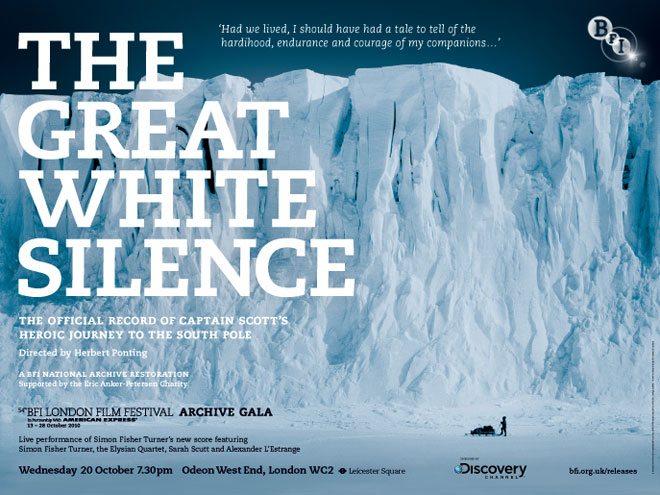
Before I Die #589: The Great White Silence (1924)

This was the 589th movie I've seen from the 1,187 films on the "Before You Die" list that I'm gradually working through.

Director: Herbert G. Ponting

Full disclosure right off the bat - technically, I didn't exactly watch the original 1924 version of this film, since I really couldn't track down a copy of it. The explanation is folded into the basic summary:

Way back in 1910 and 1911, famed English explorer Sir Walter Scott set out to lead the first team of humans to reach the South Pole. To document it, he hired film director Herbert G. Ponting to join the arduous journey, filming as much as he could for posterity. He tagged along with the team right from their departure from the shores of England, right on down to Antarctica and even a fair way into the mainland. During the final days, though, it was only six of the most seasoned explorers who would travel to the actual pole. Ponting and the rest of the support team saw them off and then returned to their headquarters on the Antarctic coast. They would later find out just how doomed Scott and his team were. While they did reach the pole, they discovered that they had been beaten by a Norwegian team led by Roald Amundsen. Adding the ultimate injury to this insult, Scott's entire team was overtaken by the elements and all died on their return trip to their base camp.

When Ponting and the remainder of the failed expedition team returned to England, Ponting spent a few years editing all of the footage he had shot during the long and arduous journey. He first released his edits as short films to the British public. Then, in 1924, he released a 112-minute single silent film. After the advent of sound came around several years later, Ponting returned to the movie and added his voice-over narration. It is this latter version which I saw.

While the documentary can be a tad dry from time to time, it is fascinating as extant proof of one of the most daring and tragic attempts in human exploration history. Being able to see the men who tried, failed, and some of whom even died, has a power that no book or article can provide. For that alone, the film still has and will likely always have an irrevocable strength. And when the narration turns to reading Scott's final words, written in the journal he was keeping right up until his death, it has an effect which no dramatization could match.

That said, the dry or dull portions can tax one's patience. Having been released in a time when moving pictures still were relatively fresh, many scenes are merely of the crew doing mundane chores. I imagine that in the 1920s and '30s, the viewing public was still gripped by these, as they had never been seen before. For those of us in the 21st century now, in the wake of the amazing advances in nature and exploration cinematography, the images and scenes in The Great White Silence are unlikely to excite. As an example, there's a good five minutes spent just on showing penguins waddling around, with the narration adding very little to spice things up.

Hardly the most comfortable of conditions, to be sure. Such a
trek would be arduous with even 21st century equipment. I can
only imagine how tough and driven these guys were to try it
with the rudimentary tools they had.
I can't write about this film without bringing up a major point of discomfort of the type which is often a possibility with older films. During one scene, showing a few of the crewmen playing with their "mascot" black cat, Ponting's narration tells us the cat's name: Nigger, which Ponting himself cheerfully announces a couple of times. Ouch. It's never fun to get a full-on racist punch to the gut like that. Reminding yourself that "those were different times" really does nothing to take the sting out of hearing such backwards thinking about race. Blessedly, this is really the only instance of this in the film, and it is over very quickly.

This film was obviously a great step forward from films like Nanook of the North, which would later be discredited for manipulating the actions in ways that disqualify it from being considered a truthful "documentary." Ponting's film seemed to stay truer to a historian's goal of capturing rather than creating significant events. It's a worthwhile watch for anyone with a bit of interest in the history of documentaries or the history of exploration.

That's 589 movies down. Only 598 to go before I can die. 

Friday, March 18, 2016

Documentary Fest!! Jaco (2015); The Great Wing Hunt (2013); King of Arcades (2014)

Jaco (2015)

Directors: Stephen Kijak and Paul Marchand

I'm always fascinated by genius in its various forms. The documentary Jaco is a very well-done study of the life of the singular musical genius John "Jaco" Pastorius, the man who many great modern musicians consider the greatest electric bass player of all time.

I had never heard of Pastorius. Fortunately, the documentary is accessible to someone like me, as it provides solid background about Jaco's early life growing up in south Florida. We get to see how he grew up around music, and how this sparked his innate facility to translate his thoughts and feelings into music. Before he was even 20 years old, Jaco was already a known and sought-after talent among jazz musicians who were morphing the style into more modern forms. The documentary includes an amazing quantity of testimonials from some of the biggest and most-respected musicians from the last 40-odd years. It's one thing to hear about a person's genius from his close friends. It's another to hear about them from John Coltrane, Sting, Carlos Santana, Herbie Hancock, Miles Davis, Flea, Joni Mitchell, and other titans of music.

As many such stories go, Jaco's had a sad ending. He died at the tragically young age of 35 years old. While it was not the result of a malignant illness, Pastorius did suffer mental disorders that were perhaps hinted at earlier in life. Eventually, his condition became severe enough that it had drowned out his immense musical talent. It is ultimately a tale of the fine line between genius and insanity, not unlike other well-known tales like that of David Helfgott, Syd Barrett, or Brian Wilson.

This film tells Jaco's tale in a compelling way, for the most part going chronologically through his rise to and fall from prominence in the musical world. Along with the numerous interviews with Jaco's collaborators and copious concert footage, there is an amazing amount of home video. These latter portions help humanize a man who might otherwise be considered a more mythical legend, rather than a rounded person who laughed, joked, and played with his children. Such images drive home the tragedy of Pastorius's ultimate fate.

One of the great takeaways of any great music documentary is the discovery of music which you may have never heard before. This is definitely the case with my experience with Jaco. While I had heard of several of the bands and musicians in the film, I was not terribly familiar with their music. I found much of what I heard in the movie very appealing, though, and I have already started listening to some of Pastorius's solo albums and his work with The Weather Report. This documentary is already enhancing my appreciation for music which I had never before considered.

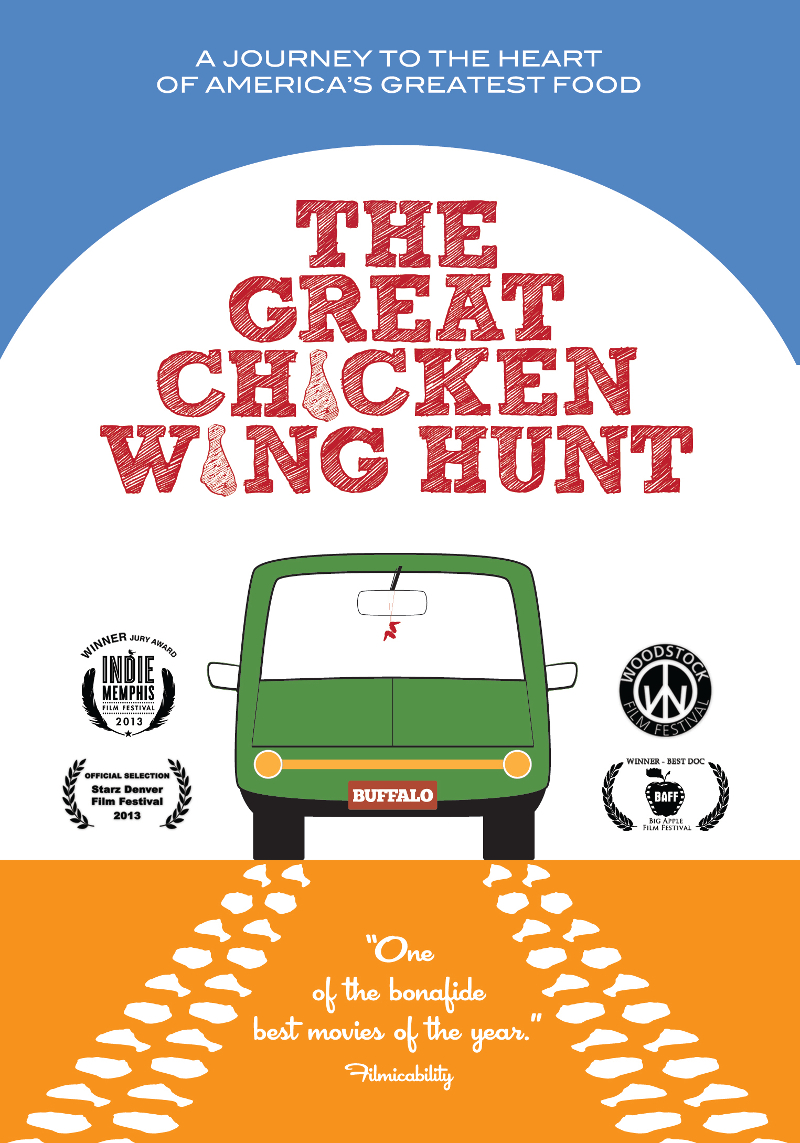
The Great Chicken Wing Hunt (2013)

Director: Matt Reynolds

I had every intention of only giving this movie about 15 minutes of my time. Imagine my surprise when I gladly watched the entire thing.

While I appreciate a good Buffalo-style chicken wing, I am far from an aficionado. Despite this, The Great Chicken Wing Hunt was great fun to watch. It follows Matt Reynolds, an American journalist with a passion for wings. Reynolds lived and worked in Slovakia, where he introduced many of his local friends to Buffalo wings. His work didn't stop there, though. Reynolds became possessed by the idea of finding the best Buffalo wings in the "Wing Belt," the area around Buffalo, New York, where many cooks take great pride in their wing recipes. Reynolds quit his writing job, rounded up several "wing experts," hired a camera crew from among his Slovakian friends, and went on a three-week marathon of wing consumption that would put most people in the hospital with congestive heart failure.

The group of wing experts is a colorful bunch, consisting of several oddballs with rather large personalities. Their enthusiasm can be a joy to watch, even for those of us who are nowhere near as picky about what amounts to cheap pub grub. The Slovakian team, while dedicated and skilled videographers, exhibit hilarious reactions to Reynolds's quirky dedication to his goal, which often confounds them. The interplay between the different groups is alone worth viewing.

This documentary is not a major commitment. In a concise 71 minutes, we get the history of the Buffalo wing, the entire journey of Reynolds's group, and their final decision on the best wing in the country. We also get Reynolds's relationship with his ever-so-patient girlfriend, who deals with the stress of going along with such a bizarre journey. All of the stories come full circle, making for a very satisfying viewing experience. Don't be surprised if you come away with a serious hankering for some good chicken wings.


King of Arcades (2014)

Director: Sean Tiedeman

Low-budget, local documentary with a fairly limited appeal.

King of Arcades is a blend of self-promotion and love letter to classic arcade games.

Produced by its subject, Richie "Knuckles", this documentary traces Richie's love of classic console arcade games, from his time as a child of the 1980s up to the current day. The documentary spends a nice amount of the first half hour or so laying out the history of arcade games. For someone like me, who has always loved such games, this was as compelling as anything else in the movie. The filmmakers did nab interviews with some of the heavy hitters in the history of arcade gaming, which makes these sections worthy entries into the documented history of this modern phenomenon of entertainment.

The rest of the documentary focuses on Knucklez himself, who is of moderate interest, but perhaps overvalues just how fascinating he is. His background as a hardcore rock singer adds a bit of spice, but is hardly the stuff of supreme curiosity. Seeing him track down and refurbish old consoles, while not exactly gripping, does illustrate his deep love and commitment to the games with which he stocks his arcade in western New Jersey.

King of Arcades is probably about 15 to 20 minutes too long, and it suffers from a touch of narcissism. Still, it's worth watching for fans of old-school arcade games. It also profiles a nice go-to arcade where they still know what old-school gamers like. 

Monday, December 7, 2015

Documentary Series Review: ESPNs 30 for 30 (2009 to present)


I'm a maniac for sports, and I love good documentaries. It follows that ESPNs massive 30 for 30 series of sports documentaries done by different directors on a vast range of topics would appeal to me. Over the past several years, I've seen nearly every single one of the seventy-three films released, and the series as a whole has been excellent. It would take an insanely long post to go over the individual films, but here are the highlights and lowlights as I see them. You can assume that any of the films not specifically mentioned are quite good, if not my absolute favorites.

30 for 30 Volume I (2009 to 2010)

Highlights:

The Legend of Jimmy the Greek. This chronicles the rise and fall of the man who brought sports betting to the national consciousness of the United States. Jimmy was a street guy with a knack for picking winners as a young man, and he created and sold his own persona to a national audience on one of the very first sports talk TV shows in the 1970s. It's a gripping look at the rise of sports gambling, a man in the middle of much of it, and how a racially insensitive, though scientifically logical, remark began his fall out of public acceptance.

The U. Following the Miami University football program's rise to national dominance during a time when college sports was just becoming a cultural and commercial juggernaut. The football part of the film is interesting enough, but the connections between the players, the program, and the local Miami community make this a study of social values as much as sports fandom.

Miller's antics used to drive me nuts.
This doc showed me just how funny
he was, though.
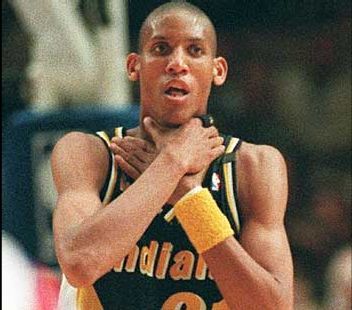
Winning Time: Reggie Miller vs. The New York Knicks. I'll admit it. I mostly love this film because Reggie Miller was a hilarious trash-talker who loved getting under the skins of equally annoying opponents. Miller's recounting of his various scuffles, his inferiority complex caused by being the younger brother to the greatest female basketball player of all time, and his mind-game tactics is endlessly entertaining. Of course, if you simply hate Reggie Miller, you'll want nothing to do with this film. He actually used to annoy the hell out of me during his playing days, but this film helped endear him to me a lot more.

The 16th Man. The powerful story of South Africa's championship run during the 1995 Rugby World Cup, held in their home country. The tale of what this team meant to a country still trying to come to grips with the abolition of apartheid is incredible. Much time is given to then-president Nelson Mandela's connection to the team, and the ways that he viewed them as a source for national healing rather than division. This story was dramatized in the Clint Eastwood film Invictus, which I haven't seen, but I doubt it can be as moving as this documentary.

The tragic story of Andres Escobar made for my favorite
doc in the 30 for 30 series so far. 
The Two Escobars. My favorite of Volume I. This is the tragic tale of Andres Escobar, the brilliant Columbian soccer star who had the horrible misfortune of kicking the ball into his team's own goal during the 1994 World Cup held in the U.S., resulting in his team's loss and unexpected early exit from the tournament. He would then be gunned down by vengeful thugs a few weeks later in Colombia. The film documents the deep and long-running connections between the all-powerful drug cartels and the national soccer league teams in the country, connecting some curious dots between Andres and the "other Escobar" - notorious drug lord Pablo. Fascinating, chilling, and heart-wrenching, to say the least.

Once Brothers. The story of Drazen Petrovic and Vlade Divac, two great basketball players who were friends and teammates on the Yugoslavian men's national team. The team was one of the best in the world, before the country was torn apart by civil war in the early 1990s. This war separated Petrovic and Divac for years, though both went on to play in the NBA. Divac had a very long and successful career, while the supermely talented Petrovic had his highly promising career and life cut short when he was killed in an auto accident in 1993. The film, done with oversight by the NBA, has incurred criticism for its omissions and inaccuracies, but the basics of the story are still very moving, and they show how sports can reflect, connect, or divide the societies and cultures that value them.

Lowlight

The House of Steinbrenner. This whole thing was essentially a puff piece love letter to the New York Yankees. I love baseball and its history, but all but the most devout Yankees fans are likely to find this glossy piece a bit nauseating. You might as well just buy a "History of the Bronx Bombers" DVD set and not bother with this one.

ESPN Presents (Aired from 2011 to 2012)
The film Renee, about a transgender woman who fought for
the right to play on the women's tennis tour, is one of the most
fascinating of the "Presents" series.

These were thirteen other documentaries that were made but not included in Volume I of the series. I've seen all except the two films
Goose and Right to Play. Curiously, nearly every one of the eleven that I've seen is excellent, leading me to wonder why they weren't included in the original volume over weaker entries. The only three that were not outstanding were Charismatic, The Dotted Line, and Roll Tide/War Eagle. None of these was a "bad" film; they just suffer from being in the same group as so many other great films.

Volume II (Aired 2012 to June 2015)

Highlights

Survive and Advance. It mostly follows the North Carolina State basketball team's improbable and amazing run towards the National Championship in 1983. This story is fascinating from a sports angle, but what makes the documentary is how it also tells the story of the team's larger-than-life coach, Jim Valvano. Valvano was a boisterous, funny, endlessly energetic man who practically willed his team to win through positive visualization and faith, rather than the dogged dictatorial style of coaching often associated with high-level athletics. Valvano's eventual losing battle against cancer puts a sad but inspiring note into this tale. I would challenge anyone to watch this whole documentary and not get choked up at some point.

Hawaiian: The Legend of Eddie Aikau. As much an anthrolological documentary as a biographical account, this tells the story of Eddie Aikau, the first native Hawaiian surfer to compete on the world stage in the sport that his ancestors had invented. I had never heard of Aikau before this documentary, but I was enthralled by what kind of person he was and just what he meant to his native Hawaii.

If, like most of America, you had written off Maurice
Clarette (left) as an idiotic thug, then the film
Youngstown
Boys may very well change your opinion.
Youngstown Boys. The tale of two guys from Youngstown. Ohio - running back Maurice Clarette and head coach Jim Tressel - who resurrected the Ohio State football program in the early 2000s, only to have it come crashing down. Like most people, I had last heard of Clarette being put in jail after driving drunk in a car filled with firearms. This documentary paints a fuller, updated picture that I found highly moving. It reminded me not to simply judge a celebrity by the headlines his actions may inspire.

Lowlights

There's No Place Like Home. To date, this is the only 30 for 30 film that I stopped watching before its end. It traces the efforts of a University of Kansas alumnus and basketball fan to raise enough money to allow UK to purchase basketball inventor James Naismith's original rules for the game, written on the original piece of paper. The fan in question has some rather serious priority issues, which are disturbing enough, but once I saw the disingenuous tactic he started to use to hit up wealthy alumni for money, I couldn't stomach the film any more. A hardcore Jayhawk might love the show; the rest of us are likely to find it dull at best and highly annoying at worst. I was frankly surprised that the people in charge of the 30 for 30 series gave this one the thumbs up.

The Day the Series Stopped. This one details the day in 1989 when, right in the middle of game 3 of the World Series of baseball between the Oakland Athletics and San Fransisco Giants, a massive earthquake struck the Bay Area. The film isn't really a terrible one, but it is only loosely a "sports" documentary. It rightfully focuses more on the actual victims of the disaster, but this makes it seem far more appropriate for the History or Discovery Channel, rather than in the middle of an ESPN sports documentary series. This, coupled with some odd decisions in terms of visuals and editing, made this 50-minute film a bit of a chore at times.

ESPN has begun airing its third season of "30 for 30." I'm sure I'll work my way through those, as well, and will give a run-down once they've all been aired over the next few years.

Sunday, September 7, 2014

Retro Trio: The Most Dangerous Man in America (2008); The Triplets of Belleville (2003); Cronos (1995)

The Most Dangerous Man in America: Daniel Ellsberg and the Pentagon Papers (2009)

Director: Judith Ehrlich & Rick Goldsmith

I can't believe I had never heard of Daniel Ellsberg.

Maybe in the mid-1970s, his story was as huge as this film made it out to be. I'm not sure since I was hardly a twinkle in my pop's eye at the time. Whatever the case, this documentary lays out a fascinating tale of personal, internal conflict that has ramifications that reach the highest magnitude.

The original TIME magazine cover that
contained one of the biggest stories
of the 1970s.
The short version is this: Ellsberg was a brilliant strategist and former Vietnam vet who worked for the Pentagon for a number of years. He basically supported the presidential regimes under which he had worked, somewhat blindly faithful that he was doing the right thing. Then, he got the keys to the secret documents. Once he found out exactly what past and current presidents had known and still knew, he started to doubt everything he had previously believed.

Ellsberg's personal struggles are engaging enough on their own. When they are told within the context of a United States in some serious turmoil, they take on much grander significance. This documentary, though now six years old, has timeless themes. By looking at exactly when a person should start to take personal responsibility for wrongdoing, even if it may be a small part of a wrong, this documentary is just what the genre is all about.


The Triplets of Belleville (2003)

Original French Title: Les triplettes de Belleville

Director: Sylvain Chomait

It's weird and I loved it.

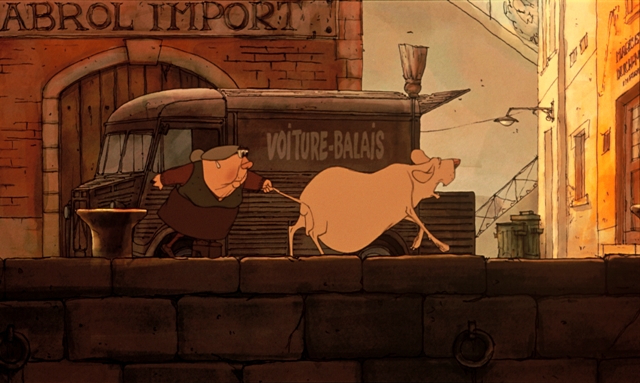
All you have to do is look a still frame from the movie to realize that this is not your typical animated film. The visual style is very quirky, and even jarring at times. Once you start watching, you realize that the film itself is just as idiosyncratic and skewed. The oddity that runs the course of the film is certainly amusing enough, but I'm not one who enjoys oddity for its own sake.

The grandmother and the dog, hot on the trail of their
beloved cyclist grandson. Two of the most endearing
characters you're likely to ever see in a film.
What I enjoyed so much about this movie is how the oddity adds an exotic spice to what is, at its most basic, a traditional tale of love, loss, and recapture. It's the details, though, that are hilariously strange. And there are countless little details to absorb. An old Portuguese woman living in France raises her grandson to be a competitive cyclist. He competes in the Tour de France, but when he falls far behind the leaders, some extremely strange things begin to take place. His supremely dedicated and stubborn grandmother winds up dragging their obese dog along on an odyssey to find the boy, running into no end of bizarre characters along the way.

The best thing? There is no real dialogue to speak of for the length of the 89-minute film. Sure, there are sound effects, music, and some grumbles and gutteral noises made by the characters. But mostly, it is all visual storytelling and humor, from start to finish. This is something that is difficult enough to do for five or ten minutes. To do it for a full, feature-length movie is the very reason the medium exists.

For an animated movie, I doubt that very young children would like all of it, though many would enjoy some of the sillier moments, especially with the dog. Anyone else who has an appreciation for the slightly peculiar and isn't too proud to watch a cartoon as an adult should give this one a watch. It's undoubtedly one of the most unique animated movies you will ever see.

Cronos (1993)

Director: Guillermo del Toro

I'm not exactly a del Toro "fan," but I've certainly enjoyed several of his movies. I really enjoyed the Hellboy films, and I thought Pan's Labyrinth was captivating. Pacific Rim was fun, even if I didn't geek out over it like many people did. I even thought that his earlier film, The Devil's Backbone, was a really novel story that showed some excellent technical skill and narrative creativity.

The kindly Jesus Gris inspects the cronos device, sending
him down a dark and tragic path along which his
granddaughter is courageous enough to follow him.
Going back and watching Cronos, del Toro's very first feature film, was mildly interesting. It's a vampire story unlike any that I've come across. An old antique dealer, Jesus Gris, comes across a statue that encases an intricately-decorated gold scarab. In examining it, the device activates several blade-like appendages which cut into and draw blood from Gris. Soon, Gris learns that the device, known as the "cronos device," was the work of an alchemist in the 16th century. The cronos contains some form of vampiric insect, which not only sustains itself with human blood, but conveys the same immortality upon its host. Thus, Gris begins to show symptoms of vampirism. This is ghastly enough, but also seeking the cronos are an uncle/nephew duo, the former of whom is seeking a cure from a terminal illness.

As with several of his films, del Toro inserts a young child into a place of prominence, which adds an atypical perspective on a horrific set of circumstances. In this case, it is Jesus Gris's granddaughter, whose love for her transforming grandfather becomes his only link to his mortal life. This is the real novelty of the film. Also impressive is the prowess of the cinematography, given that the budget of the film was clearly limited.

Cronos is not a great movie, but it's a decent enough one that gave several strong indications that its creator would be capable of far more when given more resources. 

Saturday, July 12, 2014

Burma VJ: Reporting from a Closed Country (2008)


Director: Anders Ostergaard

This is one harrowing documentary. One that makes me appreciate a great many things that I often take for granted.

Burma VJ is a documentary focused on the 2007 protests in the streets of Rangoon, Burma (presently known as Myanmar) - a large country in Southeast Asia between Bangladesh and Thailand. Though conditions have since improved somewhat, through nearly every decade following World War II and up to the making of this film, Burma was ruled by one of the most oppressive military regimes in the world. It was almost on par with North Korea in terms of how little freedom of speech its citizens were allowed. The only method of getting their stories out was through guerrilla-style street reporting done undercover and at great risk to those video journalists (the V.J. in the title of the movie).

Patched together by the journalists and sympathetic groups based mostly in Oslo, Burma VJ depicts the struggle of the Burmese people to stand in the face of the totalitarian rule of the military and demand a truer form of democracy. It's a situation that we've seen unfold in may countries in the world, especially within the last ten years. Whether it's in Burma, Thailand, or any of the many countries involved in the Arab Spring, the fight of an oppressed citizenry over tyranny has become common enough that we in more privileged countries can often become jaded to it.

That's where a film like Burma VJ comes in.

One of the many images that the Burmese military
government does NOT want outsiders to see - the standoff
and violent reaction to pacifist monks who move for
social justice.
It's one thing to read about it (as I have a few times in National Geographic or the occasional newspaper story about Aung Sun Suu Kyi), but when you see the collage of video footage of the brutality and the average people who stood up it, it becomes all too real. When you see citizens grabbed by thugs and stuffed into waiting government vehicles less then three minutes after they try to criticize the government in public, you truly do start to understand what "police state" and "living in fear" truly mean.

The real meat of this film comes during a time in the protests when the Buddhist monks, usually completely removed from politics due to their beliefs, actually take up the mantle and join the citizens in marching for freedom. Seeing these pacifists and the people who stuck with them through ruthless beatings certainly gave me some perspective. I'll probably think twice the next time I want to gripe about not getting the NFL Network as part of my cable package.

File this one in the same category as films like Waltz With Bashir, The Square, Dirty Wars, and any other documentary about the brutal realities in which many people live. No, you won't "enjoy" these movies, but you really should watch them to have an understanding of just what a large portion of the global population has to live through and fight against. 

Sunday, June 22, 2014

Tyson (2008)


Director: James Toback

Many may disagree, but I think Mike Tyson is one of the most fascinating people of our generation. And this 2008 documentary presents him in ways that illustrate exactly why I find him so.

Between the ages of 12 and 15, I knew of Mike Tyson as nothing less than a force of nature. He was not only the heavyweight champion of the world (back when that title still held a good amount of heft), but he was known for annihilating opponents in the ring. World-class, enormous fighters who had trained for decades would get leveled by this smaller, unspeakable fast, powerful and ferocious kid in less time than it took the viewers to get through their first fight-time beer. The day that he lost his title to Buster Douglas in 1990 was as shocking to me as if someone had told me that the moon had exploded. Tyson's bizarre and tragic decline in the years after that loss have become the stuff of infamy.

At 22, Tyson became the youngest ever to win the
heavyweight title. This began a four-year span in which
he became one of the most dominant forces in sports in
the 20th century.
Tyson's life story has already carried more than one extremely interesting biopic, including the 2002 ESPN Outside the Lines series which focused on him. Of course, Tyson was still a semi-active boxer at the time, so his professional life was not yet finished. This more recent release offers the look back at a man who, at the time, had been three years fully retired from a the sport which he seemed to have been born to dominate.

This more recent documentary offers a more complete picture of a man who, though still only 47 years old, has been all of the following: Brutally poor, neglected and bullied child. Hardened street thug and thief. Repeat juvenile offender. The youngest undisputed heavyweight boxing champion of the world. Publicly (falsely?) accused wife beater. Drug addict. Expert boxing historian. Convicted (erroneously?) rapist. Muslim extremist. Philosopher. Bipolar disorder sufferer. Three-time husband. Father of six. Comedian. Broadway performer.

The story of a person who has been all of these things is interesting enough, but Tyson offers far more. The movie is told almost entirely in Tyson's own words, putting together various narratives, sound bites, and monologues given by the man himself as he recounts, reminisces, and reflects on his deeds and thoughts through his tumultuous rises and falls. And this is the real draw.
Those who mostly know of Tyson through the odd headline or occasional news bulletin about his more outrageous behavior are likely to have long ago labeled him "crazy." Or "an animal." Or things far worse. Such labeling is dismissive and ignorant, as Tyson clearly shows. Mike Tyson always has been, and still is, a strange and sometimes barely-coherent collection of a full range of human traits - rage, sorrow, joy, naivete, regret, profundity, profanity, lust, discipline, chaos, and more. When you listen to his words, often given in an almost-hypnotic stream-of-consciousness method, it is clear that there is intelligence and introspection, fractured and contradictory though it may sometimes be.

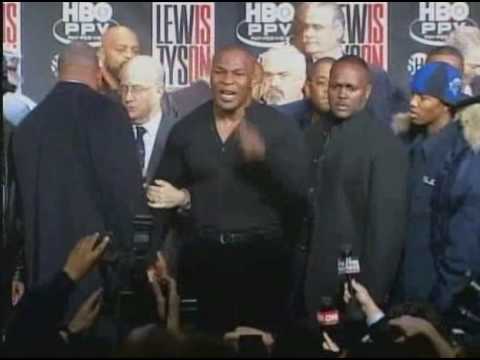
Tyson's infamous press conference meltdown in 2002. One
of many moments put in a different light in the film through
Tyson's narration.
One particular scene comes to mind. In 2002, Tyson was doing a press conference to promote his title fight against Lennox Lewis. During the Q and A, a reporter asked a question that greatly agitated Tyson, at which point Tyson went into a profanity-laced rage, nearly physically assaulting the reporter. When seen on its own merit, it seems very easy to come to two conclusion: (1) Tyson could have literally killed this man with his bare hands if his entourage hadn't held him back. (2) Tyson was a wild dog who would attack if he felt the slightest bit disrespected. However, the 2008 Tyson explains it differently. He calls himself "terrified" of people at that time. Once you hear him say this, some subtler details of the tirade become clear. His voice is cracking while he screams. He is actually on the verge of tears as he yells, "You wouldn't last two seconds in my world!!" From Tyson's own narrative of this event, it's clear that he is not talking about the realm of fighting, but the realm of his own mind. At that point in his life, his demons had been consuming him from the inside for nearly two decades. Hardly an enviable condition, especially when the person has moments of lucid introspection that offer the pain of awareness. Tyson offers this type of illumination several times.

It's hard to imagine another person even remotely like Mike Tyson coming around in my lifetime. This film may not be the exhaustive, definitive documentary about him when it's all said and done, but it offers the best first-hand account of the people and events that shaped him. Completely worth checking out for those interesting in boxing, sports, psychology, or just fascinating people.