Showing posts with label Australian films. Show all posts

Saturday, October 21, 2017

Retro Duo: Idiocracy (2006); The Babadook (2014)

Idiocracy (2006)

Director: Mike Judge

Flawed but still funny, semi-forgotten work by one of the great comic minds of our generation.

Mike Judge has a rather singular place in American humor. As the creative mind behind Beavis and Butthead, King of the Hill, and the more modern Silicon Valley, he has shown to be a distinctive voice by tapping into elements endemic to recent generations of the denizens of the U.S. and mining them for comic gold again and again. He also gave us Office Space, the cult hit that to this day, nearly two decades after its release, is perhaps the defining parody of cubicle culture.

Back in 2006, Judge wrote and directed Idiocracy, which was something of a departure from his comfort zones. Instead of lampooning dumbed-down pop culture or office hell, he went for a full-on satire in the form of future dystopia. The story follows Joe Bauers (Luke Wilson), a completely average guy (yes, this makes him an "Average Joe." Get it?) who happily does his meaningless job as an army librarian. Joe is selected for a military experiment in suspended animation, along with a prostitute, Rita (Maya Rudolph), which goes awry and leads to Joe and Rita emerging from their cocoons 500 years into the future. When they awake, they find that the world has been overrun by all of the worst elements of human nature, turning earth into a nightmare of corporate ubiquity and a population too stupid to deal with even the simplest problems. The previously-average Joe, however, is now literally the smartest man in the world, leading the population to turn to him to solve all of their many massive problems.
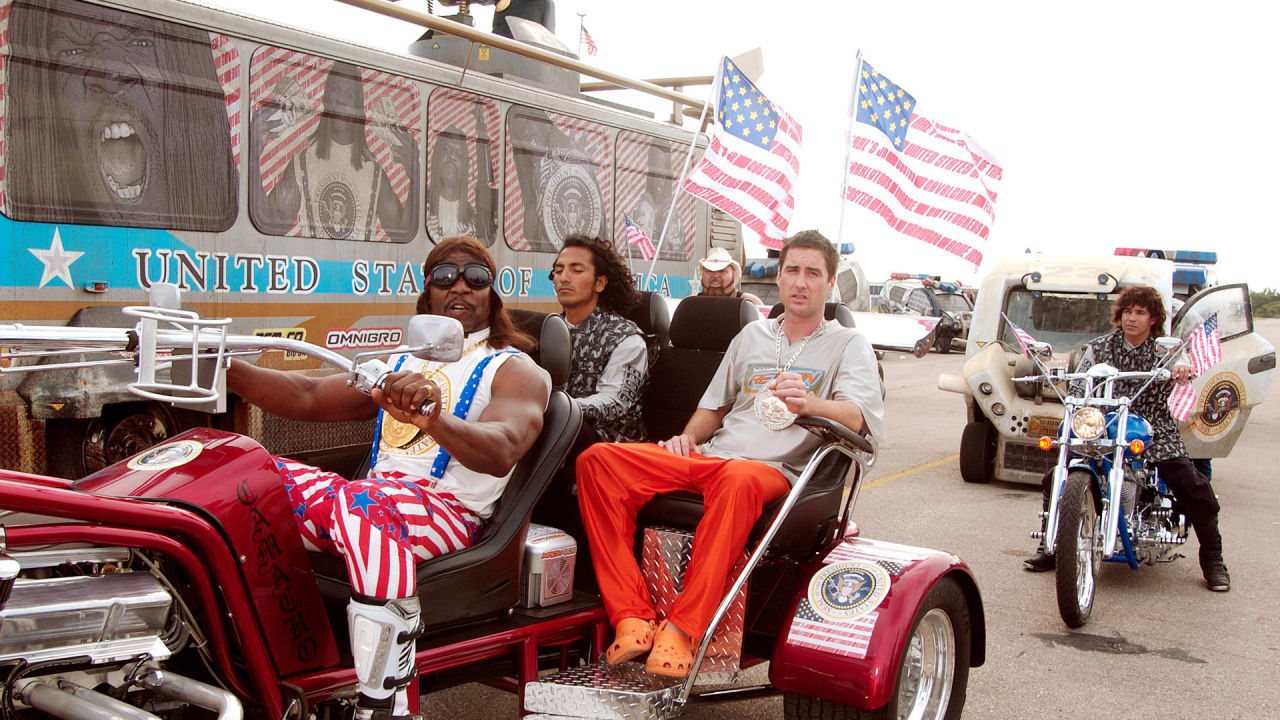
Joe rides along with President Camacho's cabinet/entourage.
The notion that the highest position in the land is held by the
brashest, most ultra-macho trash-talker isn't such a stretch.
The movie is a fun watch, despite the fact that it noticeably loses steam in its second and third acts. The first ten or fifteen minutes feature some great comic dialogue and typically hilarious Mike Judge-type gags. Once Joe awakes in the hellishly dysfunctional future, there is still plenty of hilarious commentary on the more negative trends towards homogenization, oversexualization, and commercialization that we see today. Hospital nurses who are using a fast-food style picture board to admit patients. An entire TV channel dedicated to watching a guy get his testicles pummeled in various ways. A foul-mouthed, trash-talking president who was a famous porn star and professional wrestler. These bits are as hilarious as they are the logical conclusions of certain disturbing trends in our popular culture.

What takes some wind out of the movie's sails towards the end for me is that the future depicted on the screen is simply ugly. Much of this is by design, as Judge envisioned a world where basic services like garbage disposal and environmental protection have long since been abandoned. That, and the fact that nearly every person and object has been branded by large corporations, create a visually unappealing world. It also doesn't help that the film didn't seem to have enough funding to bring the vision fully alive. In doing a touch of research, it doesn't seem like any funding was pulled from the film, but the effects, sets, and costumed have a rather cheap look to them. The movie is much more about the humor and social commentary, to be sure, but the B-grade aesthetics bring the experience down a notch.

Despite its flaws, I recommend this one to just about everybody. It's fun and silly, with a healthy amount of clever, old-school satire. While its overall scope outstripped its resources, but the ideas and gags are still well worth a look.


The Babadook (2014)

Director: Jennifer Kent

Now that is how a horror movie should be. Subtle when necessary. Profound and thoughtful. And creepy enough to make you soil your underpants.

For those who haven't seen it but plan to, I'll keep this spoiler-free, at least in terms of key plot points in the second and third acts of the movie. The tale follows Amelia, a widow whose son, Samuel, shows some concerning behavioral problems. His active imagination has him afraid of monsters to the point that he creates weapons to fend them off and sometimes acts out his violent defenses. One night, Samuel pulls a pop-up book previously unseen by Amelia off of his reading shelf. The book is titled "Mister Babadook." Amelia begins to read the book, despite its extremely creepy images and haunting narrative, and too late glances ahead to see that the story takes a horribly grim turn. She tries to hide the book, but the damage seems to be done. Samuel is so scared now that after a night of little sleep, he claims to be able to see the Babadook in many other places. As Samuel's behavior concerns and frightens other children, parents, and other adults around him, Amelia grows more and more concerned.

While I could nitpick a few things in terms of the imagery and a few of the connections from one point to another in this story, I found it to be astounding. It's not often that I'm riveted to a screen the way that I was during this picture. I can't call myself a devotee of the horror genre, but I do enjoy a well-crafted and well-executed scary movie that makes my skin crawl, and The Babadook delivers. It does rely on a few conventions, such as the odd squeaky door or shadow-shrouded closet, but the emotional and psychological context I found to be highly original. There is something of a "twist" in the story, I suppose, but it's not of the M. Night Shyamalan variety. Figuring it out early (for me it was about halfway through the picture) doesn't diminish the effect, and the film is subtle enough to not offer a grand "reveal" at any point, trusting us viewers to piece it all together on our own. And just when I was afraid that the resolution was going to be way too tidy, we get an ending that is far from completely comforting.

Little Samuel is creepy at hell much of the time, but you
learn that this impression is a bit of a red herring. This is one
of several clever wrinkles the movie offers the horror genre.
I would love to dig deeper into the psychological elements explored in the movie, as it comprises what I feel elevates this movie above just a genre picture. In the name of staying spoiler-free, though, I cannot write too much. I will only say that this was a brilliant use of the visual medium to convey the terror and confusion that I imagine people might feel when certain foundations of reality begin to crumble around them.

I will point out that this is a grim story. There are no beautiful people involved, and there is nary a joke cracked through the whole film. It is intense, and when one realizes what lies at the movie's heart, one can see why it needs to be intense. For those looking for one of those "fun" horror movies with jump-scares and maybe even a little sexual titillation, this is absolutely not the movie for you.

I'll be keeping my eye out for what the writer/director Jennifer Kent comes up with next, as The Babadook was good enough to make me regret not getting out to see it in theaters a few years ago. 

Monday, March 21, 2016

Gangster Flick 3-Pack: Kill the Irishman, Drunken Angel, and Animal Kingdom

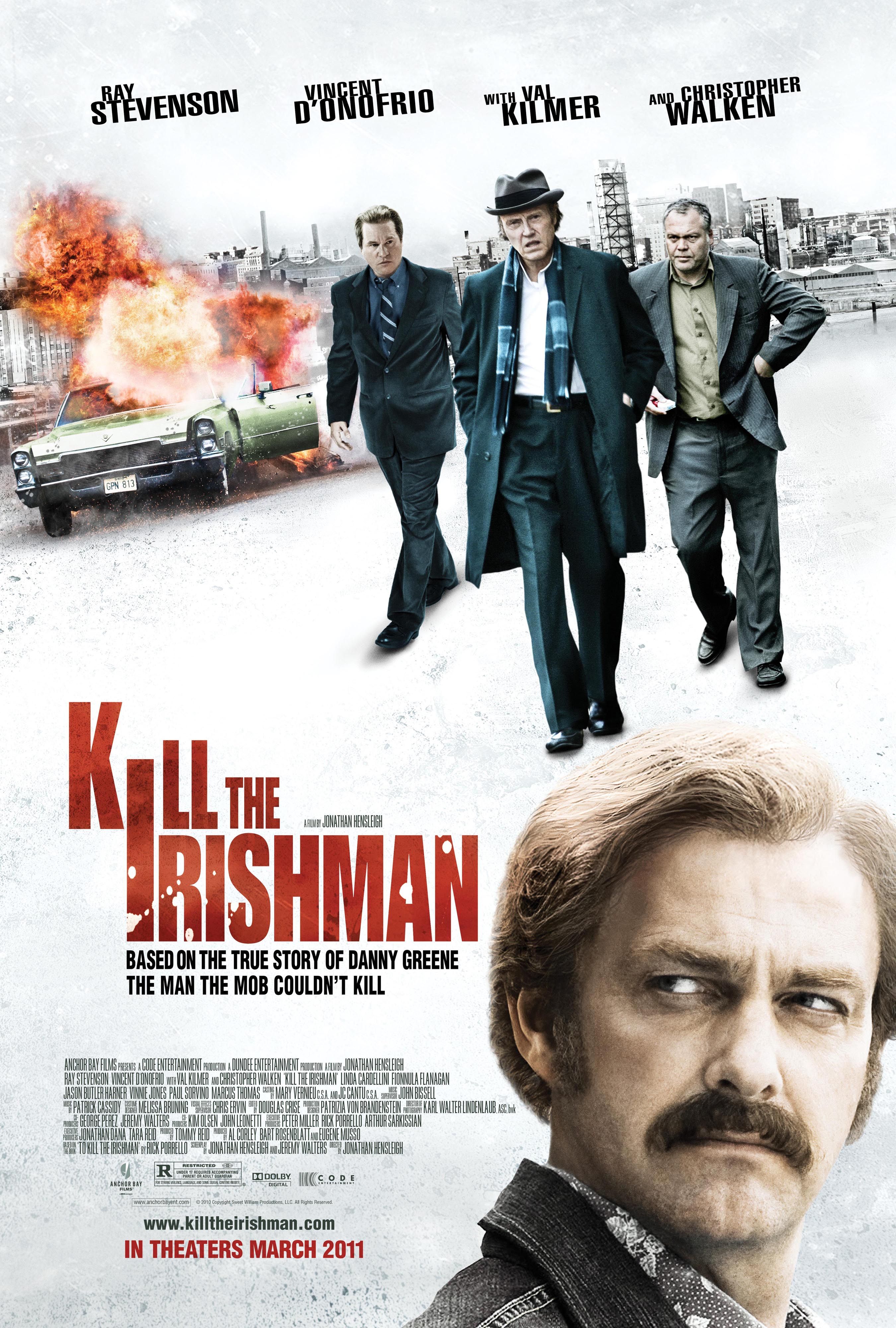
Kill the Irishman (2011)

Director: Jonathan Hensleigh

It may not be a masterpiece of the gangster film genre, but this one does a lot of things well.

Kill the Irishman tells the tale of the Danny Greene, a very real Cleveland native of Irish descent who became embroiled with the Italian mafia in the 1970s, sometimes as a reluctant partner but more often as a brutally tough adversary. Greene started as a longshoreman working under a corrupt and callous union boss. Greene muscles his way into taking over the operation, as well as several other criminal activities including stealing cargo boxes and cutting the Italian mob in on the action. After a few slip-ups and stints in jail, Greene settles into steady work as a mob enforcer. That is, until he decides to take himself and his Irish comrades out from under the thumb of Italian mafiosi who answer to crime families in New York City. This set off a massive war between 1975 and 1977, which saw dozens of car bombs planted and numerous criminals killed by one another. Through much of it, Greene escaped unscathed, becoming a folk hero to the Irish community of Cleveland.

This is definitely not the typical gangster movie, which is a clear strength. While "real stories" have been told in film plenty of times, there are few real characters like Greene. The blue-collar local was, according to the movie, highly literate and exceptionally intelligent. He was also immensely tough, both physically and mentally, refusing to back down in the face of an imposing force of professional criminals and hitmen. His is a pretty gripping underdog tale, even if he's not exactly the most pleasant of fellows all of the time.

News footage of the very real and, apparently, exceedingly
tough Danny Greene. Not many of us would pull the
"shirtless TV interview" move, but Greene made no bones. 
The cast adds some serious punch. Ray Stevenson was just the man to play the larger-than-life Greene, with his massive physical frame, steely demeanor, and wicked Irish wit. The other notables include Vincent D'Onofrio, Christopher Walken, Vinnie Jones, and Val Kilmer (yes, Iceman was still acting as of 2011). On top of that, nearly every mafia member is played by actors whose faces you are likely to have seen in at least two or three other mafia movies, including Paul Sorvino. This well-seasoned crew goes about its business very well.

The movie does have a few faults. At times, especially during the first act, things seem to feel a bit rushed. For a movie that only clocks in at 107 minutes, I was surprised that some areas went under-explored. Some even result in loose plot threads, such as the conspicuous lack of retribution after Greene unceremoniously humiliates a powerful union boss and takes his job. An even larger omission is what follows Greene's agreement to turn into an informant for the FBI, which is never again raised after the bargain is initially struck. Also, a few of the characters, as well acted as they are, felt a touch incomplete. While the bond between Greene and his closest cohorts is clear, the details of their relationships are not always fleshed out. This is actually a movie that could have been better with an extra 10 or 15 extra minutes to fill in a few gaps.

I may not watch this movie again any time soon, but I would gladly recommend it to anyone looking for a solid gangster movie that falls a little outside of the familiar Godfather and Goodfellas mold.

Post Script: The documentary feature on the DVD reveals how Greene was not quite as admirable a figure as the movie suggests. He was a complex man, and he was generous to the Irish in his neighborhood, but he was certainly not above some nasty violence or even snitching to the FBI to get what he wanted. This only reinforces my belief that Greene's life had plenty to justify a longer movie.

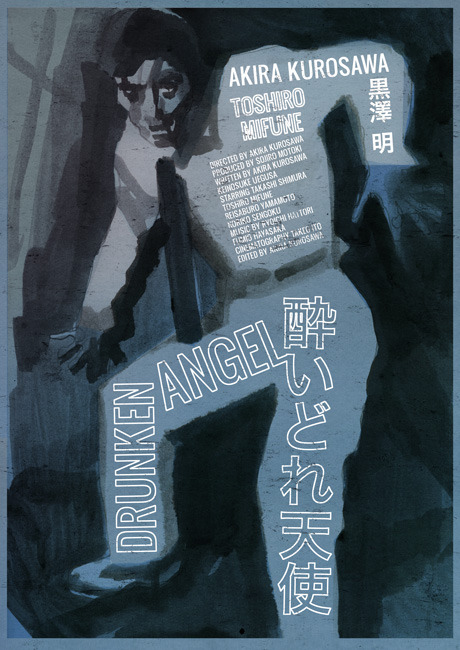
Drunken Angel (1948)

Original Japanese Title: Yoidore tenshi

Director: Akira Kurosawa

Fascinating and atypical character study of gangsters. You just have to look past some dated acting techniques to appreciate it.

Drunken Angel focuses on Doctor Sanada (Takashi Shimura), an alcoholic physician who ministers to the denizens of a post-World War II slum in Tokyo. Sanada is a blunt, temperamental, and alcoholic doctor who is brutally honest with his patients, even the yakuza-connected thugs whom he occasionally stitches up. When Sanada one night removes a bullet from the current head thug, the handsome and strutting Matsunaga (Toshiro Mifune), he detects early signs on tuberculosis. When Matsunaga rebuffs the doctor's suggestion that he might have the potentially fatal disease, a struggle begins between Sanada and the very psychology of the "tough guy" gangster widely found within the yakuza.

The strength of the film lies firmly in the emotional and mental struggle between the doctor and the primitive instincts of those criminals at the top of the local food chain. This is a more profound variation on the typical gangster movie, which is far more often focused on grabs for power or the dynamic personalities of charismatic or powerful criminals. The fact that Sanada is not merely a do-gooder, but rather an ornery booze bag with his own problems, suggests just how warped the morality in places such as post-WWII Japan had become. The beaten-down state of the neighborhood is as much a character of this movie, as is the will of its denizens to survive in any way they can.

I couldn't ignore a typical feature of films from this era, especially Japanese ones: much of the acting is sadly dated and better suited to the stage than cinema. The overblown physical gesticulations and overall lack of subtlety continued in film until well into the 1950s, and Drunken Angel is no exception. While Shimura and Mifune are much more naturalistic, it only serves to accentuate how clumsy the performances by the entire supporting cast look in comparison. The heavy doses of unimaginative "yakuza tough guy" dialogue does nothing to help the matter.

As with all Kurosawa movies, this is one where the basic story and overall theme is likely to stay with you long after you watch it. This is fortunate, as I am unlikely to watch it again. A true student of cinema is likely to give it repeat viewings for its masterful camera work, but I am no true student. Instead, I could appreciate the look and emotional tones of the movie, just as I think anyone could and should.


Animal Kingdom (2010)

Director: David Michod

Though one critic called it "Australia's answer to Goodfellas," I found this one more like Australia's answer to At Close Range. This is a good thing.

Focusing mostly on Joshua "Jay" Cody, the movie follows this modern Australian high schooler just after his mother dies of a heroine overdose. With nowhere else to go, he returns to living with his grandmother and three uncles, all of whom are criminals of a rather serious nature, including armed bank robbery and drug dealing. Jay doesn't seem to have much of a will of his own, so he begins getting caught up in the wild larceny of his uncles. It isn't until several of those closest to him start to die that he is truly forced to make some very hard decisions about whom he will ally himself with.

This basic premise is quite similar to the excellent based-in-fact film At Close Range, though without the strong patriarchal figure portrayed by Christopher Walken. Nearly everything else is there, though. The aimless young man. The warped family that sucks him into their twisted lifestyles. The generally grim, fatalistic tone. Like many of the best gangster and crime movies, Animal Kingdom strips away all of the glamour often layered onto such stories, leaving us with its most horrible aspects.

This description surely suggests that this is not an "entertaining" movie, and it is not. I did not, however, find it a chore to watch. The plot is unpredictable, the action is very well-paced, and the acting is outstanding (this last was a bit of a surprise, as the only actors whom I recognized were Guy Pierce and Ben Mendelsohn). Seeing just how a young man at a frightening crossroads reacts to the craziness around him makes for intense and compelling viewing.

I don't know that I'll ever need to see this one again, but it is an excellent gangster film, and one that likely flew under the radar for being foreign, relatively low budget, and lacking "name" actors. Don't let that turn you off, though. In fact, there is an upcoming TNT television series of the same name, and inspired by the original Australian movie. I don't know if I'll bother with the show, but the movie is worth seeing for anyone. 

Tuesday, May 26, 2015

New Release! Mad Max: Fury Road (2015)

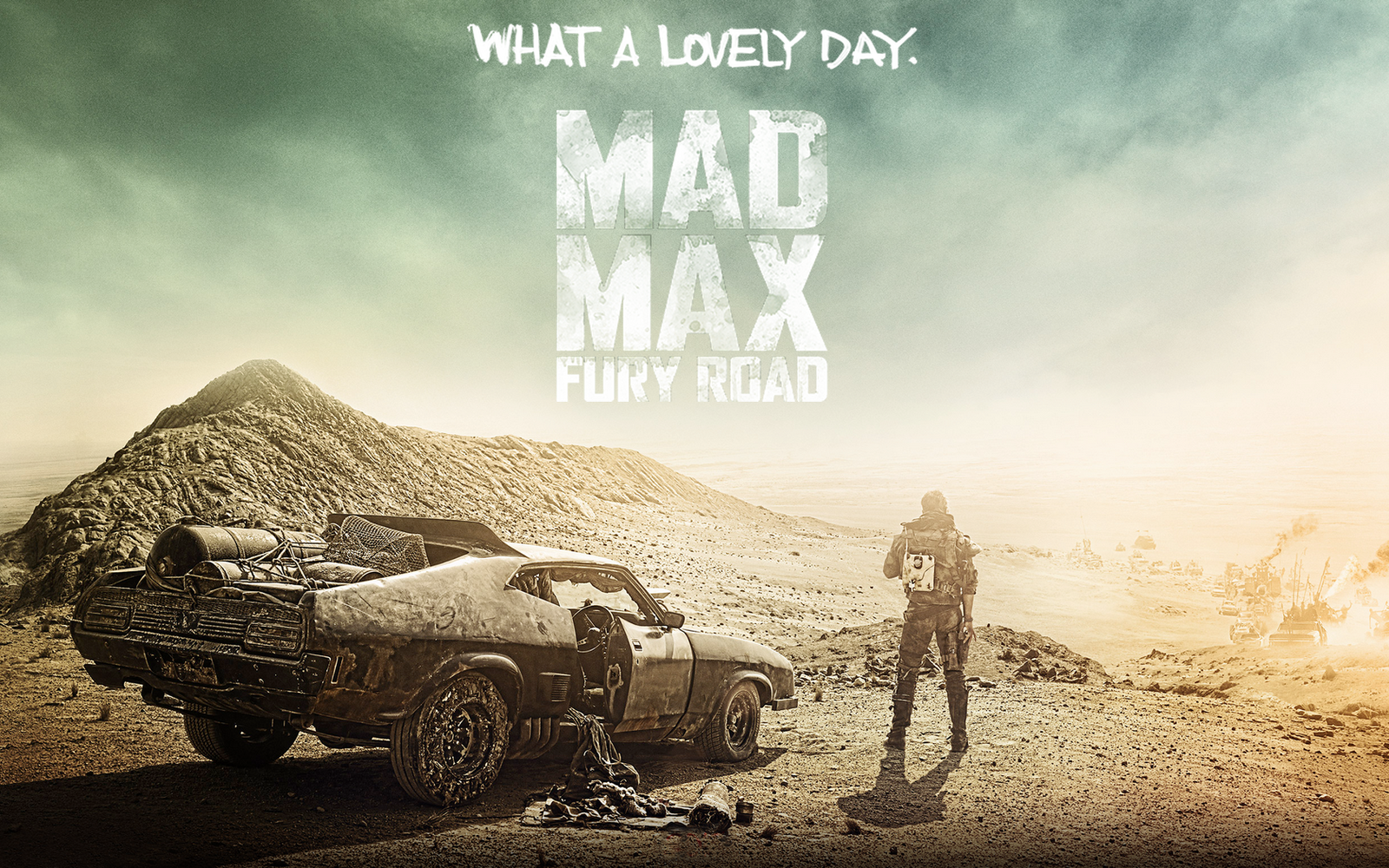
The opening scene. Things are about to get totally bananas
over that horizon, Max.
No Spoilers!!

Director: George Miller

This movie is ridiculous fun, with a nice dash of stylish social commentary.

Right off, I'll admit that I've never seen all of the original 1979 Mad Max, though I know the gist of the story. I have seen The Road Warrior and Beyond Thunderdome plenty of times. The former is an all-time great movie, while the latter is solid fun, though with some lamer elements that dilute it. Overall, I was rather curious about this reboot of an iconic and original film series.

My curiosity paid off. Big time.

In brief, Fury Road offers the goods on all sorts of levels. Right from the opening scenes, the action gets pumping right along and never really lets up. Yes, there are a few necessarily slower moments, but they give us time to breath with the characters and never drag any longer than necessary. This is something that went far awry in Thunderdome's second act. No such trouble here.

The entire post-apocalyptic world of the series has been updated marvelously. With modern technology and a massive budget, George Miller absolutely went to town. The set pieces are incredible; the countless props and costumes each suggest stories which beg to be told; and the effects and stunts are everything a summer blockbuster could possibly offer. Though fast cars and explosions do little for me, I found myself thoroughly enjoying the fast-paced and cleverly-shot pursuits that were hallmarks of the original trilogy.

Yes, that's Charlize Theron with a robotic left arm. Yes,
her character Furiosa is even more badass than she looks.
There are, in my estimation, two things that elevate Fury Road beyond a simple slam-bang monster truck rally set in the desert. One is that the tale functions as a clear allegory for modern global problems. It takes a little while to be introduced to all of the elements in it, but they are there in their amusing and disturbing glory. While this could have been executed in very clumsy ways, Miller teases them out through the narrative, piece-by-piece. Once you see the full picture, it may seem rather obvious, but I was glad that I was allowed to do the work myself, rather than have some superfluous exposition ruin the magic of it. It all spoke to a respect for the viewer which I found quite welcome.

The second aspect that sets the movie apart is the character Furiosa, played by the ever-capable Charlize Theron. This is the rare moment when a female is given equal footing with a male in an action movie. One could actually argue that Furiosa is more important to the film than Max. What I loved even more is that, while gender plays a certain key element to the plot, it is never any kind of issue in terms of who Furiosa is or what she does. She's not tough "for a woman." She's just plain old tough. It's great to see.

I'm already plotting my second viewing of this dusty monster, envisioning just how much more fun it will be to behold in 3D. I recommend this one to just about anyone who doesn't mind some visceral action and disturbing implications underlying their action movies.

Saturday, August 23, 2014

Before I Die #517: Muriel's Wedding (1994)


This is the 517th film that I've watched out of the 1,149 on the "Before You Die" lists.

Director: P. J. Hogan

You look at the title and movie poster and think "rom com," right? Well, you'd be dead wrong. Muriel's Wedding is immensely more creative and bold than any rom com would or probably could be.

Muriel (acting chameleon Toni Collette in a breakout role) is a sad sack 20-something who embodies the stereotypical "loser," as branded by the youthful social elite of the 1980s and '90s. She is frumpy, socially awkward, and desperately clings to the "cool girls" that she knew from high school. Her home life is dominated by an overbearing, bullying, career-obsessed politician father, and a mother and siblings who have been beaten into apathy about their own lives. Muriel's only solace comes from listening to ABBA songs and dreaming of one day having a monumental wedding ceremony.

Yes, that is, indeed, Toni Collette in the middle, as Muriel.
This is her in the early stages of the film, at her tackiest
and most pathetic, book-ended by her tormentors.
Things start to go along a different path when Muriel decides to abscond with $12,000 of her father's money and treat herself to an island vacation, where she meets a former high school classmate (Juliet Lewis look-alike, Rachel Griffiths). The two decide to cut loose and move to Syndey on the sly, completely reinventing themselves and aiming to have a grand old time. What follows includes literal paralysis, a marriage of convenience to an aspiring Olympic swimmer, friends lost, regained, and then lost again, and a general whirlwind of both admirable and detestable actions and emotions.

The movie never goes quite where you expect it to, though it always remains either humorous, touching, tragic, or a unique combination of the three. I suppose one could lump this into the "chick flick" category easily enough, but it is one that clearly stands out from the rest for its willingness to go to some very dark places in the human mind and soul. Several of the main characters end up showing unexpected complexity and depth, while others induce unforeseen sympathy. These stand out all the more for being in the midst of some of the most garish, tackiest costumes and location sets that one could imagine.

Muriel's Wedding is one-of-a-kind, to be sure. I wouldn't expect everyone to like it, but anyone with a slightly dark or twisted sense of humor should find more than a few things to enjoy in this singular movie. I did.

So that's 517 down. Only 632 more films from the list to see before I die...