Showing posts with label Akira Kurosawa. Show all posts

Monday, March 21, 2016

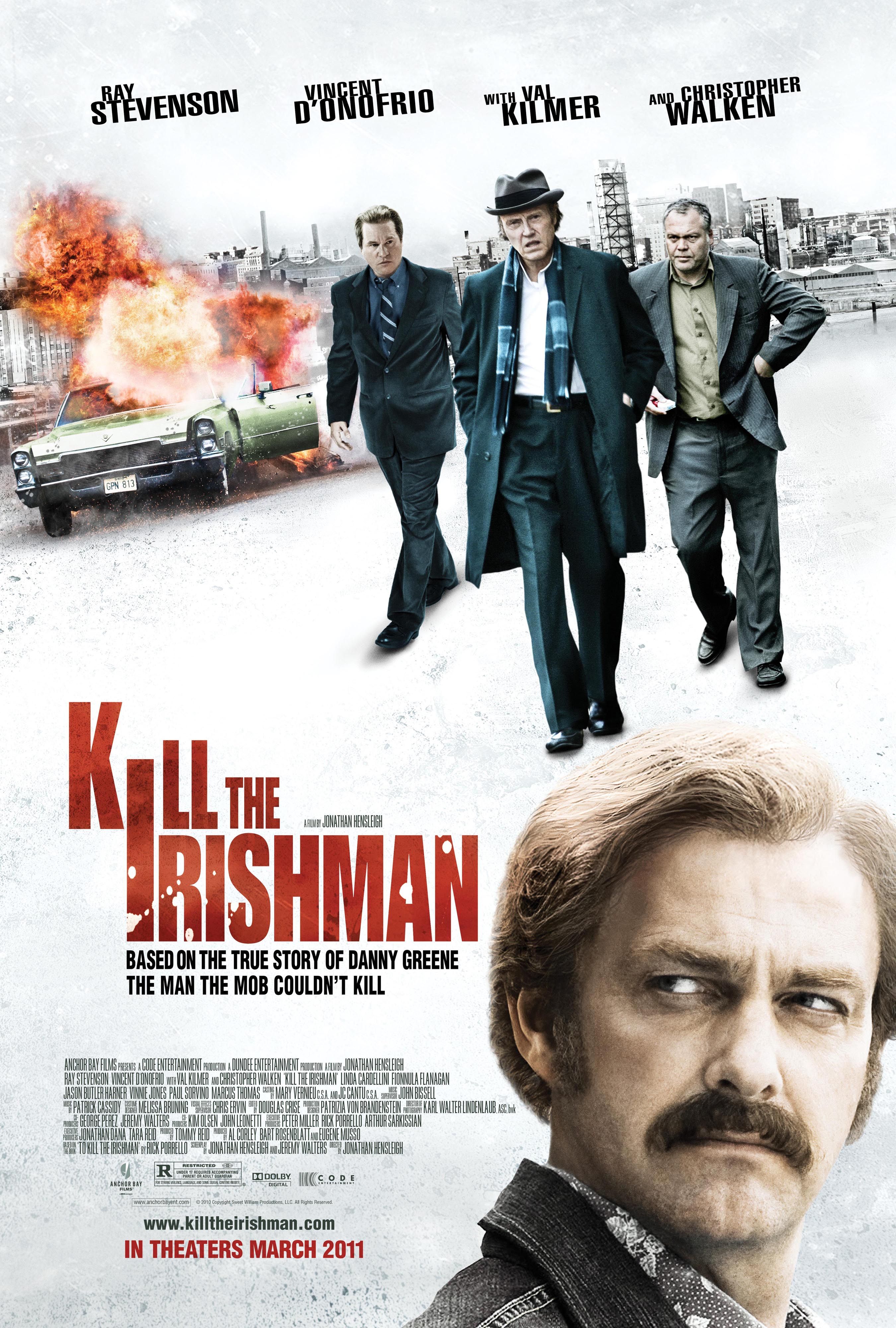
Gangster Flick 3-Pack: Kill the Irishman, Drunken Angel, and Animal Kingdom

Kill the Irishman (2011)

Director: Jonathan Hensleigh

It may not be a masterpiece of the gangster film genre, but this one does a lot of things well.

Kill the Irishman tells the tale of the Danny Greene, a very real Cleveland native of Irish descent who became embroiled with the Italian mafia in the 1970s, sometimes as a reluctant partner but more often as a brutally tough adversary. Greene started as a longshoreman working under a corrupt and callous union boss. Greene muscles his way into taking over the operation, as well as several other criminal activities including stealing cargo boxes and cutting the Italian mob in on the action. After a few slip-ups and stints in jail, Greene settles into steady work as a mob enforcer. That is, until he decides to take himself and his Irish comrades out from under the thumb of Italian mafiosi who answer to crime families in New York City. This set off a massive war between 1975 and 1977, which saw dozens of car bombs planted and numerous criminals killed by one another. Through much of it, Greene escaped unscathed, becoming a folk hero to the Irish community of Cleveland.

This is definitely not the typical gangster movie, which is a clear strength. While "real stories" have been told in film plenty of times, there are few real characters like Greene. The blue-collar local was, according to the movie, highly literate and exceptionally intelligent. He was also immensely tough, both physically and mentally, refusing to back down in the face of an imposing force of professional criminals and hitmen. His is a pretty gripping underdog tale, even if he's not exactly the most pleasant of fellows all of the time.

News footage of the very real and, apparently, exceedingly
tough Danny Greene. Not many of us would pull the
"shirtless TV interview" move, but Greene made no bones. 
The cast adds some serious punch. Ray Stevenson was just the man to play the larger-than-life Greene, with his massive physical frame, steely demeanor, and wicked Irish wit. The other notables include Vincent D'Onofrio, Christopher Walken, Vinnie Jones, and Val Kilmer (yes, Iceman was still acting as of 2011). On top of that, nearly every mafia member is played by actors whose faces you are likely to have seen in at least two or three other mafia movies, including Paul Sorvino. This well-seasoned crew goes about its business very well.

The movie does have a few faults. At times, especially during the first act, things seem to feel a bit rushed. For a movie that only clocks in at 107 minutes, I was surprised that some areas went under-explored. Some even result in loose plot threads, such as the conspicuous lack of retribution after Greene unceremoniously humiliates a powerful union boss and takes his job. An even larger omission is what follows Greene's agreement to turn into an informant for the FBI, which is never again raised after the bargain is initially struck. Also, a few of the characters, as well acted as they are, felt a touch incomplete. While the bond between Greene and his closest cohorts is clear, the details of their relationships are not always fleshed out. This is actually a movie that could have been better with an extra 10 or 15 extra minutes to fill in a few gaps.

I may not watch this movie again any time soon, but I would gladly recommend it to anyone looking for a solid gangster movie that falls a little outside of the familiar Godfather and Goodfellas mold.

Post Script: The documentary feature on the DVD reveals how Greene was not quite as admirable a figure as the movie suggests. He was a complex man, and he was generous to the Irish in his neighborhood, but he was certainly not above some nasty violence or even snitching to the FBI to get what he wanted. This only reinforces my belief that Greene's life had plenty to justify a longer movie.

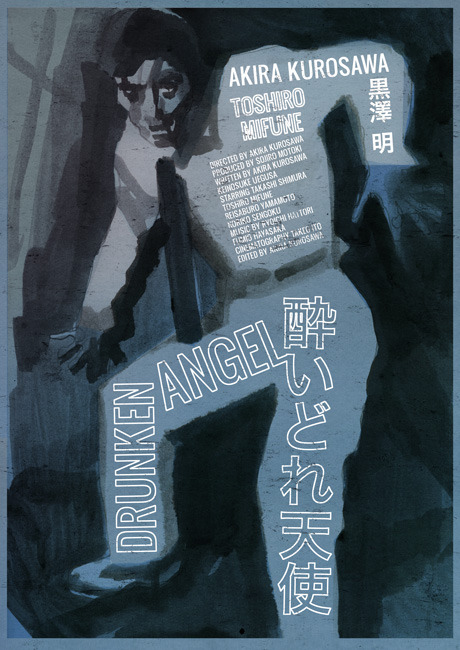
Drunken Angel (1948)

Original Japanese Title: Yoidore tenshi

Director: Akira Kurosawa

Fascinating and atypical character study of gangsters. You just have to look past some dated acting techniques to appreciate it.

Drunken Angel focuses on Doctor Sanada (Takashi Shimura), an alcoholic physician who ministers to the denizens of a post-World War II slum in Tokyo. Sanada is a blunt, temperamental, and alcoholic doctor who is brutally honest with his patients, even the yakuza-connected thugs whom he occasionally stitches up. When Sanada one night removes a bullet from the current head thug, the handsome and strutting Matsunaga (Toshiro Mifune), he detects early signs on tuberculosis. When Matsunaga rebuffs the doctor's suggestion that he might have the potentially fatal disease, a struggle begins between Sanada and the very psychology of the "tough guy" gangster widely found within the yakuza.

The strength of the film lies firmly in the emotional and mental struggle between the doctor and the primitive instincts of those criminals at the top of the local food chain. This is a more profound variation on the typical gangster movie, which is far more often focused on grabs for power or the dynamic personalities of charismatic or powerful criminals. The fact that Sanada is not merely a do-gooder, but rather an ornery booze bag with his own problems, suggests just how warped the morality in places such as post-WWII Japan had become. The beaten-down state of the neighborhood is as much a character of this movie, as is the will of its denizens to survive in any way they can.

I couldn't ignore a typical feature of films from this era, especially Japanese ones: much of the acting is sadly dated and better suited to the stage than cinema. The overblown physical gesticulations and overall lack of subtlety continued in film until well into the 1950s, and Drunken Angel is no exception. While Shimura and Mifune are much more naturalistic, it only serves to accentuate how clumsy the performances by the entire supporting cast look in comparison. The heavy doses of unimaginative "yakuza tough guy" dialogue does nothing to help the matter.

As with all Kurosawa movies, this is one where the basic story and overall theme is likely to stay with you long after you watch it. This is fortunate, as I am unlikely to watch it again. A true student of cinema is likely to give it repeat viewings for its masterful camera work, but I am no true student. Instead, I could appreciate the look and emotional tones of the movie, just as I think anyone could and should.


Animal Kingdom (2010)

Director: David Michod

Though one critic called it "Australia's answer to Goodfellas," I found this one more like Australia's answer to At Close Range. This is a good thing.

Focusing mostly on Joshua "Jay" Cody, the movie follows this modern Australian high schooler just after his mother dies of a heroine overdose. With nowhere else to go, he returns to living with his grandmother and three uncles, all of whom are criminals of a rather serious nature, including armed bank robbery and drug dealing. Jay doesn't seem to have much of a will of his own, so he begins getting caught up in the wild larceny of his uncles. It isn't until several of those closest to him start to die that he is truly forced to make some very hard decisions about whom he will ally himself with.

This basic premise is quite similar to the excellent based-in-fact film At Close Range, though without the strong patriarchal figure portrayed by Christopher Walken. Nearly everything else is there, though. The aimless young man. The warped family that sucks him into their twisted lifestyles. The generally grim, fatalistic tone. Like many of the best gangster and crime movies, Animal Kingdom strips away all of the glamour often layered onto such stories, leaving us with its most horrible aspects.

This description surely suggests that this is not an "entertaining" movie, and it is not. I did not, however, find it a chore to watch. The plot is unpredictable, the action is very well-paced, and the acting is outstanding (this last was a bit of a surprise, as the only actors whom I recognized were Guy Pierce and Ben Mendelsohn). Seeing just how a young man at a frightening crossroads reacts to the craziness around him makes for intense and compelling viewing.

I don't know that I'll ever need to see this one again, but it is an excellent gangster film, and one that likely flew under the radar for being foreign, relatively low budget, and lacking "name" actors. Don't let that turn you off, though. In fact, there is an upcoming TNT television series of the same name, and inspired by the original Australian movie. I don't know if I'll bother with the show, but the movie is worth seeing for anyone. 

Thursday, March 15, 2012

Film # 76: Star Wars (1977)


Director: George Lucas

Initial Release Country: United States

Times Previously Seen: No idea for sure, but easily 25 times. (Last time – about 3 years ago)

Teaser Summary (No spoilers)

Backwater planet yokel gets swept up in intergalactic war. Learns spirituality and how to use a magic wand.

Extended Summary (More detailed plot synopsis, spoilers included. Fair warning.)

Note: OK. I’m going to assume that virtually everyone reading this has seen Star Wars. If not, first of all, you should probably have your United States citizenship revoked. Second of all, I’m going to make this relatively brief. Third of all, if you really need a blow-by-blow of the narrative, check it out at imdb’s site here, where some detail-obsessed Star Wars nerd has gone way overboard (right down to the make and model of all of the machinery and droids).

Long ago, in a galaxy far away, on the fringe desert planet of Tatooine, young farmer Luke Skywalker (Mark Hamill) buys a couple of droids for his aunt and uncle’s farm. Little does he know that these droids, C-3PO and R2-D2 by name, were sent by Princess Leia Organa of the planet Alderaan (Carrie Fisher) to abscond with technical blueprints for the Galactic Empire’s massive, planet-destroying space station known as the Death Star. Leia is part of a rebellion against the Empire, which rules the known galaxy with an iron fist. Leia had just been captured by Lord Darth Vader (David Prowse, voiced by James Earl Jones), an imposing, black-clad prime figure within the Empire. She sent the droids away in a desperate attempt at assistance.

Following Leia’s orders, R2-D2 leads C-3PO and Luke deep into the desert, to the hermit Ben “Obi-Wan” Kenobi, who had long before been a Jedi Knight, an order of peace-keeping warrior monks. Obi-Wan seems to know something of Luke’s history, and after they retrieve Leia’s plea for help from R2-D2, they set out to help. Luke is reluctant at first, but his resolve is solidified when he discovers his aunt and uncle have been killed in his absence by the Empire, who are pursuing the droids. Obi-Wan also begins training Luke in the use of “The Force”, which is an energy field that binds all life and can be harnessed through concentration and discipline. It was this that Jedi used as their source of power, until they were all but wiped out by Darth Vader and the Empire.

In the desert wastes of Tatooine, the ever-patient Ben "Obi-Wan" Kenobi guides the whiny C-3PO and naive Luke Skywalker towards their destinies in the skies.

In the nearby space station of Mos Eisley, Luke, the droids and Obi-Wan hire the mercenary rogue pilot Han Solo and his companion Chewbacca, a towering, fur-covered alien with expertise in machinery and fighting. The sextet narrowly escape capture in Solo’s spacecraft, the Millennium Falcon. They head toward Leia’s home planet of Alderaan, only to find that it has been destroyed by the Death Star. They also find a massive Imperial “Star Destroyer” battleship, which captures the Millennium Falcon.

Through several tricks and some good luck, the six companions avoid capture on the Star Destroyer and rescue Princess Leia, though not without some help from Leia herself. Unfortunately, they also watch as Obi-Wan, after an extended light saber battle with his former pupil Darth Vader, is cut down and seemingly dissipates into thin air.

The remaining five companions and Princess Leia flee the Star Destroyer, though they have been, in effect, allowed to escape so that the Empire can follow them to the Rebellion’s secret base. Leia and the Rebellion use the Death Star blueprints to find a weak point, though it will require a highly risky and daring aerial assault. Luke, hungry to make a difference, immediately signs on. The self-serving Han Solo, on the other hand, takes the reward that he has been promised and leaves the Rebellion to its fate.

Luke, Leia, and Han Solo in the midst of their daring escape from the Star Destroyer. Leia insults Solo at every turn, but I think her hand in this still shot tells us everything.

With the Death Star approaching an attack window that will allow it to obliterate the rebel base, the rebel fighter squadrons attack. After an intense battle, Luke and his two wing men make a last-ditch attempt to hit the Death Star’s minuscule weak spot. With his wing men both shot down, and none other than ace pilot Darth Vader himself positioning his cross-hairs on Luke’s fighter craft, Han Solo swoops in and scatters the pursuing Imperial fighters. Luke, listening to the disembodied voice of Obi-Wan, turns off his targeting computer and uses The Force by relying on his instincts. Doing so, he hits the target and the Death Star is destroyed, saving the rebel base and fending off the Empire. At least for a time…

Take 1: My Gut Reaction (Done after this most recent viewing, before any further research.)

What does one of my generation say about this movie? In short, it’s still damn good, though some viewer maturity and the benefit of hindsight cast much more light on its shortcomings.

Star Wars is arguably the greatest pop culture phenomenon in history. Very few, if any, single entity, individual, or fictional realm in entertainment has become so famous, so widespread, and so embraced by so much of the world. Having seen this movie dozens of times, starting at age 4, it’s impossible for me to view it with fresh eyes. Yet try, I did. (Sorry, Yoda.)

It had been a few years since I’ve watched the movie (this time, I watched the original, theatrical version), and I am now 36 years old. This being the case, I can be slightly more objective than I would have been fifteen or even ten years ago. Please keep in mind that I am fully aware of the deconstruction of the Star Wars movies into their basic elements, and the fact that Lucas “borrowed” heavily from several major sources. Still…

Honestly, who wouldn't want to find out what these four chaps were up to?

Star Wars is still a lot of fun to watch, and I’m still impressed by the magic of the formula that George Lucas concocted. Until this movie, there had been absolutely nothing like it in movies. Sure, there were some highly innovative, creative, intelligent, and even visually stunning science fiction movies. However, there was nothing on Star Wars’ scale, in terms of epic storytelling and breadth of captivating elements.

True to the spirit of classic adventure movies, Star Wars tells a pretty gripping tale of a damsel in distress (though Leia is hardly helpless), fighting against tyrannical powers. The entire universe is a mystery in the beginning, but from that very first moment that you see the pursuit of Leia’s spacecraft by a gargantuan Star Destroyer, you want to know more. With every passing scene, we are given hints at a universe that is as much fantasy as science fiction. This mythical quality is given to us right away with the now-iconic phrase, “Long ago, in a galaxy far, far away…” With these words, high-tech is no longer equivalent to “futuristic”. Already, the tale has our minds expanding a bit.

The true trick of Lucas’s Star Wars galaxy was just how he blended the elements. There are cool gadgets and star ships for the techie, science fiction types. There is the mysticism and philosophy of The Force, the Jedi, and the Sith for the dreamier, more spiritual types. Most importantly for its mass appeal, though, is that there are all of the elements of a rip-roaring adventure story, complete with daring escapes and rescues, gun fights, and aerial battles. And of course, the light sabers. My cousin believes that it is the lightsaber that truly makes Star Wars what it is, and he has a point. If you take out those stately, blazing, “elegant weapons”, as Obi-Wan refers to them, then the Star Wars galaxy gets significantly blander.

The first lightsaber battle in the entire Star Wars movie franchise. These would become the hallmark ending of every single one of the six films in the series. One could argue that the lightsaber is the single most iconic prop in the history of film.

The main characters that everyone knows are almost all on display in this first film, save Yoda, who first appears in The Empire Strikes Back. Basically everyone on Earth is familiar with at least a few of the eight main characters in Star Wars. Oddly enough, in watching it this most recent time, I found Luke to be more annoying than anything else. He is rather whiny, but it’s easy to dismiss this, as he is basically a redneck farm boy who has no idea just what he’s stuck his dusty little toes into.

As much if not more than the characters, though, is simply the spectacle of the entire thing. From highly-functioning robots to bizarre species of creatures like the Jawas, Bantas, to the entire motley crew in Mos Eisley space station, so many things in the movie capture the eye and the imagination. I do have to say, also, that this is where the original, untouched theatrical release needs to be cherished. Lucas’s attempts to go back and give his own films facelifts met with harsh criticism from purists, and I wholeheartedly agree. There was absolutely nothing wrong with anything in the originals, in terms of the visuals. Simply using makeup and costumes, without the benefits of computer generated imaging, always makes those characters more tangible to me. Computer graphics are incredible these days, but let’s face it – we can always tell when they’re computer graphics. Not using these high-tech methods helps us suspend our disbelief a little more easily, in my opinion, and the original Star Wars was and is testament to this.

One thing that does not hold up over the years, or at least has become a more obvious weakness, is the dialogue in the movie. Now that most of us have seen the other George Lucas-penned scripts in Phantom Menace and Attack of the Clones, it’s even easier to see that the man was simply atrocious at writing dialogue. While Star Wars isn’t nearly as bad as Episodes I or II, it’s far from good. There’s a lot of hokum and very hackneyed attempts at humor. Probably the main reason that it doesn’t stand out as much is that the actors are talented enough to gloss it over. Hamill, Ford, Fisher, Guinness, and Jones are much stronger presences than Hayden Christensen and Natalie Portman, and the discrepancy in their abilities to sell lame dialogue shows it. The cast of the original Star Wars was, three-fingered hands down, far superior.

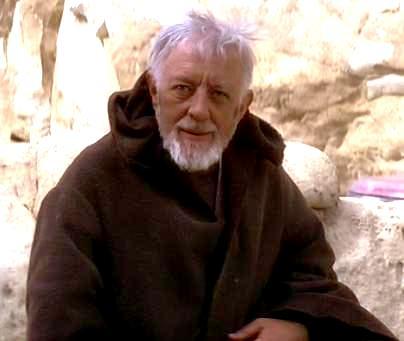
Even hungover with horrendous bed-head, Alec Guinness could out-act anyone else in the Star Wars series. He needed all of his skill to overcome the oft-lame dialogue.

So upon watching it this time, the movie is still great fun to watch. Perhaps I can’t really look at it with total objectivity since it captured a place in my heart at the time when all of our hearts are so impressionable – those magic years between ages three and ten when fantastic stories and movies can imprint themselves on our very beings. I suppose an older viewer who watches Star Wars for the first time may be a tad disappointed, considering just how massive the entire franchise has become. All the same, I think anyone can marvel at just how unique a potion George Lucas mixed up for us, and I know that I’ll never tire of the original trilogy.

Take 2: Further Thoughts (Based on the context of the entire Star Wars series & random factoids.)

Did you notice how, on the “All-TIME 100 Films” list, certain film series are put together and counted as one movie? Namely, The Apu Trilogy, The Godfather Parts I and II, and The Lord of the Rings? Notice how Star Wars sits alone, without either of its immediate sequels, The Empire Strikes Back or Return of the Jedi? Did you notice that? I did. So, why do you think it is?

My guess is that, while the original trilogy was just that, Star Wars can actually stand alone and separate from the latter two films, which rely on the other two. When any Star Wars dork is asked which of the six films in the series is the best, the answer is almost overwhelmingly The Empire Strikes Back, and I agree. I suppose that this movie wasn’t included because, unlike Star Wars, it did not end with any sense of closure. It was therefore connected to the slightly inferior Return of the Jedi (only made weaker by those silly little Disney puppets, the Ewoks). With the choice of either putting only Star Wars on the list or having to include the entire trilogy, I guess the list compilers went with the former option. It makes sense to me.

That's right, fellas. Your respectable series just got down-graded to pre-kindergarten levels. Don't worry in the back there, Luke. In a little while, you'll have an awesome lightsaber fight with your pops...

So, in light of Episodes I, II and III, what do I think? Basically, Episode I is nearly putrid. I remember how, back in 1999, as a 23-year old who was unspeakably excited about the new films, I was bafflingly disappointed. Like many of my ilk, the entire Jar-Jar Binks character was insulting to my intelligence (and, I assume, the intelligence of anyone over the age of four). Liam Neeson and Ewan McGregor were fine, but Jake Lloyd as the young Anakin Skywalker was dreadful (I checked imdb and he hasn’t had an acting gig since then. Small wonder.) The film is only watchable because of the pod races and the three-way light saber battle at the end between Obi-Wan, Qui-Gon and Darth Maul. Aside from these few things, The Phantom Menace was a flashy mess.

After that debacle, things got a tad better with Episode II, and even closer to tolerable with Episode III. Still, none of these prequels could hold a Yoda-levitated candle to any of the original three, not even its weakest link, Return of the Jedi. To me, the reason is simple. George Lucas got too crazy trying to use modern movie magic to try and please every fan. Star Wars and Empire Strikes Back did things using special effects to greatly enhance an engaging, if simple, adventure story. When he went back and did the prequels, it was almost as if the effects became the story.

After Episode II, Attack of the Clones, came out, a friend of mine was disgruntled with it and told me that it seemed like George Lucas had basically read a bunch of fan emails and tried to satisfy every fanboy’s wildest fantasies. You want to see more of Boba Fett? Well, here’s his daddy, Jango Fett! You want to see Yoda use a light saber? Well, here’s Yoda bouncing around with a light saber! It continued in Episode III, but not as egregiously.

Yoda getting his game on in Attack of the Clones. One of several elements Lucas put in seemingly to appease many fans' daydream desires. Personally, I liked it better when Yoda's martial prowess was merely implied and never revealed.

When I go back and watch Episodes IV and V, I absolutely love how scaled down the effects are and how the tale itself is the dominating force. There are many things that are hinted at, but never completely explained. How did Obi-Wan and Luke end up in the Tatooine desert? How did Yoda end up in the swamps of Dagobah? What pushed Darth Vader to the dark side of the force? In truth, I didn’t really need to know the answers to these questions, though I wanted to. Now that I do know, I basically wish that Lucas hadn’t even bothered with the prequels and simple left it all up to our imaginations. It would have saved me a lot of disappointment and would have left Episodes IV, V and VI to stand on their own, something they can do quite well.

Now that nearly three decades have passed since Return of the Jedi was originally released, there has been no end of study done of the Star Wars phenomenon. By now, many people are aware that its tremendous success was no accident. In conceiving his “science fiction soap opera”, George Lucas consulted the renowned cultural anthropologist Joseph Campbell on just what constituted the ultimate story. In a thoughtful (some cynics might say Machiavellian) approach, Lucas used what he learned about popular myths to construct the overall drama of the Skywalkers. The archetypical protagonist that is universal to the greatest of human mythology became Anakin Skywalker/Darth Vader – the flawed hero who falls from grace, then redeems himself in his waning hours.

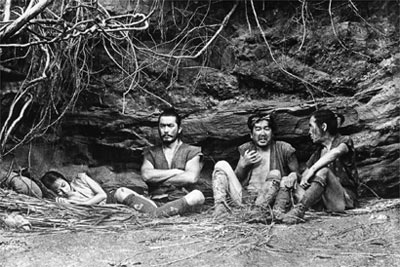
We also learned long ago that the filming of the original Star Wars itself was far from original. In basic narrative and even in shot composition, George Lucas “borrowed” (many say “stole”) from Akira Kurosawa’s classic adventure tale The Hidden Fortress. Despite these borrowed elements, Lucas was one of the earliest to depict a science fiction universe that was used up and grungy, unlike nearly all of the sleek, polished looks of sci-fi TV shows and films that had come previously. Sort of like what Sergio Leone did to the Western picture.

A shot from Akira Kurosawa's 1958 samurai movie, The Hidden Fortress. In this shot, you see the "inspirations" for Princess Leia, Obi-Wan Kenobi, and the droids C-3PO and R2-D2. Lucas also used the settings and locations in his first Star Wars movie.

Out of the countless other oddities and peculiarities about this series, there are two about the cast that have always intrigued me. Perhaps not surprisingly, they both deal with actors who were talented and professional, but didn’t really think much of their roles.

The first is Harrison Ford. He basically thought Han Solo was an idiot. And you know what? After watching the Star Wars movies as an adult, it’s obvious that Han Solo was not the sharpest tool in the shed. He was brave and funny, and he was an amusing rogue, but mostly he was a dolt. Harrison Ford has always said that he would always play Indiana Jones as often as possible because he liked the character, but that he would never play Han Solo again because he was a dunce. In fact, Ford tried to convince George Lucas to have Solo killed off at the end of either Empire or Jedi, to no avail.

The other is Alec Guinness. Anyone who has seen Alec Guinness in his film roles between the 1940s and 1970s knows that he was incredible. Whether it was as Fagan in Oliver Twist, his multitude of roles in Kind Hearts and Coronets, Colonel Nicholson in Bridge on the River Kwai, or any others, you know that he was an actor of incredible range and skill. As Obi-Wan Kenobi, he absolutely nailed the part as the wizened old knight who could quietly harness supernatural powers while mentoring the clueless young Luke. Guinness himself, however, seriously disliked certain things about playing Kenobi. One was that he found the dialogue to be atrocious, and could barely stomach delivering such hokey lines. He even succeeded where Harrison Ford failed – he convinced George Lucas to kill off Kenobi, ostensibly because he felt it strengthened Kenobi as a character (which it does). Later, though, Guinness admitted that it was also because he wanted to get out of reading dialogue that he found horrendous. More nuisance was to come in the succeeding years, as Star Wars mania grew to epic proportions. Guinness, a man of staggering accomplishment on both stage and film long before Star Wars, would forever after be known as “Obi-Wan Kenobi”.

In very limited screen time, Guinness played Kenobi so well that it became his blessing and his curse. This "silly role with terrible lines" overshadowed his previous decades of outstanding work. Oh well. At least he made serious cash out of it.

I used to feel sorry for Alec Guinness in that last respect. That was until I found out that he did something that showed great foresight. Unlike nearly everyone else involved with the original Star Wars movie, he thought that it would be highly successful. He therefore negotiated a contract that would pay him percentage royalties rather than a flat fee. As you can imagine, this ultimately led him to live very comfortably for the rest of his days. I guess in the end, it was a decent enough trade-off for him. Leave it to the Brit to show some foresight and do the responsible thing.

I could, like nearly any fan of science fiction and films, go on forever about the Star Wars franchise. Suffice it to say that it’s an incredible world that Lucas constructed, and it’s fun to go back into that world from time to time. These days, people can do it through novels, video games, role playing games, comic books, and myriad other sources. Still, there’s nothing quite like going right back to where it all started – with that massive, groundbreaking film in 1977 that set new standards for wondrous adventure movies. I’ll be shocked and amazed if the phenomenon of Star Wars dies out in my lifetime, and I know that I’ll go back and watch those original three every few years for as long as I live.

That’s a wrap. 76 shows down. 29 to go.

Coming Soon: Mon oncle d’amerique (1980)


This is one of the few “modern” movies that I know absolutely nothing about. It’s French and Gerard Depardieau is in it. That’s all I’ve got. Come on back in a week or so to find out what I think of it.

Please be sure to pick up all empties on the way out.

Friday, April 8, 2011

Film #53: Yojimbo (1961)


Title for Us English-Speaking Types: “The Bodyguard”

Director: Akira Kurosawa

Initial Release Country: Japan

Times Previously Seen: once (about 8 years ago)

Teaser Summary (no spoilers)

Skilled, masterless samurai whittles away two rival gangs in a dusty Japanese village. Drinks plenty of sake.

Uncut Summary (A full plot synopsis, including spoilers. Fair warning)

In 19th century feudal Japan, Sanjuro Kuwabakate (Toshiro Mifune), a drifter samurai with no retainer, wanders into a tiny village. He soon runs into a small horde of raggedy hoods who bar his path through the town. Not itching for a fight (yet), he casually retreats into the tiny nearby sake shop. While there, the owner, Gonji (Eijiro Tono), explains the ill-fated town's situation. The entire village is the setting of a current stalemate between two rival gang families, headed by Seibei on one side and Ushitora on the other. They are both competing for domination of the local silk and sake trade. The competition is so fierce that each boss has appointed his own mayor and essentially owns a complete half of the village. Sanjuro sees this as a money-making opportunity.

Sanjuro, getting the lowdown and considering his money-making options.

He first strolls over to the Ushitora gang, goads some of them into attacking him, and effortlessly slays three of them in full sight of the Seibei clan, who is watching from the far side of the village main street. He walks over to Seibei and extorts major cash from him to side with him. After the deal, though, Seibei's venomous wife pulls her husband aside and convinces him to kill Sanjuro after he helps them exterminate Ushitora and his minions. Sanjuro overhears this, but does nothing immediately.

Emboldened by his new-found sell-sword, Seibei calls out the Ushitora clan and calls for a showdown. Both sides square off, but just as they are about to begin their slow approach towards each other, Sanjuro throws Seibei's money into his and his wife's faces, loudly proclaiming how insulted he is that they were plotting to assassinate him. He then calmly scales the central bell-tower, overlooking everyone. Seibei, now in no position to back down, begins the slow march towards Ushitora's gang. From on high, Sanjuro gleefully watches what he hopes will be a bloodbath that eliminates both gangs at once, without much effort on his part.

Unfortunately, just as the two gangs are about to start fighting, an inspector rides into town. Sanjuro's plan is stymied. He returns to Gonji's shop to plot his next move. He learns of a nearby murder of a local magistrate (conducted by Ushitora's men), and decides to wait and see which clan outbids the other for his services. He doesn't have to wait long, as Ushitora's comes with a very generous offer. Sanjuro refuses, saying that he has many offers to consider. Later that night, Ushitora's youngest brother, the handsome but psychotic Unosuke arrives, brandishing a brand new pistol.

The night deepens, and Sanjuro approaches Ushitora, offering to spy on Seibei for him. Ushitora accepts and pays Sanjuro. Shortly after, Sanjuro runs across the two drunken thugs who Ushitora sent to kill the magistrate. Sanjuro quickly rounds them up and brings them to Seibei, who pays him handsomely for the chance to have proof of Ushitora's assassination order. Sanjuro then quickly returns to Ushitora and informs him that Seibei has captured his men (leaving out the fact that he's the one responsible). This leads to a quick deal for a hostage swap: Ushitora gets his men back, and he will return one of Seibei's prized stable girls, Nui, whom he had stolen and pimped out to his puppet mayor. After one failed attempt, the deal eventually goes down, much to the dismay of Nui's poor husband and young son. Sanjuro watches the exchange with these last two, and shows no sympathy for the quivering husband.

Sanjuro goes to work. Scum-thugs flee in terror.

Without much ado, the homicidal Unosuke kills the two returned assassins, and his elder brother Ushitora returns Nui to the lecherous mayor's home. Sanjuro learns of the latter and coyly suggests that he check on the house, despite the six armed guards that Ushitora has placed there. Sanjuro goes with Ushitora's middle brother, the dull-witted thug Inusuke. Just before they arrive at the mayor's house, Sanjuro distracts Inusuke, pretends to have inspected the mayor's house, and then tells Inusuke that the six guards have all been killed. Inusuke, without bothering to check Sanjuro's story, runs back to his brother's house to rouse the troops. Sanjuro then storms the mayor's house, easily slaughters the six guards, and grabs Nui, whom he returns to her husband and son, who have been hovering just outside. They try to stay and offer their profound thanks, but Sanjuro disgustedly ushers them on their way.

Ushitora's men soon arrive at the mayor's house, which Sanjuro has just demolished in order to lend credence to his lie that the place had been stormed by a group of Seibei's men. Ushitora buys it, and they all return to his place in anger.

A few days later, Sanjuro is relaxing in Gonji's sake shop when he receives a letter from Nui and her husband, thanking him again for saving their lives. Sanjuro repeats his distaste for such “weak people”, though Gonji openly admires Sanjuro's heroism. Then, the cold-blooded Unosuke arrives with Inusuke. He has had his doubts about Sanjuro's tale about the mayor's house. In addition, he has heard through the grapevine that Nui and her husband have been seen in a nearby village, claiming to have been saved by a single skilled samurai. Sanjuro plays it cool and tries to dismiss the accusations and inconspicuously dispatch the note from Nui, but Unosuke sees and snatches it first. Sanjuro is finally caught in his deception. His sword is taken from him, leaving him all but defenseless.

Back at the Ushitora compound, Sanjuro is locked in a side room and beaten mercilessly for a full day. Eventually, he is left alone and he takes his chance. He crawls inside a chest and waits. When his two thug guards return and don't immediately see him, they believe he has escaped, panic and run out of the room, leaving the door open. Sanjuro painstakingly crawls out the door and, with agonizing slowness and a little luck, manages to evade Ushitora's brothers and gang.

He makes it to Gonji's and asks the sake maker to smuggle him out of town. Gonji and the local casket maker load Sanjuro into a casket and begin to carry him to the local cemetery. Just as they begin their trek, though, they see that Ushitora has launched an all-out assault on Ushitora's compound. Ushitora believes that Seibei is responsible for Sanjuro's escape, and he sets fire to his rival's house, with all of those fleeing the inferno being either cut down by a gang member or gunned down by Unosuke. Sanjuro watches from afar, the fact that half of the town's cancerous crime is dead bringing his battered body some small relief. He is then carried to a safe house on the outside of the village.

Sanjuro spends several days quietly recuperating and practicing hitting a moving leaf with a throwing dagger. He has also heard that Ushitora has fired most of his thugs, now that Seibei's entire crime family is dead. Both Gonji and the casket maker have been smuggling him food and water during this time, but a serious problem emerges. The casket maker informs Sanjuro that Gonji has been discovered and captured, and that Ushitora has him strung up in the middle of town. Sanjuro's decides to cut his recovery shorter than expected.

The final stand-off commences.

In the middle of town, Gonji hangs from a low gibbet, tied around his body and awaiting his fate. Less than a dozen gang members are left to support Ushitora and his two deadly brothers. Sanjuro walks into the center of town, only to be met by these last, most powerful criminals. A few words are exchanged, and then the fighting breaks out. Unosuke, predictably, pulls his revolver first, but Sanjuro is faster and hurls his throwing dagger, striking Unosuke directly in his shooting forearm. With this primary threat neutralized, Sanjuro routinely mows down everyone left with his sword.

With all of the criminals now dead, Sanjuro pronounces the town clean of its human filth and walks out, leaving it to Gonji, the casket-maker, and the scant few others remaining to rebuild anew.

Take 1: My Gut Reaction (Done after this most recent viewing, before any research.)

To use one of Quentin Tarantino's favorite phrases, this movie is bad-ass. Or, perhaps more accurately, Sanjuro Kuwabakate is bad-ass. So, what accounts for its bad-assitude? I thought you'd never ask...

Before really looking at the greatest strength of this movie, I have to give credit to several other impressive aspects. First is the story. The notion of having a seeming mercenary drift into a lawless town, wreck shop, save the remaining innocents, and coolly walk away from it is legendary. I'll have to do some digging to see if this idea has been used before (I'm reasonably sure it has), but Kurosawa molded it into one hell of a fun film to watch. Waiting to see just how Sanjuro would play one side against the other and take advantage of their own insecurities and paranoia is as entertaining as can be.

Here's a great scene. Sanjuro uses hits wits to con the doltish Inusuke, then his unmatched swordsmanship to dispatch basically everyone else who gets in his way:


The setting itself is worthy of mention. While this tale could easily be told in a large, thriving city, and in a more modern time, doing it in a tiny 19th century village lends a perfect sense of unity to everything that's happening. With such a limited cast of main characters and individual places, one can really sense how connected everything is and just how imminent the dangers are.

Of course, these two previous components are only enhanced by the flawless direction of Akira Kurosawa. By this point, Kurosawa was fully established as a brilliant filmmaker. While I know that he had some critics, I don't think that anyone can see a film such as Yojimbo and deny just how great he was at visual storytelling, pacing, and overall directing. Just one of the many great examples might be early in the movie, when Gonji is giving Sanjuro the low-down on all of the dirty dealings in the village. Both men are inside Gonji's weathered, wooden store, with Gonji excitedly throwing up the various windows as he points out the different factions and ne'er-do-wells. This short scene is filled with so much energy that you almost can't help but get caught up in it.

The crowning element of the whole thing, though, is Toshiro Mifune's turn as Sanjuro himself. Anyone who has seen both The Seven Samurai and Yojimbo has to marvel at the man's range. Sure, both roles were feudal-era Japan swordsmen, but they could not have contrasted more. Six years prior, he played an uncontrollable wildman. In Yojimbo, he portrayed a character as psychologically poised as a bamboo reed and cool as the snowy slopes of Nagano.

However, it would be hasty just to lump him into the standard “calm, calculating maverick hero” department. With Kurosawa envisioning Sanjuro as a generally amoral, eminently scruffy, and only occasionally fallable rogue, he created something new. Mifune brought the master director's vision to full life with his lazy gaze, shifting shoulders, and unhurried manner. Mifune did in 1961 what great character actors like Johnny Depp and Brad Pitt made careers of decades later.

Upon dissection, my guess is that most, if not all, of the components of Yojimbo have their inspiration in other direct sources. Still, I found it to be a fantastically unique and entertaining film. As long as one realizes that the scenarios and characters are rather ridiculous, it's easy to see this movie for the masterpiece that it is.

Take 2: Why Film Geeks Love This Movie (Done after some further research)

As suspected, Yojimbo was not created in a vacuum. Akira Kurosawa, a junky of the western noir and western film genres, apparently took the story and Sanjuro character ideas from one or two Dashiell Hammett novels, namely The Glass Key and Red Harvest. The visual style was adapted from classic John Ford westerns, most notably the now-standard scene of the hero in foreground, enemies in the distance, and dust blowing through the streets. In fact, this last element is almost comically overdone (intentionally?) in Yojimbo.

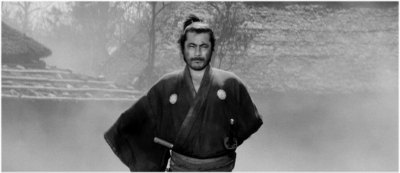
A great shot of Sanjuro, hopinng to watch the two gangs weed each other out, thanks to his own skillful machinations.

When it was released, Yojimbo was a massive hit. Kurosawa's name had already been well-established throughout the cinema world, both popular and critical, but Yojimbo offered something new. While it was still clearly a samurai movie, the character of Sanjuro provided a rather new creature: a true mercenary with only the odd pangs of morality. Essayist Alexander Sesonske gives a really interesting analysis of it here.

Popular audiences loved the sword-swinging action and the steady dose of sarcasm throughout the movie, and this is no surprise. What was a tad surprising to me is how universal the critical praise was for such a “western style” action film. This original TIME piece, in addition to raving about Yojimbo, offers a really insightful look at Kurosawa himself and his place in Japanese film history (it was already clearly staked out, even back in 1961).

Yojimbo may have borrowed certain elements from other, earlier, sources, but its mark has been so indelible as to have spawned several direct remakes, set in different places. The first, and probably the greatest, is the Sergio Leone spaghetti western, A Fistful of Dollars (1964). Other less notables include the science fiction version, The Warrior and the Sorceress (1984), and the return to black-and-white noir, Last Man Standing (1996). Love the first one. Never seen the latter two.

My final word? Steam up some rice, warm up some sake, and fire Yojimbo into the DVD player!

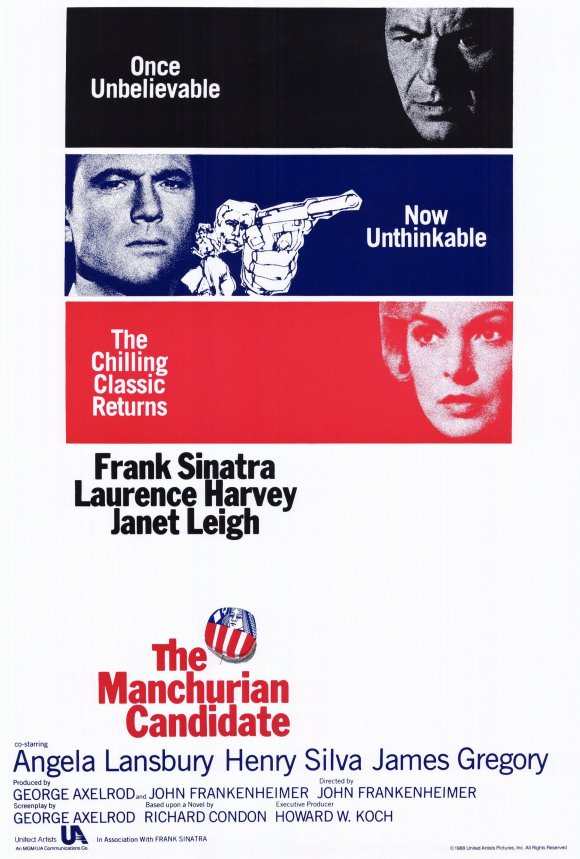
Coming Soon: The Manchurian Candidate (1962)


Chinese communists! Brainwashing!! Assassination plots!!! Angela Lansbury!!!! Frank Sinatra!!!!! How can one film have literally EVERYTHING??!!! Come on back later and find out!

Please be sure to pick up all empties on the way out.
Friday, November 12, 2010

Film #38: Ikiru (1952)


Title for Us English Types: “To Live”

Director: Akira Kurosawa

Initial Release Country: Japan

Times Previously Seen: none

Teaser Summary (no spoilers)

Crusty old bureaucrat is diagnosed with stomach cancer, seeks for ways to squeeze some life out of his remaining months.

Uncut Summary (the full plot, including spoilers; fair warning)

In a stuffy Japanese city hall building, the aging Kanji Watanabe (Takashi Shimura) sits at his desk for the section chief within the massive bureaucracy. He does nothing more than robotically stamp forms, a task that he has done for over thirty years.

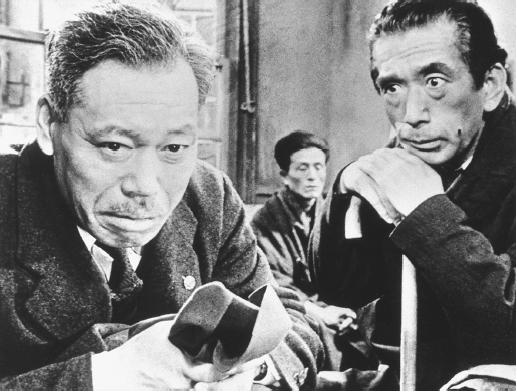
And then, a change. He learns that he has stomach cancer. This shakes him to his very fiber, as he begins to realize that he has done nothing of substance with his life. He begins to dwell on his relationship with his son, whom he lives with, and realizes that they are totally detached emotionally. This is clear through his son and daughter-in-laws' plans to edge Watanabe out of his own house and pension. This becomes known to the now-terminal man, but he is lost in his search for his soul. He decides to try and spend his remaining months living. The problem, however, is that after 30 years of being an automaton he doesn't know how.

Kanji Watanabe (left) beginning to realize his mortality & wasted life.

He begins by trying the hedonistic route. While drinking heavily at a local bar, he confesses his condition to a young pulp writer. The writer takes Watanabe out for a wild night of drinking, dancing, singing, and women. Watanabe begins by having some fun, but in the end is left with a hollow feeling of being unsatisfied with this definition of “living”.

The next morning, Watanabe runs into his co-worker, Sakai, a lively and friendly woman young enough to be his daughter. Watanabe becomes taken with her vitality and general happiness, and begins to spend time with her. Sakai is happy to oblige at first, and the two enjoy each others' innocent company, but Sakai eventually becomes nervous about Watanabe's obsessive fascination with her. In the end, she leaves her job at the city office to work in a toy factory. When Watanabe finally grills her on how she can always be so cheerful, she responds that making toys for children simply makes her happy. This is the small spark Watanabe needs.

After his two mysterious and unprecedented weeks away from work, Watanabe returns with a new mission: to make some kind of difference in the world before he dies. He reviews old cases in his stacks of papers and finds a past request to have a children's park built in a small, squalid neighborhood. He decides to finally stop the “pass the buck” system of his offices and take charge. He gathers his staff and heads out to the potential park site.

Flash forward five months. Kanji Watanabe has just died and the mourners are all at the wake in the family home. In attendance are several of the more prominent politicians from city hall. It soon becomes clear that the park of Watanabe's quest has not only been built to phenomenal success, but the credit for it is being taken by the mayor. This claim of responsibility, however, is up for serious debate.

As Watanabe's co-workers, family, and acquaintances pay their respects and recall the final months of the deceased's life, it becomes clear that Watanabe was, indeed, the singular force that led to the park's construction. Through sheer force of will and a quiet, unwavering refusal to take “no” for an answer, he got the plan passed through every stodgy section in city hall, even openly defying local gangsters and the mayor himself. After overseeing the park's construction, it was here that Watanabe chose to die on a snowy winter night, finally succumbing to the cold while singing the forlorn old tune “Song of the Gondola”.

In recounting their co-worker's tale of dedication, the still-living bureaucracts make drunken pledges to reform their ways and begin to perform their tasks with more active compassion. Of course, their talk is only so much hot air. In the end, nothing changes at the city offices. However, we are left with the joy of young children playing in the glittering new park that was left by Watanabe's iron will. It was here that he decided to pour all of his remaining life energy, and we are left with children's joyous laughter to echo the final acts of a man who, in the end, figured out some way to imbue his otherwise forgettable life with some meaning.

Take 1: My Gut Reaction (done after 1 viewing, before any research)

Ikiru is another great movie that I'll likely never watch again.

I came into this one expecting an outright depressing tale, based on the synopsis on the DVD cover, and that's what I got for a while. In the last 45 minutes, though, an interesting transformation took place within the film itself and in my connection to it.

For the first 90 minutes or so, things played out not unlike I expected. A man learns that he has 6 to 12 months to live, begins to seriously examine his life and try to find the vitality that he's let drain out of himself for the previous three decades. In going to the likely areas of first vice, then young love, there are no great surprises. Still, there is something there that sets Ikiru apart from other end-of-life, soul-searching movies. It has the gumption to stare the abyss right in its terrifying face.

Throughout the various episodes Watanabe experiences, he perpetually wears a haunting death mask. His distant, eerie gaze belies the fact that he has turned his sight inward to the extent that he becomes downright creepy. During most of these moments in the film, there is absolutely no music or sound. If you allow yourself to become lost in Watanabe's stare and try to ponder the existential questions that consume him, you may find yourself in the same very real place as this loosely fictional man. We all may end up right where he is, and what, exactly will you think of your own life when you can see the end of the road coming? I found myself getting quite pensive at times during the watching.

Here's a haunting scene from Kanji's night on the town, when he breaks into a forlorn love song from his youth:


Back to the narrative. The last portion of the movie took me by surprise, as there is a severely abrupt jump from a Watanabe newly rejuvenated by the new park project, to his funeral five months later (the narrator dedicates about 3 seconds to explaining this to us, the addled viewers). From there, the movie becomes a series of flashbacks that tell the rest of the tale. In that final 45 minutes, the movie says so much about the value of living personal dedication while condemning the ineffectiveness of stale, bloated bureaucracy. In watching all of Watanabe's coworkers lament Watanabe's death, we see nearly every possible facet of humanity. They all go through periods of reverie, nostalgia, sycophancy, guilt, defensiveness, and in the end, dedication that they will become true difference-makers in their offices. These final booze-drenched promises, of course, come nowhere close to getting fulfilled. This leaves us with perhaps the ultimate message of the film: why is it that only a person who has nothing to lose is the only one who helps others in need?

In this, you can see that the themes and narrative are the true strengths of the movie. Some other aspects of the film are not exactly world-beating to me. The acting is old-school. It's solid, especially for its era, but there were still some conventions that were prevalent in a lot of acting of the day that stand out to me in a negative way. Mainly is the very slight overacting at certain moments of higher emotion, especially laughter or sorrow. It's not enough for the actors to chuckle naturally – they have to erupt with ear-piercing cackles. They can't just cry – they have to collapse into a heap on the floor. It's not as bad I may make it seem, but a few moments stood out to me.

One thing I can't knock is, as you may imagine, the directing and cinematography. Akira Kurosawa was an absolute master. Before this film, I had seen many of his dozens of films, including epic action masterpieces like The Seven Samurai or Throne of Blood, more humorous adventure tales like Yojimbo, and the more measured psychological crime dramas like High and Low. Even though I already thought it before, the humane Ikiru confirmed my notion that Kurosawa was incredible at any cinematic story he decided to tell. Between the camera work and use of sound, the meditative, somber mood is set beautifully.

The movie is pretty long, clocking in at 2 hours, 20 minutes, and to be honest, it sometimes feels like it. However, it's clear that there is no wasted time. By the time you get the end, with the near-death but redeemed Watanabe gently swaying back and forth on the park swing, contentedly singing the lonely lyric, “life is brief”, you can't help but feel that you've joined him on a spiritual journey every bit as epic as Ulysses or Beowulf.

Take 2: Why Film Geeks Love This Movie (done after further research)

Wow. Researching this movie is almost akin to a religious or epiphanal experience, not unlike the film itself.

While not exactly opening my eyes to anything in the film that I didn't notice upon first watching it, the thematic depth is confirmed and expanded upon. In reading several different essays and reviews, it becomes clear that, among Akira Kurosawa's brilliant films, Ikiru is often cited as his true masterpiece. This undoubtedly is for doing something that writer Alexander Sesonske points out as being exceptionally difficult: create a film about death that carries very real emotional power from start to finish. In this essay, Sesonske agrees that Ikiru is a masterwork, but he feels that Kurosawa's sexier tales of the samurai still have an equal place among the great films of the world. I agree.

Writer Donald Richie goes deep into analyzing the film's place among great existentialist tales in history with this piece. He reminds that Kurosawa's favorite writer was Dostoyevsky, whose stories sometimes featured protagonists very much like Kanji Watanabe – those who need their death to become tangible in order for them to enact a meaningful life. One can endlessly debate what “meaningful” is, and Richie points out that this is a hallmark of great tales – that they can be interpreted differently throughout time and among different peoples.

I think that, of all of the different summations of the ultimate message of Ikiru, my favorite comes from the original TIME magazine review, written upon Ikiru's delayed release in the U.S. in 1960:

“To live is to love; the rest is cancer.”

Watching it in isolation robs it of its emotional punch, but here's the extremely touching and iconic ending:


That's a wrap. 38 films down. 67 to go.

Coming Soon: Ugetsu (1953):


The second of a cluster of three movies done in the Land of the Rising Sun in the 1950s. I'll see how this one does in the wake of such a weighty film like Ikiru.

Please be sure to pick up all empties on your way out.