Showing posts with label David Lynch. Show all posts

Sunday, August 9, 2020

Lost Highway (1997)

Director: David Lynch

And Lynch gets Lynchier. If you're in the right mood, this is a very good thing.

This movie follows professional jazz saxophonist Fred Madison (Bill Pullman), who one day receives a mysterious VHS tape from an unknown source. This sets off a sequence of confusing and frightening events that lead to Fred's arrest for murdering his wife Renee (Patricia Arquette), a horrific act which is seemingly caught on tape but of which Fred has no memory. While in prison awaiting a death sentence, Fred inexplicably into a young mechanic, Pete Dayton (Balthazar Getty). A dazed Pete is released by the flummoxed prison warden and returns to his life at an auto repair shop. There, he restarts a relationship with an organized crime boss, the intimidating and brutal "Mr. Eddie" (Robert Loggia). Pete begins an affair with Mr. Eddie's mistress Alice, a platinum blonde lookalike of Renee Madison. At Alice's pleading, Pete begins taking revenge on Mr Eddie and others who Alice claims forced her into the pornography industry. Along the way, Pete transforms back into Fred, who completes the grisly task of killing Mr Eddie and his gangsters.

Lost Highway was David Lynch's seventh feature-length film, nearly all of which I've seen (except 1990's Wild at Heart). Of those first six films, I find Lost Highway to be the most distinctively his, featuring nearly all of the traits that film lovers associate with the eccentric filmmaker. There is mystery, murder, beautiful women, and at least one man stuck in the middle of sinister forces. There are also supernatural elements involving swapped personalities, possible doppelgangers, and even suggestions of time travel. In short, it's not a straightforward narrative or story in any traditional way. It's also the most sex-drenched of any of his movies, even the sometimes disturbingly graphic Blue Velvet. It can all be a bit much to take, if you're not in the right headspace for it. But if you are, it's a fascinating visual and narrative exploration of many primal, human forces that often seem to underscore Lynch's movies and shows. My attempts to unravel what, exactly, was happening with Fred Madison and his wife (?) had me pondering some deeper, more profound possibilities regarding sex and violence and how they can be intertwined. These are themes explored really well in the David Cronenberg classic A History of Violence, but Lost Highway offers us a dark, hallucinatory fantasy version of it. 

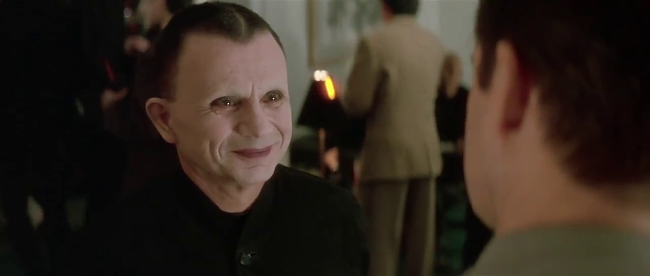
This creepy, mysterious figure appears to both Fred and Pete,
though his actual nature is unclear. Like most David Lynch 
works, there's more than a little that's left unsaid, leaving us
viewers to fill in the pitch-black blanks.
As much as any Lynch film, there's a sinister tone and undercurrent running through everything. It's more obvious here due to the visuals and music. Notably more than Blue Velvet, many scenes feature hard angles, deep shadows, and dark costumes and settings. This isn't to say that the movie is devoid of color; more that the vibrant visuals stand out even more in between the many moments and sequences shrouded in the darker elements. On top of this is a soundtrack dominated by hard-hitting, industrial heavy metal music, including genre icons Nine Inch Nails, Marilyn Manson (who has a small role in the movie), and German band Rammstein. For my part, I enjoy this kind of music, so this is an enhancement for me. Others are likely to find it repulsive or grating, though they would have to admit that it certainly fits the mood and themes of the picture. 

Lost Highway is just a mind-bender. I could probably watch it ten more times, coming up with a new theory each time as to what is happening and why. But rather than find this frustrating, I actually enjoy it. For me, this is a surreal movie in all the right ways. It taps into a dreamlike (or nightmarelike, to be more precise) wavelength that defies simple interpretation, which is what some of the best works of art do. I've been on a monster David Lynch kick lately, having watched every Twin Peaks episode and movie, Eraserhead, Blue Velvet, and now Lost Highway. And I'm still eager to rewatch Mulholland Drive and maybe even see Inland Empire, one of the few of his I haven't watched before. As unusual and challenging as Lynch movies can be, I'm still on board. 

Tuesday, July 28, 2020

Blue Velvet (1986)

Director: David Lynch

Pretty riveting, dark neo-noir type film which is the most accessible film I've seen from noted surrealist David Lynch.

I recall watching this one once before, about 20 years ago, though I had zero recollection of the second half of the movie. This means that I either fell asleep, or that I left the friend's house where we were watching it before it was over. Whatever the case, I'm happy that I finally went back to it.

The movie follows Jeffrey Beaumont (Kyle MacLachlan), a young man who returns to his cozy American town from college after his father is hospitalized after falling ill. While walking in a field near his neighborhood, Jeffrey makes the grisly discovery of a human ear lying on the ground. He takes the ear to the police, but can't seem to leave it at that. With the help of a police detective's daughter, Sandy (Laura Dern), he employs some amateur sleuthing techniques to dig deeper into the mystery. Before long, he is wrapped up with the sultry lounge singer Dorothy (Isabella Rosalini) and a maniac criminal, Frank (Dennis Hopper). Jeffrey is inexorably pulled into a dark, underground criminal world filled with drugs, violence, and depravity of a level that belies the otherwise peaceful-seeming town.

Blue Velvet is still pretty hypnotic, even after nearly 35 years, and certain elements almost seem like a practice run for some of what we would see in the original Twin Peaks  TV show 4 years later. The most obvious one is the notion of dark, twisted forces lurking beneath the tranquil, All-American, white picket fence veneer of the setting. You have the attractive young couple in Jeffrey and Sandy, who seem to be falling in love, and we see more than a few nods to the idealist view of relationship from American suburbia from the 1950s and early '60s. It doesn't take long, though, before things get weird. Like, really weird. No sooner does Jeffrey sneak into the lounge singer Dorothy's house for some intel on a possible murder than he finds himself in a closet, peeping on her undressing, then seeing her brutally victimized by the unhinged, sexually warped madman, Frank. This dizzying dichotomy of light and dark has long been a part of David Lynch's works, and Blue Velvet was his earliest and probably still his most accessible example of it.

Then there are the technical merits of Blue Velvet. The movie just looks so good. And I don't mean to say that it's easy or always pleasing to watch. It's not. There are just too many disturbing and violent behaviors going on to say that you "enjoy" watching it. Still, it doesn't take an expert to see that the costumes, lighting, sets, and cinematography are masterfully designed and executed. There's such a rawness to most of the scenes involving Frank that most films won't employ. When Frank is terrorizing then raping Dorothy, there are no edits or camera maneuvers to spare the viewers of just how horrific he is. Similarly, when Jeffrey is basically abducted to the apartment where Dorothy's child is being held captive, there is such a skeevy, dangerous vibe that one can't help but feel like Jeffrey has ended up in some deceptively drab-looking circle of Hell. An easily overlooked part of these disturbing sequences is the lack of music, creating a silence that intensifies the horror. On the flip side, there are other scenes and moments that are very lush and stylized, showing off Lynch's range of techniques.

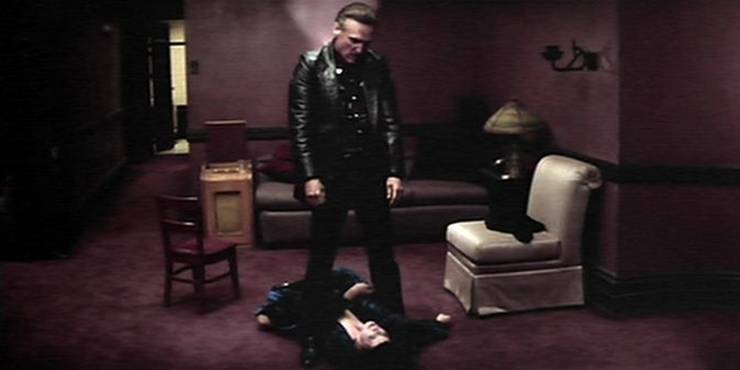
Frank, menacing over a terrified Dorothy. Frank is one of
the most frighteningly raw psychotics you'll ever see in film.
And Lynch doesn't let you off the hook by stylizing him in
any way - he's just a mad dog nutbag, on unflinching display.
I always find it hard to explain my feelings on the acting in David Lynch's movies, since there's such a range. There's almost always some campiness to be found in his works, which inherently requires some overacting and scene-chewing from the actors. And sometimes camp filmmakers just put bad actors in their movies, either because they find the amateur acting funny or because they just like the way an actor looks on film, despite a lack of acting ability. I think David Lynch has always done all of these things, and Blue Velvet is no exception. All that said, the four main performers - all rock-solid professionals - are perfect. And there's also a great, smaller turn we get from Dean Stockwell, the bizarre, perverted "ringmaster" at the aforementioned apartment scene (I must admit that this character can accurately be branded as a classic example of homophobia).

Like every David Lynch movie I've seen, I can only recommend it to people who are ready for something that's more than a little odd, twisted, and challenging in some respects. While the over-arcing story follows your typical crime thriller, the telling is much grittier, bizarre, and in your face than more popular fare in the genre. The best starting place for those who haven't seen Lynch's work is the original Twin Peaks TV show. If the darker elements of that program don't freak you out, check out Blue Velvet. From there, Lynch's work mostly gets darker and more surreal, so it's a logical next step. 

Monday, July 20, 2020

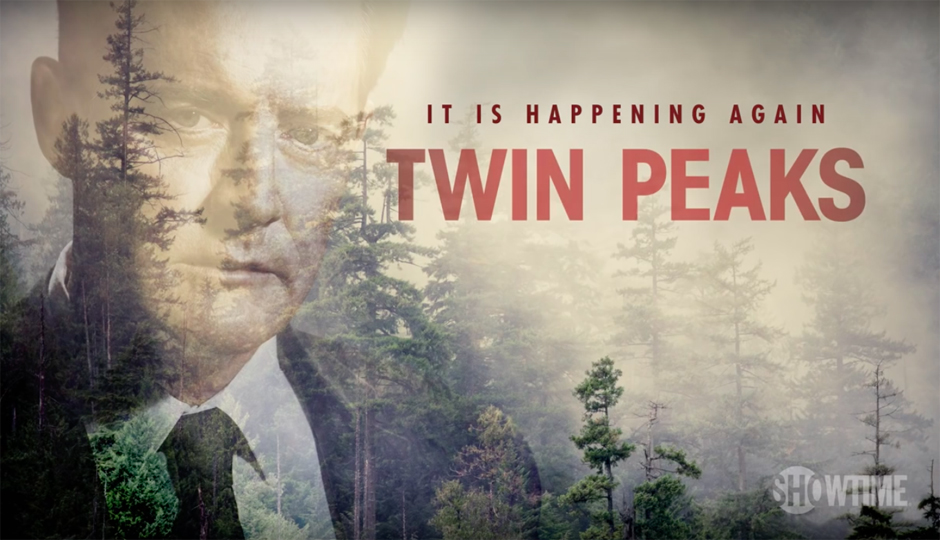
Twin Peaks (2017)

Spoilers Ahead! Fair Warning. 

Director: David Lynch

It's simple: if you enjoy David Lynch, you'll enjoy this show. If not? This one is highly unlikely to win you over.

I recently posted my reviews of the original Twin Peaks show and its prequel movie, Fire Walk with Me, as my wife and I worked through them. The original program was canceled after only two seasons and 30 episodes, then left in the ether for well over two decades. Then, lo and behold, it was resurrected by Showtime.

Sometimes referred to as Twin Peaks: The Return, this long-awaited continuation of the quirky, dark TV series does actually pick up roughly 25 years after the final episode of the original, which aired back in 1991. That final episode ended with a wild ride of surrealistic madness, capped off with buoyant, boy scout FBI Agent Dale Cooper seemingly getting trapped in another realm while an evil doppelganger had taken his place in our world. The 2017 resurrection series jumps ahead in time the same 25 years that had passed between the airing of the two series. In the strange "Red Room" limbo where Cooper was stranded in 1991, he is finally sent back out to reclaim his place in our world. The problem is that the evil version of Cooper has been there, long building and overseeing a criminal enterprise and planning how he will avoid being pulled back into the Red Room. In our world, a series of new, bizarre murders starts to bring back together many of the people in Twin Peaks and within the FBI who had previously known and worked with Cooper, especially dealing with the Laura Palmer murder.

Unless I wanted that summary to stretch into a 20-page exposition, I had to keep it laughably short and simple. Twin Peaks: The Return consisted of 18 episodes, all between 50 minutes and an hour, and it takes no end of strange, surreal twists, and is told in typically David Lynch, non-linear style. This makes any concise, clear summary all but impossible. At least, not one that conveys the show's distinguishing characteristics. This is a long, all-David Lynch production, and it contains pretty much all of the "Lynchian" elements that one might expect.

In short, my wife and I enjoyed watching it.

Andy and Lucy are among the many original characters 
to return. They're also part of several of the stranger,
stilted, and seemingly disconnected scenes and sequences
that we get over the course of the 18 episodes.
If you ever saw the original show, or a few of Lynch's more surreal films like Eraserhead, Lost Highway, and Mulholland Drive, among others, then you have a sense of what to expect. So many scenes and moments will leave you questioning what, exactly, is going on, especially in terms of the plot. Thanks to shifting perspectives, unclear identities, multiple identities, non-linear narrative, and outright surreality, Twin Peaks is far from a traditional narrative. Sure, it contains more than a few familiar mainstream elements of crime dramas - mysteries surrounding murders, some tense confrontations between hardened criminals, narrow escapes from death - but the precise combination and presentation of them in all uniquely David Lynch. Characters act and speak in strange, often stilted ways. The pacing of many sequences is bafflingly drawn out at times. Many of the odder elements are never clearly explained. Such non-traditional spinning of a story can be enjoyed, tolerated, or rejected. I actually enjoyed much of it, and was able to tolerate the rest. But I also understand why some people would reject the show.

Probably the most obviously bizarre elements are the supernatural/surreal ones. In Twin Peaks, David Lynch has created his own cosmology - one which we viewers are not meant to completely understand, in my view. It involves industrial machinery, electricity, deep space, atomic science, and several immortal beings that are able to move between alternate dimensions and planes of existence. I won't pretend to understand it all, but I greatly enjoyed the mental exercise of stitching together the images and implications presented in the show. While there are plenty of these supernatural elements to be found through the entire 18-episode series, the most mind-blowing and dazzling episode was Part 8, which is almost completely done in black and white, with sparing dialogue, and is a parade of images and settings which can only be understood as "not of this world." That is, except for some scenes at the beginning of the atomic bomb detonation in 1945, and some bizarre, ash-covered demon-like figures who appear later, in 1956. The rest is a hypnotic, dreamlike tour through alien landscapes and perception-altering imagery. Honestly, watching it was not unlike taking hallucinogenics, and I was transfixed.

One of the many striking and puzzling images from the
markedly surreal eighth episode. Some viewers would be
turned off by the strangeness of it, but I was dazzled by the
imagery and dreamlike nature of this chapter.
But what about the more grounded elements? What about Dale Cooper and the crime stories? This is where, I suspect, some viewers lost their patience with the show, which I can understand. During many of the periods on "our world," David Lynch often chose to draw scenes out to frustrating lengths. A ten-minute sequence of a few people trying to find a key to an apartment. Two full minutes of a guy sweeping up a bar floor. An interminable argument between Audrey and her husband that stretches out, piecemeal, over four or five episodes and ends up going seemingly nowhere. And there are plenty of other examples. For me, these were things that I tolerated, but I totally understand how some people found them infuriating. In my case, I found that they did somewhat fit into the overall off-beat vibe of the entire series. Or at least, they fit just enough that they didn't get on my nerves too much.

A significant part of the fun here is seeing which characters and actors return from the original show, and what their characters are up to. Amazingly, the overwhelming majority of the original actors were around and signed on for it. Some of them don't show up until much later in the season, and very few of them have any great roles. In fact, almost none of them have any more than maybe 30 minutes of total screen time, across all 18 episodes. I have to think that this was much more about David Lynch just wanting to show faithful fans of the original show that these characters are still around, even if most of them no longer have any real connection to the greater events swirling around Agent Cooper. Whatever the case, my wife and I certainly perked up when seeing an original cast member turn up, however inconsequential their presence may have been.

The alienness of the Red Room serves as a microcosm for how
a viewer might feel while watching this show. Familiar elements
mixed in jarring, inexplicable ways can both attract and baffle.
I do have to point out something which my wife initially noticed about the entire show, and which is hard to ignore once perceived, and that is the role of women. David Lynch is clearly an artist who has a deep passion for the styles and character archetypes of popular Americana from the 1950s and 1960s. This has long been a huge part of his style: blending those classic, romanticized elements of U.S. culture with the twisted, pitch-dark demons lurking beneath their surface. Unfortunately, he also seems to keep his female characters almost always restricted to the old, limited roles of popular stories from those bygone decades. With very few exceptions, the women in Twin Peaks are either victims, objects of lust, mentally unstable, or various combinations of those three. A few others may only be attractive window dressing, such as Agent Tammy Preston in The Return, who does little more than pose like a model for David Lynch's Gordon Cole character to gaze at from time to time. As our culture changes in its attitudes towards representation here in the 21st century, it becomes harder and harder not to notice such a clear imbalance in gender roles in TV and films like this.

As implied, this show is a tough one to recommend. I certainly can't suggest that anyone start with this revival of the show, before watching the original. The original program will give you a beginning sense of whether you care for David Lynch's general style or not. More than that, though, I would recommend also seeing one or two of Lynch's relatively more accessible films, like his neo-noir thriller Blue Velvet or even the aforementioned Lost Highway. Those two contain some of the challenging, surreal elements that the director uses more in Twin Peaks: The Return. If you dig those earlier movies, then you'll probably like the resurrection of Twin Peaks

Tuesday, July 14, 2020

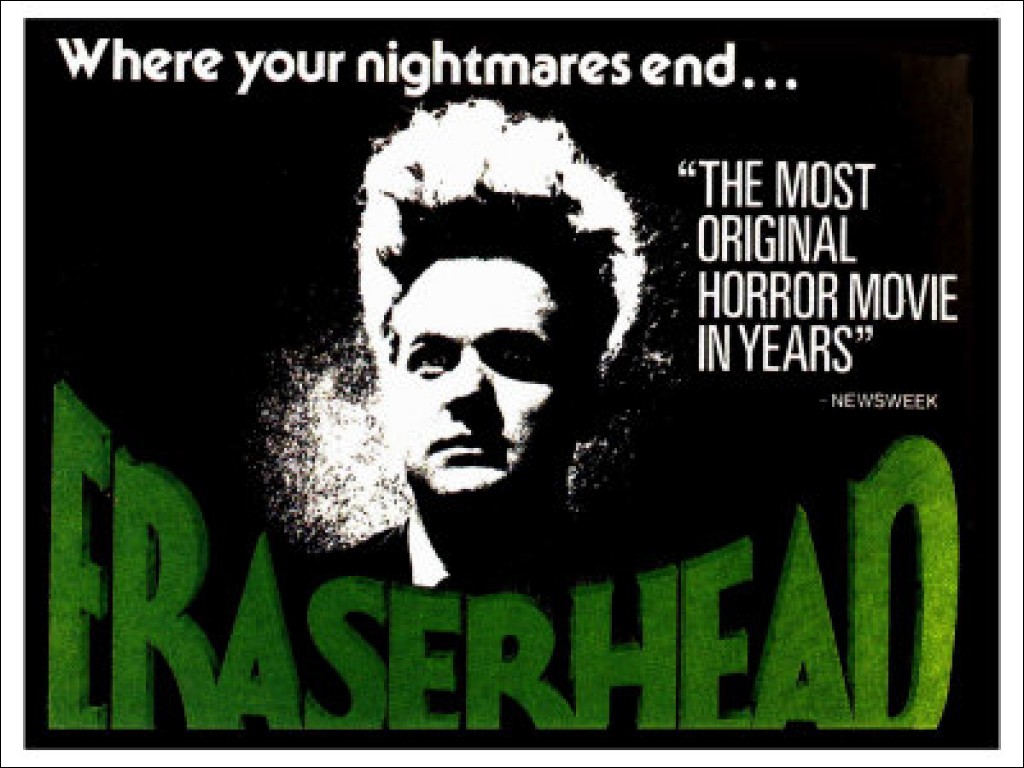
Before I Die #642: Eraserhead

This was the 642nd film that I've seen out of the 1,222 movies on the "Before You Die" list that I'm gradually working through.

Director: David Lynch

A relentless work of disturbing film art. Enjoyable? No. The work of a master? Unquestionably.

No summary or synopsis of this movie does it justice, but I'll give you the basic characters and "plot," as much as such a thing is possible. Henry is a rather awkward, lonely man who gets his girlfriend Mary pregnant. Mary has the baby and moves in with Henry, but the baby's incessant crying drives Mary to leave Henry with it for a night. From that point, Henry's mind seems to break, and it becomes more difficult to distinguish Henry's reality from his panicked and lust-fueled delusions.

Honestly, that's about the best I can do, though one could even debate such a simple explanation of the plot of Eraserhead. There are countless ways to interpret what you're watching here, thanks to a level of surreality that would become a hallmark of director and writer David Lynch. The movie is all in black and white, which already creates a starker tone than a color film. But this movie goes light-years beyond that. With carefully-chosen shooting locations, meticulously-crafted props and sets, and masterful use of light and shadow, this movie brings you into a nightmarish landscape that is a thoroughly-realized world of its own. This may seem an odd thing to say, since a natural reaction to much of Eraserhead is, "What in the hell is going on here?!", probably quickly followed by the question, "How much more of this can I take?" The story of Henry is presented in such a dark, horrific, disorienting manner that it is disturbing, almost from its opening moments. At the very least, it is challenging, with very few aspects that are straightforward or easily interpreted. Just to give a simple idea, the film opens on Henry floating in space; we get closer to a planet superimposed over his head, then enter a building on that planet. In that building is a man pulling various levers. These images are followed by something that seems to be a spermatozoa moving along, eventually entering a pool. We are shortly after seeing Henry go about what passes for "everyday life" in this movie. Right away, we're being asked to put some serious thought into what we are seeing. And the movie never lets up in this regard. Every person, every location, and nearly every image suggests broken people in a broken world, with terror seeping into every fiber of all of it.

Even an ostensibly "normal" scene like sitting around the
dinner table is humming with a foreboding sense of
eerie alienation and isolation. As weird as these scenes are,
they are among the tamer ones in the movie.
If this sounds like a difficult viewing experience, it is. In fact, this was my second attempt at watching this. My first attempt - about 15 years ago - was a failure after getting about 40 minutes into it. My brain just wasn't up to the task, even though I had seen and even enjoyed a few of Lynch's later films (which I'll be rewatching and reviewing soon). If you're not ready to see this as a piece of art to be studied - if you're not ready to grapple with multiple disturbing, perplexing images and sequences, then Eraserhead will not be for you. I must say, though, that on this successful viewing, I was fairly compelled. I think I found a better, objective perspective from which to watch a movie like this. This is not a movie to be "enjoyed," in my view. At least, not in the same way that a mainstream action or adventure movie is. Not even in the same way that a drama is. Rather, Eraserhead is a film that you allow to pull you in, in order to ponder over what vision its creator is bringing to life. And I don't think anyone can dispute that David Lynch had a cohesive vision here. Not cohesive in an obvious, narrative way, but cohesive in terms of tone and mood. Once I locked into this, the film became more fascinating. I certainly didn't "understand" all of it. Not even close. But I enjoyed the mental exercise of theorizing what the story and images were representing, and what it was saying about its protagonist.

This is certainly one of the more challenging, least accessible movies that I've ever seen. I can only recommend it to people who enjoy surrealistic art, and who don't mind dark and disturbing energy flowing through a movie. In the coming weeks, I'll be watching more David Lynch and coming up with an overview of several of his films and TV shows. I'm fairly sure, though, that Eraserhead will reign as his strangest picture. 

Tuesday, August 15, 2017

Retro Duo: Boy (2011); Enemy (2013)

Boy (2011)
The titular Boy, with his flighty but artistic brother Rocky
tagging along. Boy's T-shirt puts on display his love of pop
culture of the 1980s, when the story takes place.


Director: Taika Waititi

A brilliant early feature film from New Zealand native son, Taika Waititi.

I picked this one up on the recommendation of a Kiwi friend of mine, after I had told him just how much my wife and I had enjoyed Waititi's recent film Hunt for the Wilderpeople. This friend actually stated that he enjoyed Boy even more, and I can now see why. The movie tells the story of the titular Boy, an 11-year old native Maori growing up in rural New Zealand in 1984. Like most of his family, friends, and those around him, Boy is obsessed with American pop culture, especially Michael Jackson. Such pastimes help him get through a rather tough life taking care of his several siblings, as his mother has long since passed away and his father has been in prison for several years. Boy's life takes a wild change when his father Alamein (Taika Waititi) is released from prison and turns up to resume his role as Boy's father. The problem is that Alamein is essentially a 30-year old adolescent even more obsessed with 1980s pop aesthetic and machismo than the local pre-teens.

Not unlike Waititi's later Wilderpeople, Boy does an excellent job of blending the quirky humor endemic to the region with some truly heartfelt examination of relationships between people. Yes, the surface makes many of the characters seem almost cartoonishly goofy at times, but the motivations and impulses behind their buffoonery have a genuine feel. Boy's adulation of his criminally immature father makes all the sense in the world for a motherless kid who is desperate for a father figure. And both his and his father's actions are, while laughably silly at times, do reflect relationship dynamics that feel authentic. In certain ways, there is a similarity to the movies of Wes Anderson, whose meticulous aesthetic and peculiar humor are just window dressing on what are usually touching relationship troubles between family members. Waititi achieves much the same effect, including some of the same humorous tone as Anderson but utilizing a look much more his own and that of his native New Zealand.

This is an easy movie to recommend. Only those with a low tolerance for quirky films would have any great problems with this one. It's a brilliant blend of humor, heart, and region that was a pleasure to watch.


Adam and Anthony's meetings are far from the joyful
"separated at birth" kinds of reunions that one might hope for.
Rather, their dual existences suggests far grander and darker
things about the world around them and their perceptions.
Enemy (2013)

Director: Denis Villeneuve

Intense. Menacing. Puzzling. Bizarre in a way that would probably make David Lynch proud. Enemy was not exactly what I expected from the talented director of Sicario and Arrival. But it is quite good.

The movie follows Adam, a college professor who seems to be going through the motions of his life with limited engagement or passion. This includes his job and his sexual relationship with what seems to be a relatively casual girlfriend. One day, Adam is watching a movie and sees an actor who looks exactly like him. Overcome by curiosity, Adam tracks down the actor, Anthony, and tries to make contact with him. Once the two come into contact, things become stranger and stranger for the both of them, and the very question of their being separate people starts coming into question. Sprinkled through the movie in a handful of different scenes are strange sequences involving spiders, sex, or a combination of both. At the story's end, only one of the two "twins" is left alive, although his identity is still in question, as is his perception of the reality around him.

I'm still trying to figure this film out, several weeks after I watched it. The fact that I am still immensely impressed by it and may watch it again, despite its disturbing tale and imagery, speaks to me of a richness that is all too rare in movies. The tale of Adam and Anthony can probably be interpreted in countless ways (and I've already looked up a few very solid, highly fascinating theories), and they are all intellectually stimulating. Some touch on themes of masculinity, while others on the notion of being an unwitting puppet under a totalitarian system. And there are certainly plenty of others. As tricky as it can be to arrive at a clear, definite explanation for the surreal elements of the story, it is quite clear that the writers and director Denis Villeneuve were expressing a fantastic and disturbing vision. It is not unlike certain films of the aforementioned David Lynch, perhaps most notably Lost Highway or Mulholland Drive, wherein questions of identity and connection can abound but the sense of a cohesive artistic work still runs through the work.

Now that I've seen several of Villeneuve's movies, I'm all in with him. Like one of my other favorite modern directors, Darren Aronofsky, he tackles movies on vastly different but challenging themes and tones, and he does it with an amazing knack for visual and narrative artistry. I'm immensely excited about his upcoming Bladerunner: 2047, and whatever else he decides to helm after that. As for Enemy, it won't be to everyone's tastes, to be sure, given the dark mood and rather disturbing suggestions about relationships, identity, and society. But for those willing to delve into such places, this is a warped trip worth taking. 

Sunday, January 25, 2015

Retro Analysis and Review of Dune (1984)

Normally, I only dedicate single-film posts to new releases or films on the "Before I Die" list that I work from. The 1984 adaptation of Dune, however, has earned the right for all the wrong reasons.

Background

If you're wondering why I would be watching a film often mentioned among film history's all-time flops, I'm happy to explain. Recently, the very highly-acclaimed documentary Jodorowsky's Dune hit theaters. I knew I wanted to see it. However, I have also long wanted to re-read the original novel, and even re-watch the 1984 David Lynch adaptation. I figured that this would further enhance the viewing of the recent documentary. Hence...

The source novel: Dune by Frank Herbert

This is my longer review of it on Goodreads.

This 1965 novel is considered one of the all-time greats in the genre of science fiction. I read it first around fifteen years ago, but couldn't remember much of it. So I decided to give it another go. Having finished it a few weeks ago, it is now clear that I simply wasn't paying attention to what I was reading that first time. The book, though not without some very obvious weaknesses, is fantastic. There are tremendous ideas and creative speculative fiction within, and it was a great read.

Enjoying the book so much, I was anticipating my re-viewing of the 1984 film version...

Dune (1984) [Where Nearly All Goes Horribly Wrong]

I bop over to my local video store (yes, they do still exist, and yes, I'm lucky enough to live very close to one - Viva Video in Ardmore, Pennsylvania), and I ask for the movie. The eminently affable cinephile owner/manager Miguel hands me the case, telling me "Yeah, this movie's a mess. But I still love it!"
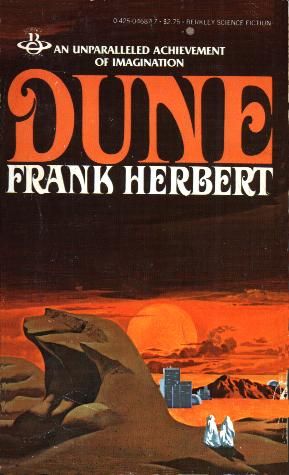
The poster was just artful enough to
make one hope for an intelligent,
engaging movie. If only...

That should have been a massive hint. Foolishly optimistic, though, I thought, "How bad could it really be?"

The answer? Really bad.

Not wanting to half-ass it, I took the full plunge and opted for the 3-hour extended cut of the film. The 176 minutes within are an exhibit of just how many cinematic missteps can be made in one movie.

First off, I should explain that I understand and respect director David Lynch. He's been a skilled and unique voice in world cinema for decades now. As strange and puzzling as his movies can be, they show singular vision and can be highly engaging to the discriminating viewer.

That being said, his missteps and some serious meddling from the producers resulted in a simply bad film.

Almost every wrong choice that could have been made was made. One need look no further than the opening ten minutes of the extended cut (which, it should be pointed out, Lynch had little to do with). The story is set in a tremendously rich and complex universe, one which would require deft and creative film storytelling to lay out for a new viewer. Instead, the movie starts with a slow close-up of the cover of the book!!! Following this was the choice to simply have rather poorly drawn illustrations and narration by what sounds like McGruff the Crime Dog explain the entire political landscape to us. For over ten minutes. It's almost unwatchable. But I soldiered on.

Once the astoundingly clunky opening sequences are through, we get to feast our eyes on the live action. Immediately, it is clear that the aesthetic is drawn from every over-stylized, dated fashion of 1970s science fiction (think Flash Gordon, with a better budget). The actors, many of whom are classically trained and prestigious, go full-on operatic with the performances. This would be fine, except that the script is so insanely heavy with exposition that things crawl at a maddening pace. My wife, who has never read the book or seen the movie but was willing to give it a shot, threw her hands up and left the room after fifteen minutes. And I didn't blame her for a second.

Things only get more muddled as the film goes forward. All sort of interesting elements from the book are thrown into the film, but without any innovative ways to explain them, Lynch simply opted for endless voice-over narration to convey the characters' inner thoughts. While voice-over can occasionally enhance a film, it is generally considered a massive crutch in what should be a visual medium. And it's not just one or two characters' heads that we are in, but nearly every one with more than two minutes of screen time gets their little musings voiced over. It was a pretty lazy cop-out.

The story itself, while not exactly getting butchered, is pared down and modified in odd ways. The movie introduces a "sound weapon" used by the Atreides family that is not in the book. I can only presume that this was the script writer's attempt to create a "cool" device that might be the "light saber" of this movie. Well, it's not. In fact, it's rather ridiculous. The warriors who use them have to wear a restrictive-looking choker around their necks, with a cumbersome microphone sticking in front of their mouths. I'm no soldier, but I'd probably not want to go charging into battle with something that would, should I stumble and fall, crush my windpipe. Then there are the bizarre "heart plugs" that the Harkonnens use, which seem some strange insertion of Lynch's hallmark body horror movies.

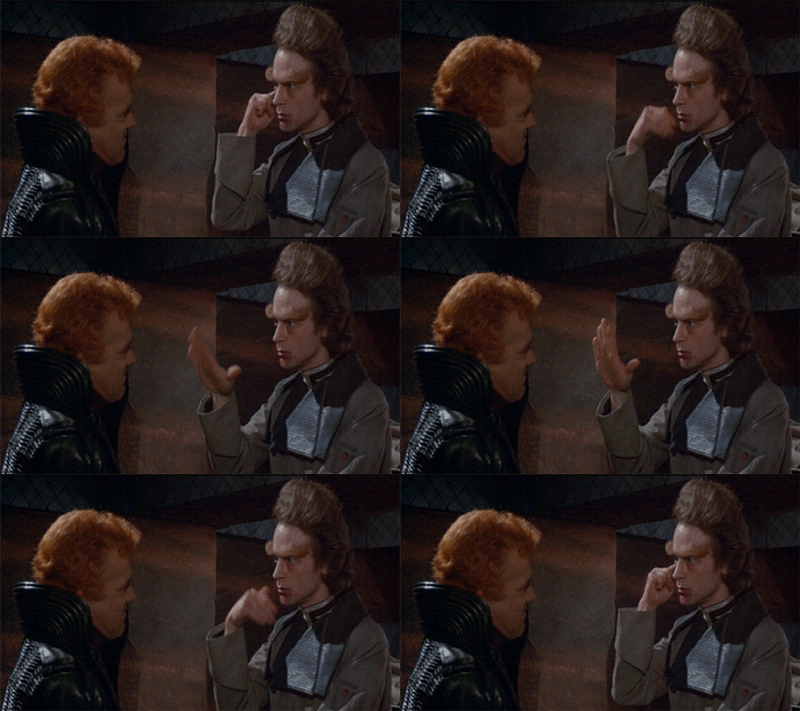
Brad Dourif as Piter de Vries (right) is the most obvious
example of misplaced camp in the movie. He and everyone in
House Harkonnen is laughably over the top.
The characters themselves are mostly one- or two-dimensional archetypes that never give the impression of being real humans at all. Admittedly, this was one of the main weaknesses of the novel, but a good screen writer could have imbued them with a little more depth and complexity. Instead, everyone is either purely noble or purely evil. As with all such stories, the result is a big fat bore.

The music. My god, the music. I'm amazed that anyone would have honestly tried to emulate the anthemic hard rock soundtrack of the campy 1980 Flash Gordon (again?), but try it they did. It's bad enough on its own, but it's rendered even more ridiculous when cast against just how pretentious the film is in most other areas. At least the Queen soundtrack went along with the self-aware, silly tone of Flash Gordon. Dune can make no such claims.

The overall effect of the acting, visuals, and music is what one would expect from the campy TV mini-series which were in their heyday just before Dune was released. This is fine when you sit down to watch The Thornbirds or Shogun, but it's simply laughable when you try to tell an intelligent and rich, epic tale of speculative fiction. As it was, they might as well have cast Richard Chamberlain as Paul Atreides. At least then, viewers wouldn't have been blindsided.

I will say that I found two things of merit, though they are relatively small ones. One is the way Lynch portrays the Spice Guild Navigators. This is something that is not described until later novels in the series, the Guild being highly reclusive. The film, though, gives us grotesque and fascinating creatures that, though once presumably human, have been warped and twisted by long-term use of "the spice," melange, which is what allows the Navigators to bend time and space. In addition to the Navigators are the still-suits worn by the Fremen on Arrakis, which do actually look quite cool. So cool, in fact, that I had to wonder whether the movie blew its budget on designing and making the still suits, leaving it far less money to dedicate to other aspects of the film which came off as rather cheap.

If David Lynch's Dune has any value today, it is mostly as fodder for a Mystery Science Theater 3000 working over. I was actually doing this myself, and by myself, during the last hour of the movie. The film would actually be great fun in this way, if you were watching with a few friends. Hardly what David Lynch had in mind, I'm sure.

Dune, the TV series (2000)

In 2000, the Sci-Fi channel put together a 3-part adaptation of Dune for TV. I watched it for the first time, and it's not bad. There are certainly issues with it, some rather serious, but it's a far cry better than Lynch's misguided visions in the 1984 version.

The more limited budget resulted in cheaper-looking sets,
background effects, and costumes; however, the TV series did
a far better job cutting to the heart of the novel's themes.
This more recent TV adaptation is able to include a bit more of the source material, including more development with and between the many characters. With a full running time of nearly 4-and-a-half hours, the grander themes of Frank Herbert's story could receive much more attention, as well. We get to see the slow, painful realization of Paul that his powers, training, and breeding have led him to the inexorable and almost pitiable position of becoming a messiah. The acting is solid all around, and the script is fairly strong in many places.

There are some misfires in the series, though. The Harkonnens, while clearly evil in the novel, are made laughably one-dimensionally evil in this series. The Baron Harkonnen even spews his expositions in rhyme, which is a oddly theatrical choice. The costumes are a mixed bag. The designers clearly went for high-end, progressive flash, and it actually works in some cases. In others, the styles are hilariously bad oversights of functionality, while simply being flat-out ugly. I assume we can chalk much of this up to budget constraints.

Hard-core, purist fans of the novel will, of course, find plenty to criticize in this version. However, this is still the more faithful and better-executed adapation, compared with the 1984 job.

Jodorowsky's Dune (The Agony of Unfulfilled Potential)

If only. As if the 1984 version of Dune weren't enough to make you wish for a more competent version of the titanic novel, the knowledge of the adaptation that almost happened is crushing. This past year, the documnetary Jodorowsky's Dune was released. It traces the birth, incubation, and near-life of what might be one of the "greatest films never made."

Back in the 1970s, renegade filmmaker Alejandro Jodorowsky was making serious waves in the cinema world. He had directed several challenging and mind-bending films like El Topo and Holy Mountain, which had set off protests and resulted in many critics hailing this strange, powerful new voice in film. Jodorowsky was approached by a young film producer to take on the project of adapting Dune. Not even having read the book, Jodorowsky accepted it, based solely on a brief summary of the story.

The character & costume design sketches done by
Moebius. They're vibrance gives some indication of
just how trippy Jodorowsky's adaptation would have been.
Over the next few years, Jodorowsky used charm, fear, shame, and a lot of artistic honesty and zealotry to assemble a mind-blowing crew of talent. By the late 70s, he had agreements from Mick Jagger, Salvador Dali, and Udo Kier to act in the film. He had artistic contributions from H.R. Giger (yes, this was years before Alien) and Moebius. He got Pink Floyd to agree to do the soundtrack. And there were others. This group had put together a massive storybook of Jodorowsky's entire strange and hallucinatory vision, from the first to the last shot. They even had much of the money they would need to do it all.

The rest of the money they needed - a relatively small amount of five million dollars - never materialized. The project had to be abandoned, never to be taken up again, mostly due to the controversial themes explored in the movie - a movie that Jodorowsky himself said wanted to be "like taking LSD, without actually taking LSD." It really was a shame because, even though the storybook and descriptions would suggest the potential for horrible failure, there was also the potential for a wondrously interesting film.

Again?

The concept of "the great Dune adaptation" is still a dragon that some are chasing. A quick search online for the terms brings up various rumors about studios and directors who may, or may not, be working on a new adaptation. Until it happens, these tales will never vanish.

But is it possible? In a post-Lord of the Rings trilogy film universe, my hunch is that it is possible. Main Line Films and Peter Jackson showed that, with some massive financial support and a dedicated, passionate, and talented creative team, a massive fantasy tale can be brought to stunning life on film. Of course, Tolkien's seminal work lent itself to commercial success, featuring family-friendly themes and characters. The most fascinating concepts in Dune would never garner such broad interest to make it a financially viable enterprise for a movie studio.

And so my personal guess is that I will never see a high-quality, highly-faithful adaptation of Frank Herbert's classic book. It's a shame, but perhaps the tale is best left where it began - as a purely literary work. 

Monday, November 17, 2014

Before I Die # 524: Tetsuo: The Ironman (1989)

If this movie poster seems bleak, horrific,
and claustrophobic, then you've got some
inkling as to the tone of the feature.
Director: Shin'ya Tsukamoto

Whoa. If you plan to watch Tetsuo, then you had better be mentally prepared. It is one trippy, disturbing piece of work, which wears its influences right on its sleeve.

The story, at its most basic, is that a young businessman in Japan suddenly finds different parts of his body turning into machinery. The process is slow at first, but then rages in fits and starts, so that the man soon begins to look like a moving, humanoid sculpture assembled out of scrap yard leavings.

Now, take that idea and imagine that the tale is directed by David Lynch in his most Eraserhead state of mind. Add in several dashes of David Cronenberg's grisly transformation horrors like The Fly and Videodrome, and blend in the psychological torture element of guilt over accidental murder as seen in the harrowing film The Machinist. Put all of those uncomfortable movies together, and you get Tetsuo.

If you're unfamiliar with the movies cited, you just need to know that the movie is stunningly brutal. And yet, its merits are there, for those who care to get past the grainy black and white filming, shocking imagery, and the breakneck editing. The result is that one feels claustrophobic and completely pinned down by the relentless onslaught of the machinery and technology that literally consumes the main characters. And this is clearly what director Shin'ya Tsukamoto was aiming to accomplish. For that, it is easy to see why this film is lauded in many circles.

The movie is taxing to watch. No particular shot lasts for more than four or five seconds before it jumps to another frenetic image, many of which utilize some very well-done stop-motion animation or skewed framing or constricted perspective. Fortunately, I was in the right head space to keep up with it, and the movie is a mere 64 minutes long. Any more than that, and I don't know that my brain would have been able to maintain pace.

File this one under the label of "interesting, experimental films that are good to watch once." If you're looking for a graphic, deeply frightening and challenging visual experience, Tetsuo will satisfy the urge. Just know what you're in for.