Showing posts with label The Lady Eve. Show all posts

Saturday, January 1, 2011

Film #44: Invasion of the Body Snatchers (1956)


Director: Don Siegel

Initial Release Country: United States

Times Previous Seen: once (about 8 years ago)

Teaser Summary (no spoilers)

Doctor discovers growing fear of strange, replica impostors of the denizens of his all-American hometown.

Uncut Summary (Full plot synopsis, spoilers included. Fair warning)

In a Californian hospital in the mid-1950s, Doctor Miles Bennell (Kevin McCarthy) is raving and being restrained by the police. A psychiatrist arrives on the scene and calms Bennell down into semi-coherence. All he can muster, though, is that everyone is in danger of some kind of looming menace that has taken over his hometown of Santa Mira, California. Once further eased, Bennell traces his story back...

A few days prior, he had returned from a conference out of the state to his hometown. Santa Mira seems like the fully realized American dream town, as defined by widely shared post-World War II sentiments: white picket fences, a clean downtown area where the tallest buildings are a mere three stories, and a populace of genial folks, all of whom know and like each other. Upon his return, all seems to be normal to Dr. Bennell. Then, slightly odd things emerge:

While driving back to his office, he nearly runs down a local boy who is running from his grandmother, screaming that his mother is “not his mother.” When Bennell returns to his office, his nurse informs him that nearly all of the patients who had scheduled appointments earlier in the week had canceled, saying that they were now fine. In addition, a cousin of Bennell's former girlfriend, Becky Driscoll (Dana Wynter), claims that her uncle is no longer her uncle.

Becky Driscoll and Doctor Miles Bennell.

This final claim spurs Bennell to investigate. He goes to Becky's cousin's house where the young woman explains that, while her uncle looks the same and has all of the same memories, there is a strange lack of emotion and tenderness in his eyes that had always been there previously. Bennell feels that it is simply some kind of misunderstanding and assures Becky's cousin that it will surely pass.

That evening, Bennell begins to try and rekindle his past relationship with Becky. However, before he can make any real progress, he receives an urgent call from a friend and local writer, Jack Belicec and his wife, Teddy. Bennell goes to their house to find their shocking discovery laid out on their pool table: a lifeless, humanoid form that bears a close resemblance to Jack. No one is sure where the body came from, but they decide to leave it there, with the Belicecs keeping an eye on it, while Bennell takes Becky home.

Jack Belicec reveals his discovery of his own pod replica to Bennell and Becky.

At the Driscoll house, Dr. Bennell gets a disturbing feeling from Becky's father, whom he finds ascending from the basement below. He leaves, only to sneak into the basement and find another near-facsimile growing in their basement dumpster, this one resembling Becky. Bennell sneaks upstairs and rescues a slumbering Becky from the house.

Back at Bennell's house, the doctor calls the police and brings them to the Belicec's to see the “Jack” replica. The doppelganger, however, is now gone. Bennell then brings them to the Driscoll's to expose the “Becky” form, which is also gone. Just then, another police officer tells them that they have just found a burned body matching the description of the “Jack” form. The investigators chalk Bennell's notions up to delusions, and the doctor is sent home.

The next day, things start to become eerily normal again. The young boy and Becky's cousin, both of whom had claimed close relatives to no longer be themselves, now have no problems and claim that everything is fine. That night, while preparing a barbecue with the Belicecs, Bennell makes a harrowing discovery in his greenhouse: four bizarre, large plant pods. As he watches, they hatch and spill out steadily growing human shapes, each one taking on the structure of the four people present. They try to call the police, but the operator tells them that all lines both within and outside of the city, are busy. Bennell gives up and decides to leave the house with Becky, but not before destroying the pod bodies. The Belicecs decide to try and escape town on their own, leaving Bennell and Becky to do the same.

In traveling through the town, the two quickly discover that essentially all of their friends and neighbors have been transformed into pod people. Not only that, but they are trying to do the same to Bennell and Becky. The two see no immediate way out of town, and pursued by the police, escape into Bennell's office in town. Here, with some time to think, they decide that he pods take over a person's identity when the person sleeps. With this in mind, they dose up on amphetamines and decide to wait until morning.

After the sun rises the following day, Becky and Bennell see the greatest horror thus far. In the middle of town, hundreds of the people of Santa Mira, now clearly pod people, gather thousands of new pods to disperse to outlying towns and neighborhoods. The goal is clear: eventually turn every living human into a pod creature. Jack Belicec then shows up at the office with a few police, though we quickly learn that they are now, too, pod people, and the full, horrifying story is told. A few weeks prior, a few pods had rained down from space and landed near Santa Mira. The plants are parasites that can mimic any living form and take over their identities by absorbing their minds when they sleep. The new person seems to be a perfect copy, physically and mentally. The one thing missing, though, is emotion. The pod people who explain all of this to the doctor and Becky implore them to give up, ensuring them that emotions such as love are more of a hindrance than a help. The two refuse to listen and fight their way out of the clutches of their near-captors.

Becky and Miles flee from the now completely replicated townspeople of Santa Mira.

Now alone and completely on the run, Becky and Bennell frantically flee from the entire town of Santa Mira. They hide briefly in a cave, throwing the townspeople off of their trail for a few hours. Bennell eventually leaves Becky in the cave to investigate the outside, but the exhausted woman can no longer stay awake on her own. Bennell returns to her to discover that she too is now a pod person. He runs for the highway and just manages to beat the chasing townspeople.

Flash forward to the hospital. Doctor Bennell's story has failed to convince anyone of any more than that he is suffering from an intense hallucination. That is, until they receive a call from the local police detailing a traffic accident that has just sent a large truck spilling out the contents of its bed: hundreds of strange, pod-like structures. Hearing this convinces everyone in Bennell's presence of the veracity of his story, and they rush out to combat the menace. The viewers can only assume that they will emerge victorious.

Take that, you green, replicating pieces of space trash!

Take 1: My Gut Reaction (Done after this most recent viewing, before any research)

Pretty average.

Invasion of the Body Snatchers has a mildly interesting plot with some thought-provoking psychological suggestions, but ones that have been plumbed far deeper and more skillfully by many a talented science fiction writer (see anything by Philip K. Dick, for instance). The acting is adequate, but certainly nothing special. The direction and cinematography are solid, but far from revolutionary.

So why is this movie considered such a seminal one in science fiction films?

I'm sure that my further research will reveal or confirm some of my suspicions about the answer to this question, but there are several easy speculations to make:

One is that it may have been one of the first sci-fi movies to strike at deep, universal psychological fears. The clearest one is the ever-present question about human emotion. Is love truly such an enviable feeling? When one considers the pain and suffering that it can cause when lost, how many of us would really clutch so tightly to it? This is the question that the pod people pose to Bennell and Becky towards the end of the movie. Their response is the typically humanistic one – an outright refusal to exchange ostensible peace for their ability to retain their emotions. Still, while this is a curious thought experiment, its one that probably requires a more austere setting than a “vegetable aliens crash land and take over” context to ponder with any true gravity.

Here's the link to a youtube clip that gives a good sense of when things get cranked up: the all-American barbecue with friends so rudely interrupted by usurping space plants. (Sorry for the lack of an embedded clip)

The more obvious explanation for the endurance of this movie is the time in which it was made. Of course, 1956 was when the Red Scare of communism was roughly at its height. Though the ideal of a “perfect America”, as envisioned by Anglo-Americans, had crystallized and been informing popular entertainment (a la Leave it To Beaver, The Andy Griffith Show and The Honeymooners), the perpetual threat was the notion of communism. And of course, detractors of communism claimed that it was a system in which people would become little more than machines, whose sole purpose was to subsist and procreate. Invasion of the Body Snatchers clearly latches onto this primal fear of Americans and runs with it. There's even a moment during the grand exposition in Bennell's office when the doctor asks, “So, we would all be the same?” to which the pod person responds, “Yes.” Pretty hard to miss that one.

While the concept of using science fiction as a vehicle to create symbolized versions of communism isn't unique (I'd be remiss if I didn't mention The Blob, filmed here in my home of Phoenixville, PA), I believe that Invasion may have been the first film to be so blatant about it. The science fiction veneer is so thin that I find the filmmakers' notions a bit ridiculous: that viewers would equate the blank-faced pod people spawned by extraterrestrial plants with the reality of communism. It borders on contempt for one's intelligence, perhaps no more so than during the finale, when a frantic doctor Bennell is running along the highway, screaming for help and madly attempting to explain his pursuers: he stares directly into the camera and yells, “You're next! You're next!!” It may as well have been Senator Joseph McCarthy himself doing it.

The final aspect of this movie that I feel may be seen as influential is the juxtaposition of the bizarre and terrifying with the exceptionally “normal.” By giving the viewer the town of Santa Mira, a carefully-constructed vision of the Utopian, 1950s American ideal, and injecting an all-consuming, hidden, alien threat, it relies on the time-tested formula of tapping into the terror of the familiar and comfortable becoming alien and deadly. It's something that has been notably used by the likes of David Lynch in Blue Velvet and the cult classic TV show, Twin Peaks. Invasion a of the Body Snatchers is the earliest piece of film work that I've seen that uses this combination, and I suspect that it may have influenced later filmmakers.

Whatever the reason is for this movies's status within the cinema world, I feel no need to watch it again. Science fiction to me, a person who really loves a good sci-fi tale, is all about ideas. The primary thrust of it all, from H.G. Wells' The Invisible Man, through Dick's Do Androids Dream of Electric Sheep (a.k.a Blade Runner), to Darren Aronofsky's The Fountain, is the emotional and social impacts of humans' increasing grasp on universal knowledge and technology. These stories are, by nature, cautionary tales, but the best ones are not so heavy-handed with the warnings. Invasion of the Body Snatchers doesn't make much pretense about its political and social commentary, and its one that is rather outdated in my view. And while sometimes a science fiction film's other qualities can overcome an outmoded theme, Invasion doesn't quite hold up in 2010.

Take 2: Why Film Geeks Love This Movie (done after some further research)

In reading a bit more, I realize that my first take may be a little bit harsh. Still, I stand by the general feeling that, while it's far from a bad movie, Invasion of the Body Snatchers is not one that I would rate nearly as well as other science fiction movies.

First of all was that this movie suffered that same, cruel fate of several others: the Hollywood studio demand for a more “up-beat” ending. The result was that, instead of the original intended ending of Doctor Bennell running maniacally down the highway, screaming “You're next!!”, we got the happier version in which the earth will be saved by people's zero-hour realization of the invasion. Hence, in the same fashion as films like Baby Face, The Lady Eve, and others, Invasion of the Body Snatchers just misses the chance to leave its audience a bit more ponderous for being left with a more fatalistic outcome.

The lingering question and area of debate over this movie is, to no one's surprise, the allegorical question. Was it meant to be a commentary on McCarthyism or not? While director Don Seigel and star Kevin McCarthy (nominal coincidence, anyone?) deny this, I remain skeptical. Some also argue that the story is meant to warn against the danger of general conformity, whether it be through communism or dogmatic political stances. This is likely the reason that it has been remade three times, most recently in 2007's The Invasion.

Whether the film's creators had any specific political agenda or not, it is clear that the engine that drives the movie is people's fear of losing their emotions and individuality. When this is taken into account, I have to give the movie a little more credit. When one does watch and think about it, there are clearly several frightening notions suggested by the ultimate goals of the pod people.

Here's another link to the iconic ending scenes. Once again, no ability to embed the clip into the link, unfortunately.

The only other factoid of interest that I dug up was a very curious cameo. During a very brief scene at Dr. Bennell's house, Bennell nervously discovers the local gas man in his basement, reading the meter. That young, thin, polite and mustachioed young man is none other than “Bloody” Sam Peckinpah, the visionary director who would make some of the most revolutionary and violent popular films in history, notably The Wild Bunch and Straw Dogs. “He wasn't an real conformist, but he did play one in a movie.”

That's a wrap. 44 shows down, 61 to go.

Coming Soon: The Searchers (1957)

Yeee-Haaaawww!!! We finally ring in the Western in one of the best possible ways. Our first (but far from last) Western features none other than the embodiment of that truly American film creation: Mr. Marion Morrison, better known as John Wayne.

Please be sure to pick up all empties on the way out.

Wednesday, April 28, 2010

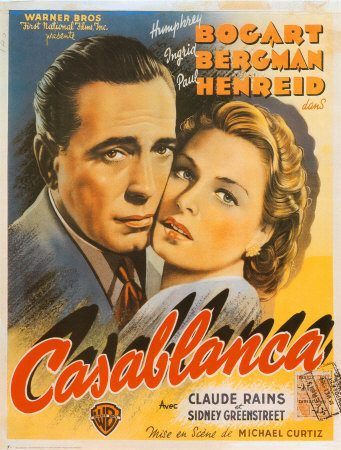
Film #24: Casablanca (1942)


Director: Michael Curtiz

Initial Release Country: United States

Times Previously Seen: 4 or 5 (last seen about 6 months ago)

20-Words-or-Fewer Summary (no spoilers):

Jaded club owner/ex-mercenary is reunited with past love, wife of underground Nazi resistance movement leader. Romance and adventure ensue.

Full Blow-by-Blow (a detailed summary, with spoilers. Fair warning):

World War II has completely erupted and the Axis is steadily marching through Europe. In the Moroccan city of Casablanca in northeast Africa, hordes of refugees are scrambling for freedom and desperately searching for ways and means to escape from the carnage. Casablanca is now a city filled with expatriates, rich and poor, and scoundrels looking to take full advantage of their desperation.

One semi-safe haven is the swinging night club Rick's Cafe Americain, run by American expatriate and former soldier-of-fortune, Rick Blaine (Humphrey Bogart). Rick is a world-weary man who seeks nothing more than to operate a viable club, clearly stating that he won't "stick his neck out for nobody." Despite this callous decree, Rick is a man who has a hidden soft spot for those he sees as decent people, and who privately despises the Nazis and their fascist ideals.
The four main players, left to right: Rick, Renault, Lazlo and Ilsa

One night, local scumbag Ugarte (Peter Lorre) shows up in Rick's, asking him to stash two exit visas, exceptionally valuable commodities in Casablanca, that Ugarte has stolen from a pair of Nazi couriers whom he has killed. Rick agrees, but Ugarte is promptly seized and killed trying to escape. Overseeing the action is the local corrupt police chief, French Captain Renault (Claude Raines) and newly-arrived Nazi Major Strasse. Strasse has arrived to find and contain escaped resistance leader Victor Lazlo, a Czechoslovakian who has suffered in a concentration camp, escaped, and continued to fight for freedom from Nazi rule.

Lo and behold, Lazlo appears, and he's not alone. With him is his beautiful wife, Ilsa Lind (Ingrid Bergman). When the pair show up at Rick's, the normally stoic Rick sees Ilsa and slips into a deep, depressive reverie. After being cordial to Victor and Ilsa, we learn that, prior to arriving in Casablanca, Rick had fallen in love with Ilsa in Paris just before the Nazis rolled in and took over. Rick had planned to flee Paris with Ilsa, but was left standing at the train station with his piano-playing comrade, Sam, and an extra train ticket. Devastated, Rick flees, not knowing what became of his love.

In modern Casablanca, Rick's heart has become hard. When Ilsa and Victor ask for his help in acquiring exit visas, he refuses, despite having the visas stolen by Ugarte. Ilsa eventually reveals that, when she and Rick were together in Paris, she was still married to Victor, though she had then thought him dead. Shortly before Rick's flight from Paris, she had learned that her husband still yet lived, and she abandoned Rick to return to her husband. Even this revelation seemingly fails to move Rick.

As Major Strasse tightens the noose around Victor, he and his wife become more desperate. Rick cooks up a scheme by which he plans to use the two exit visas for himself and the now exhausted and complicit Ilsa, apparently to leave Lazlo to the mercies of the Nazis. However, when all of the different forces converge on an airstrip, Rick offers a final surprise: he gives the visas to Ilsa and Victor and gets them on a plane, granting them their freedom. To boot, he guns down Major Strasse, a terribly severe crime that is overlooked by Captain Renault, who re-embraces his own past convictions. Victor and Ilsa fly away into the night, and Rick and Renault saunter off to who-knows-where, to fight for the Allied cause in even more distant lands.

Love and ideals conquer all.

Take 1: My Gut Reaction (done after this most recent viewing of the film, before any research):

Citizen Kane may be the most innovative and artistic work in the history of major American films, but Casablanca is the absolute pinnacle of what mainstream Hollywood can ever achieve in terms of storytelling. I can't think of a movie that has a tighter script, more memorable classic lines, and as solid a cast as this all-timer.

At the very start, things are a touch droll. During the initial scan through the city, we are treated to various scenes that convey the sense of wonder that is the thrumming populace. For the first five minutes or so, we see people getting robbed, suspected refugees shot, and even a young woman looking up at a departing plane and, dreamy-eyed, declaring, "Do you think we'll be on that plane one day?" Such a cheese-tastic line almost had me wondering just why I like this film so much.

Then, a reverse of my The Lady Eve experience occurs.

That film had an amazingly strong beginning, then faded significantly as it went along. Casablanca just gets better and better as the story unfolds. Every major and minor character is memorable, right down to the bartender in Rick's. Every scene and line of dialogue advances the story or reveals something essential about a character. And yet, despite the film being an economical hour and forty-two minutes long, it at no time seems rushed. There are quiet, ponderous moments, just as there are moments of high intrigue and suspense. The cocktail is mixed so perfectly that you don't even realize that you're being intoxicated until you've got that stupid grin on your face.

The lines. Those who haven't seen this film may not realize just how many classic lines come from this movie. When I first watched it back when I was about 21 years old, my initial thought was, "Man, that line was another cliche." Shortly after that first notion, I realized that this movie was the source for all of the cliches:

"Play it, Sam." (there is no "again," as some may have you believe)

"Of all the gin joints, in all the towns, in all the world, she walks into mine."

"Here's looking at you, kid."

"Round up the usual suspects."

"Louis, I think this is the beginning of a beautiful friendship."

There are plenty more, including this favorite gem of mine (sorry there's no clip, just the link):

"I was misinformed." Just count how many great lines are in this 2:30 bit of the film.

In between all of these more renowned lines are tons of others. Throughout nearly the entire film, I was smirking at the clever digs and cynical observations of everyone involved. The true stars of the show, though, are Humphrey Bogart and Claude Raines, who get the best lines and deliver them masterfully.

More needs to be said of Bogart and Raines. The other actors are excellent, including Bergman, Henried, Lorre and the others. However, when Bogie shows up as Rick, he becomes the stuff of legend. His weary hangdog face, subtle gestures, one-of-a-kind voice, and effortless delivery are cinematic platinum. His sarcasm is authentic and timelessly funny, his anger is intense, his depression is heart-rending, and his compassion, though sparing, is wholly redeeming. I can't possibly imagine any person playing the role as well, and no actor has filled the slot left in Hollywood once Bogart left.

Raines is the sleeper of this one. Though not as prominent as Rick, he's the character whose scenes you're waiting for. While he's mostly comic relief, like most of the characters aside from Ilsa, Victor, and Major Strasse, Raines is far superior to them all. His officious posture and self awareness as a playfully corrupt official are as entertaining and unique as they come. He's slimy, to a degree, but one whom you know has a good heart buried under all of that manicured vice. He and Rick pairing up at the airfield and heading out to unknown horizons on the war front is arguably the greatest ending a Hollywood film has ever had.

Here's one of Renault's greatest lines:


Of course, in addition to all of this is the time when the film was released. The U.S. had just seriously committed to engagement in WWII, so the collective emotions of the nation were focused on the goings on in Europe and northern Africa. If you keep in mind the uncertainty of things in those years, the film's story of love and hope becomes far more potent. As great as it is today, I can only imagine how much better it would have been to see it back in 1942.

There it is. With Casablanca, you arguably get: the greatest tale told in film, some of the greatest characters in film, the greatest lines in film, and the greatest ending in film. These things are the reasons that people have been trying for nearly 70 years to match Casablanca in terms of smoothness, tone, characterization, dialogue, and storytelling. Long before Steven Soderberg went at it, many have tried and come close, but none have matched it, in my view.

If you haven't seen this film yet, you only have two choices: watch it immediately or renounce any claim as a movie lover.

Take 2: Why Film Geeks Love This Movie (done after some further research):

As with Citizen Kane and other mammoths of film history, Casablanca has been studied and critiqued endlessly, if not for exactly the same reasons. It's a fascinating film since, while it can be called "sophisticated hokum," as one of the original script readers put it, there's a timeless charm that is exceptionally rare, though not elusive.

While the casting went through many iterations, one stood out to me. The Rick Blaine character was originally to be given to...are you ready? Ronald Reagan. Oof. I really can't get my mind around that one. I know Reagan had some clout back then, but anyone who's seen this movie can see why my eyes go wide when I consider this.

Another fairly interesting fact is that World War II itself indirectly (as well as directly) contributed to the greatness of Casablanca. Many of the supporting actors were themselves real refugees who had been prominent actors in their home countries, such as Germany, Bulgaria, Czechoslovakia, and others. This goes a long way to explaining why even the bit parts are so well played. I was a bit surprised at how dismissive the original TIME review was in regards to Raines' Captain Renault character. Bush-league?

In learning about the story and script I picked up that, in the film (it was adapted from an unproduced play called Everybody Comes to Rick's), Rick's background is left intentionally vague. In the play, it is revealed that in America, he was a lawyer with a wife and children. By omitting this, and only filling in the occasional detail about Rick's past fighting against fascist regimes, we're left with a more mysterious figure. To me, this is a fantastic example of skillful story editing.

Director Michael Curtiz was hailed as one of the great directors of his day. The surprising thing is that, apparently, he was not much of a "story" man. So much so that one writer explained that Curtiz didn't get along with writers and couldn't talk to them because, "He didn't know what the hell we were talking about." Rather, Curtiz was a master of scenes and working with actors. He may not have been able to create or adapt and tale, but once you gave it to him, he knew exactly how to translate it to film.

Something that I totally overlooked in my first take was the music. I think that this is because it's such a part of the fabric of the movie that I didn't give it much thought. It is excellent, and of course the song "As Time Goes By" is just as memorable as any of the classic lines of dialogue. Intriguing is the fact that the original music director didn't like the song, but wasn't able to find an alternative in time for the film's rushed release. I guess he had to eat a little crow on that one.

All of this is the slenderest tip of the iceberg of study that can be done on this movie. As opined above, Casablanca is not a masterpiece of high art or the culmination of genius. This film is not the ceiling of the Sistine Chapel. Rather, it's more like the most superbly crafted wooden chair. All of the pieces have been carefully carved and fit together just the way that they need to. You can sit down, lean back, run your hands over the supply curved arms, relax and marvel at how such a seemingly simple thing can be so rare and enjoyable. While it's perfection may invite overanalysis, there's no real need - just enjoy it.

Greatest ending ever? If not, it's in the discussion:


That's a wrap. 24 shows down. 81 to go.

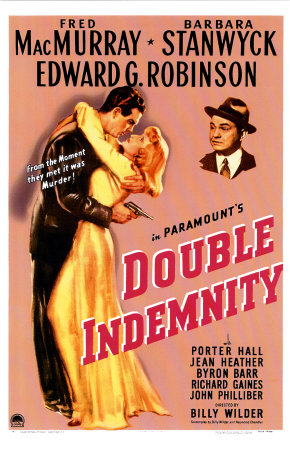
Number 3 in the 1-2-3 combo of some of my favorite films is this film noir classic. Barbara Stanwyck makes her third appearance of TIME's list, this time as a true femme fatale. I'm all geared up for another viewing of this back-stabbing, double-dealing yarn of lust and betrayal. Good, clean fun.

Please be sure to pick up all empties on the way out.

Monday, April 12, 2010

Film #22: The Lady Eve (1941)


Director: Preston Sturges

Initial Release Country: United States

Times Previously Seen: once (about a year ago)

20-Words-or-Fewer Plot Summary (no spoilers):

Wealthy ale heir is conned by lovely young grifter, who falls in love with him.

The Full Story (a complete summary, spoilers and all. Fair warning):

Charles Pike (Henry Fonda) a young ophiologist (that's snake scientist to we lay people) and heir to the vast fortunes of the Pike Ale company boards a cruise ship returning to the U.S. after a year-long research expedition in the Amazon. He is spotted and marked by Jean Harrington (Barbra Stanwyck) and her father, a pair of slick con artists. The savvy Jean uses her cunning and wiles to seduce Pike with the intention of suckering him out of some serious dough. In the process, however, she falls in love with him. She promises her father and herself to give up grifting and marry Charles, but before she can do so, Pike discovers their identities, dumps Jean and crushes her earnest desire to be with him.

The slick Harringtons on the left, with the mark, Pike, on the right.

Some months later, Jean, still seething from the rejection, sees a chance to get even with Pike. She poses as a young English aristocrat, Lady Eve Sidwich, and turns up at the Pike family mansion, once again conning Pike into believing that she's a different, though still infinitely charming, woman. Pike falls for her again and marries her. On the wedding night, just before the consummation, Jean tortures Pike with fictional tales of a wildly loose past with countless men. This time, it's Charles' turn to be crushed. He stops the train, mid-trip, and jumps off, swearing to never see his bride again.

Only after achieving her harsh revenge does Jean realize that she still loves Charles, and she seeks to make amends, still under the auspices of her assumed identity as Lady Eve. She is severely rebuffed by a still-disconsolate Charles, who then leaves for a new research journey into the jungles. On the ship, however, Jean tracks him down again, this time as herself. Charles sees her and, without realizing her past ruse as Lady Eve, instantly falls in love with her again. All is apparently forgiven and they fall into each other's arms.

Eve has truly captured her Adam, the one for whom she was made.

Take 1: My Gut Reaction (done after 1 viewing, before any research):

When I first watched this film a year ago, my lingering impression was of a decent, though not great, film. Upon this second viewing, I was conflicted for the first half. For 45 minutes, the film is so damn good that I almost wondered why I came away with such a lukewarm impression the first time. The characters are fantastic, Fonda and Stanwyck are absolutely perfect in their roles, the intrigue of the con game is totally engaging, and the script is razor sharp. Stanwyck renews my opinion that she may have been the sexiest woman in American film, which is only augmented by Fonda's stern, semi-naive portrayal of the bookish Pike. Everything that unfolds in the first episode of the film is flawless.

In this scene, Stanwyck does nothing more than run her fingers through Fonda's hair and whisper to him. She was so sensual, though, that this is one of the most alluring scenes I've ever seen in film.

Then, the second half.

After Pike leaves Jean emotionally high and dry, things got really tedious really quickly, and I can sum up every problem with one hyphenated word: Screw-fucking-ball.

Once the action goes to the Pike mansion, it all got to be way too much like the corniest bits of The Awful Truth, The Philadelphia Story, and their ilk. Virtually gone is the sophisticated plot and thoughtful dialogue, only to be replaced by a torrent of sophomoric sight gags. Within about 15 minutes, you get to watch the high-brow (read that with oozing sarcasm, please) jokes of: a couch tripped over by Pike, curtains ripped down by Pike, a roast beef platter spilled on Pike, coffee spilled on Pike, Pike fall over in a train, and Pike slip in the mud. If it had been a Three Stooges film, I would have been into it. Based on the first half of The Lady Eve, though, I felt like I had been demoted from a trigonometry to a finger painting class.

On top of that, the ending is a touch implausible. After Pike has dumped "Lady Eve" and sees Jean on the second cruise ship, his instantly re-kindled love is a bit confounding. He had initially dumped her as a deceptive gold-digger, and there's really nothing that's changed from this standpoint. Yet he gives himself right back to her, giving us all a happy ending that seems almost slapped together.

While the latter half left me unsatisfied, I still have to say that the first half is so strong that I'm willing to forgive the lamer follow-up. In fact, I was even able to deal with the weaker portions due to the performances of Fonda and Stanwyck. I cannot express enough how much I like Barbra Stanwyck. Before starting this blog, I only knew her from Double Indemnity (soon to be reviewed as film #25), and grew to appreciate her far more in Baby Face (film #9). I'm willing to admit that there were probably more stunningly beautiful actresses of the day, but I'm yet to see one who had the natural wits, power, and smoky sensuality that she portrayed with seeming effortlessness.

Check out this symbolic still of when she's seducing Pike under the guide of "The Lady Eve", especially how close her mouth is to Pike's:
Along with this, Stanwyck constantly draws attention to her mouth, whether it be with her words or movements. There's a scene on the ship deck in which she uses a rose to gently and playfully caress her own lips. It's entracing.

Fonda is a slightly different story. I've seen a handful of his better-known movies and I think he's great, though limited. Whether he was playing the quiet hero Tom Joad in The Grapes of Wrath or the cold-blooded murderer Frank in Once Upon a Time in the West, he had the strength one would ascribe to a gnarled oak tree. It's rigid and tough as hell, but in the end it's wooden. His character in The Lady Eve doesn't dispel this image that I have of him, but it's perfectly acceptable for the character. Charles Pike is meant to be a stiff bookworm who's uncomfortable around women, and Fonda was the perfect man to play him. The juxtaposition of Pike and Harrington was amazingly effective.

This is a film that, for me, represents a movie-watching experience that all movie-watchers experience at some point - the disappointment of a great extended first act followed by inferior second and third acts. I'd gladly re-watch the first half , but couldn't make any promises about sitting through the rest.

Take 2: Why Film Geeks Love This Movie (done after some further research):

No fantastic shocks in doing the research. Of note is that the original TIME magazine review, obviously impressed, indicates that neither critics nor fans were yet tired of the slapstick gags littering screwball films. I guess I just have to suppose that, had I been born in 1920, I would be far less bored by these elements.

One thing that I'm almost ashamed to have overlooked was the figurative nature of all of the physical humor. All of the the spills that Fonda takes throughout the story are meant to represent the mythical "fall" of Adam. This may add a certain amount of depth to the fumbling, but it doesn't make it any less tiresome to me.

Also of note is that director Preston Sturgess is a major footnote in film history. Most casual fans of classic films know at least a few old directors: D.W. Griffith, John Ford, and so on. Sturgess, though, is far less known, in the grand scheme. This apparently is because he was something of a comet - he banged out 9 extremely successful films within four years, most notably The Lady Eve and Sullivan's Travels. Nearly all of these screwball tales were darlings of moviegoers and critics alike, a feat that not many directors accomplish. I can only assume that his relative lack of enduring fame is due to the screwball genre having faded so much once films evolved in certain ways.

That's a wrap. 22 shows down. 83 to go.

Coming Soon: Citizen Kane (1941):


This is it! The one that many argue is the greatest American film of all time, and the film that kicks off what may very well be the best 1-2-3 sequence of the list: Citizen Kane, Casablanca, and Double Indemnity. Damn. On top of this, I absolutely love this movie and am greatly looking forward to watching it again, with my critic's hat on. Y'all come back now, y'hear?

Please be sure to pick up all empties on the way out.