Showing posts with label mafia. Show all posts

Monday, March 21, 2016

Gangster Flick 3-Pack: Kill the Irishman, Drunken Angel, and Animal Kingdom

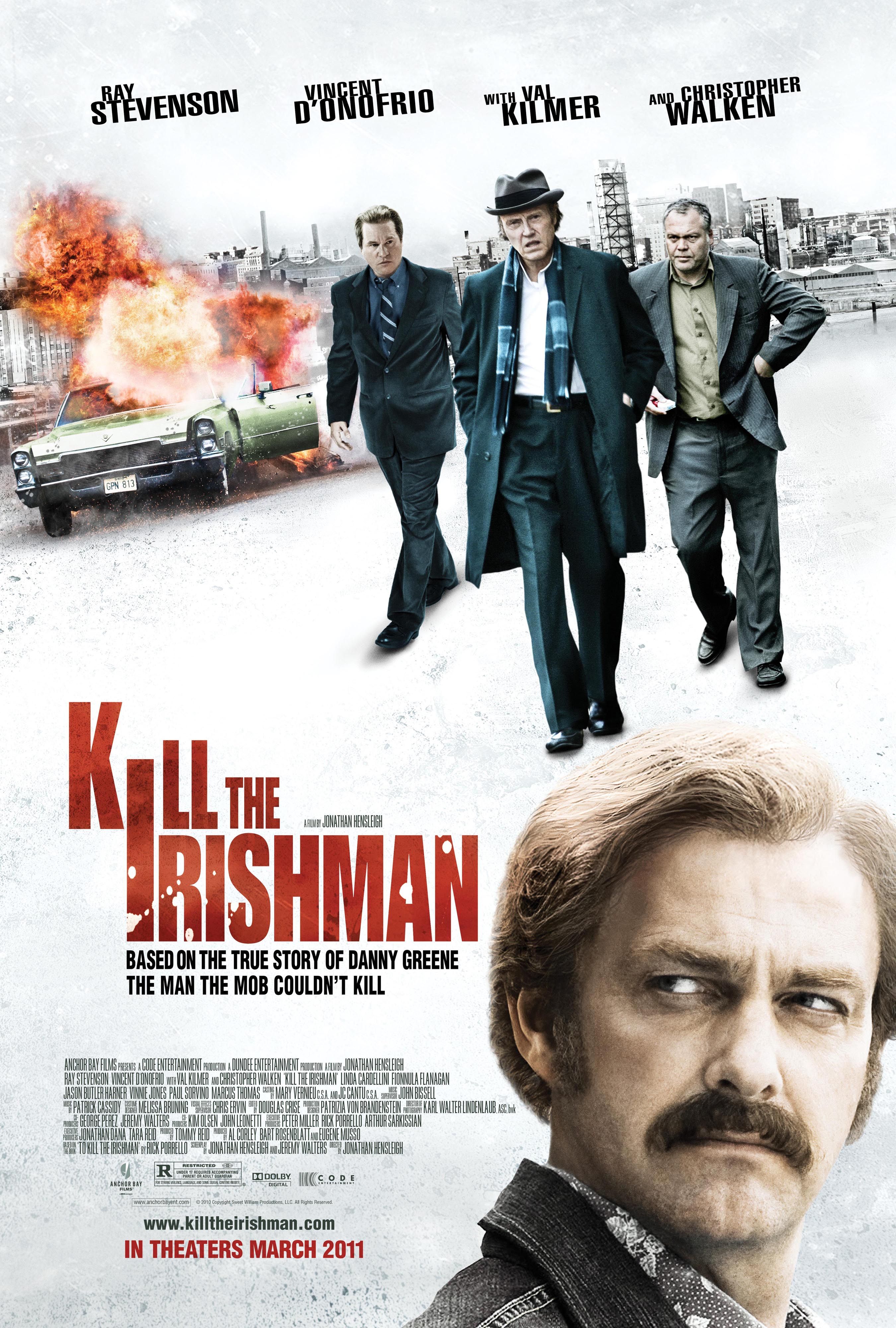
Kill the Irishman (2011)

Director: Jonathan Hensleigh

It may not be a masterpiece of the gangster film genre, but this one does a lot of things well.

Kill the Irishman tells the tale of the Danny Greene, a very real Cleveland native of Irish descent who became embroiled with the Italian mafia in the 1970s, sometimes as a reluctant partner but more often as a brutally tough adversary. Greene started as a longshoreman working under a corrupt and callous union boss. Greene muscles his way into taking over the operation, as well as several other criminal activities including stealing cargo boxes and cutting the Italian mob in on the action. After a few slip-ups and stints in jail, Greene settles into steady work as a mob enforcer. That is, until he decides to take himself and his Irish comrades out from under the thumb of Italian mafiosi who answer to crime families in New York City. This set off a massive war between 1975 and 1977, which saw dozens of car bombs planted and numerous criminals killed by one another. Through much of it, Greene escaped unscathed, becoming a folk hero to the Irish community of Cleveland.

This is definitely not the typical gangster movie, which is a clear strength. While "real stories" have been told in film plenty of times, there are few real characters like Greene. The blue-collar local was, according to the movie, highly literate and exceptionally intelligent. He was also immensely tough, both physically and mentally, refusing to back down in the face of an imposing force of professional criminals and hitmen. His is a pretty gripping underdog tale, even if he's not exactly the most pleasant of fellows all of the time.

News footage of the very real and, apparently, exceedingly
tough Danny Greene. Not many of us would pull the
"shirtless TV interview" move, but Greene made no bones. 
The cast adds some serious punch. Ray Stevenson was just the man to play the larger-than-life Greene, with his massive physical frame, steely demeanor, and wicked Irish wit. The other notables include Vincent D'Onofrio, Christopher Walken, Vinnie Jones, and Val Kilmer (yes, Iceman was still acting as of 2011). On top of that, nearly every mafia member is played by actors whose faces you are likely to have seen in at least two or three other mafia movies, including Paul Sorvino. This well-seasoned crew goes about its business very well.

The movie does have a few faults. At times, especially during the first act, things seem to feel a bit rushed. For a movie that only clocks in at 107 minutes, I was surprised that some areas went under-explored. Some even result in loose plot threads, such as the conspicuous lack of retribution after Greene unceremoniously humiliates a powerful union boss and takes his job. An even larger omission is what follows Greene's agreement to turn into an informant for the FBI, which is never again raised after the bargain is initially struck. Also, a few of the characters, as well acted as they are, felt a touch incomplete. While the bond between Greene and his closest cohorts is clear, the details of their relationships are not always fleshed out. This is actually a movie that could have been better with an extra 10 or 15 extra minutes to fill in a few gaps.

I may not watch this movie again any time soon, but I would gladly recommend it to anyone looking for a solid gangster movie that falls a little outside of the familiar Godfather and Goodfellas mold.

Post Script: The documentary feature on the DVD reveals how Greene was not quite as admirable a figure as the movie suggests. He was a complex man, and he was generous to the Irish in his neighborhood, but he was certainly not above some nasty violence or even snitching to the FBI to get what he wanted. This only reinforces my belief that Greene's life had plenty to justify a longer movie.
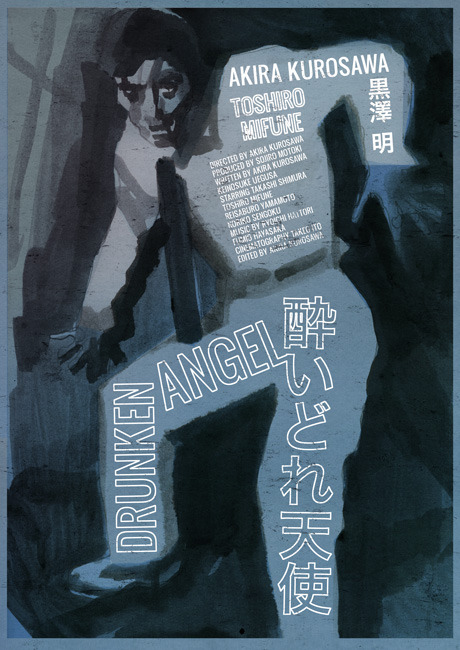
Drunken Angel (1948)

Original Japanese Title: Yoidore tenshi

Director: Akira Kurosawa

Fascinating and atypical character study of gangsters. You just have to look past some dated acting techniques to appreciate it.

Drunken Angel focuses on Doctor Sanada (Takashi Shimura), an alcoholic physician who ministers to the denizens of a post-World War II slum in Tokyo. Sanada is a blunt, temperamental, and alcoholic doctor who is brutally honest with his patients, even the yakuza-connected thugs whom he occasionally stitches up. When Sanada one night removes a bullet from the current head thug, the handsome and strutting Matsunaga (Toshiro Mifune), he detects early signs on tuberculosis. When Matsunaga rebuffs the doctor's suggestion that he might have the potentially fatal disease, a struggle begins between Sanada and the very psychology of the "tough guy" gangster widely found within the yakuza.

The strength of the film lies firmly in the emotional and mental struggle between the doctor and the primitive instincts of those criminals at the top of the local food chain. This is a more profound variation on the typical gangster movie, which is far more often focused on grabs for power or the dynamic personalities of charismatic or powerful criminals. The fact that Sanada is not merely a do-gooder, but rather an ornery booze bag with his own problems, suggests just how warped the morality in places such as post-WWII Japan had become. The beaten-down state of the neighborhood is as much a character of this movie, as is the will of its denizens to survive in any way they can.

I couldn't ignore a typical feature of films from this era, especially Japanese ones: much of the acting is sadly dated and better suited to the stage than cinema. The overblown physical gesticulations and overall lack of subtlety continued in film until well into the 1950s, and Drunken Angel is no exception. While Shimura and Mifune are much more naturalistic, it only serves to accentuate how clumsy the performances by the entire supporting cast look in comparison. The heavy doses of unimaginative "yakuza tough guy" dialogue does nothing to help the matter.

As with all Kurosawa movies, this is one where the basic story and overall theme is likely to stay with you long after you watch it. This is fortunate, as I am unlikely to watch it again. A true student of cinema is likely to give it repeat viewings for its masterful camera work, but I am no true student. Instead, I could appreciate the look and emotional tones of the movie, just as I think anyone could and should.


Animal Kingdom (2010)

Director: David Michod

Though one critic called it "Australia's answer to Goodfellas," I found this one more like Australia's answer to At Close Range. This is a good thing.

Focusing mostly on Joshua "Jay" Cody, the movie follows this modern Australian high schooler just after his mother dies of a heroine overdose. With nowhere else to go, he returns to living with his grandmother and three uncles, all of whom are criminals of a rather serious nature, including armed bank robbery and drug dealing. Jay doesn't seem to have much of a will of his own, so he begins getting caught up in the wild larceny of his uncles. It isn't until several of those closest to him start to die that he is truly forced to make some very hard decisions about whom he will ally himself with.

This basic premise is quite similar to the excellent based-in-fact film At Close Range, though without the strong patriarchal figure portrayed by Christopher Walken. Nearly everything else is there, though. The aimless young man. The warped family that sucks him into their twisted lifestyles. The generally grim, fatalistic tone. Like many of the best gangster and crime movies, Animal Kingdom strips away all of the glamour often layered onto such stories, leaving us with its most horrible aspects.

This description surely suggests that this is not an "entertaining" movie, and it is not. I did not, however, find it a chore to watch. The plot is unpredictable, the action is very well-paced, and the acting is outstanding (this last was a bit of a surprise, as the only actors whom I recognized were Guy Pierce and Ben Mendelsohn). Seeing just how a young man at a frightening crossroads reacts to the craziness around him makes for intense and compelling viewing.

I don't know that I'll ever need to see this one again, but it is an excellent gangster film, and one that likely flew under the radar for being foreign, relatively low budget, and lacking "name" actors. Don't let that turn you off, though. In fact, there is an upcoming TNT television series of the same name, and inspired by the original Australian movie. I don't know if I'll bother with the show, but the movie is worth seeing for anyone. 

Monday, January 4, 2016

Gangster Flick 3-Pack: Let Him Have It (1991); Layer Cake (2004); State of Grace (1990)

Let Him Have It (1991)

Director: Peter Medak

A harrowing drama about one of the most personal tragedies in criminal and judicial history.

Let Him Have It is a documdrama about the life of Derek Bentley, a mentally inferior young man who, in London of 1953, falls in with the wrong people and pays the ultimate price. Derek is a young, impressionable 19-year-old who is lured into a small gang of wanna-be criminals made up of boys still in secondary school. The leader is Chris Craig, an especially loud-mouthed lad who works hard to look and sound like the crooks glamorized in Hollywood gangster movies. He and three of his cohorts walk around town dressed in dark trenchcoats and black fedoras, trying as hard as possible to imitate Chris's authentically criminal older brother. Derek, an otherwise gentle soul, is taken in by the strong attitude and image of Chris's gang, and he begins to sneak away from his parents' home to hang out with them.

On the most fateful of nights, Derek finds himself on a warehouse rooftop with Chris, both of them playfully looking for a way to break in. The police arrive, however, and when one of them apprehends Derek, Chris pulls a gun. As the police officer demands that Chris turn over the weapon, a frightened Derek calls out "Let him have it, Chris," which Chris misunderstands as a prompt to shoot the officer. A firefight and standoff ensue, ending with Chris injured from a long fall, one officer wounded, and another dead by Chris's hand. The real tragedy begins when Derek and Chris are brought to court, where the penalty for their crimes is execution.

The movie is a strong one, and the tragedy of the situation is palpable. Thanks to very strong acting and pacing, what could have been a depressing slog is actually a sad but compelling account. Very much in the vein of Kieslowski's 1990 film Decalogue Five: Thou Shalt Not Kill and the 1995 movie Dead Man Walking, with their the juxtaposition of illegal murder with legal execution, Let Him Have It forces viewers to think long and hard about capital punishment.

As with any film which depicts a tragedy which happened in reality, the dramatization offers a buffer which a documentary would not. However, for cases which happened longer in past, such as this one, I feel that a well-crafted and respectful docudrama is the closest we can get to truly feeling the loss the the Bentley family did at the end of this affair. Let Him Have It is not a movie which needs to be seen more than once, but once is all but mandatory.

Layer Cake (2004)

Director: Matthew Vaughn

An entertaining British gangster flick, adding depth to the Guy Ritchie brand of films which preceded and obviously influenced it.

Layer Cake tells the story of a highly intelligent, never-named drug dealer (Daniel Craig) who is on the cusp of sealing a final "big deal" in London which will allow him to retire from the sordid, dangerous world of crime. As such stories go, though, things get extremely complicated, extremely quickly.

Up to the point of the tale's beginning, "Mr. X" has been expert at keeping his head down and remaining under the radar of more powerful or more volatile criminals in his industry. However, once the wrinkles start to pop up, X must navigate lethally treacherous waters infested with British gang lords, headstrong power-grabbers, and his own conscience. Following the actions and reactions of X certainly makes for a sometimes fun, sometimes harrowing, and often violent tale.

The style and construction of the movie is quite familiar to any who have watched 1998's Lock, Stock, and Two Smoking Barrels or 2000's Snatch, the two seminal modern British gangster movies by Guy Ritchie. There's a dizzying array of shadowy, vicious characters, and more than a little gallows humor sprinkled throughout. Compared to those earlier movies, though, Layer Cake ratchets down the insanity and overt comedy in favor of taut suspense. This is carried through with great performances all around by the brilliant cast, spearheaded by a pre-James Bond Daniel Craig.

One could criticize the movie for borrowing too heavily from Ritchie's hyperspeed style of storytelling (director Matthew Vaughn was, in fact, a producer of Ritchie's films), but this was easy for me to forgive. While there is nothing of great ingenuity here in terms of subject matter or methodology, Layer Cake feels enough like its own movie not to be overly harsh with any critique. It goes deeper into the protagonist's psyche than any Ritchie film ever dared, which prevents it from being a mere clone.

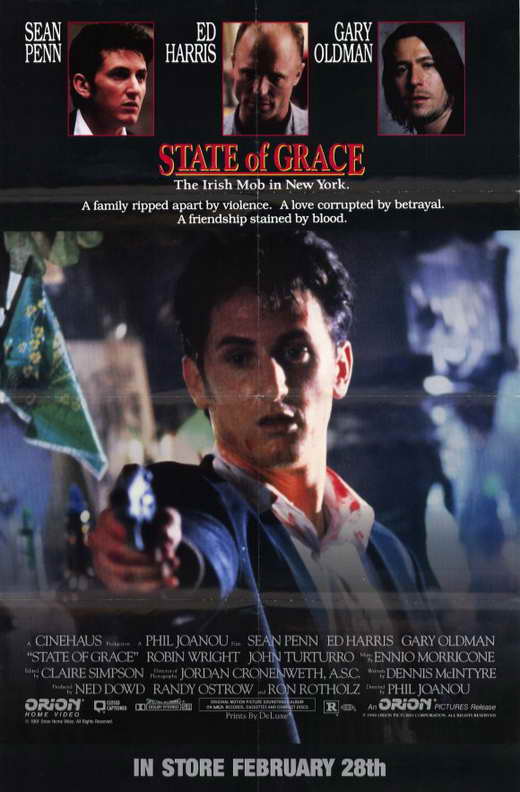
State of Grace (1990)

Director: Phil Joanou

If timing is everything, then State of Grace had nothing going for it from the jump. This is a shame, as it is a great gangster movie.

I had never even heard of this movie before I came across it on a "best gangster films" list. When I saw the cast list, I was further amazed that it was never on my radar. The movie follows young undercover police officer Terry Noonan (Sean Penn), who has returned to his old neighborhood in the Irish section of New York's Hell's Kitchen. Under the guise of a drifter looking to get back into the criminal lifestyle, he reunites with old friend Mickey Flannery (Gary Oldman), and the two soon begin cracking jokes and skulls, alike. Terry's ultimate plan is to obtain incriminating evidence on Mickey's older brother, Frankie (Ed Harris), who has become the boss of the local Irish mob. However, doing the right thing as a cop becomes far more difficult for Terry as he becomes further entrenched in his old environment.

The characters, plot, acting, and general direction of State of Grace are excellent. The drama between Noonan and the Flannerys is organic and tense, with a palpable emotional depth. The story unfolds and intensifies as well as the very best crime dramas. In addition to the great actors mentioned above, several supporting roles are played expertly by great talents like Robin Wright, John C. Reilly, and John Turturro.

At this point, you many be wondering how a high-quality movie, with such an outstanding cast, is not better-known. I wondered the same thing until I discovered that State of Grace was released on September 14, 1990. For those without a photographic memory for film release dates, this is the exact same day that Goodfellas was released. Yikes. When forced to go head-to-head against one of the absolute greatest gangster movies in the history of cinema, anything less than The Godfather would pale in comparison. Such was the fate of State of Grace. It could not have helped that, by this time, Martin Scorsese was well-established as a brilliant director, so that his return to New York crime tales was bound to drown out even an outstanding effort by a relative newcomer like State of Grace director Phil Joanou. No, Joanou's movie is not as great as Goodfellas, but it is one of the best of its kind.

The commercial and historical fate of State of Grace is rather sad. However, I highly recommend the movie to anyone who loves the gangster genre. 

Wednesday, March 4, 2015

Before I Die #541: Prizzi's Honor (1985)

This is the 541st I've now watched of the 1,162 movies on the "Before You Die" list that I'm gradually working my way through...

It's past the statute of limitations, but I still
feel like suing this poster for false
advertising. 
Director: John Huston

Totally disappointing.

When I see the words: "mafia," "Jack Nicholson," and "John Huston," I start to think good things. Such thinking resulted in the sad shock I felt in watching this movie.

The basic story is thus: Charley Partanna is a man quite literally born into the mafia. His father and god-father swear, immediately after his birth, to raise him within the Prizzi "family." Charley doesn't disappoint, growing to become one of the most feared mafia enforcer/assassins in the country. A very serious problem arises, however, when Charley falls in love with Irene Walker, a fellow assassin who robs the Prizzis. Things are further complicated when Charley's ex-wife, Maerose Prizzi, gets involved in the entire mess.

The story seems, on paper, to make for a solid mafia movie. When you add in a brilliant cast including Jack Nicholson, Kathleen Turner, Anjelica Huston, and many other great character actors, then you would expect movie gold. What I saw was a borderline-mess of a film that fell completely flat.

Firstly, Jack Nicholson's New York accent is horrendous. This is very odd to me, as he was born and raised in New Jersey. Despite this, his faux New York street guy affect is even worse than the shakey Boston accent he put on in The Departed. This wouldn't be such a nuisance if Nicholson weren't in nearly every scene. He is, though, so it's a nuisance. A larger, less superficial problem to me is that the tone is never consistent. At times it wants to be a dark comedy; at others a touching dramedy; and at others a suspenseful crime tale. It's a very difficult trick to pull off, and John Huston (an indisputably great director) failed on every count. Neither the characters nor their motivations ever fully gel, leaving a bizarre, rambling story in which I cared about no one and nothing.

I couldn't shake the feeling that this movie is one that could have been done by filmmakers like the Coen Brothers, whose quirky sense of genre and tone blending might have resulted in a brilliant cult classic. As it is, though, I'm left to wonder just why so many film critics have hailed Prizzi's Honor as an "all-time great gangster movie." I just don't see it.

That's 541 movies seen. Only 621 to go before I can die...