A decent, if a bit overstuffed, cartoonish adaptation of a popular, violent samurai-era manga.
The story is based on the hit Japanese manga (comic book) series of the same name by writer and artist Hiroaki Samura. I was a fan of this comic back in the late 1990s and early 2000s, and had kept up with the series for about half of its considerable length. So I was curious when I heard that hyper-prolific Japanese director Takashi Miike (13 Assassins) adapted it into film.
The story is set in feudal Japan, in the thick of the samurai era. A lethally-skilled mercenary known as "Manji" has blood infused with "blood worms," which heal any wounds with amazing speed. This makes Manji virtually immortal, though he seems to be dejected and devoid of purpose in life. That is until a young woman, Rin, seeks his aid in satisfying her desire for revenge. She wants to find and kill Anotsu Kagehisa, the young leader of a group of revolutionaries who want to destroy the long-standing system of formal fighting schools in Japan. Kagehisa and his band, contrary to traditional fighting school structures, uses unorthodox fighting weapons and techniques, making them all heretics in the eyes of the established martial arts schools. Rin wants Kagehisa dead because he killed her father and mother, due to her father's rejection of Kagehisa's revolutionary ideas. Finding and getting to him are no easy feat, however, as the young upstart is surrounded by a large band of ruthless and highly-skilled minions.
Blade of the Immortal is a pretty wild ride, though one that I was prepared for from having read the manga. Director Takashi Miike is known for very flashy, violent movies, and this one is right in his wheelhouse. The story is populated by colorful - both visually and personality-wise - oddball characters, nearly all of whom range from "violent" to "murderously deranged." As Manji and Rin work their way towards Kagehisa, nearly every edged weapon you can imagine flies, along with buckets of blood. It's stylish, vibrant, and brutal.
Manji squares off against a whole bunch 'o dudes. This is a pretty typical situation for the deathless, irritable samurai without a master. His immortality, along with his immense fighting skills, help even the odds, though.
But is it good? Yeah, I thought so. Not great, but compelling and entertaining enough. It probably would have been better served as a mini-series, though (I just learned that this is exactly what has happened - a full anime series started in late 2018). Despite clocking in at a good two hours and twenty minutes, the movie often felt rushed, introducing and cramming too many new characters down our throats in rapid succession. Most of the key adversaries are strange characters in and of themselves, each of whom could have been given more time in order to reveal the odd and sometimes highly-twisted aspects of their motivations and psyches. As it was, though, a new fighting weirdo would show up, trade blows with Manji, then get killed within a few minutes. After roughly three minutes of slower story, that cycle would repeat. And so it went for the entire second act of the film.
The original manga was a fun, modern, and fantastical take on violent samurai tales, and the movie maintains that spirit. It looks and feels rather campy much of the time, and the final battle scene, as epic as it is, drags out for too long in my opinion. Still, I enjoyed with one, as I imagine others will who want to see a well-done, live-action movie version of a story usually told in comic book or cartoon form.
A moving and magical tale, only slightly marred by a touch of hokum and a handful of laughably bad soundtrack tunes.
The movie begins when a high school girl, Mitsuha, seems to have some sort of mental lapse. One morning, she wakes up not acting at all like herself, much to the confusion of her family, friends, and classmates in her small, picturesque town near a dead volcano in Japan. The next day, she is back to herself, but with no idea of what had happened the day before. We eventually realize that, for some mysterious reason, she is swapping bodies with a young high school boy in Tokyo, Taki. At first, they each think that they are simply dreaming, but they eventually come to learn of each others' existence. It is then that the story only deepens, as an already strange situation only grows stranger and more mysterious, as the more the two find out about one another.
The story of Your Name is phenomenal, and it is told with amazing deftness. In the first ten or fifteen minutes, I thought I was merely watching a farcical "body swap" tale which has already been told dozens of times, across dozens of cultures. And the gender swap was nothing fresh, either, not even in Japan, where popular manga and anime character Ranma 1/2 had covered that territory thoroughly back in the 1980s and 1990s. But as Your Name moves beyond the introductory, almost obligatory pratfalls and humorous situations of a gender swap, you realize that there is much more going on with the tale. When Mitsuha and Taki start to try and meet one another, serious and baffling complications arise, leading one of them on an obsessive pursuit of answers - answers which confirm a truly surprising and brutal tragedy.
Despite some of the grimmer aspects, the movie is a romance at heart, even if a bittersweet one at times. And the supernatural elements at work are handled exceptionally well. Often, anime films can be overly flashy, masking narrative and creative shortcomings with an onslaught of chic style and frenetic action. Such is far from the case with Your Name, which is much more about quieter observation of characters and their deepening connection to each other. When one remembers that most of the truly great, classic romances involve supernatural elements and love transcending known realities and boundaries, then Your Name has its place among the classics.
I must note the one obvious blemish on this mostly masterful film. The soundtrack can be downright laughable at times. For whatever reason, those in charge of the music decided to hand the reins over to a Japanese group known as Radwimps. Radwimps is, as far as I can tell, a pop rock group who had some massive hits in Japan between 2006 and 2011. For Your Name, they put together a handful of what I (and my wife) found to be extremely sappy tunes, with lyrics that simply do not translate well into English. One example:
And when I dozed off into a lukewarm can of soda, I
dreamed of a world so far from here that's not on the map
Searching outside of the classroom window
Or in a summer morning that's brought from a commuter train
Maybe not the worst lyrics in the world, but certainly not good. They are downright distracting with the way that they are mixed into the film, and would have been better of sung in Japanese. Blessedly, there are only four of these songs with lyrics in the movie, but it was hard to ignore them when they turned up.
Lame pop song music aside, this was a great movie. Those who scoff at anime may not exactly be won over by this one, but I would suggest it to anyone with a mind open to such things. It is a rather touching, if in some ways melancholy, love story very much its own.
A Ghost Story (2017) Director: David Lowery
A wonderfully poetic and measured tale of the supernatural, which takes an old and almost silly convention and spins a beautifully melancholy story around it.
Part of this movie's magic is not really knowing where it is headed, so I will offer only a simply introduction to the plot: a young couple, played by Casey Affleck and Rooney Mara, experience a horrible tragedy. The result of the tragedy is that a sheet-enshrouded ghost, a la Casper, now quietly hovers within the couple's home. The ghost merely watches the living, though no living person can see it.
This movie really is unlike any other that I've ever seen. The first ten or fifteen minutes are quite slow. So slow at one point, in fact, that my patience started to wear a bit thin. However, once the story starts to move along at a slightly faster pace, my fascination only grew with every new scene. Along with that fascination comes a steadily-increasing sense of sadness, but it is a sadness of the beautifully poetic variety.
And lest you think that the movie is just a depressing slog into a tragedy which befalls two people, know that this movie goes far, far beyond that. The tale eventually incorporates supernatural elements beyond the obvious ghost, many of which are left open to various interpretations.
I will readily watch this movie again, which is the highest praise I can offer nearly any film.
One of the granddaddies of modern anime, and this one still holds up quite well.
Like Fist of the North Star and Vampire Hunter D, Akira was one of the titans of anime film that I watched many times back in the early 1990s. Not having seen it in over two decades, though, I wasn't sure how it would feel. I needn't have worried.
Based on director Katsuhiro's Otomo's equally-lauded, massive manga work of the same name, the story is a science-fiction action tale that takes place in Tokyo in 2030, now "Neo-Tokyo," nearly four decades after a mysterious and immensely powerful weapon had destroyed much of 1992 Tokyo and triggered World War III. The main story follows a few adolescent biker gang members, led by Kaneda, who become enmeshed in a bizarre and terrifying confluence of events and powerful figures. At its center is a long-buried, secretive science program that had, several decades earlier, been experimenting on children in order to harness energies no less powerful than the Big Bang itself. Kaneda's best friend, Tetsuo, is accidentally imbued with similar powers, but he has no training or assistance in controlling them. The result is a devastating variety of psychokinetic abilities which, though at first granting Tetsuo immense power, eventually overwhelm and threaten to consume not only him, but also the entire city of Neo-Tokyo.
At its heart, Akira is a cautionary tale about mankind meddling with the forces of nature. The way that it tells this story, though, is truly a sight to behold. The film melds several conventions of speculative fiction, horror, and action extremely well, and it does it on as epic a scale as one could imagine. When Tetsuo is first afflicted by the side effects on his newly-acquired powers, we get several nightmarish hallucination scenes that are as creepy as some of the best shows in the horror genre. As his abilities rapidly crescendo, the military and science groups who try to rein in Tetsuo find themselves hopelessly outmatched. But as they try ever-more powerful methods of stopping the young man, the scenes of destruction grow larger, more devastating, and more captivating for us viewers. What starts as a few soldiers and doctors being carelessly dismembered eventually escalates into Tetsuo destroying entire tank regiments, city blocks, and even a massive laser satellite in space, all with mental powers that have been unleashed.
Freaky, handsy teddy bears are just the beginning of Tetsuo's problems. The eerie music that accompanies these scenes just makes them that much more horrifying.
Scale is one thing, but it isn't everything (I site every Michael Bay Transformers movie as evidence). What makes the movie enthralling much of the time is the aesthetic. Katsuhiro Otomo was actually trained as an architect, and it shows in both in manga and animation. He had an excellent sense of how to use negative space and scale to create sequences which, even if chaotic and packed with action, make an impression beyond objects and people simply flying around the screen. To put it simply, there are a ton of gripping action scenes that are a blast to watch.
The story has always felt rushed, even if mostly compelling. This isn't really a big surprise, given that Otomo's original, serialized manga was a sprawling, 2,000-plus page tale that delved into multiple storylines involving Tokyo society, political corruption, and several other grand themes, along with the gradual erosion of Tetsuo's sanity and his friendship with anti-hero Kaneda. Otomo did a commendable job in condensing many of the main points of his larger story into a 2-hour movie, but the pace can often seem too brisk, not offering us enough time to know or care much about the main characters.
I would be remiss if I did not mention one of the movie's greatest strengths - the soundtrack. I had forgotten just how haunting and evocative it is. This movie is very nearly three decades old, but the score has not aged a day. It is still an amazingly slick fusion of electronica and traditional Japanese sounds, including driving taiko drums and even deep-throat Buddhist chanting. Like any great soundtrack does, it immensely enhances every scene during which it is played, from the motorcycle street races, to Tetsuo's earliest nightmares about the toys, to the finale during which the titular Akira emerges to try and stop the seemingly unstoppable, cosmic and destructive forces exploding from within Tetsuo. The music always hits just the right notes and tones demanded.
I was glad to fire this one up again. Far more than just bringing me back in time nearly three decades, it proved to still be an impressive work of film making.
Ninja Scroll (1993)
Original Japanese Title: Jubei Ninpucho
Director: Yoshiaki Kawajiri
Back in the mid-1990s, MTV would occasionally air brief, one- to two-minute clips of animation from fringe artists or foreign countries. I recall being stricken by a phenomenal clip of a quiet samurai crossing a bridge, only to be assaulted by a trio of thieves whom he dispatches with lightning-fast sword work and a few slick one-liners. I was dazzled, but also frustrated by not knowing what it was or where I could get more of it. Luckily, not long after that initial exposure, I discovered the source to be Ninja Scroll, a feature-length samurai/fantasy film. After watching the full movie, I was borderline obsessed. I bought the VHS tape and watched it at least once every year through the rest of the decade. My viewing rate slowed down after that, so familiar was I with the film, but this recent viewing renewed my appreciation for this anime masterpiece.
The story follows Jubei Kibagami, a drifter samurai/ninja for hire in the mold of classic lone gunmen/samurai in the films of Sergio Leone or Akira Kurosawa. Jubei is a master swordsman with a keen wit and a soft spot for the little guy. Through little fault of his own, Jubei becomes embroiled in a sinister power play to overthrow the local government by the "Eight Devils of Kimon," an octet of villains possessed of bizarre, supernatural powers. Jubei teams up with a female ninja, Kagero, and a crafty old government spy, Dakuan. As the trio try to fend off the lethal Devils and their otherworldly abilities, Jubei discovers that their leader is an old nemesis whom he had thought dead. This turns a mission of survival into one of revenge.
Jubei's duel in a quiet bamboo forest with the blind sword master Mujuro is my favorite stand-off against one of the lesser Eight Devils. It's relatively short, but has a fantastic atmosphere and one of several clever turns in the film.
To this day, this is my favorite anime film. As a viewer in his early forties now, I still appreciate the clever little turns in the plot and the overall tight storytelling. In my experience, most anime puts more emphasis on aesthetic, at the expense of thoughtful or mature plotting or character development. Ninja Scroll is a rare exception. I won't suggest that it can stand up to high-quality live-action movies, but there is still something genuinely moving and engaging to be found in this period tale. Jubei is well-constructed character, and when he finally loses his cool in the final sequences, his rage is fully palpable.
Of course, great ninja/samurai anime shouldn't just be solid story and characters. We came to see some sword-swinging action striking visuals, right? Right. Well, Ninja Scroll is tough to top in this department. The concept of having a set of villains with abilities like rock-hard skin, being able to literally melt into shadows, or unleash a horde of deadly wasps from a hive built into one's back is a great start. Couple such bizarre attributes with hyper-slick, dynamic animation, and you have an action movie that is simply a blast to watch. The duels and fights are thrilling, and there are even some trippy visual sequences that make for a nice change of tone. Director (and chief animator) Kawajiri's semi-rough style may not be for those who enjoy the more pleasing, smoother animation of legends like Hayao Miyazaki or Katsuhiro Otomo, but I think his style is the perfect representation for his brand of adult-oriented violence and action.
Speaking of violence, Ninja Scroll has it in spades. Without going into detail, this one is absolutely not for kids. On top of that, there are a couple of sexual assault scenes that unfortunately bear the stamp of misogyny all-too often found in anime. It is only this latter blemish that I can criticize in this movie. Fortunately, the scenes do pass rather quickly, minimizing the discomfort they are likely to cause any thoughtful viewer.
If you enjoy any form of mature anime but haven't yet seen this movie, you owe it to yourself to give it a shot. It is simply tough to top.
One of the very best animated movies I've ever seen, but one I'm afraid has not found a wide enough audience.
Kubo and the Two Strings tells the tale of Kubo, a young boy whose mother has made great sacrifice to save him from an immensely powerful and supernatural danger. Saying more will likely spoil the story, but I can say that the tale becomes one of an epic adventure. After being forced to flee his home village, the ten-year old Kubo finds a couple of very strange protectors who seek to help him recover several magical items which will aid him in fending off the immense threat. I realize that this is a vague description, but much of the movie's appeal comes from the revelations of the details and how they are spun out. The basic story is perhaps nothing new, but I assure you that the details, which do some wondrously creative things with elements from classical Japanese mythology, are pleasantly unique for a family movie.
At this point, I will bring up my only complaint, if you can call it that. In terms of the jokes and site gags, not every one of them hits with the effectiveness that you would see in the very best Pixar or other animated movies. And there is a slyness and sarcasm which may end up dating the movie a little bit, many years down the road. I personally would have enjoyed getting a tone that may have been just a bit more timeless, but this is an extremely difficult feat for any story, and it is hardly a major demerit. For the most part, the dialogue and visual jokes were solid, if not mind-blowingly creative or funny throughout the movie.
And that is all I have for criticism of this movie. The rest is amazing. Firstly, the story itself is unlike nearly anything you would get from a Western movie studio family film. Relative newcomer to the animation game, Laika studios (who did Coraline and two other feature films before Kubo), clearly decided to challenge American audiences with different cultural elements and a more measured story pacing. Even the very beginning of the movie sets an oddly quiet, meditative tone, even though it is a scene invovling a literally storm-tossed mother and her infant son desperately trying to reach a safe shore. There is a real patience shown in the narrative, which may not be great for very young children, but it is bound to leave a great impression on those old enough to detect that there is something very different and profound happening in Kubo which sets it apart from the latest Disney musical.
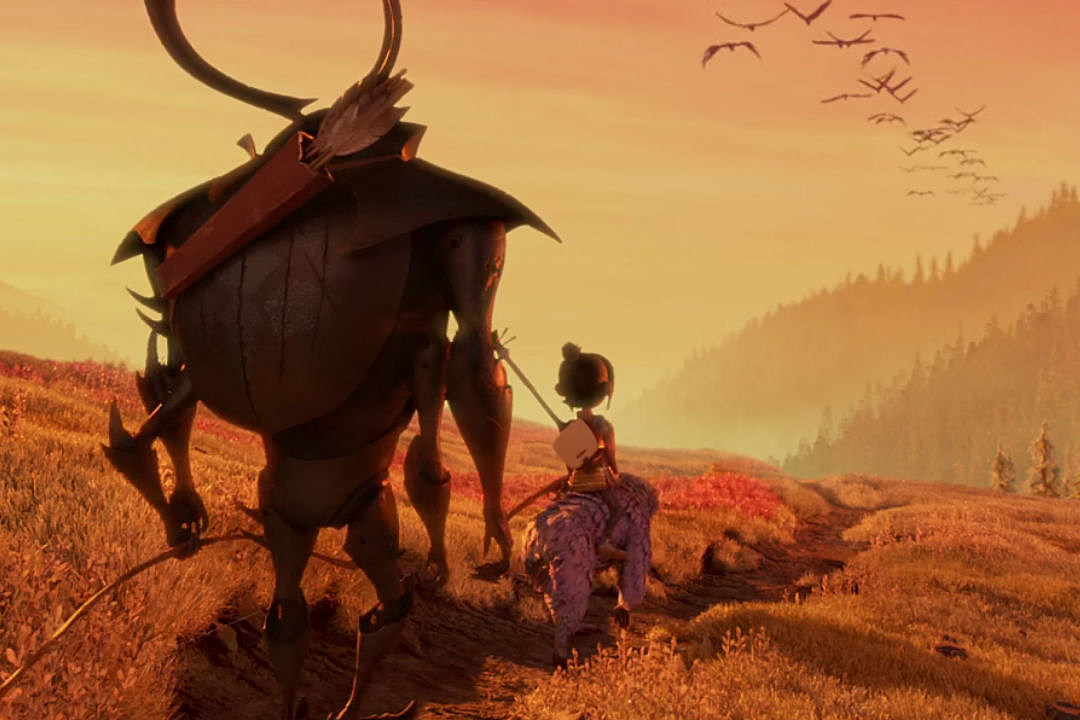
Beetle, Kubo, and Monkey, on their way to fulfill their quest. This kind of picturesque scene shows a great eye for scene and framing, as do so many of the shots in the movie.
Profundity is hardly limited to the general tone, either. The primary themes of the film become sacrifice and how someone can cope with the deaths of those closest to them. And this is not done with some pat, cursory moral message conveniently thrown at you in the final two minutes of the movie. It is raised very early and revisited throughout the picture, without the topic ever becoming overly simplified or sentimental. And while "messages" can often be very ham-fisted or stifle a story, even if handled well, Kubo implies another strong one during the final confrontation between the "hero" and "villain," which resolves itself in a way unlike any family movie I can recall. I literally got choked up several times during the movie, thanks in no small part to the deep humanity being displayed by these little animated characters.
Only enhancing the emotional impact of the story and characters are the visuals. Using their own blend of stop-motion puppetry and CGI, Laika's animators crafted a vibrant, singular world which looks unlike anything I've seen. Adapting a medieval Japanese aesthetic, the settings, characters, and visual wizardry are on full display. I appreciated the fact that, rather than keeping the high-polished perfection typical of digital animation, there is noticeable wear on many of the characters and props. The little holes and tears in the clothing and the scars on characters' faces have a much more tangible feel than they might in a traditional two-dimensional animated feature. It only helps that the writers, rather than going for the standard laugh every 20 seconds, give us plenty of chances to sit back and marvel at the world and set pieces which they created.
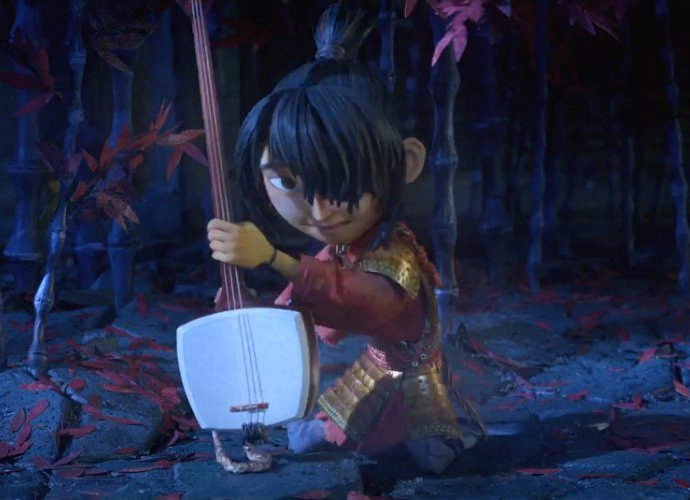
Kubo and his trusty shamisen. Not many movies, including animated family ones, would have the creativity or guts to have its hero's main weapon be music, but this one does it with gusto and a ton of heart.
Rounding out the entire affair is the music - something which no doubt had a major role in stoking my own emotions. Being a sucker for mournful-sounding string instruments, I was affected by the thoughtful and skilled use of the Japanese shamisen - the traditional three-stringed instrument which Kubo uses in various ways. Yes, Disney and Pixar movies often have catchy singalong tunes or songs crafted and performed by brilliant pop musicians, but Kubo's music score is very much its own beautiful, if sometimes melancholy, creation. And the movie is made even better for it.
I saw this movie recently, roughly a month after its release. Once I did, I was curious about how well it was doing, commercially. Sadly, it hasn't done terribly well. I fear that this will be a movie that acquires similar cult status as a movie like The Iron Giant, which was a commercial flop that would eventually be recognized as one of the great animated movies. Kubo will maybe break even, but I fear that its lack of tremendous success will make studios more reluctant to fund such unique films. I hope I'm wrong, because the world could use more movies like this one.
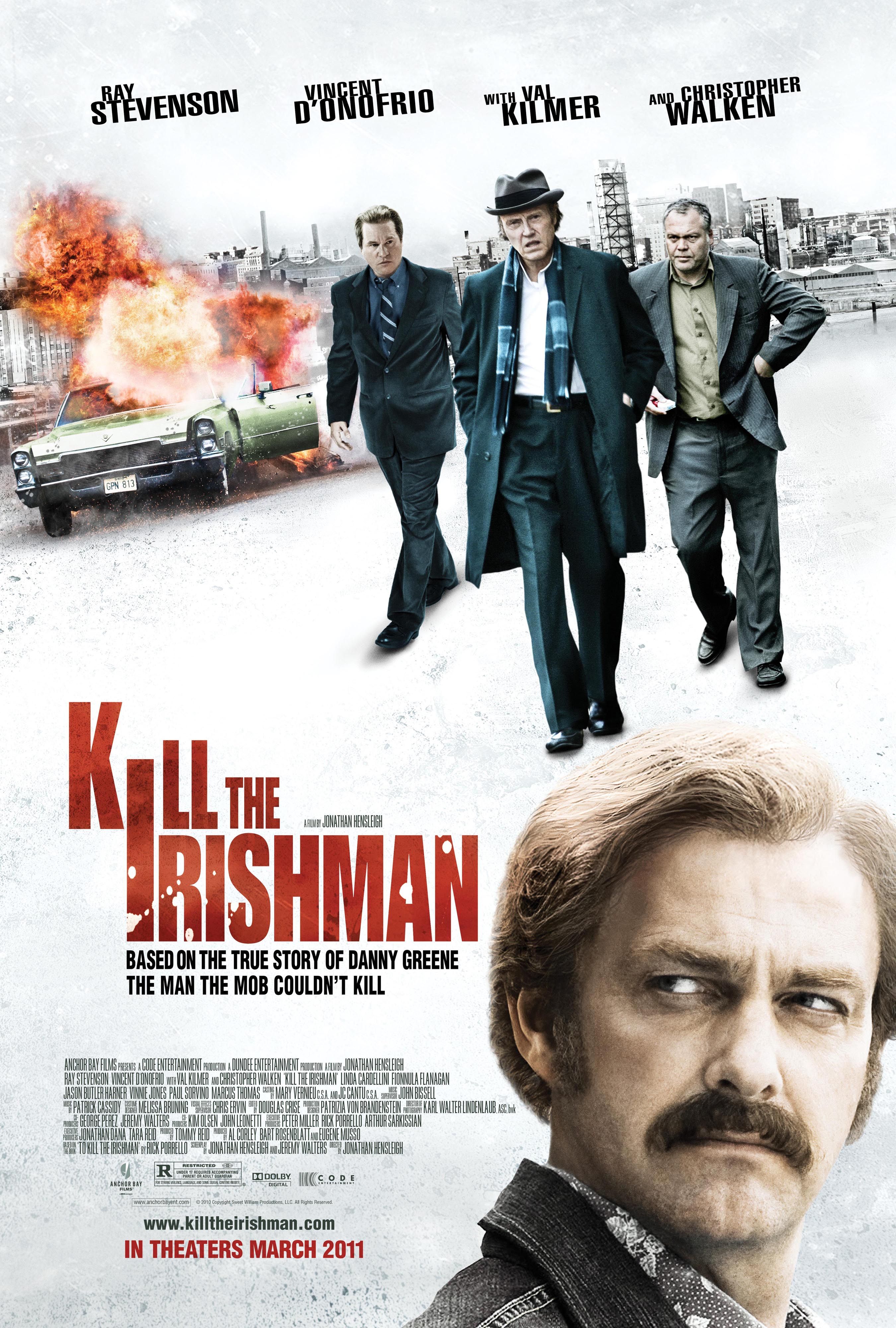
Kill the Irishman (2011)
Director: Jonathan Hensleigh
It may not be a masterpiece of the gangster film genre, but this one does a lot of things well.
Kill the Irishman tells the tale of the Danny Greene, a very real Cleveland native of Irish descent who became embroiled with the Italian mafia in the 1970s, sometimes as a reluctant partner but more often as a brutally tough adversary. Greene started as a longshoreman working under a corrupt and callous union boss. Greene muscles his way into taking over the operation, as well as several other criminal activities including stealing cargo boxes and cutting the Italian mob in on the action. After a few slip-ups and stints in jail, Greene settles into steady work as a mob enforcer. That is, until he decides to take himself and his Irish comrades out from under the thumb of Italian mafiosi who answer to crime families in New York City. This set off a massive war between 1975 and 1977, which saw dozens of car bombs planted and numerous criminals killed by one another. Through much of it, Greene escaped unscathed, becoming a folk hero to the Irish community of Cleveland.
This is definitely not the typical gangster movie, which is a clear strength. While "real stories" have been told in film plenty of times, there are few real characters like Greene. The blue-collar local was, according to the movie, highly literate and exceptionally intelligent. He was also immensely tough, both physically and mentally, refusing to back down in the face of an imposing force of professional criminals and hitmen. His is a pretty gripping underdog tale, even if he's not exactly the most pleasant of fellows all of the time.
News footage of the very real and, apparently, exceedingly tough Danny Greene. Not many of us would pull the "shirtless TV interview" move, but Greene made no bones.
The cast adds some serious punch. Ray Stevenson was just the man to play the larger-than-life Greene, with his massive physical frame, steely demeanor, and wicked Irish wit. The other notables include Vincent D'Onofrio, Christopher Walken, Vinnie Jones, and Val Kilmer (yes, Iceman was still acting as of 2011). On top of that, nearly every mafia member is played by actors whose faces you are likely to have seen in at least two or three other mafia movies, including Paul Sorvino. This well-seasoned crew goes about its business very well.
The movie does have a few faults. At times, especially during the first act, things seem to feel a bit rushed. For a movie that only clocks in at 107 minutes, I was surprised that some areas went under-explored. Some even result in loose plot threads, such as the conspicuous lack of retribution after Greene unceremoniously humiliates a powerful union boss and takes his job. An even larger omission is what follows Greene's agreement to turn into an informant for the FBI, which is never again raised after the bargain is initially struck. Also, a few of the characters, as well acted as they are, felt a touch incomplete. While the bond between Greene and his closest cohorts is clear, the details of their relationships are not always fleshed out. This is actually a movie that could have been better with an extra 10 or 15 extra minutes to fill in a few gaps.
I may not watch this movie again any time soon, but I would gladly recommend it to anyone looking for a solid gangster movie that falls a little outside of the familiar Godfather and Goodfellasmold.
Post Script: The documentary feature on the DVD reveals how Greene was not quite as admirable a figure as the movie suggests. He was a complex man, and he was generous to the Irish in his neighborhood, but he was certainly not above some nasty violence or even snitching to the FBI to get what he wanted. This only reinforces my belief that Greene's life had plenty to justify a longer movie.
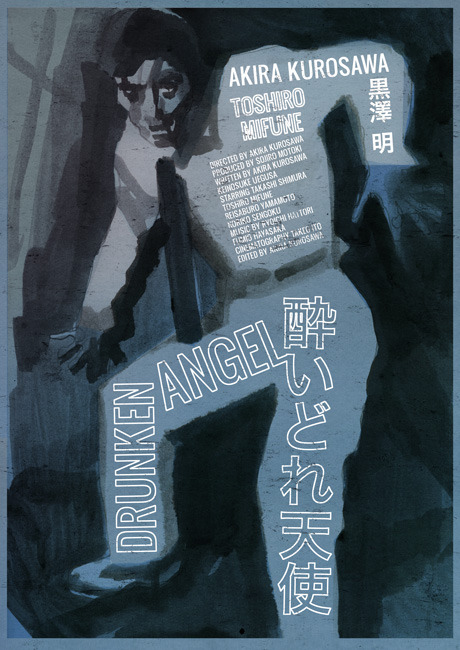
Drunken Angel (1948) Original Japanese Title: Yoidore tenshi
Director: Akira Kurosawa
Fascinating and atypical character study of gangsters. You just have to look past some dated acting techniques to appreciate it.
Drunken Angel focuses on Doctor Sanada (Takashi Shimura), an alcoholic physician who ministers to the denizens of a post-World War II slum in Tokyo. Sanada is a blunt, temperamental, and alcoholic doctor who is brutally honest with his patients, even the yakuza-connected thugs whom he occasionally stitches up. When Sanada one night removes a bullet from the current head thug, the handsome and strutting Matsunaga (Toshiro Mifune), he detects early signs on tuberculosis. When Matsunaga rebuffs the doctor's suggestion that he might have the potentially fatal disease, a struggle begins between Sanada and the very psychology of the "tough guy" gangster widely found within the yakuza.
The strength of the film lies firmly in the emotional and mental struggle between the doctor and the primitive instincts of those criminals at the top of the local food chain. This is a more profound variation on the typical gangster movie, which is far more often focused on grabs for power or the dynamic personalities of charismatic or powerful criminals. The fact that Sanada is not merely a do-gooder, but rather an ornery booze bag with his own problems, suggests just how warped the morality in places such as post-WWII Japan had become. The beaten-down state of the neighborhood is as much a character of this movie, as is the will of its denizens to survive in any way they can.
I couldn't ignore a typical feature of films from this era, especially Japanese ones: much of the acting is sadly dated and better suited to the stage than cinema. The overblown physical gesticulations and overall lack of subtlety continued in film until well into the 1950s, and Drunken Angel is no exception. While Shimura and Mifune are much more naturalistic, it only serves to accentuate how clumsy the performances by the entire supporting cast look in comparison. The heavy doses of unimaginative "yakuza tough guy" dialogue does nothing to help the matter.
As with all Kurosawa movies, this is one where the basic story and overall theme is likely to stay with you long after you watch it. This is fortunate, as I am unlikely to watch it again. A true student of cinema is likely to give it repeat viewings for its masterful camera work, but I am no true student. Instead, I could appreciate the look and emotional tones of the movie, just as I think anyone could and should.
Animal Kingdom (2010)
Director: David Michod
Though one critic called it "Australia's answer to Goodfellas," I found this one more like Australia's answer to At Close Range. This is a good thing.
Focusing mostly on Joshua "Jay" Cody, the movie follows this modern Australian high schooler just after his mother dies of a heroine overdose. With nowhere else to go, he returns to living with his grandmother and three uncles, all of whom are criminals of a rather serious nature, including armed bank robbery and drug dealing. Jay doesn't seem to have much of a will of his own, so he begins getting caught up in the wild larceny of his uncles. It isn't until several of those closest to him start to die that he is truly forced to make some very hard decisions about whom he will ally himself with.
This basic premise is quite similar to the excellent based-in-fact film At Close Range, though without the strong patriarchal figure portrayed by Christopher Walken. Nearly everything else is there, though. The aimless young man. The warped family that sucks him into their twisted lifestyles. The generally grim, fatalistic tone. Like many of the best gangster and crime movies, Animal Kingdom strips away all of the glamour often layered onto such stories, leaving us with its most horrible aspects.
This description surely suggests that this is not an "entertaining" movie, and it is not. I did not, however, find it a chore to watch. The plot is unpredictable, the action is very well-paced, and the acting is outstanding (this last was a bit of a surprise, as the only actors whom I recognized were Guy Pierce and Ben Mendelsohn). Seeing just how a young man at a frightening crossroads reacts to the craziness around him makes for intense and compelling viewing.
I don't know that I'll ever need to see this one again, but it is an excellent gangster film, and one that likely flew under the radar for being foreign, relatively low budget, and lacking "name" actors. Don't let that turn you off, though. In fact, there is an upcoming TNT television series of the same name, and inspired by the original Australian movie. I don't know if I'll bother with the show, but the movie is worth seeing for anyone.
Massacre Gun (1967)
Original Japanese Title: Minaogoroshi no kenjuu
Director: Yasuharu Yasebe
At a glance, Massacre Gun has all of the sheen and polish of the slickest, finest noir crime films. Unfortunately, there is very little beneath the stylish exterior.
The movie follows Ryuuichi (Joo Shishido), a highly trusted lieutenant in the yakuza - the organized crime cadre in Japan. Ryuuichi is loyal enough that he even kills a young woman whom he has been leading on, at the orders of his bosses. This stuns his two younger brothers - Eiji, who is an aspiring yakuza, and Saburo, an up-and-coming boxer. When Ryuuichi decides to leave the life of a yakuza, his bosses begin to apply pressure on him to stay. Things soon escalate from minor skirmishes into all-out warfare between the brothers and Ryuuichi's former employers.
The basic story certainly has the makings of a decent crime tale. The execution, however, is often poor. The characters often act foolishly or completely predictably. It is thoroughly clear from the first 5 minutes that Ryuuichi is the "calm, quiet, thoughtful loner" - an archetype loved by many tough-guy movie fans, including Japanese cinema-goers. The only remote twists are when he decides to turn against his bosses, and when he decides to go completely "massacre gun" on them after they go too far. Aside from these, the plot and characters are fairly paint-by-number. Eiji is the typical hot-head, and Saburo is the kind-hearted prospective boxer who "coulda been a contender" if not for the interference of the mafia (On the Waterfront, anyone?). The mob against which the brothers fight is composed of completely one-dimensional, cardboard cutout gangsters, complete with cliche one-liners and hard stares. Whenever the movie attempts to do something original, it was a bit ill-conceived, such as when the brothers intimidate an opponent by dropping bowling balls on his foot - a foot which, inexplicably, the guy never tries to move. The movie has more than a few such scenes in which the aesthetic was more important than any attempt at organic plot progression. Once you've seen a Scorsese-directed mob torture scene, pretenders are embarrassingly weak-willed.
Perhaps the movie would have been more compelling had the dialogue been more original or the acting been more subtle. Neither was. I can't recall a single line of dialogue which stood out or wasn't predictable. Similarly, the acting was typically exaggerated for many Japanese films, whereby far too many of the actors are trying to deliver their lines with their entire bodies, all of the time.
Massacre Gun is a curious entry into the noir film canon. If you're looking for something of the depth or artistry of classics like Double Indemnity, Out of the Past, or even more mob-centric movies like The Killers, you're bound to be disappointed. If, on the other hand, you simply enjoy the look and general style of hard-boiled crime films, then this one is worth a viewing.
The Happiness of the Katakuris (2001)
Original Japanese Title: Katakuri-ke no koofuku
Director: Takashi Miike
A very strange one that amuses, in its way.
From what I've heard, this movie released with a decent amount of buzz back in 2001. It was being called "an instant cult classic," and similar. Had I known of this hype around the movie, I probably would have been disappointed by it. Fortunately, I knew very little, so I was able to enjoy it for what it was and not what others were telling me it was supposed to be.
The movie follows the Katakuri family, a sextet of Japanese spanning four generations, as they attempt to get their new bed and breakfast to make a profit. The problem is that the B&B is isolated from any kind of attractions and main roads. Making matters far worse is that once a few travellers do show up to stay, they all seem to die horrible deaths, including suicide, heart attack, and asphyxiation under a sumo wrestler, to name a few. Amid all of the death and fretting over economic viability, the Katakuris experience the typical dramas of a sitcom family. The father and mother work hard to support the family. Their son is a typically-disaffected young man, and their daughter is a dreamy, flighty romantic.
Frequently, the Katakuris sing. In a bizarre homage to The Sound of Music, the characters will often break into song and dance numbers about their emotional plights or the grim circumstances of macabre deaths around them.
You can imagine that this all makes for a very peculiar movie. When you add in the fact that the movie periodically shifts into claymation for no discernible reason, then you have a truly unique viewing experience. It's not exactly a great one, but it is unique. My wife and I definitely got a good amount of laughs from the movie, though we were in agreement that this was likely because we had no expectations going in. The movie was clearly filmed on a very low budget, and director Takashi Miike, who directed the brilliant 13 Assassins and about a million other movies of varying quality in the last 25 years, was throwing all kinds of things against the wall in this one. Some of them stick, while others simply slide down the wall and end up in a sloppy puddle on the ground.
Blades of Glory (2007)
Directors: Josh Gordon & Will Speck
This is a Will Ferrell movie that delivers the laughs more consistently than many of his others.
The world of figure skating had long been ripe for parody. In 2007, Blades of Glory got it very right. The two leads, Will Ferrell and Jon Hader, play Chazz Michael Michaels and Jimmy McElroy, two parodies on ice. Michaels is the oversexed "bad boy" of skating, while McElroy is the polished, effeminate, squeaky-clean pretty boy. The two are bitter rivals who are thrust together as a pair after being banned from the sport for fighting on the ice. It's a set up that easily could have fallen completely flat, if not for solid comedy writing and great acting.
I generally like Will Ferrell, though many of his hit movies are mediocre at best. Talladega Nights, Get Hard, and Anchorman are a few examples of his movies that provided me with just enough laughs to justify watching them once, but I've never felt the urge to go back to them. Blades of Glory, however, holds up well, even after seeing it three times. The lines are great, and the gags hit far more often than most parodies. When it's not Ferrell's hilarious over-confidence, it's Craig T. Nelson's showing of a decapitation during a pairs skating performance in North Korea. Or Rob Corddry's cameo as the over-serious manager of a second-rate kids show on ice. Since the movie doesn't solely rely on Ferrell's comedic magnetism, its humor can hit you from different directions.
This is a goofy comedy that I'll return to every year or so and thoroughly enjoy, as ridiculous as it is and should be.
A History of Violence (2005)
Director: David Cronenberg
A phenomenal movie that pulls off the unique feat of thematic, effective self-criticism.
The two homicidal maniacs on left have no idea what's lurking under the humdrum exterior of Nick Stall. The peeling back of that exterior is an exercise in intelligent, chilling filmmaking.
The basic story seems to be a straightforward tale of bad guys getting their comeuppance after messing with the wrong man. Tom Stall (Viggo Mortenson) lives in a sleepy little Indiana town, where he runs a quaint diner and has a loving relationship with his wife, teenage son, and young daughter. When a pair of homicidal thieves attempts to rob Stall's diner and rape one of the employees, Stall kills the invaders with astounding efficacy. This tale of the small-town hero draws the attention of the national press. Soon after, a trio of extremely grim men arrive and approach Stall, claiming that Tom is really a man named "Crazy" Joey Cusack, a former wildman thug associated with an organized crime syndicate in Philadelphia. Stall must begin going to more and more extreme measures to protect his life and family.
While this may all seem like a familiar story of satisfying, righteous justice, trust me that it is far more. Early in the movie, it becomes clear that the story, guided by David Cronenberg's brilliant direction, is displaying the deeper, scarier nature of violence, its effects on humans, and its place in society. Tom's teenage son, Jack, is the victim of bullying at school. Jack follows his father's noble guidance by not fighting back and defusing many situations with his wit and humor. After he sees the praise his father receives for killing the two would-be murderers in his diner, though, Jack abandons his passive approach and pummels his tormentor at school. We viewers gain that base level of satisfaction at seeing this; however, when Jack's father later tells him that this is not the way to solve problems, we feel conflicted again. Certainly, non-violence is the lofty and ideal way to answer aggression, but we can't deny the primal thrill of physically punishing those who threaten us. This is just one of several very mature and intelligent themes and scenes in the film that add unprecedented depth to what could have been a more run-of-the-mill precursor to Taken.
The story carries the movie well enough, but Cronenberg's direction enhances it every step of the way. This is one of the most efficient movies you are ever likely to see. In an exceptionally tight 95 minutes, there are moments of brooding tension that bridge the violent action. It all has an almost hypnotic rhythm which carries you through, with virtually no wasted shots, scenes, or lines.
An easy technique to overlook is one that I particularly love about Cronenberg - his approach to film violence. When he portrays violence on screen, Cronenberg never glamorizes. There are no slow-motion shots. No triumphant music scores. No one-liners. Killing and maiming are horrible, brutal acts, and this is exactly how Cronenberg gives them to us. In A History of Violence, the deaths are ugly, gut-wrenching affairs, even when they are happening to villains who may have had it coming. This is a point for which I admire Cronenberg - the point that one should never get comfortable watching realistic violence.
I thoroughly enjoyed this rewatch (my fourth viewing, I believe), and I'll continue going back to this movie every few years in the foreseeable future.
Underworld, U.S.A. (1960)
Director: Samuel Fuller
Not the most polished film you'll ever see, but one loaded with admirable energy and conviction.
I've seen a handful of Samuel Fuller films - The Steel Helmet, Shock Corridor, and The Naked Kiss. I find them all to be the product of a man with a bold approach to the types of stories that he told in film, though without the resources that would make the film more widely appealing. Underworld, U.S.A. falls right into the same category.
You probably wouldn't trust a guy who looks like him, but watching Devlin exact a brutal vendetta against a bunch of repugnant criminals is crime movie gold.
The story is that of Tolly Devlin - a street thug who sees his low-rent criminal father killed by a quartet of goons associated with local organized crime. Devlin swears revenge. Over the next decade, he becomes an expert safe-cracker. Eventually, he sees his chance to exact vengeance on his father's killers, though it will be no small task. Three of the four men are extremely powerful lieutenants in a massive crime syndicate. This doesn't deter Devlin, though, as his sense of purpose brooks no flinching at the task he set himself from the moment he saw his father murdered.
The tale is a solid revenge story, though it doesn't take the path that you may predict. Fuller, who wrote the script, gave us something that I can't recall seeing in other crime/revenge stories. While the overall arc follows typical lines, the path that Devlin takes is novel enough to keep things interesting. He cozies up to unexpected figures, including a prostitute, a police lieutenant, and even the ruthless murderers whom he hopes to assassinate. He is a true rogue whose only allegiance is to his own vendetta, and such characters are almost always intriguing.
The movie has a certain raw feel to it, as do all Fuller movies which I've seen. He was willing to go places, in terms of human vice and violence, that kept him from mainstream success. His treatment of these things was never gratuitous, though. In Underworld, we see an innocent young girl ruthlessly run down by a hitman. Such an act is shown not for mere shock value, but rather to exemplify the hitman's utter lack of empathy or compassion. The movie has several other hard-hitting scenes, and they set Fuller movies apart from their contemporaries.
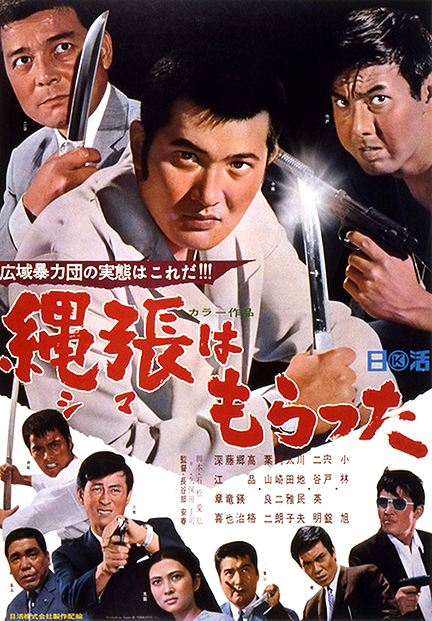
Even when in the middle of a lethal firefight, Aniki (far right) shows a disturbing amount of impassiveness. It eventually becomes clear that this is not done merely to make him seem "cool."
Sonatine (1994)
Director: Takeshi Kitano
A quirky, enigmatic film with a powerful final punch.
Anyone who has seen a Kitano film knows that he has an unusual style. Sonatine is no different. It follows Japanese yakuza strongman Aniki Murakawa (Takeshi Kitano, who also directed). Though very powerful and successful on his turf in Tokyo, Aniki gets orders from a superior to take a small contingent of soldiers to Okinawa, where they need to settle a turf war between locals. Once there, Aniki and his mostly inexperienced crew find things becoming unexpectedly complicated. Several men on both sides are killed, and Aniki and his remaining soldiers retreat to a secluded house on the beach. While there, the men while away the time by drinking and clowning around. Aniki has some fun with them, but he also begins to quietly ponder the meaning of his life of crime.
I must admit that I found the movie somewhat difficult to follow. This is partially because of the number of characters involved, each being part of one of four or more factions in the disputes. (And no, it's not because I think all Japanese guys look the same - I spent two years living and working in Japan, and I never confused people). A larger reason, though, is that the plot is vague. This is by design, as Aniki's confusion over the killings around him is what spurs his existential crisis. For all the value Aniki and his men give to killing their opponents, they might as well all be the same. Adding to my confusion was the quirky detachment that nearly all of the characters exhibit. I'm all for using deadpan as a device, and it is sometimes effective in Sonatine, but it was amazing how it obfuscated people's intentions and motivations much of the time.
Though I discovered afterwards that I had clearly missed and misunderstood certain plot points in the movie, this did not make the ending any less powerful. The closing sequences expose Aniki's deepest, darkest feelings in ways that I had never seen. These alone set this movie apart from any other gangster film that I have seen thus far.
Those unfamiliar with modern Japanese cinema might find the tone and performances off-putting in their stoicism or strangeness. However, if you are willing to put in some work and make it to the end, there is a rather profound payoff waiting.
One of the most beautiful, and saddest, animated films that you will ever see.
Director Isao Takahata, long-time collaborator with iconic Japanese animation master Hayao Miyazaki, drew from Japanese folklore for this film. The story, better known as The Tale of the Bamboo Cutter, is at least 1,300 years old, and it is arguably the single-most famous story in all of Japan.
The tale is of a middle-aged bamboo cutter who, while working in the forest one day, discovers a tiny princess embedded inside a bamboo shoot. He brings her home, where she magically transforms into a normal-sized human infant whom they name Kaguya. Over the next few years, Kaguya grows with supernatural speed, both physically and intellectually, in the rural town where her surrogate parents raise her with unbridled love. She eventually understands that she came from the moon, her true home, but she was sent to Earth for some purpose which she cannot recall. Just as Kaguya approaches womanhood, her father decides to use a magically-produced cache of precious gems to finance her entrance into the aristocracy based in the capital city. Kaguya then must decide just who she wishes to be and what she truly loves about earth, her adopted home.
Being an animated movie, you might wonder just how much emotional punch the story may have. I can tell you that it is extremely powerful. Using techniques best utilized in the animated medium, the emotional tone of key moments are conveyed beautifully and powerfully, occasionally using impressionistic and wild visuals. The resolution of the story bears many hallmarks of Japanese Zen existentialism, which adds impressive depth to what might appear to be a mere fable for children.
I would guess that a young child will enjoy this movie. However, the deeper themes and emotions will only be perceived by viewers with a greater wealth of life experience. The Tale of Princess Kaguya can only be fully appreciated by mature viewers, and it shows exactly why a film should never be written off artistically simply because it is animated.
Nightcrawler (2014)
Director: Dan Gilroy
As the title might indicate, Nightcrawler is bound to leave you feeling uncomfortable and disturbed. Even so, this is an exceptionally well-done film.
The movie follows the rise of Lou Bloom, an unemployed petty thief who gets involved in the field of "nightcrawling," the finding and filming of violent accidents and crimes which occur at night in the Los Angeles area. Such footage can be sold to covetous morning news shows which follow the credo "if it bleeds, it leads." Bloom proves himself a highly capable and energetic study of the profession, and he will stop at nothing to become the premier provider for such graphic footage.
The technical elements of the movie are virtually flawless, capturing the danger and fear of not only the profession of nightcrawling but also the nighttime environment of L.A. The camerawork and framing carry the story along visually,which is no small merit given the subject of the film.
What sets the movie apart, though, is the character Bloom himself. Though it is difficult to imagine such a person existing in reality, he certainly represents an engaging amalgam of several very real characteristics. Some of these are actually admirable: his diligence, intelligence, and tenacity are the stuff of "The American Dream." However, Bloom's obsession with success and his utter lack of morals or empathy reflect the darkest aspects of a monomaniacal desire to reach "the top." Bloom is unnervingly persuasive, especially with those who share his selfish need for personal success. Jake Gyllenhaal is eerily effective at bringing the singularly creepy Bloom to life.
Nightcrawler is not a movie that will leave you feeling warm or fuzzy. It is, though, an extremely well done piece of cinema with one of the more unique protagonists you are bound to find.
Draft Day (2014)
Director: Ivan Reitman
Though far from terrible, Draft Day is a rather lame movie, however you look at it.
The plot follows the roughly 24 hours of the first day of the National Football League (NFL) Draft - the day on which professional teams get to select the very best players from college to play for their franchises. It's a day on which entire futures can be made or broken, based on how effective teams are at projecting potential success or failure of young, extremely talented and aspiring athletes. There is certainly more than enough drama built into this real-life sports event that a clever filmmaker could construct a solid movie from such material. Such is not the case here, though.
Specifically, the movie is about fictional coaches and administrators of real teams in the NFL, with the primary focus on the Cleveland Browns and its general manager, Sonny Weaver (Kevin Costner). Weaver is a second-year GM who is feeling pressure from all sides to make the draft selection that will change the fortunes of the Browns' franchise. The problem is that Sonny's ideas about player evaluation are at odds with his fiery new head coach, Penn (Denis Leary), the team owner, other draft analysts on his staff, and of course, the seething masses of rabid Cleveland Browns fans. The three players most under Weaver's microscope are a "can't miss" quarterback, and a linebacker and running back who both show extreme talent but also have a few character concerns.
The basic ingredients are there for some decent drama, and I admit to being just curious enough about the outcome to watch the entire movie. However, as a passionate fan of football and movies in general, the outcome was never really a mystery. Once the first few little wrinkles in the plot surface early in the picture, it's no great leap to figure out almost exactly what will happen and how. Though the actors all acquit themselves well, the lack of suspense lets far too much air out of the proceedings (no apologies to Tom Brady).
Just one of the many unrealistically tense confrontations between coworkers in the film. Anyone who has seen Hard Knocks, or has some sense, will find them implausible.
Three greater weakness really sink this movie to no better than mediocrity. One is that anyone who has closely followed a football team will notice all sorts of unrealistic depictions. A college coach gets extremely snarky with an NFL GM. The GM for Jacksonville is sweating and shaking in his boots on draft day like a kid who forgot to prepare for his fifth grade oral book report. Several GMs seem to have absolutely zero back-up plans when their targeted player is taken unexpectedly, leading to laughably unrealistic panic. Several GMs, including Weaver, seem to forget the draft order. A veteran quarterback goes into a rage and trashes the GMs office. These and several other ridiculous actions completely undermine the credibility of the movie's attempt to be authentic in its depiction of this real event.
The second weakness is one that dogged Costner's other late-stage sports movie The Perfect Game, which is the attempt to insert a completely unrelated romantic story into it. Weaver is in a secretive relationship with the Browns' financial expert, Ali (Jennifer Garner), who has just that morning informed Weaver that she is pregnant. It's a completely tangential storyline that does nothing to enhance anything else about what is otherwise a movie completely about sports. Nevermind the fact that we get yet another relationship featuring an attractive woman and man nearly old enough to be her father.
The final problem is that there is no true sense of closure. Anyone who follows sports teams knows that draft picks, no matter how sure a team might be about their strengths or weaknesses, have the potential to brutally disappoint or pleasantly surprise. Draft Day never gives any indication of what, exactly, happens with the players whom the Browns select. The day of the draft ends, everybody hugs, and that is all. I was expecting, at the very least, some final title cards giving the future lifetime statistics of the three players involved, just so we could get the satisfaction of knowing for certain that Weaver's evaluations were correct. No such information is given, leaving us to simply assume that the players would go on to fail or succeed just as Weaver hoped and expected. Sports simply don't work this way, as it is a true meritocracy in which the proof must be in the pudding and not just look good on a recipe card.
With a better script and a better understanding of just how in tune many football fans are with the inner workings of their teams, Draft Day could probably have been a much better movie. As is, I wouldn't recommend it to any serious football fan. A very casual football fan might enjoy the artificial drama of it, but few others will.
If this movie poster seems bleak, horrific, and claustrophobic, then you've got some inkling as to the tone of the feature.
Director: Shin'ya Tsukamoto
Whoa. If you plan to watch Tetsuo, then you had better be mentally prepared. It is one trippy, disturbing piece of work, which wears its influences right on its sleeve.
The story, at its most basic, is that a young businessman in Japan suddenly finds different parts of his body turning into machinery. The process is slow at first, but then rages in fits and starts, so that the man soon begins to look like a moving, humanoid sculpture assembled out of scrap yard leavings.
Now, take that idea and imagine that the tale is directed by David Lynch in his most Eraserhead state of mind. Add in several dashes of David Cronenberg's grisly transformation horrors like The Fly and Videodrome, and blend in the psychological torture element of guilt over accidental murder as seen in the harrowing film The Machinist. Put all of those uncomfortable movies together, and you get Tetsuo.
If you're unfamiliar with the movies cited, you just need to know that the movie is stunningly brutal. And yet, its merits are there, for those who care to get past the grainy black and white filming, shocking imagery, and the breakneck editing. The result is that one feels claustrophobic and completely pinned down by the relentless onslaught of the machinery and technology that literally consumes the main characters. And this is clearly what director Shin'ya Tsukamoto was aiming to accomplish. For that, it is easy to see why this film is lauded in many circles.
The movie is taxing to watch. No particular shot lasts for more than four or five seconds before it jumps to another frenetic image, many of which utilize some very well-done stop-motion animation or skewed framing or constricted perspective. Fortunately, I was in the right head space to keep up with it, and the movie is a mere 64 minutes long. Any more than that, and I don't know that my brain would have been able to maintain pace.
File this one under the label of "interesting, experimental films that are good to watch once." If you're looking for a graphic, deeply frightening and challenging visual experience, Tetsuo will satisfy the urge. Just know what you're in for.
This was my second viewing of this one, and I feel the same now as when I saw it on the big screen a year ago. It's certainly fun, but far from a masterpiece.
Yes, it's giant robots fighting against giant monsters, referred to as jaegers and kaiju, respectively. If you need to know more than that, then you probably won't be into this movie.
I do have to say that they do come up with a decent enough story for why we are watching a robot/monster slugfest. It's not exactly novel, but it doesn't try to get too clever for its own good, while not insulting your intelligence. Also, the notion of needing at least two "pilots" to handle the neural requirements to command the jaegers, leads to a bit more genuine empathy than you might expect.
Del Toro made sure that the fights looked at felt just as titanic as they needed to be. Mindless? Yes. Fun? Hell yes!!
The fights are pretty awesome. They lose quite a bit on a small screen, it must be admitted, but they're still fun to watch, if you're not bored by that sort of thing, like my wife often is (she was fast asleep while I was happily watching Gipsy Danger body slam a Gamorrah lookalike into a Chinese skyscraper). Waiting to see just what type of bizarre powers the kaiju possess, or what kung-fu type moved the jaeger pilots will employ is plenty of fun. And there are a few noble deaths given up for admiration. The a deep-sea slugfest at the end is more than satisfying.
The weaknesses to me are few, but too obvious to ignore. The first is that the dialogue is inconsistent. There are some decent lines, including virtually all of the ones delivered by Idris Elba. However, there are plenty of cheesy duds that made me wince. When the protagonist Raleigh Beckett urges his neural partner Mako, "Let's do this! Together!!", it sounded way too much like the awful, hackneyed dialogue one might hear in a children's anime program. The other weakness to me is the romance between Raleigh and Mako. Totally unnecessary. The shame is that, for nearly all of the film, they don't fall down the Hollywood trap of cramming a romance story into an out-and-out action movie. Then, at the end, we get the cliched kiss-cut-credits sequence. I would have admired the film a bit more if they had simply kept Raleigh and Mako's relationship one of friends and colleagues.
A fun movie, nonetheless. Watch it on blu-ray, on a large screen, with a good sound system, if possible.
13 Assassins (2010)
Director: Takashi Miike
Great samurai flick. I don't watch a ton of Japanese or samurai movies, but I absolutely love them when they're done well, like 13 Assassins.
It probably helped that, just by coincidence, I had finished reading Hagakure a few weeks prior. This 18th century collection gathers the thoughts of a true feudal samurai, and it provides a fair amount of insight into the ideals of that position in Japanese social history. 13 Assassins incorporates several of the deepest sentiments and values of the samurai, both the admirable and the baffling. The primary belief is the ultimate quest for an honorable death. Essentially, a true samurai should never fear death. In fact, a true samurai should embrace the fact that he will die, and he should simply prepare and wait for the opportunity to give his life in the service of his feudal lord. It may seem like an oddly suicidal world view to most of us Westerners, but I've always been intrigued by the sense of honorable purpose conveyed by such an approach to life and death. 13 Assassins uses this idea to motivate the titular group.
But the movie is far from merely being a somber existential meditation. It starts off not unlike a Seven Samurai "let's get the band together" scenario. A middle-aged samurai, Shinzaemon, is tasked with the mission of killing the psychotic, sadistic, and homicidal Lord Matsudaira before he ascends to an esteemed place at the side of the shogun. So Shinzaemon, played with masterful gravitas and humanity by Koji Yakusho, rounds up whomever he can find to attempt what amounts to a suicide mission. The dozen fellows who join the band do so for various reasons, but they all add something to the group.
Do not get on the wrong side of this haggard-looking group. They're just itching to give their skills and lives up for a noble purpose.
The assault on Matsudaira is akin to the final 90 minutes of Seven Samurai, but condensed and thrown into a blood-soaked typhoon. In short, it's amazing. There is a slow-build throughout the movie, in terms of the duels and stand-offs. There are some outstanding showdowns, with steely-eyed swordsman squaring off. During the final half hour, though, it's a blizzard of violence, as Shinzaemon's band uses every scrap of cunning and trickery, as well as their considerable individual fighting skills to mow down their 200 opponents. The direction is outstanding, giving a phenomenal sense of place, purpose, and tension to all of the action.
True to the spirit outlined in Hagakure, the 13 "assassins" charge towards their noble deaths, and it's a phenomenal show.
Dark City (1998) Director: Alex Proyas
As the title suggests, this is a dark, twisted science fiction mystery tale that I found to be excellent.
Dark City contains many shades of other, earlier artists and works: Franz Kafka, Philip K. Dick, noir in its many forms, and Clive Barker's Hellraiser are some of the most immediate that come to mind. The blending of them, though, is unique and highly engaging.
I'll refrain from writing about the plot, as the slow revelation throughout the movie is a large part of its appeal. All a first-time viewer needs to know is that the protagonist, John Murdoch, awakes in a motel bathtub, with no memories of who he is or how he got there. He very quickly finds himself pursued by shadowy, cloaked figures who possess terrifying supernatural powers. Murdoch, in constant flight, attempts to figure out who and where he is, but every answer raises many more questions about the nature of the reality that he is experiencing.
The story is so creative, and its execution is so brilliant, that I'm simply amazed that this movie isn't better known. My guess is that some of the themes and visuals were a little too bizarre or macabre, and the aesthetic - a pervasive noir darkness - was a bit off-putting to people who didn't know what to make of it. In addition, the film doesn't draw the clearest lines between good and evil, which can often disappoint and confound many viewers.
Another potential source of frustration for many viewers is likely the fact that there are certain larger questions that are not clearly answered. Without giving anything away, I can say that we are never given the grand answer to just how the entire scenario of the movie began. But this is completely fine to me. Ultimately, the way it began is immaterial, and this unanswered question allows us viewers the opportunity to engage in some imaginative speculation, based on the many details offered in the film's look and narrative.
Whatever the reasons for its lack of commercial success, it's a great science fiction movie that has rightfully built up the wider praise that it should have received from the outset.
Fogies visit kids The children are too busy Mama keels over
Uncut Summary (a full plot synopsis)
In 1950s Japan, retired Shukishi and Tomi Hirayama leave their home village in the south of Japan to visit their children in Tokyo. The elder Hirayamas are nearing their 70s and haven't seen their busy children in some time.
When they arrive in Tokyo, however, they are not afforded the pleasure of truly spending any quality time with any of their natural children. Their sons and daughters are all too busy with their work lives to make time or space for their parents. The Hirayama children even send their parents off to a nearby pricey spa, ostensibly for them to “relax,” but in truth merely to alleviate the nuisance of having to accommodate them.
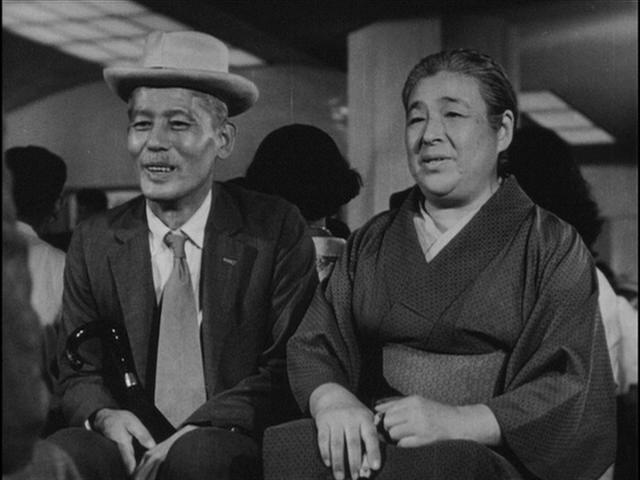
Shukishi and Tomi Hirayama's pleasant demeanors mask deep disappointment.
The only one who shows any form of true welcome is their widowed daughter-in-law, Noriko. Through the Hirayama's interactions with her and a few of their older friends, we see that the old couple is coming to grips with the reality that they are no longer a part of their children's lives. After several days of being shuffled between houses, the parents decide to cut their trip a bit short and head back to their hometown.
On the train back, however, Tomi takes ill. By the time she and her husband reach home, she is in a coma. The children finally break away from their daily hustles to be with their mother on her death bed. After she passes away, three of the five callously rush to get back to their lives in Tokyo. The two who remain with their father, the widow Noriko and the bachelorette Kyoko, share a sad moment realizing that they both may likely become just as detached from their father as their siblings have, should they start their own families some day.
The surviving Hirayamas make their final farewells & realizations
Take 1: My Gut Reaction (done after this most recent viewing, before any research)
Oof. Good thing I watched this on a grey, rainy day.
Tokyo Story is about as melancholy as they come, made all the more sad by the sheer reality and fatalism of it, as well as the skill with which the story themes are conveyed.
In the same vein as Umberto D., director Yasujiro Ozu turns his gaze toward a younger generation's attitude towards its forebears. It certainly seems that the Hirayama family is meant to represent the larger Japanese society, one in which the modernizing world has no place for maintaining deep, steady ties with anything or anyone, including one's parents.
The thing is, whereas Umberto D. had a quicker pace, a few lively characters, and a cute dog as some comic relief, Tokyo Story gives it to you raw and is much further-reaching. The former Italian film was really about an isolated loner, but Tokyo Story is about a very average family, making it far easier to feel empathy towards the characters. The dialogue and acting is so naturalistic that it almost feels like a film ethnography. In fact, of all the 40 films I've seen so far, this one has the most naturalistic acting. This is what gives it its power, especially to one as myself – a person whose parents are still alive and nearing the age of the Hirayamas. It was impossible for me to not get reflective about so many of the things the elder couple brings to light: their mild disappointment in their children, their sense of loss at their detachment from them, and their sad acceptance that nothing is to be done about it.
Here's a great moment in which Shukishi is at his most unguarded about his children. This is also a scene that reminds me an awful lot of my own time in Japan. A little too much sake in the system, coming down over a steaming bowl of ramen. Start it at time 4:40:
The pace of this movie is something quite novel, relative to the other films from the list that I've watched thus far. I'm sure some people would have a hard time sitting through the measured, quiet moments depicting everyday life. As far as I was concerned, it did get a bit tedious, but I completely understand that this is necessary and intentional. Actually, by the end I found Shukishi and Tomi's slow, almost catatonic speech soothing and very much in keeping with what they were meant to represent: a more carefully, cautiously paced generation that was being left behind in the rapidly booming 1950s.
Part of my interest in this film certainly comes from the fact that I lived and worked in Japan for two years. Very much in evidence is the famed Japanese formality and ostensible kindness, which is a theme that Ozu later explored with his film Good Morning. Most Westerners may find alien the almost mannequin-like smiles that Shukishi and Tomi wear throughout nearly the entire film, despite their growing sadness. This is what makes the few moments that they break the formality all the more potent, if not very dramatic. Were anyone I know to ask what Japanese culture is like, I could show nearly any 10-minute clip from this 57-year old movie and feel confident that it stands as a solid representative of Japanese behavior and culture. One of the several very “Japanese” moments that stood out was an exchange between Noriko and Kyoko, when the latter says, “Isn't life disappointing?” to which a calmly smiling Noriko replies, “Yes.”
As alluded to, the technical merits of the film are beyond reproach, in my opinion. It may not have been the most challenging movie to film, or the most taxing on its actors, but everything is done to perfection. Long shots convey isolation, interior shots give the sense of relative claustrophobia inside the family houses, and it's not hard to buy into the Hirayama family as thoroughly authentic.
All of these accolades aside, this is another movie that I very likely will not see again, and would only recommend with several caveats. A person must be ready for a 2-hour, 15-minute gaze into the very real but very subtle generational tensions of a Japanese family. If this doesn't sound overly entertaining, it's because it isn't. Watching this movie is an exercise of a different sort. It's one that is probably worth making at least once, but not one that's guaranteed to touch everyone.
Take 2: Why Film Geeks Love This Movie (done after further research)
One doesn't have to do much research to confirm just why Tokyo Story has a place in film history: it's that rare and classic thing that does so much in reality while seemingly doing very little. All that's needed is the viewer's careful attention and patience.
In more detail and with more erudition than I could muster, David Bordwell's analysis carefully points out just how subtle Ozu is with his lack of camera motion and his refusal to cut away from a character while they speak. Roger Ebert covers the same ground, perhaps more thoroughly in this review. What both men point to is both just how Japanese the story is, while being equally accessible to any viewer with a marginally open mind.
In reading the essays echoing the theme of a slower, older generation (aren't all younger generations “faster” these days?), I almost can't help but wonder if Tokyo Story is the very thing that it speaks of. In an age when generation gaps and attention spans seem to be shrinking astronomically, will a slow and careful look at such gaps, which is what Tokyo Story truly is, eventually be dismissed and pushed to the side?
Here's a thoughtful clip of the very end of the movie, with the new widower, Shukishi, slowly absorbing his isolation with the same measured calm as everything else. Being at time 8:20:
That's a wrap. 40 shows down. 65 to go.
Coming Soon: On the Waterfront (1954)
“I could'a been somebody! I could'a been a contendah!!” One of the few films on the list that I've already seen and absolutely love. I can't wait to watch old Terry Malloy do his thing on the docks again. Come on back and see how I feel about my latest viewing of an irrefutable classic.
Please be sure to pick up all empties on the way out.
Pair of overly ambitious, 16th century farmers run into seriously nasty business while chasing money and glory.
Uncut Summary (The full plot, including spoilers. Fair Warning)
In 16th century Japan, the land is torn by civil war. In a tiny village, two neighboring farmers, Genjuro and Tobei seem to have the necessities – land to tend and loving wives. Genjuro even makes pottery in his spare moments, which he sells for extra money. Despite having their basic requirements satisfied, both Genjuro and Tobei seek more.
With a far-reaching civil war nearing their village, the two men see a chance to chase their ambitions. Though the village head cautions them to stay with their lands and families, Genjuro and Tobei make for a nearby city. Genjuro hopes to sell his wares for a hefty profit, and Tobei dreams of finding a lord under whom he can become a great samurai. Genjuro does make a tidy sum selling his pottery, but Tobei finds only bitter disappointment. He finds a general and throws himself at his feet, only to be mocked and pushed away. He is taunted due to being a peasant and not even having a spear or armor to fight with.
On returning to their wives in the village, the men undergo a change. Having tasted some financial success, Genjuro begins work on a massive amount of new pottery, with a plan to sell it for a greater profit in a much larger city. Tobei, still tasting his humiliation, is far from discouraged and assists Genjuro with his pottery. His hope is to be able to afford the armor and spear he needs to join an army and find martial glory.
Gejuro and Tobei take their families with them to chase their dreams.
On the day that the two men finish their batch of plates, cups, and other earthen wares, the village is attacked in a nighttime raid by one of the nearby armies. Genjuro and Tobei, with their families, manage to escape capture and to save the pottery. In a difficult moonlight sojourn, they run across various victims of the armies, but eventually make it to the largest city.
In the city, things finally start to look up. The men's pottery is selling very well in the hustle of the market. Then, Tobei sees the object of his desire – a stately general whom he wishes to follow. He grabs a fistful of his and Genjuro's coins and runs madly after the general, despite his wife Ohama's pleading that he stay with her. Tobei evades her, buys the required spear and armor and abandons his wife.
Back at his stall, Genjuro continues to sell his pottery when a beautiful noblewoman, Lady Wakasa, appears with her elder handmaiden. Genjuro, who is stunned by the Lady Wakasa's looks and bearing, sells them several items and is told to deliver them to the Wakasa estate just outside of town.
Without his wife, Miyagi, or child, Genjuro delivers the pottery to Lady Wakasa, who invites the humble craftsman inside her home. She showers Genjuro with praise for his goods, and Genjuro expresses the honor he feels at such accolades. Lady Wakasa then makes the bold proposition that Genjuro remain with her and marry her. She courts him with a traditional love song, after which she and her servant hear the voice of her long-dead father, the daimyo Kawasa. The deceased patriarch apparently approves of his daughter's proposed marriage to this simple farmer. Genjuro, now hypnotized by the phantasmic atmosphere and the Lady's strange beauty and sorrow, accepts and stays.
Their husbands now in the throes of military and marital glory-seeking, Ohama and Miyagi are left to fend for themselves. Tobei's wife Ohama is soon beset by a gang of thugs who rape and humiliate her. Miyagi and her son try to make their way back home, but have to fend off starving transients and other peasants. The women are surviving, but only with the greatest of perseverance.
Tobei eventually gets his chance. He happens across an injured general who has just been willfully beheaded by his lieutenant. Tobei rushes in, steals the general's head, and presents it as a trophy to a rival general. He is then showered with a title, a horse, and vassals. With his new platoon, he goes to celebrate in a local brothel, where he finds none other than his disgraced wife Ohama, who is now a prostitute. After Ohama heaps scorn upon him, Tobei realizes the errors of his ways; the two reconcile, to a degree, and agree to head back to their village and continue to make amends.
At the Wakasa Estate, Genjuro is experiencing otherworldly delights. The grounds of the estate are heavenly, and his new wife seems utterly, obsessively devoted to him. However, he does sense that something is amiss. On his first return trip to the city by himself, a traveling monk sees Genjuro and detects what he calls “a hint of death” on him. It is revealed that the entire Wakasa family has been dead for years, and that Genjuro must be in the thrall of the demonic spirit of the Lady. The monk paints wards of protection on Genjuro's body. Upon returning to the estate, Lady Wakasa and her servant sense Genjuro's betrayal and try to tempt him to remove the wards, so the he can remain Wakasa's wife for eternity. Genjuro resists the temptation and escapes their grasp for good.
Genjuro enjoys a heavenly picnic with his spirit bride.
Back in the village, Tobei and his wife are finding a new kind of happiness. Tobei has rededicated himself to his work on his land and has abandoned any hopes of becoming a great soldier. He and his wife have found some form of peace.
Genjuro finally makes it back to his village in the deep of night, where he finds Ohama oddly awake and calmly tending the home fire while their son sleeps. Seemingly, they made it back home safely while Genjuro was in the clutches of the demon Wakasa. Genjuro expresses his relief at seeing Ohama and their son, apologizes for his foolishness, and lays down in exhaustion.
In the morning, the village head wakes Genjuro and his son. When Genjuro calls for Ohama, the confused village head tells him that Ohama has died a month prior, and that his son had been at the village head's house being taken care of. Genjuro makes the slow realization that he had been welcomed home not by his wife, by by her spirit.
Take 1: My Gut Reaction (done after 1 viewing, before any research)
Pretty cool movie. I was genuinely unnerved at a few moments, too.
Really, the whole thing amounts to a supernatural cautionary tale/parable. In this sense, it wasn't too hard to see where it was going from the start. The method of getting to that ending point, though, is the strength of this movie and why I really enjoyed it.
For the first portions of the film, it just seems like two average Joe's (or Ichiro's, I guess) who overreach themselves. Any viewer who's read an Aesop's fable or Grimm's Faerie Tale or two can see where it's heading for these two fellows – a painful lesson in knowing one's limitations and enjoying the good things that life has given you. In this sense, it's a very Japanese tale in that the men's ambition's are punished rather than rewarded, and this is the interesting part of the story to me.
The tale of the foolish Tobei is pretty obvious; the man is an obvious buffoon from the start, so it's no surprise that he makes bad decisions and that he and his wife suffer greatly for it. The unusual tale is the relatively upstanding Genjuro's. The man isn't necessarily avaricious. He seems to simply want to make enough money to buy his wife, whom he loves, the occasional kimono. While in a capitalistic society, such an attempt to modestly improve one's material lot in life is lauded, in the story of Ugetsu it invites demonic predation. This is actually the frightening part of the tale and what sets it apart from a more juvenile cautionary tale – Genjuro really isn't that bad a guy, but he's put through emotional hell for showing a tad of initiative.
On the horror aspect of the movie, it's incredibly effective. This is certainly not a “horror” movie, but the supernatural elements are so well-played that they are brilliant. For most of the movie, things are very straightforward, from the characters, the plot, and even the camerawork and visuals. For nearly 45 minutes, the acting and story are very naturalistic and commonplace. This is why, when Genjuro first goes to the Wakasa estate and I heard the deep, echoing murmurings of the dead general, it cut right to my gut. Following on the footsteps of a chilling song by the Lady, this whole scene is like cold, sharp razor blades tickling the back of your neck.
Here's the geisha dance that Lady Wakasa uses to lure Genjuro into her clutches. We Westerners may not find it appealing, but it has a very haunting quality due to Noh techniques of power acheived through minimalist movements and sounds:
Enhancing the effect of the supernatural portions of the movie is the cinematography. As mentioned, most of the movie is very traditional in its filming - it's solid, but nothing creative. Then, when the Lady appears, things shift. We start seeing some parts of the story from unusual angles. The costumes and set designs take on a polished, dreamlike quality. Even before Wakasa's true nature is revealed, we can sense that there is something artificial an untrustworthy about her and her home. This technique is not hard to pull off in a color film, and with modern technology, but in Ugetsu it was done in black and white. In an intellectual way, this is more impressive to me.
Ugetsu is, in my mind, a classic case of the whole being greater than the sum of its parts, as impressive as some of those parts are. The story is certainly interesting, but far from novel. The dialogue is engaging, but not exactly fresh. The acting is refreshingly naturalistic, but not amazing. However, with the filming and themes providing cohesion, and the fact that the movie is a very efficient 95 minutes, I find that I'd certainly watch it again.
Take 2: Why Film Geeks Love This Movie (done after some further research)
Lots of interesting analyses written about this movie, all of which add several layers of appreciation for me.
Unlike several other films on the TIME list, Ugetsu was recognized internationally as a masterpiece right away. It's clear from this original TIME review that not only was its international release not delayed (as opposed to the years-long wait for Ikiru), but it was showered with critical acclaim.
In reading essays on the movie, a few things stand out. One is the use of camera and sound, and the way that director Mizoguchi made such effective use of distinctively Japanese artistic elements. This essay by Keiko McDonald describes how Mizoguchi drew from canvas painting, noh and kabuki elements to evoke myriad feelings, such as the connection between farmers and land, and the supernatural aspects of Genjuro's interactions with Lady Wakasa.
Another is Kenji Mizoguchi's storytelling. Ugetsu, taken from an 18th century collection of short stories, is meant to describe the overall effects of war on the common person. As with many of his scores of earlier films, he uses the plight of common women to illustrate it. In this essay, critic Philip Lopate points out something that alters my previous opinion. While I had suggested that Ugetsu is really a cautionary tale, Lopate suggests that it is, rather, a realistic look at the effects of war. It is not meant to moralize, but rather to simply focus one's gaze upon the way humans behave. In Mizoguchi's visions, men often seek aggressive change, causing pain and sorrow, even if unintentionally, to themselves and those whom they truly love.
I guess it's this last idea that makes Ugetsu both a uniquely Japanese film and one that connects with any group: it's a beautifully artistic look at a rather sorrowful truth about humanness. It's certainly not an overwhelmingly cheery message, but there is some hope for contentedness, if not joy.
Here's the final scene, in which Genjuro recalls his loving wife, while her benvolent spirit comforts him with the wisdom of acceptance:
That's a wrap. 39 down, 66 to go.
Coming Soon: Tokyo Story (1953)
The final of the Japanese ichi-ni-san panchi (1-2-3 punch, English speakers). I've this sad little number about geriatrics before, and am not overly relishing a second viewing. Maybe an older, wiser me will appreciate it more. Or I'll just get tired of looking at mama- and papa-sans.
Please be sure to pick up all empties on the way out.


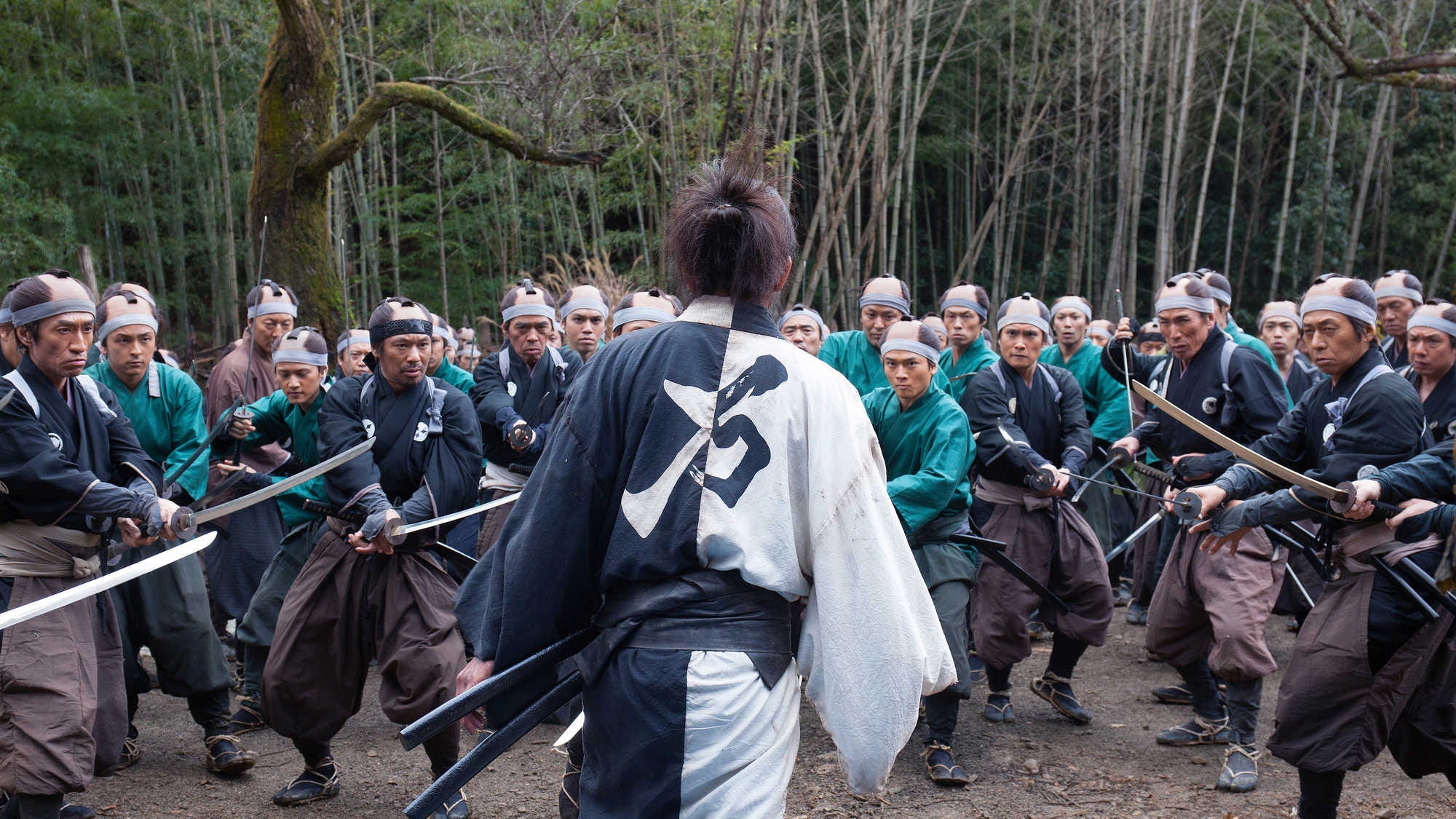


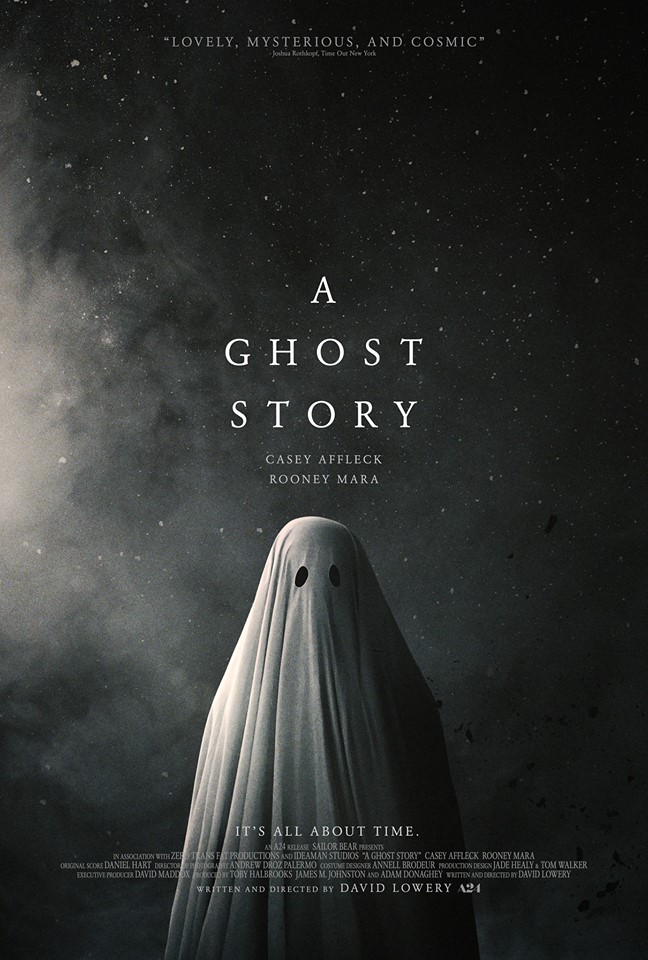
+Japan+1.jpg)