Showing posts with label music films. Show all posts

Saturday, July 18, 2020

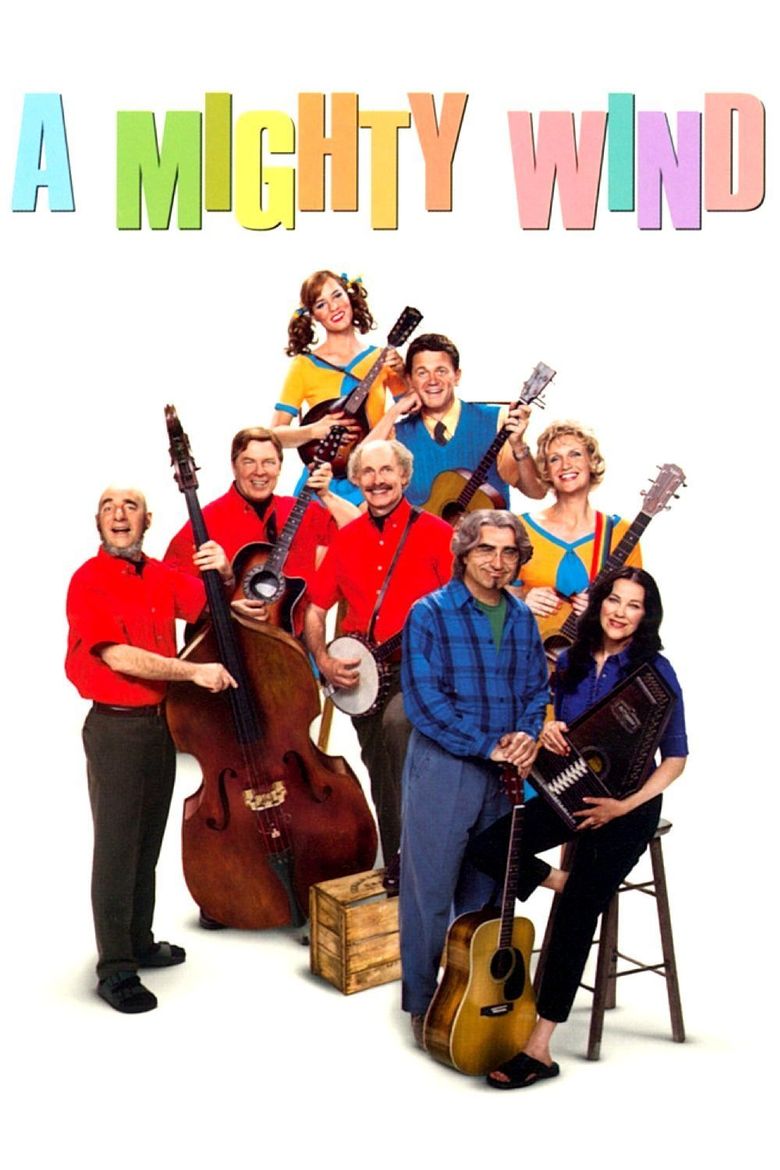
A Mighty Wind (2003)

Director: Christopher Guest

Really funny mockumentary from arguably the genre's most accomplished practitioner, Christopher Guest.

A Mighty Wind is a fake, humorous documentary that chronicles the organization and execution of a commemorative reunion of folk musical acts, following the death of an influential producer who had been connected to the performers. Through interviews and Ken Burns-style still photos, bands with names like Mitch and Mickey, The Folksmen, and The New Main Street Singers tell of their own rises to fame during the 1960s, when the form was at its peak and their acts were on top of the popular music world. Not long after their heydays, though, all of the groups broke up, disbanded, or underwent large-scale personnel changes. So they all face the challenge of overcoming past divisions and grudges, in order to put on a reunion performance that isn't an embarrassing farce.

While I haven't seen all of Christopher Guest's documentaries, I've seen and loved his best-known ones for years. This is Spinal Tap and Best in Show are tough to top, in terms of phony documentary comedies. Still, there are others of his that I'd never seen. My wife and I watched the first 15-odd minutes of his scripted comedy For Your Consideration, but it didn't grab us. We jumped over to A Mighty Wind and found exactly what we were looking for. I don't find it quite as good as Spinal Tap or Best in Show, but it's not far behind.

As with most good mockumentaries, moments of awkward-
ness are offset by either silliness or, in the case of
A Mighty
Wind, sappy earnestness between some of the musicians.
Here, Levy and O'Hara crank up the cheese as they practice.
I think one's enjoyment of this movie simply comes down to whether you like mockumentaries or not. There's always more than a little improvisation involved here, with the actors all given rough ideas of where a scene needs to end up, but little else in the way of a script. This allows them to more naturally riff and flow with their characters, making everything feel more like an actual, unscripted documentary. In unskilled hands, such an approach can be an unmitigated disaster. Fortunately, though, Christopher Guest and his frequent collaborators are among the grandmasters of improv comedy. The core trio of Guest, Michael McKean, and Harry Shearer have always been together, and they once again make up a musical trio in this movie. Other Guest mainstays fill up the roster: Eugene Levy, Catherine O'Hara, Bob Balaban, Jane Lynch, John Michael Higgins, Parker Posey, and others prove why Guest taps them as often as possible for these projects, as they nail their oddball, disaffected roles with aplomb. I will say that Eugene Levy's take on the quirky, socially inept Mitch Cohen wore on me just a tad, with his strangely high-pitched voice and somewhat forced discomfort, but he still provided laughs. The others were all great, especially the recently-deceased Fred Willard. But viewers who prefer tightly-scripted films may grow frustrated with the "loose" feel of this kind of movie.

The subject matter of folk musicians was a great choice. While the movie exaggerates the scale of folk music's popularity in the 1960s a tad for comedic effect, the fun part of it is making these popular groups exceedingly corny and sappy, even when singing about intensely dark topics (not unlike some very real folk groups of past and present). I'm fairly sure that the actors did a fair bit of their own playing and singing, but whoever did it was pretty great. As funny as the lyrics are, the actual musicianship is solid, which just makes the hokey words and sentiments that much funnier. It's sort of like having a really good "straight man" off of whom the "funny man" comedian gets their laughs.

This was a really enjoyable entry into the mockumentary canon. I only which I'd seen it sooner. 

Friday, March 18, 2016

Documentary Fest!! Jaco (2015); The Great Wing Hunt (2013); King of Arcades (2014)

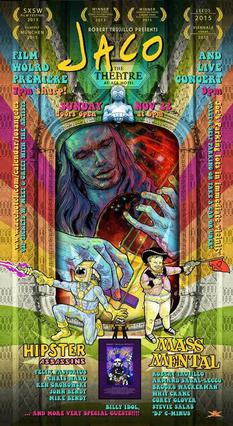
Jaco (2015)

Directors: Stephen Kijak and Paul Marchand

I'm always fascinated by genius in its various forms. The documentary Jaco is a very well-done study of the life of the singular musical genius John "Jaco" Pastorius, the man who many great modern musicians consider the greatest electric bass player of all time.

I had never heard of Pastorius. Fortunately, the documentary is accessible to someone like me, as it provides solid background about Jaco's early life growing up in south Florida. We get to see how he grew up around music, and how this sparked his innate facility to translate his thoughts and feelings into music. Before he was even 20 years old, Jaco was already a known and sought-after talent among jazz musicians who were morphing the style into more modern forms. The documentary includes an amazing quantity of testimonials from some of the biggest and most-respected musicians from the last 40-odd years. It's one thing to hear about a person's genius from his close friends. It's another to hear about them from John Coltrane, Sting, Carlos Santana, Herbie Hancock, Miles Davis, Flea, Joni Mitchell, and other titans of music.

As many such stories go, Jaco's had a sad ending. He died at the tragically young age of 35 years old. While it was not the result of a malignant illness, Pastorius did suffer mental disorders that were perhaps hinted at earlier in life. Eventually, his condition became severe enough that it had drowned out his immense musical talent. It is ultimately a tale of the fine line between genius and insanity, not unlike other well-known tales like that of David Helfgott, Syd Barrett, or Brian Wilson.

This film tells Jaco's tale in a compelling way, for the most part going chronologically through his rise to and fall from prominence in the musical world. Along with the numerous interviews with Jaco's collaborators and copious concert footage, there is an amazing amount of home video. These latter portions help humanize a man who might otherwise be considered a more mythical legend, rather than a rounded person who laughed, joked, and played with his children. Such images drive home the tragedy of Pastorius's ultimate fate.

One of the great takeaways of any great music documentary is the discovery of music which you may have never heard before. This is definitely the case with my experience with Jaco. While I had heard of several of the bands and musicians in the film, I was not terribly familiar with their music. I found much of what I heard in the movie very appealing, though, and I have already started listening to some of Pastorius's solo albums and his work with The Weather Report. This documentary is already enhancing my appreciation for music which I had never before considered.

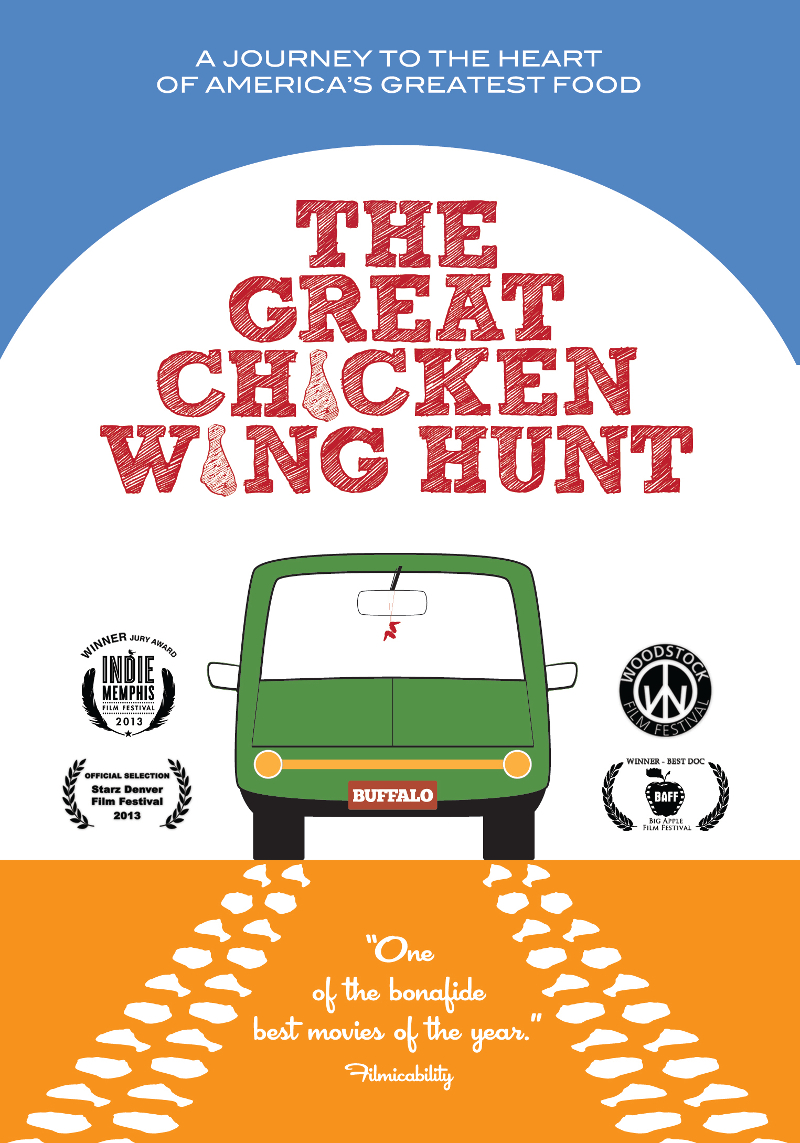
The Great Chicken Wing Hunt (2013)

Director: Matt Reynolds

I had every intention of only giving this movie about 15 minutes of my time. Imagine my surprise when I gladly watched the entire thing.

While I appreciate a good Buffalo-style chicken wing, I am far from an aficionado. Despite this, The Great Chicken Wing Hunt was great fun to watch. It follows Matt Reynolds, an American journalist with a passion for wings. Reynolds lived and worked in Slovakia, where he introduced many of his local friends to Buffalo wings. His work didn't stop there, though. Reynolds became possessed by the idea of finding the best Buffalo wings in the "Wing Belt," the area around Buffalo, New York, where many cooks take great pride in their wing recipes. Reynolds quit his writing job, rounded up several "wing experts," hired a camera crew from among his Slovakian friends, and went on a three-week marathon of wing consumption that would put most people in the hospital with congestive heart failure.

The group of wing experts is a colorful bunch, consisting of several oddballs with rather large personalities. Their enthusiasm can be a joy to watch, even for those of us who are nowhere near as picky about what amounts to cheap pub grub. The Slovakian team, while dedicated and skilled videographers, exhibit hilarious reactions to Reynolds's quirky dedication to his goal, which often confounds them. The interplay between the different groups is alone worth viewing.

This documentary is not a major commitment. In a concise 71 minutes, we get the history of the Buffalo wing, the entire journey of Reynolds's group, and their final decision on the best wing in the country. We also get Reynolds's relationship with his ever-so-patient girlfriend, who deals with the stress of going along with such a bizarre journey. All of the stories come full circle, making for a very satisfying viewing experience. Don't be surprised if you come away with a serious hankering for some good chicken wings.


King of Arcades (2014)

Director: Sean Tiedeman

Low-budget, local documentary with a fairly limited appeal.

King of Arcades is a blend of self-promotion and love letter to classic arcade games.

Produced by its subject, Richie "Knuckles", this documentary traces Richie's love of classic console arcade games, from his time as a child of the 1980s up to the current day. The documentary spends a nice amount of the first half hour or so laying out the history of arcade games. For someone like me, who has always loved such games, this was as compelling as anything else in the movie. The filmmakers did nab interviews with some of the heavy hitters in the history of arcade gaming, which makes these sections worthy entries into the documented history of this modern phenomenon of entertainment.

The rest of the documentary focuses on Knucklez himself, who is of moderate interest, but perhaps overvalues just how fascinating he is. His background as a hardcore rock singer adds a bit of spice, but is hardly the stuff of supreme curiosity. Seeing him track down and refurbish old consoles, while not exactly gripping, does illustrate his deep love and commitment to the games with which he stocks his arcade in western New Jersey.

King of Arcades is probably about 15 to 20 minutes too long, and it suffers from a touch of narcissism. Still, it's worth watching for fans of old-school arcade games. It also profiles a nice go-to arcade where they still know what old-school gamers like. 

Thursday, February 18, 2016

New(ish) Releases (2015): Ex Machina; Dope; Straight Outta Compton

Ex Machina (2015)

Director: Alex Garland

A brilliant piece of original speculative fiction.

Ex Machina begins with Caleb, a young computer programmer in a large company, winning a competition to spend a week with his company's eccentric, reclusive, and brilliant founder, Nathan. Caleb is taken to Nathan's home in a beautiful, isolated area, where he is told that he will take part in a ground-breaking experiment. Nathan has been building robots with cutting-edge artificial intelligence, the long-time dream and goal of computer programmers whereby a machine actually possesses all the deepest and most complex intellectual capacities of human beings. Caleb's job will be to interview Nathan's latest creation, Ava, a robot given the form of a beautiful young woman. Nathan is told to apply his knowledge as a programmer to assess whether Ava could pass as a human.

Within the first few days of his stay at Nathan's beautifully sleek but confined home, Caleb senses something amiss. His host drinks himself into a total stupor every night. Several parts of the house are firmly locked by Nathan's state-of-the-art smart home security measures. Caleb is charmed by Ava when they first meet, but she soon tells him that Nathan torments her, out of the sight of others. Eventually, Caleb is mentally scrambling to determine whether he is part of some twisted experiment, or whether he is being manipulated by one or both of the hyper-intelligent beings in the house with him.

It is rare to get a science fiction film that is confident enough to keep its pace measured and its aesthetic simple and clean, but this is what Ex Machina does. The result is a striking work with a ton of intellectual and emotional power. The character of troubled genius Nathan is fascinating to attempt to analyze, though such an exercise is difficult for much of the film. Caleb, the far more sympathetic character, evokes the kind of feeling which we reserve for the good-hearted and vulnerable. The three-way psychological war is subtle enough that it never relies on cheap thrills or obvious melodrama. There is tension, but it is cerebral in nature, and it builds wonderfully to a shocking finish.

When taken with other films penned by Alex Garland, such as Sunshine and Dredd, Ex Machina means that I now have a smart, modern science-fiction movie writer who I am glad to follow to the theater.


Dope (2015)

Director: Rick Famuyiwa

A phenomenally creative update to the "coming up in the 'hood" movies of the late '80s and early '90s.

Dope chronicles several very tense and sometimes funny weeks in the life of Malcolm (Shameik Moore), a high school senior growing up in 2014 in Inglewood, California, an area notorious for its poverty and danger. Malcolm is an unusual kid for his time and place - he's a young black man with a passion for learning at school, science fiction, punk music, and 1990s hip-hop and rap music and clothing styles. Basically, he's a geek. He and his two misfit friends, Jib and Diggy, spend far too much time trying to avoid the various perils rife in his neighborhood, tellingly nicknamed "The Bottoms."

One night at a club which Malcolm and his friends have nervously wormed their way into, a gunfight breaks out over a raid on a drug deal. After the chaos abates and the trio flee to safety, they discover that an entire brick of uncut cocaine has been stuffed into Malcolm's backpack, which had been placed behind the bar for safekeeping. This puts Malcolm, Jib, and Diggy in the difficult position of deciding what to do with it. Various social pressures and personal desires assert themselves, understandably, as these three nerds in the 'hood try to cope with a situation which could land one or all of them in prison.

Following such a description, you may be surprised to learn that Dope is an incredibly funny movie. Malcom, Job, and Diggy are such awkward fish out of water, despite being natives to The Bottoms, that their simplest, everyday interactions are often comedy gold. This is enhanced by some great direction by Rick Famuyiwa. For sections of the movie, Malcolm is almost a Ulysses-type character. He needs every bit of his considerable smarts to survive an array of dangerous and bizarre characters and situations. Almost every stage in his mini-epic journey has a distinctive sense of place, and it makes a viewer eager to see just what awaits Malcolm and his comrades around the next corner.

Dope is a wonderfully clever update to films from the late 1980s and the 1990s like Juice or Boyz In The Hood. It shines a light on a part of the United States that is far too often overlooked, and it does it with style and respect. A larger message is there, but it is not what you might expect, and it is nowhere near as heavy-handed as those earlier groundbreaking movies.


The original members. Unlike many of the "gangsta" rappers
who followed in their footsteps, these guys came by their
anger and perspectives honestly, as the movie shows.
Straight Outta Compton (2015)

Director: F. Gary Gray

Slick and compelling dramatization of the formation and dissolution of one of the iconic music groups of the late 20th century.

While the above-reviewed film Dope is a brilliant fictional tale of modern life in a rough section of Los Angeles, Straight Outta Compton is the dramatized tale of the very real hardcore rap group N.W.A. in the late 1980s and early 1990s in neighborhoods not far from the Inglewood in Dope. Those of us over age 35 are bound to have strong recollections of the waves that this group made at that time, and this movie does the members' stories justice.

Blessedly, the movie doesn't bother going back too far into the lives of the group's members. Rather, it picks up just before they come together and start performing. Director F. Gary Gray made the savvy move to quickly establish the social ills that Andre Young, O'Shea Jackson, and Eric Wright (Dr. Dre, Ice Cube, and Eazy E, as they were better known) and fellow N.W.A. members lived every day. The movie then jumps into just how they channeled their frustrations, anger, and musical talents into a form of rap music that became wildly popular while scaring the pants off of the conservative white establishment. The focus on how the music reflected and was influenced by incidents such as the Rodney King beating and other institutional racial injustices is what propels this movie beyond a mere music biopic.

Eazy E's business partnership with manager Jerry Heller is
at the crux of much of the drama. Actors Jason Mitchell
and Paul Giamatti add plenty of power to their dynamic.
The movie is not flawless. A bit of research can tell one how certain details are glossed over or completely ignored (Dr. Dre's abuse of women, for one) or how certain events in the film either did not happen or were manipulated by the writers for more narrative punch. It also comes as no surprise that the movie's executive producers - Ice Cube and Dr. Dre - are painted in the most positive light. The movie also slows a bit when it comes to Eazy E's HIV diagnosis. Still, the lion's share of violent and unhinged incidents depicted can be confirmed with a bit of research, so one should fight the urge to dismiss the wilder elements as pure fiction. Pure truth or somewhat embellished, the movie is extremely well-paced, well-acted, and it remains interesting for nearly all of its 140-plus minutes. This is true even for someone like my wife, who knew very little about the group or its members but enjoyed the film.

Obviously, anyone with a severe distaste for gangsta rap will have difficulty with this film, as it does feature a considerable amount of the music of the era. That aside, and if one can handle the very authentic blue language and hedonism on full display in the movie, then they should give this one a go. 

Thursday, February 19, 2015

Oscar Run-Down (an incomplete review)

So here is my run-down of the six of the eight Best Picture nominees.

American Sniper

Director: Clint Eastwood

After the recent weeks of controversy and debate over this film, I finally saw it. I find it to be a very good movie about one singular man's experience with war, though it's not exactly a flawless masterpiece of cinema.

The story is that of Chris Kyle, the deadliest sniper in U.S. military history. Kyle was a man driven to enlist by patriotism and a strong urge to fight very real terrorism. As such, he did four separate tours in Iraq during the 2000s, distinguishing himself mostly through his unmatched skill in long-range shooting, which gave much-needed cover to ground troops. Also depicted are Kyle's struggles to reacclimate to life away from combat and back with his wife and children.

Most things are done quite well in the film, and they speak to Eastwood's deftness as a director. The battle scenes are intense without being gratuitously violent. Kyle's subdued intestity and levity feel extremely authentic, thanks to Bradley Cooper's understated yet nuanced performance. My main problems with the movie come from two places: one is that Kyle's wife, Taya, becomes a one-note refrain of "Don't go." It's an important sentiment, to be sure, but the film never does much to innovate on the theme.

The other, larger, problem I have is that there was clearly some manipulation of the facts in order to present a more exciting film narrative. In fact, I have even heard Cooper himself say that they had always pitched the film to be a "Western in the desert." This is fine in a work of fiction, but when you are telling the tale of a real man and the effects he felt of war, then artificial elements come off as a bit cheap and disrespectful to the subject. It doesn't help that some of these fictional manipulations can be seen as nationalistic propaganda, even if this was not the filmmakers' express intent.

My general feeling about the controversy around the movie is that both sides are blowing things a bit out of proportion, in order to support their pre-existing beliefs. One could perhaps make an argument that there is a hint of propaganda about the film, but it's certainly not clear-cut. However, I really didn't get the sense that the filmmakers were trying to make any kind of grand political or social statement about war. It's simply a well-done look at a gifted soldier and war's brutal effects on him.

Will it win Best Picture? I seriouly doubt it. Eastwood has done better movies, and the flaws are a little too glaring.

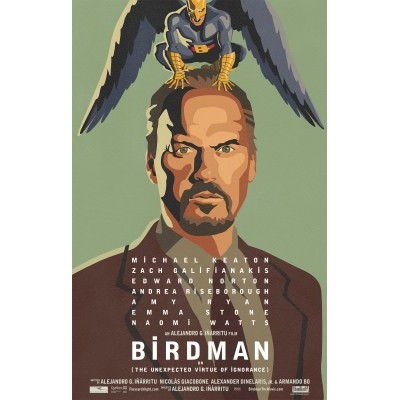
Birdman or (The Unexpected Virtue of Ignorance)


Director: Alejandro Inarritu

I just watched this one, and it's certainly a trip. Using a heavy dose of Stedicam cinematography and extremely clever editing, Birdman follows Riggan Thompson, a once-immensely popular star whose best-known role as the titular superhero has become an anchor on his soul. Seeking to legitimize himself as a serious artist, Thompson burns through his remaining finances and emotions to try and pull off a successful production on Broadway. It is, of course, no acident that Thompson is played by Michael Keaton, whose "biggest" role was as Batman in the two massively successful Tim Burton movies in 1989 and 1992. Keaton is great as the celebrity going through a very serious mental and professional crisis, and his performance is worthy of the Best Actor nomination that he's received.

The film has a lot ot absorb, and I  must admit to feeling a tad burned out during the last 30 minutes or so. Still, it's mostly an engaging look at a few intense days in the life of a man whose sanity is fraying more with every passing hour. There is plenty of magical realism to be had, and the performances are as impressive as they come. It can be a bit tough to glean an ultimate point through all of the criticism that Inarritu hurls in nearly every direction: celebrities, self-absorbed actors, theater critics, the public, and basically anyone involved with theater or film. Regardless, it's absolutely worthy of the 9 Oscar nomination it got, and it certainly should take home at least a few of the technical awards.

Will it win Best Picture? I doubt it, since the film takes so many pot-shots at every aspect of showbusiness, though it's a highly creative and worthy contender.

Boyhood

Director: Richard Linklater

An excellent film, in keeping with Richard Linklater’s naturalistic style while being a rather new achievement.

Boyhood follows the twelve formative years of a child named Mason, from ages 6 through 18. It is a tapestry of moments, of varying intensity, that leave an imprint on him as he grows towards adulthood. Similar to Linklater’s Dazed and Confused and other films, there is no particular “story” here, other than a single American boy experiencing a rather typical childhood in Texas between 2001 and 2013. He has an older sister; a single, working mother; and a wayward father who is periodically involved in his life. Mason has to deal with his mother’s sometimes strict, alcoholic boyfriends/husbands, his nagging sister, and the attempts to find any sort of purpose in life.

The brilliance of the movie is just how organic and subtle everything is. While there are a handful of shocking and traumatic moments, none of them is the stuff of high cinematic drama. Most of the movie is given over to the little moments that slowly shape Mason: the discovery of female bodies through lingerie catalogues; a casual conversation with his father that alters their relationship ever-so-slightly; a brief shove from a pair of bullies; a stern talk with his photography teacher. These and many more moments tell the tale of a boy who becomes sullen but hopeful that life does have something to offer a young person who is never completely sure of his footing. It’s a long movie, in terms of time (2 hours and 45 minutes), but it never feels it as we smoothly transition through Mason’s childhood years.

I may not feel the need to watch Boyhood again any time soon, but it is clearly an outstanding film achievement.

Will it win Best Picture? Perhaps, given Linklater’s place in American film history and the fact that he hasn’t been honored in such a way before. It is certainly one of the strongest contenders in the field.


The Grand Budapest Hotel

Director: Wes Anderson

It's a Wes Anderson movie, alright.

Told with several chronological jumps and a ridiculously talented cast, we follow the adventures of Gustave H., the legendary concierge at the title Hotel. He's a curious character, who lives to be the very best at his prestigious job, while bedding wealthy women of advanced age. Gustave is sold to us by the hilarious performace of Ralph Fiennes, who completely nails the shifts in register required by Anderson's ever-quirky script. The story is rather ridiculous, as have been all of Anderson's movies to varying degrees, but there is always a unity to each movie that allows us to accept the strange ways in which they work.

I'm of two minds these days about Anderson. He's clearly a unique filmmaker, and I still find his movies amusing and impressive for their exacting detail and singular blend of childlike glee and more universal and profound human sentiment. However, I can't shake the question of whether he's capable of doing something truly outside of the clear niche he's created for himself. In Grand Budapest, we even see the first marks of self-referential narcissism with a montage of other concierges across the globe, with each one being an actor who is an Anderson movie mainstay: Bill Murray, Bob Balaban, and others. The joke is only remotely funny if you know Anderson's films. Such egotism is a bit annoying, in my view.

Will it win Best Picture? No way. Though it might be another tiny step towards the "Life-Time Achievement Award" that Anderson will win 20 years from now.

The Imitation Game

Director: Morten Tyldum

An otherwise very good film made excellent by an outstanding acting performance.

This film, in keeping with the unoffical "biopic" theme of 2014, looks at key moments in the life of British mathematician Alan Turing. Turing is the father of modern computer science, and the film mostly traces his enlistment by the British military to crack the Enigma Code - Nazi Germany's code for military transmission used in World War II. The code was considered unbreakable until Turing and his small team put all of their mental efforts towards cracking it.

The Enigma Code puzzle is the intellectual meat of the plot, given its greater place in world history, but the film takes a close look at Turing himself, who was himself a cipher to many who knew him. Awkward with people and a closeted homosexual (homosexual acts were illegal in England during Turing's life), his struggles with himself are almost as fascinating as his desire to solve logical puzzles. The more personal elements explored in the film wouldn't have had nearly the power that they do if not for a spellbinding performance by Benedict Cumberbatch. Like most in the U.S., I first knew of Cumberbatch through the incredible Sherlock series on the BBC. What I saw in The Imitation Game was an actor going well beyond the norm to bring a singular historic person to life on screen. I have to think Cumberbtach a serious contender for Best Actor.

Will it win Best Picture? There's a very good chance, given how solid the movie is, in all respects.


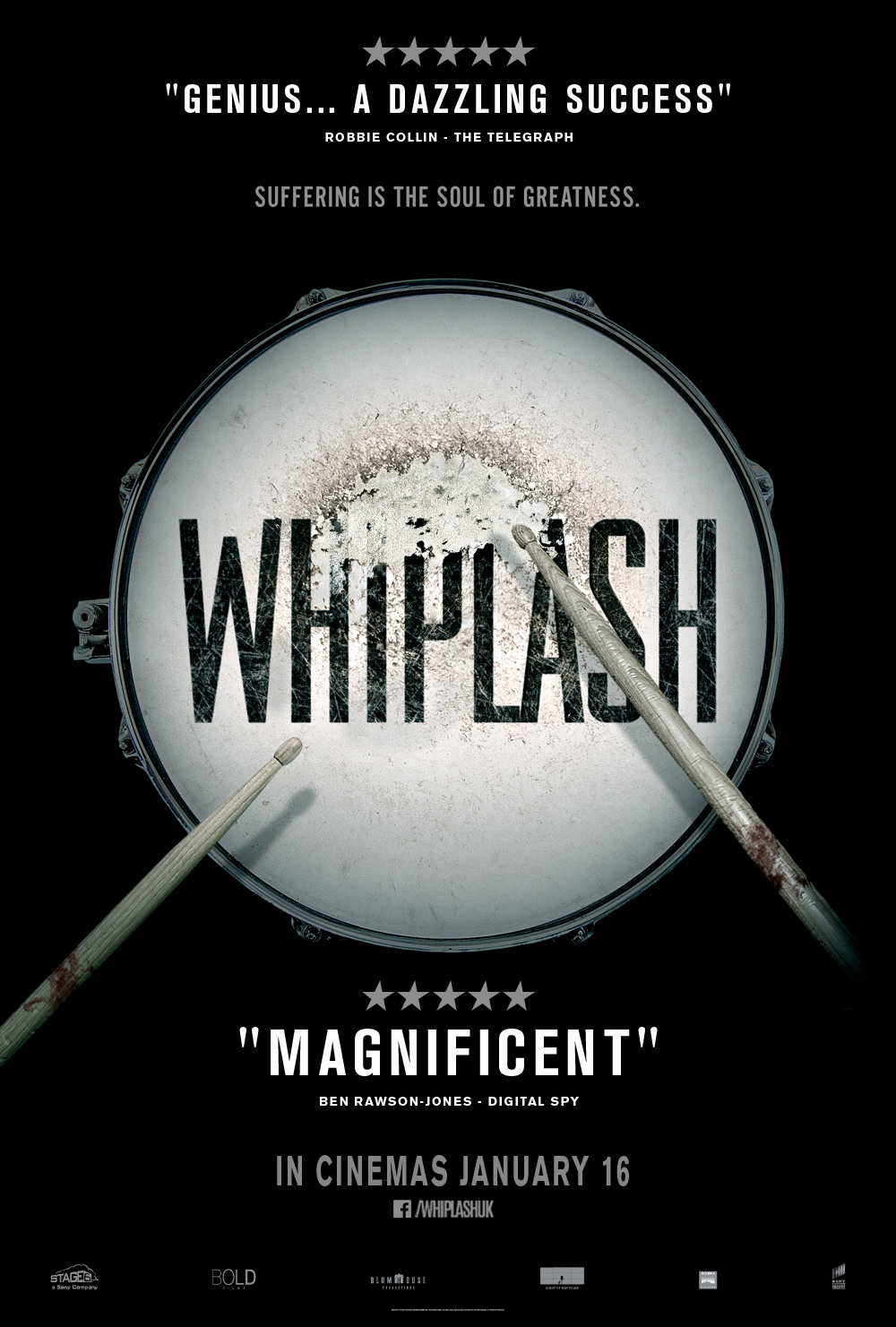
Whiplash

Director: Damien Chazelle

This is a fantastic movie about obsession, drive, and the question of how far people will go to find and inspire greatness, either in themselves or in others.

The story follows Andrew Neimann, a freshman drummer at a highly prestigious music conservatory in New York City. Andrew's presence, skill, and determination are noticed by the school's most accomplished instructor, Mr. Fletcher, who quickly invites Neimann to try playing with the school's elite jazz ensemble. Neimann's excitement is soon burned away by Fletcher's unrelenting, scathing style of discipline and verbal abuse towards his pupils, especially Neimann. The young percussionist's drive to excel is driven by his own passion for greatness as well as his growing hatred for Fletcher.

The movie is uncomfortable in many places, as we watch Fletcher abuse Neimann in every way imaginable: physically, emotionally, and psychologically. Fletcher's rationale is that only through such manipulation and pressure can a musician become one of "The Greats." To support his theory, he often cites a famous anecdote about legendary jazz saxophonist Charlie "The Bird" Parker having a cymbal thrown at his head. We viewers are left plenty to ponder this notion of artistic acheivement and whether it is worth the cost. The cost, in Neimann's case, is his relationships with family, friends, and other musicians.

The music is the film is great, as you would expect, and the sound and film editing enhance it to a great degree. The highlight is clearly the performance of J. K. Simmons as Fletcher, who brings the sadistic music instructor to frightening life. Simmons will likely win Best Supporting Actor for the role, and he alone is worth watching, even if it can be difficult to witness the maelstrom of torment that he heaps upon Neimann.

Will it win Best Picture? I'm skeptical, due to how specialized the topic is, but it is clearly an all-time great "music" movie.

Selma & The Theory of Everything (and a few final thoughts)

I wasn't able to see either of these movies, try as I might. Based on the buzz, though, it sounds like we can expect Selma to completely get the shaft, while The Theory of Everything may merit little more than a Best Actor award for Eddie Redmayne.

Overall, I have to say that this year's crop of Best Picture nominees is a fairly solid one, though not exactly a year that will be seen as a historically great year. When we look back at these eight films twenty years from now, I don't know that more than one or two of them will have acheived "all-time great movie" status.