Thursday, June 11, 2015

Idiot Boxing: Game of Thrones full series review


Since we are now nearing the end of Season 5 of HBO's Game of Thrones series, I've gone back to watch the first four seasons (only the first two of which I'd already seen).

I should state that, long before the HBO series, I was a tremendous fan of the book series A Song of Ice and Fire. Since 2001, I’ve read the first three books three times each, the fourth twice, and A Dance With Dragons once. I recall the excitement I felt at the low-key announcement back in 2006 that HBO had purchased the rights to the series, and I wondered if they would be able to do such a great literature series real justice. Here are my thoughts on the results so far:

Casting actor Sean Bean as the patriarch Ned Stark was just
one of countless excellent choices made by the show runners.
Season 1

Season 1 was a phenomenal start to what could have been a disaster. As a devotee of the novels, I could hardly have been more pleased.

Following the arc of the first novel - A Game of Thrones - the show sets up the Stark family and the lands of Westeros brilliantly. It's a massive, detailed world, with no end of characters and motivations, locales, and mysteries to be discovered, and a lesser team of creators could have fumbled things in many ways. Instead, show creators David Benioff and D.B. Weiss knew exactly where and how to streamline things, without losing the lifeblood of the show.

The story of Ned Stark's tragic journey to the capital King's Landing is a great one, told very well in this first season. Those who hadn't read the book before the show were as stunned by Ned's fate as I was when I read of it long ago. This, of course, sets a certain tone that continues through George R. R. Martin's novels - that no characters is ever "safe". It's one that very few writers have the courage to follow, given the difficulty in creating characters that thoughtful readers love and will follow. Martin has never minded offing a strong character, if it makes sense within the tale or it makes the story more interesting.

The acting was without reproach. There will always be some characters who won't match the way a reader envisions them, and this TV series is no different. More importantly, though, is that they all nail the spirits of their characters perfectly. Sean Bean wears his anguished sense of duty right on his sleeve. Maisie Williams carries every scrap of Arya's toughness and surliness in her tiny little frame and on her face. I could go on and on, without finding a single casting misstep.

Shae and Tyrion - my least and most favorite characters,
respectively, through much of the TV series. 
The only things I can even gripe about are very minor, and they only come from my close familiarity with the novels. The very small one is that Robert Baratheon is nowhere near as physically large as I felt he should have been. Mark Addy is a great actor, but his character is described in the books as being a massive man, though one grown fat after 17 years of indulgence. In his scenes, Addy is often shorter than several other men in the room, which takes a little something away from the power that he is meant to have. My other gripe is with a lesser character, but it is far more annoying: that of Shae, Tyrion's favored prostitute. She only appears towards the end of the first season, but she very quickly becomes extremely biting and confrontational towards Tyrion. This is something that never happens in the books, and runs counter to nearly everything she is about. In the books, she is perpetually sweet and loving towards Tyrion (even if out of self-interested greed rather than genuine affection). In the novels, she will become pouty when dissatisfied, but she never exhibits the fury or surliness that the TV character has.

Two rather small things in a first season filled with literally hundreds of potential pitfalls. Not bad at all, really.

Season 2
The Battle of the Blackwater was the best of several
extremely tense situations in which characters' true
mettle (and lack of) is on full display. 

This season mostly follows A Clash of Kings, the second novel in the Song of Ice and Fire series. The arc of this season, as with the novel, is the further fracturing of Westeros as the Lannisters take over the kingdom. Various other kings proclaim themselves, including each of dead King Robert's two brothers Renley and Stannis, as well as Ned's eldest son Robb being dubbed "King of the North." This leads to battles and preparations for battles that raise the stakes ever higher. Meanwhile, across the sea, Daenerys seeks to not only survive with her three newly-hatched dragons but also build an army to sail back to Westeros and reclaim the Iron Throne.

The maneuvering of the major players is plenty fascinating, but they are not even my favorite part of season two. What I love is that this is Tyrion's true time to assert himself. Once his father grudgingly makes him acting Hand of the King, Tyrion has the freedom to use his considerable wiles and intelligence to constantly one-up his many adversaries. It's an amazingly entertaining display of brains over brawn, and Peter Dinklage continues to fulfil the promise of the character.

In season 2, we also start to see the TV series creators Weiss and Benioff modify and streamline certain parts of Martin's original tale, to great effect. The standout change to me is the running story at Harrenhal of Arya Stark accidentally becoming the serving girl to Tywin Lannister, who is unaware of exactly who she is. The scenes between Maisie Williams and Charles Dance are all incredible, and they enhance the series tremendously.

One other aspect of note stand out. If any viewers of the series found that they particularly liked the episodes Blackwater in season 2 and The Pointy End in season 1, then you may note what these two episodes have in common: they were both adapted for the screen by George R.R. Martin himself. Martin, who has a ton of work experience in TV through shows like Beauty and the Beast and others, shows that he can carry his brilliant writing skills from novel to screenplay form.

Season 3

The third season begins to show more adjustments and alterations to the source books, while keeping nearly all of Martin's original "Holy s--t!" moments intact, as detailed in the novel A Storm of Swords, with a sprinkling in of material from the next book A Feast for Crows.

Jaime and Brienne - one of the greatest odd couples ever.
There's plenty of fun to be had just deciding whether Jaime's
tongue or Brienne's martial prowess is more impressive. 
The major story arcs follow Tyrion's attempts to rise up after being cast down by his stern father, Jon Snow's double agency with the Wildlings as they march against the Wall, Robb Stark's military conquests, and Daenerys's gathering of her army across the sea. There are plenty of other plotlines that are excellent, if not as large in scale as the others.

As with the novels, one of the best arcs is that dealing with Jamie Lannister and Brienne of Tarth - two characters who are so opposed in every way that their unlikely pairing becomes the stuff of brilliant storytelling. The show's handling of Jaime's development as a character is just as deft as George R.R. Martin's, and it becomes just as compelling as any of the larger scale stories unfolding.

Any viewer of the show knows that the 8th episode of the season, The Rains of Castamere, contains what was, to date, the most shocking and violent plot turn in the series. Without giving it away for any who haven't yet seen it, suffice it to say that just when you think you're getting a footing on how the broader story is playing out, the tale completely flips things on you. As usual, such chaos creates plenty of fodder for the various characters in Westeros to test their mettle. This serves as the perfect set-up for the following season.

Season 3 does seem to be going heavier with the sadism than previous seasons. The most obvious example is Theon's imprisonment by Ramsey Snow. It's hardly the only one, but the brutality and graphic nature of the images can be off-putting once the point of Ramsey's twisted nature is made abundantly clear. By the end of this season, my hope is that this doesn't become an expanding trend.

Season 4

Things continue to roll along nicely in season 4, with a few of my earlier annoyances vanishing but others growing. 
The Viper and the Mountain - a brutal highlight of season 4.
As much as I love Bronn's cunning duel in the Eyrie in season 1,
this duel is perhaps the best of the series so far. 

We finally get the satisfaction of seeing one despicable character get killed in suitably gruesome fashion. This, of course, sets off the sad but compelling story of Tyrion's horrible tumble from grace. This plot line is a strong one, though it's hard to watch Tyrion take even more abuse, especially after acquitting himself so well during seasons 2 and parts of 3. Still, it did lead to the fantastic duel between the Viper and the Mountain, which was almost as good as in the source novel. 

The other storylines are all compelling in their ways. One of my favorites is Jaime's development after returning to King's Landing, sans sword hand, where he has to reinvent himself. This also leads to the fun pairing of the amusing squire Podrick with the grim Brienne. These two make for a curious contrast with the other odd couple of this season - Arya and the Hound. Arya's darkening worldview is one of the more fascinating, if ultimately disturbing, arcs of the entire series.

As always, Daenerys still gathers herself across the Narrow Sea, where she continues her conquest of liberation. Seeing how she deals with the grayer areas of leadership add some welcome depth to this storyline. It also gave us one  of the best killings of the series, when Daario Naharis takes out the Champion of Mereen in hilariously, awesomely efficient fashion.

The penultimate episode was arguably the best of the series to that point. This is the only episode to date which has remained exclusively in one setting - the Wall, where Jon Snow attempts to fight with his fellow Crows against the oncoming hordes of Wildlings. This episode had all of the tension and excitement of some of the very best battle scenes from the Lord of the Rings trilogy.

Two annoyances stick with me after watching the whole season. The lesser one is how actor Aiden Gillen has gone a little overboard voicing Littlefinger. He always gave him a rather sinister tone, but in this season it becomes almost cartoonish. His voice has the low, hushed tone of a one-dimensional schemer in a lame TV crime drama. It's a distraction.
The irredeemably odious Karl. Along with Joffrey and Ramsey,
he completes a trifecta of horrid characters that exist to do
little more than turn viewers' stomachs. 
More pervasive and annoying, however, is a concern of mine from season 3 - the escalating sadism. The books and show have always had some brutal characters, and Joffrey was clearly a nasty little sociopath from the get-go. But whereas Joffrey was the lone main character who was a sadist through the first three seasons, we now get more of the depraved Ramsey Snow mutilating and tormenting Theon and others. If that's not enough, we get multiple scenes of the vicious Karl lording over what is essentially a rape camp north of the Wall. There were times when the show wandered a little too close to - and arguably into - the realm of torture porn. Fortunately, most of these elements were front-loaded into the first 4 or 5 episodes, leaving the more palatable stuff for the latter half of the season.

The Next Season is Coming...

So that's my overall run-down. While I haven't stayed on top of the series from week to week like the most dedicated viewers, I do think it's an outstanding show. I'm just happy to live in a time and place where the technology and resources exist to bring such a vibrant, engaging, and epic tale to visual life.

A review of season 5 will be coming, once I catch up on all of the shows in a week or two...

Monday, June 8, 2015

New(ish) Releases: The Tale of Princess Kaguya (2014); Nightcrawler (2014); Draft Day (2014)

The Tale of Princess Kaguya (2014)

Director: Isao Takahata

One of the most beautiful, and saddest, animated films that you will ever see.

Director Isao Takahata, long-time collaborator with iconic Japanese animation master Hayao Miyazaki, drew from Japanese folklore for this film. The story, better known as The Tale of the Bamboo Cutter, is at least 1,300 years old, and it is arguably the single-most famous story in all of Japan.

The tale is of a middle-aged bamboo cutter who, while working in the forest one day, discovers a tiny princess embedded inside a bamboo shoot. He brings her home, where she magically transforms into a normal-sized human infant whom they name Kaguya. Over the next few years, Kaguya grows with supernatural speed, both physically and intellectually, in the rural town where her surrogate parents raise her with unbridled love. She eventually understands that she came from the moon, her true home, but she was sent to Earth for some purpose which she cannot recall. Just as Kaguya approaches womanhood, her father decides to use a magically-produced cache of precious gems to finance her entrance into the aristocracy based in the capital city. Kaguya then must decide just who she wishes to be and what she truly loves about earth, her adopted home.

Being an animated movie, you might wonder just how much emotional punch the story may have. I can tell you that it is extremely powerful. Using techniques best utilized in the animated medium, the emotional tone of key moments are conveyed beautifully and powerfully, occasionally using impressionistic and wild visuals. The resolution of the story bears many hallmarks of Japanese Zen existentialism, which adds impressive depth to what might appear to be a mere fable for children.

I would guess that a young child will enjoy this movie. However, the deeper themes and emotions will only be perceived by viewers with a greater wealth of life experience. The Tale of Princess Kaguya can only be fully appreciated by mature viewers, and it shows exactly why a film should never be written off artistically simply because it is animated.

Nightcrawler (2014)

Director: Dan Gilroy

As the title might indicate, Nightcrawler is bound to leave you feeling uncomfortable and disturbed. Even so, this is an exceptionally well-done film.

The movie follows the rise of Lou Bloom, an unemployed petty thief who gets involved in the field of "nightcrawling," the finding and filming of violent accidents and crimes which occur at night in the Los Angeles area. Such footage can be sold to covetous morning news shows which follow the credo "if it bleeds, it leads." Bloom proves himself a highly capable and energetic study of the profession, and he will stop at nothing to become the premier provider for such graphic footage.

The technical elements of the movie are virtually flawless, capturing the danger and fear of not only the profession of nightcrawling but also the nighttime environment of L.A. The camerawork and framing carry the story along visually,which is no small merit given the subject of the film.

What sets the movie apart, though, is the character Bloom himself. Though it is difficult to imagine such a person existing in reality, he certainly represents an engaging amalgam of several very real characteristics. Some of these are actually admirable: his diligence, intelligence, and tenacity are the stuff of "The American Dream." However, Bloom's obsession with success and his utter lack of morals or empathy reflect the darkest aspects of a monomaniacal desire to reach "the top." Bloom is unnervingly persuasive, especially with those who share his selfish need for personal success. Jake Gyllenhaal is eerily effective at bringing the singularly creepy Bloom to life.

Nightcrawler is not a movie that will leave you feeling warm or fuzzy. It is, though, an extremely well done piece of cinema with one of the more unique protagonists you are bound to find.

Draft Day (2014)

Director: Ivan Reitman

Though far from terrible, Draft Day is a rather lame movie, however you look at it.

The plot follows the roughly 24 hours of the first day of the National Football League (NFL) Draft - the day on which professional teams get to select the very best players from college to play for their franchises. It's a day on which entire futures can be made or broken, based on how effective teams are at projecting potential success or failure of young, extremely talented and aspiring athletes. There is certainly more than enough drama built into this real-life sports event that a clever filmmaker could construct a solid movie from such material. Such is not the case here, though.

Specifically, the movie is about fictional coaches and administrators of real teams in the NFL, with the primary focus on the Cleveland Browns and its general manager, Sonny Weaver (Kevin Costner). Weaver is a second-year GM who is feeling pressure from all sides to make the draft selection that will change the fortunes of the Browns' franchise. The problem is that Sonny's ideas about player evaluation are at odds with his fiery new head coach, Penn (Denis Leary), the team owner, other draft analysts on his staff, and of course, the seething masses of rabid Cleveland Browns fans. The three players most under Weaver's microscope are a "can't miss" quarterback, and a linebacker and running back who both show extreme talent but also have a few character concerns.

The basic ingredients are there for some decent drama, and I admit to being just curious enough about the outcome to watch the entire movie. However, as a passionate fan of football and movies in general, the outcome was never really a mystery. Once the first few little wrinkles in the plot surface early in the picture, it's no great leap to figure out almost exactly what will happen and how. Though the actors all acquit themselves well, the lack of suspense lets far too much air out of the proceedings (no apologies to Tom Brady).

Just one of the many unrealistically tense confrontations
between coworkers in the film. Anyone who has seen
Hard
Knocks, or has some sense, will find them implausible.
Three greater weakness really sink this movie to no better than mediocrity. One is that anyone who has closely followed a football team will notice all sorts of unrealistic depictions. A college coach gets extremely snarky with an NFL GM. The GM for Jacksonville is sweating and shaking in his boots on draft day like a kid who forgot to prepare for his fifth grade oral book report. Several GMs seem to have absolutely zero back-up plans when their targeted player is taken unexpectedly, leading to laughably unrealistic panic. Several GMs, including Weaver, seem to forget the draft order. A veteran quarterback goes into a rage and trashes the GMs office. These and several other ridiculous actions completely undermine the credibility of the movie's attempt to be authentic in its depiction of this real event.

The second weakness is one that dogged Costner's other late-stage sports movie The Perfect Game, which is the attempt to insert a completely unrelated romantic story into it. Weaver is in a secretive relationship with the Browns' financial expert, Ali (Jennifer Garner), who has just that morning informed Weaver that she is pregnant. It's a completely tangential storyline that does nothing to enhance anything else about what is otherwise a movie completely about sports. Nevermind the fact that we get yet another relationship featuring an attractive woman and man nearly old enough to be her father.

The final problem is that there is no true sense of closure. Anyone who follows sports teams knows that draft picks, no matter how sure a team might be about their strengths or weaknesses, have the potential to brutally disappoint or pleasantly surprise. Draft Day never gives any indication of what, exactly, happens with the players whom the Browns select. The day of the draft ends, everybody hugs, and that is all. I was expecting, at the very least, some final title cards giving the future lifetime statistics of the three players involved, just so we could get the satisfaction of knowing for certain that Weaver's evaluations were correct. No such information is given, leaving us to simply assume that the players would go on to fail or succeed just as Weaver hoped and expected. Sports simply don't work this way, as it is a true meritocracy in which the proof must be in the pudding and not just look good on a recipe card.

With a better script and a better understanding of just how in tune many football fans are with the inner workings of their teams, Draft Day could probably have been a much better movie. As is, I wouldn't recommend it to any serious football fan. A very casual football fan might enjoy the artificial drama of it, but few others will. 

Thursday, June 4, 2015

Before I Die # 545: Clueless (1995)

This is the 545th movie I've watched from the 1,169 movies to "See Before You Die" list that I'm gradually working my way through.

Director: Amy Heckerling

A fairly pleasant little surprise, and certainly a slice of pop culture from my formative years in the 1990s.

This is one of my wife's favorite movies, so she was able to fill me in on the interesting fact that this is a modern comedic adaptation of Jane Austen's Emma. This alone piqued my interest a little more, and I was rewarded with a pretty clever and entertaining movie that I somehow had never previously seen.

The movie follows several months in the life of high school senior Cher, an obliviously wealthy and priveleged teen whose primary concerns are fashion trends, having her way, and occasionally helping those she deems "in need." The film unabashedly wears its place and time on its sleeve, from the fashion aesthetic to the soundtrack to the quirky slang. And few things say "mid-1990s" like Alicia Silverstone, the "It Girl" for a brief period. Fortunately, these dated elements do nothing to diminish the basic story and the humor of the film.

My wife informs me that the story is, indeed, a reasonable facsimile of Jane Austen's classic novel. Cher, like that book's protagonist, is a priveleged rich girl who actually does have a sense of goodness, though it takes her some time to get any kind of true sense of herself and the world around her. Her fumbling ditsiness still makes for some solid humor, even these 20 years after the film's initial release. The script holds up surprisingly well, with plenty of the supporting characters rounding out the  movie nicely. The cast has more than a little to do with this; a young Paul Rudd and Brittney Murphy feature, and veteran Dan Hedaya are just a few of the actors who nail their roles and lines.

Admittedly, I found some of the elements a tad sappy here and there, which is unsurprising for what amounts to a romantic teen comedy. Still, the movie never takes itself seriously enough to invite harsh criticism. The tale is amusing, if slightly familiar.

I have to confer the highest compliment that I can for a movie like this: I enjoyed it. Considering what it is, and the fact that I was expecting to find it a chore to watch, this is high praise.

That's 545 movies seen. Only 624 to go before I can die...

Saturday, May 30, 2015

Idiot Boxing: Agents of S.H.I.E.L.D. Season 2 (2014-2015)

The team at the start of the season. Things do change,
in highly entertaining fashion.
An excellent sophomore season of a show that has really found its footing.

Season 2 of Agents has several interesting stories running through it. The first half, comprising 10 episodes, follows two main stories. One is the attempt of Coulson and the remnants of his team to deal with the remaining Hydra agents in the world, who themselves are attempting to regroup and usurp any advantage which SHIELD might attain. The other story involves the pursuit of Skye's insane father, Kal, and Raina of the strange alien artifact which may hold some key to Skye's origins.

Unlike the first season's initial 10 episodes, season 2 has virtually no tepid "filler" episodes. While there are one or two episodes which stand alone, and do it fairly well, the entire sequence clearly has a long-term purpose in terms of storytelling. The pacing is strong, and it all brings us up to the mid-season break with a great cliff-hanger episode during which a close team member is shockingly killed.

Once the season returned from the hiatus, it picked right back up. The latter half of the season is very much about Skye, who has now had latent superpowers triggered. Her story helped drive the plot along at a nice pace, gaining plenty of momentum by the final three or four episodes.

At this point, the characters are fleshed out well, and we get more insight into the stoic and enigmatic May. The characters introduced in this season begin to shine, as well. While I don't find actress Adrianne Palicki particularly talented in terms of acting, she does certainly have the physique of an intimidating, badass spy. If only the show-runners didn't seem to feel the need to have her hair looking Pantene-perfect in every shot, I might be less annoyed. This is a bugaboo of mine, but when a character has just punched and kicked her way through dozens of heavily-armed adversaries, her hair should not look like it was just primped for a 5-star Glamour Shot sitting.

The revelations and developments of Skye's character
some of the several strengths of this sophomore season.
Little nuisances like this aside, the new and old characters blended and conflicted in highly entertaining ways. The two-part season finale was a great piece of action storytelling, complete with fun twists, clever one-liners, and well-executed fight choreography. Underlying it all is a basic story that has a surprising amount of heft to it, dealing with the concept of pre-emptive strikes. This is something touched upon in Captain America: The Winter Solider, and it is a topic at the heart of the final chapters of this season of Agents. The show-runners work in this rather gray area well, making the ambiguity and chaos of it work for their fantasy tales.

I was very pleased to read, shortly after the season ended, that it has been renewed for a third season. Given the way that this season ended, with more than one fascinating cliff-hanger, I'll be excited to see where the show heads later this year. 

Tuesday, May 26, 2015

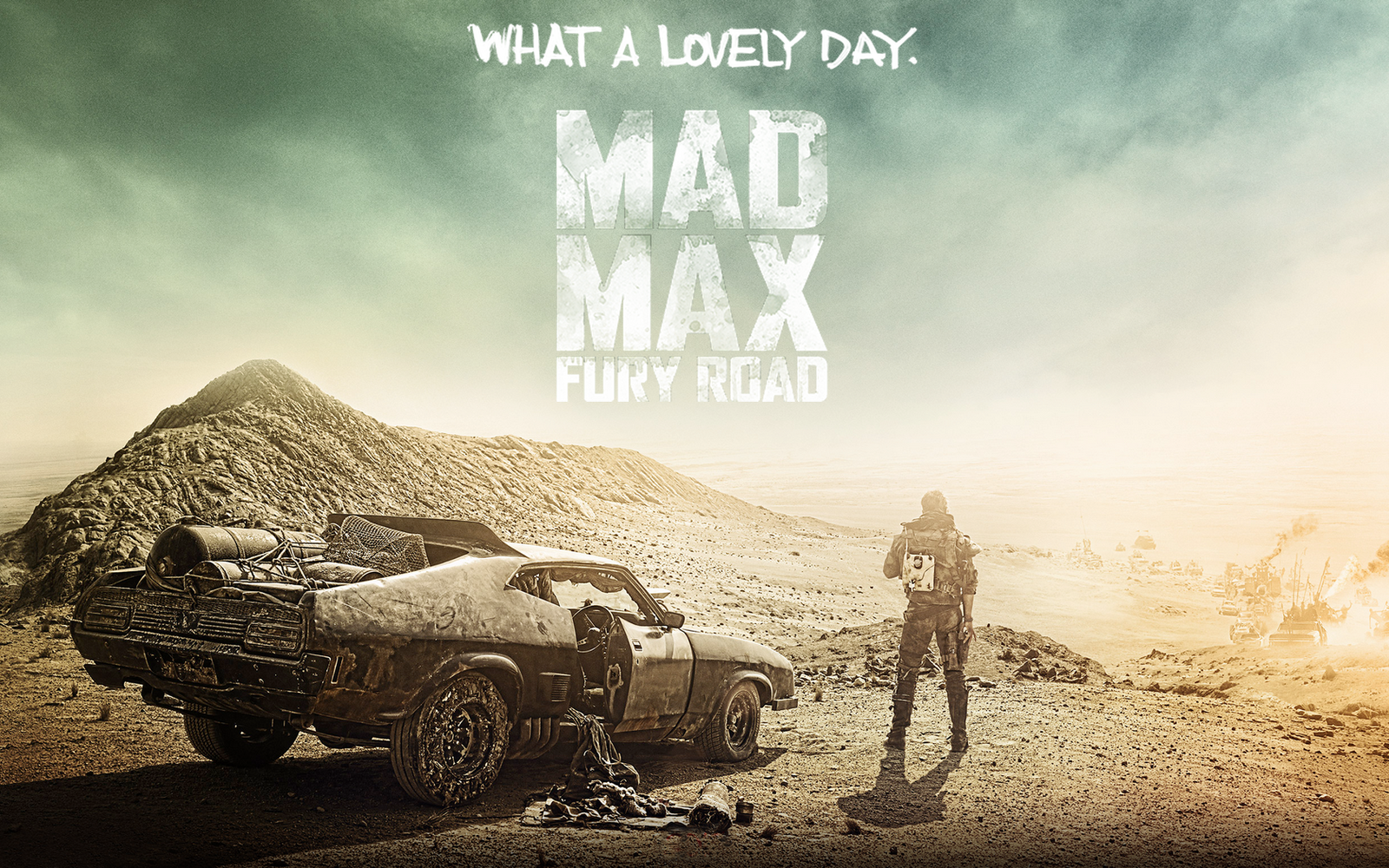
New Release! Mad Max: Fury Road (2015)

The opening scene. Things are about to get totally bananas
over that horizon, Max.
No Spoilers!!

Director: George Miller

This movie is ridiculous fun, with a nice dash of stylish social commentary.

Right off, I'll admit that I've never seen all of the original 1979 Mad Max, though I know the gist of the story. I have seen The Road Warrior and Beyond Thunderdome plenty of times. The former is an all-time great movie, while the latter is solid fun, though with some lamer elements that dilute it. Overall, I was rather curious about this reboot of an iconic and original film series.

My curiosity paid off. Big time.

In brief, Fury Road offers the goods on all sorts of levels. Right from the opening scenes, the action gets pumping right along and never really lets up. Yes, there are a few necessarily slower moments, but they give us time to breath with the characters and never drag any longer than necessary. This is something that went far awry in Thunderdome's second act. No such trouble here.

The entire post-apocalyptic world of the series has been updated marvelously. With modern technology and a massive budget, George Miller absolutely went to town. The set pieces are incredible; the countless props and costumes each suggest stories which beg to be told; and the effects and stunts are everything a summer blockbuster could possibly offer. Though fast cars and explosions do little for me, I found myself thoroughly enjoying the fast-paced and cleverly-shot pursuits that were hallmarks of the original trilogy.

Yes, that's Charlize Theron with a robotic left arm. Yes,
her character Furiosa is even more badass than she looks.
There are, in my estimation, two things that elevate Fury Road beyond a simple slam-bang monster truck rally set in the desert. One is that the tale functions as a clear allegory for modern global problems. It takes a little while to be introduced to all of the elements in it, but they are there in their amusing and disturbing glory. While this could have been executed in very clumsy ways, Miller teases them out through the narrative, piece-by-piece. Once you see the full picture, it may seem rather obvious, but I was glad that I was allowed to do the work myself, rather than have some superfluous exposition ruin the magic of it. It all spoke to a respect for the viewer which I found quite welcome.

The second aspect that sets the movie apart is the character Furiosa, played by the ever-capable Charlize Theron. This is the rare moment when a female is given equal footing with a male in an action movie. One could actually argue that Furiosa is more important to the film than Max. What I loved even more is that, while gender plays a certain key element to the plot, it is never any kind of issue in terms of who Furiosa is or what she does. She's not tough "for a woman." She's just plain old tough. It's great to see.

I'm already plotting my second viewing of this dusty monster, envisioning just how much more fun it will be to behold in 3D. I recommend this one to just about anyone who doesn't mind some visceral action and disturbing implications underlying their action movies.

Tuesday, May 19, 2015

Retro Trio: A Fish Called Wanda (1988); The Man Who Knew Too Little (1997); Killing Them Softly (2012)

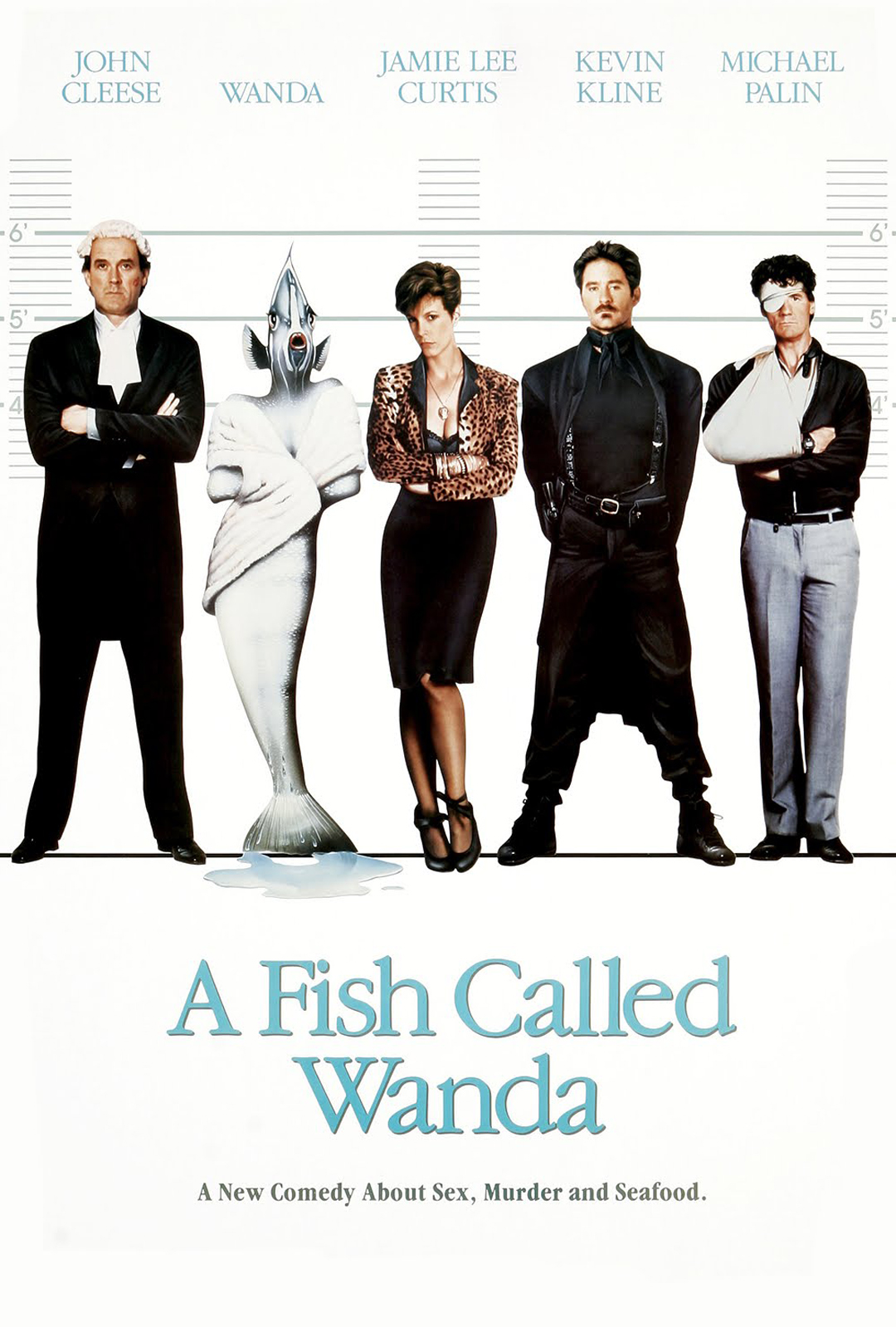
A Fish Called Wanda (1988)


Director: Charles Chrichton & John Cleese

A 1980s classic comedy that still has it.

I watched this movie plenty of times as a kid, but it had been at least 10 years since I last saw it. Though there are a few dated elements, in terms of the visuals, the dash of sappiness, and even a bit of the acting, A Fish Called Wanda is still a brilliant blend of British and U.S. humor.

For those who may not have seen it, the story mostly follows Wanda Gershwitz (Jamie Lee Curtis), a con woman who uses her beauty and wiles to horn in on a bank heist, with the intention of stealing the prized diamonds from the primary thieves. Using sex and emotional manipulation, she coldly plays every man involved - the mastermind George, the weapons man Otto (Kevin Kline), the stuttering henchman Ken (Michael Palin), and the repressed and unwitting lawyer Archie (John Cleese).

What allows the movie to stand the test of time rests on the script and the performances. The interactions between the more liberal and maverick Americans - Wanda and Otto - and their British cohorts are hilarious and eminently quotable. The standout scenes are typically between Otto and any of the English characters, whom he despises out of his own small-minded xenophobia and latent inferiority complex. Otto's supremely "ugly American" personifies every laughably obnoxious trait of U.S. travellers that has been the butt of jokes for decades, right up to the present.

Otto may not have been as memorable had it not been for an Academy Award-winning performance by Kevin Kline, which is a rare feat for a comedy film, but completely worthy. He often makes the movie, and his stand-offs with John Cleese's barrister Archie Leach and Michael Palin's Ken are perfection.

Great movie that is still great 25 years later, and will likely be great for decades to come.

The Man Who Knew Too Little (1997)

Director: Jon Amiel

A pretty fun, if not outstanding, little comedy.

I had never seen this one before, and I must admit that I could see why it was never hailed as a "great" comedy, despite having a great cast. The movie is a spoof on the spy thriller genre, following goofy American tourist Wallace Ritchie (Bill Murray) who goes to London and is unwittingly pulled into a plot between English and Russian forces to resurrect the Cold War status quo. Ritchie, however, is sucked into the entire affair, believing that he is the center of a popular television show on which the central "actor" is an average person who must play along with the professional actors around him, ad libbing along the way.

This premise isn't a bad one, as far as spoofs go, though the political elements do seem a few years too late for a film made in 1997. Even still, there was plenty of fodder for better political satire which went unused. That aside, there are plenty of solid setups for the comedic misunderstandings that drive the movie.

Instead of focusing more on the political humor, the film focused almost solely on its star, and one could do far worse than Bill Murray. Even when the dialogue or set-ups fall flat, Murray can carry a scene or an exchange with his hilarious deliveries, reactions, and physical comedy. It's easy to forget, given Murray's strengths with extremely dry and deadpan humor, that he can act the oblivious fool extremely well.

As a whole, though, the humor and goofiness wore thin by the third act. Despite being an obvious parody, the silliness level ramped up a little too high to remain effective. The grand finale scene consists of an overly long dance routine that borders on feeling interminable. And instead of leaving well enough alone and having Wally go on his merry way, we're left with him being recruited by the C.I.A. It was a bit too juvenile for my liking.

Had the script been a bit more clever and abandoned the more slapstick elements, this movie could very well have been a classic. As it is, it offers a few laughs, but doesn't warrant multiple viewings for me.

The social commentary is clumsy, but it
is curious enough to provoke thought.
Killing Them Softly (2012)

Director: Andrew Dominik

I was disappointed, but not necessarily because the movie is bad.

Killing Them Softly was released in 2012 and had a short and quiet run in theaters, despite solid critical acclaim. By the time of its video release, it had attained status as an "underrated film" and "sleeper pick" by critics in many quarters. With all of this "in the know" hype, I had very high hopes. The movie is quite good, but not without its flaws.

I will admit that the movie is fairly original, in terms of its grittiness and willingness to look at the more unglamorous aspects of criminality. The story takes place in a horribly bleak part of Boston, where a couple of dim, low rent street guys rob a high stakes poker game which includes members of the local mob. This sets off a chaotic attempt to assess blame and levy punishment, with noted hitman Jackie Cogan (Brad Pitt) brought in to sort the entire mess out.

The novelty of the story is that it does look at the disorganization and brutality of "organized" crime. The characters come off as extremely authentic, with all of their weaknesses on full display. Whether it's simple base greed, lust, or substance addiction, a viewer gets the sense that the grim and nasty picture painted for us is far closer to the reality than the more palatable portraits given us by more mainstream gangster movies. Instead of the ultra-slick, hyper-intelligent criminals, we see the sad, flawed, and ultimately doomed thugs and lowlifes who stand no real chance at getting what they want. Easily the most poised character is Jackie, who spends far more energy battling his disgust for the stupidity and indecision around him than on actually cleaning up the various messes created by foolish thugs and Jackie's waffling employers.

Jackie spends an awful lot of time in this kind of situation -
explaining a lot of harsh realities to dim or weak wanna-be
criminals. They provide much of the movie's power.
As far as the cleaning up of those messes, they do provide some excellent on-screen suspense and power. There are more than a few scenes that can effectively stun you with their impact. Unfortunately, there are also a few plot lines and scenes that seem to drag endlessly. The main one is the entire character Mickey, played by James Gandolfini in one of his final roles before his death. Mickey is an aging hitman who Jackie brings in to help him, but it soon becomes apparent that Mickey is a broken shell of what he once was. The point of Mickey's descent, though, is belabored so much that it is taxing to watch, and it almost resulted in my completely checking out of the film. Blessedly, it does end, and the main story picks back up in the movie's final 20 minutes.

A greater enigma hanging over the entire movie is the completely unsubtle social commentary. Right from the jump, we see dashes of political posters with Obama and Romney on them, in the throes of the 2008 presidential race. The blatantly obvious message is that the United States is in a state of free-for-all chaos, with our little crime story meant as a microcosm of the entire quagmire. It's not a terrible suggestion, but it could have been handled with far more deftness. It does, however, set up an absolutely classic final line to the movie, which may be one of the most memorable in all of crime cinema.

Killing Them Softly is, despite its weaknesses, a nice addition to the genre of crime films. It does stand apart from most of its ilk, and the performances are more than strong enough to carry a viewer through it. Definitely recommended to any fan of gangster movies. 

Thursday, May 7, 2015

The Avengers: Age of Ultron (2015)

Director: Joss Whedon

Spoiler-Free Review

Good fun, but dare I say that the thrill is gone?

I suppose that this was inevitable. I absolutely loved (and still love) the first Avengers. I loved it so much that, despite my very best efforts to temper my enthusiasm, the sequel was bound to disappoint me. The good news is that it isn't more than a minor letdown, which in reality is a "win".

Age of Ultron gives fans all of the superhero action that they could want, with plenty to spare. Of course, this isn't what set the first one apart, and it's not what sets this one apart. This movie has some great set pieces, well-choreographed fights (albeit often composed mostly of CGI constructs), and confrontations which are compelling due to the combantants' motives. The battle that takes place in the middle/end of the second act is worth the price of admission, alone. I never found the finale to be as much pure fun as that of the first movie, but it is certainly impressive and entertaining.

What may turn some people off a tad is the complexity of the story. It's actually rather clever and intriguing, and the more I dwell on it, the more I like it. However, like much of the movie, the points are often laid out rather quickly, leaving viewers scrambling to catch up a little too often. I also couldn't help but think that Joss Whedon was having to work a little too hard to connect all of the dots of characters and story lines from other movies and TV shows in the Marvel Cinematic Universe. Again, he's probably one of the very few who could even manage it in any way. His weaving of these various elements is rather well done, but it does seem to have put a bit of a strain on the pace and rhythm of the story.

The movie definitely fell prey to one of my greatest worries going in - character overload. There are simply WAY too many characters. Even the first Avengers was a bit of a stretch, giving us six "main" characters who have to come together. In Ultron, we get the six primary Avengers, two minor heroes from other MCU movies, and three new wildcard, superpowered characters. There simply isn't enough screen time to build any real connection with the newer additions. I will, however, say that I appreciated how the story focused a little more on characters and relationships that got short shrift in earlier movies. Whedon was clearly not content to simply revisit old ground, which keeps the movie fresher than it might have been.

He looks pretty cool, is certainly powerful, and has a unique
backstory. But it's a little tough to get past Ultron's moving
"lips" and the one-liners.
I did find a slight lack of satisfaction in the villain Ultron. He's actually curious and compelling in many ways, but a few aspects of the character strike odd chords. Most obvious is the robot's dialogue. Ultron mostly speaks in imposing dicta, though he will throw in glib one-liners here and there. It strikes an odd note, given his grand plans of mass destruction. There may be an explanation for this, though I have to work rather hard to get to this "maybe." Such unresolved conundrums are not what I look for in a superhero flick.

The ultimate test of the MCU movies to me is whether I feel like watching them a second time. For me, with Age of Ultron, it's a definite "yes." However, unlike the first movie, I'm unsure as to whether my opinion will improve or degrade upon repeat viewing.

Update!! (Still no Spoilers!!!)

I saw the movie again. Two things:

1. I can't recommend the 3D and/or IMAX viewing enough. My first viewing was on a smaller screen, in standard visuals. I splurged for the 3D IMAX experience this second time, and was blown away with how much it added. I typically don't care about such things, but the scale and planning of this movie lent itself to massive 3D visuals.

2. The movie holds up quite well upon watching again. Many of the weaknesses described above still stand, though a few of the more subtle plot points became clearer when seen again. This is actually a positive to me, since I appreciate tales that reward second or even third exposures.

I was quite glad to have my return trip rewarded. I have to give the movie a solid, if not wildly enthusiastic, recommendation.