Saturday, June 4, 2016

Retro Trio: Sorcerer (1977); The World's End (2013); Ghost World (2001)

Sorcerer (1977)

Director: William Friedkin

An adequate but ultimately inferior and arguably unnecessary remake of a classic 1950s film.

Sorcerer is a spiritually faithful remake of the 1953 movie The Wages of Fear by Henri-Georges Clouzet. Though each film takes place roughly in the time that it was released, the 23-year difference between them matters little. The basic story follows a handful of shady drifters from different countries, all stuck in a small town in South America. All of them have long since run from something else, but all are desperate to finally return to their respective home countries. So desperate, in fact, that they agree to take an extremely high-risk, high-reward job in order to get the funds needed to leave. The job requires them to drive two trucks filled with highly volatile nitroglycerin across 200 miles of pock-marked dirt roads, so that the explosives can be used to collapse a runaway oil burn. These basics, along with the element of suspense which they set up, are the same in both movies.

Where Sorcerer differs from the original film is mostly in the time it spends on back story. Clouzet's film begins in the small village and spends the first 30-odd minutes there. Friedkin, however, opted to show how the four primary drivers ended up in their predicament. Perhaps unsurprisingly for the director of The Exorcist and The French Connection, the men's tales paint a grim picture. All four are varying degrees of despicable, with serious blood on their hands and misery in their wakes. While this does add a grimness to the movie that Clouzet's lacked, I actually found it a very effective device, as there is a fascination born of seeing if a quartet of vicious, haunted men can actually work together towards a common goal under deadly circumstances.

In nearly all other respects, though, I have to say that Clouzet's original is superior to Friedkin's. It's been about ten years since the one and only time that I saw The Wages of Fear, but I loved it and it always stuck with me.While it doesn't depict the drivers' nefarious backstories, it does strongly imply that these are desperate and somewhat unsavory men. Once they start to make the treacherous journey in their trucks, the movie is far better than Sorcerer. The tension and suspense is more consistently engaging. Whereas Sorcerer has several overly long scenes relying more on set pieces and drawn-out, repetitive action, The Wages of Fear sparks your engagement with one quietly deadly situation after another. Friedkin's movie does have some really good moments of suspense, but they don't stack up to the source material in either quantity or quality.

Sorcerer is a decent enough movie that suffers most from being a remake of an earlier masterpiece. Friedkin, as great a director as he was, probably should have left this one alone.


The World's End (2013)

Director: Edgar Wright

The second time I watched this one from start to finish, and it's even better than I had remembered. And what I remembered was a great movie.

Director Edgar Wright and writer/actor Simon Pegg wrote The World's End as the third and final installment of their "Cornetto Trilogy", a series of films connected mostly by their hilarious appropriation of well-known popular movie genres. This last film drew much of its inspiration from the science-fiction realm, most notably the classic Invasion of the Body Snatchers. Wright and Pegg had done this before, using George Romero's zombie flicks to inspire Shawn of the Dead and any number of Hollywood action cop movies to create Hot Fuzz. As great as those first two film are, The World's End outdoes them and showcases its writers' brilliance for creating entertaining, clever, and even thoughtful movies.

For the entire first act of the movie, a first-time viewer might wonder just where the science fiction is. The set up centers on Gary King (Simon Pegg), an alcoholic who peaked during his senior year of high school and, as he nears forty, decides to round up his old pals for a reunion pub crawl in their hometown. Once Gary convinces his reluctant former comrades to join (and enable) him and go back home, they soon find that their old pubs have all been homogenized by franchizing. This is the first glimpse of the sci-fi iceberg looming beneath the movie's first 30 minutes. As the fellows progress in their crawl, they discover that most of the town's denizens have been replaced by some sort of automated replicants, complete with their actual memories.

In the spirit of the classic movie Invasion of the Body Snatchers, The World's End uses its fantastic fictional elements to comment upon the homogenization of society. Whereas that earlier film was a thinly-veiled response to the utopian promises of communism, Wright and Pegg's film is a response to corporate sterilization of culture. There are several engaging exchanges that tap into deeper questions about individuality and youth-worship, among other rich topics. Carrying much of the load is a brilliant performance by Simon Pegg, who shows his surprising and impressive acting range in this movie. His Gary King character evokes several different emotions, and his arc is a surprisingly fascinating one.

I've become a real fan of Edgar Wright, and this movie is the one that solidified it for me.

Ghost World (2001)

Director: Terry Zwigoff

I hadn't seen this one since shortly after it was released 15 years ago. It still holds up very well as a funny, thoughtful drama about people who dwell outside of the mainstream. With hindsight, it is also clear that Ghost World was a rather early version of a style more widely popularized later in movies like Garden State and Juno. When compared to those more recent movies, I actually enjoy Ghost World a bit more.

Based on the graphic novel of the same name, the film focuses mostly on Enid (Thora Birch), a rather snarky, hip, 18-year old misfit who looks for inventive ways to stave off boredome during the summer following their senior year in high school. She and her equally-disaffected best friend Rebecca (Scarlett Johannson) tease and torment their friend Josh and hang around their more mainstream classmates just enough to mock and scoff at them. If this sounds a little jerky, it's because it is. Enid and Rebecca do make fun of some things which are worthy of mockery, but they're not exactly noble souls themselves.

Things are taken a little too far when, on a lark, Enid responds to a personal add and pretends to be a woman called for in the add. Enid and Rebecca stake out and watch as the man who placed the add (Steve Buscemi) arrives at the designated area to be unwittingly stood up. After watching the man wait hopefully and then leave dejected, Enid and Rebecca follow him to a garage sale. Enid buys an old record from the man, whose name is Seymour, and she makes a connection with him. Much of the rest of the story involves Enid trying to find a romantic interest for the introverted Seymour, deal with her changing relationship with the Rebecca, and pass a summer art class which she needs to officially receive her high school diploma. On the surface, it could be the plot to many coming-of-age films.

And yet, the novelty lies in the details. Typical of a Terry Zwigoff film, there is plenty of quirky and unexpected humor and drama. The characters are quite different from those in more popular teen movies. Enid, even more than Rebecca, typifies the condition that some young people experience when they have a far clearer idea of what they don't want than what they do. While this is familiar, neither Enid nor Rebecca are portrayed as loveable darlings whom the audience is clearly meant to support. They do selfish and even mean things, even if they aren't essentially mean people. This lends some drama to moments such as when Enid befriends Seymour, or when she breaks down as her friendship with Rebecca deteriorates. Thanks to the steady development of dimensions beyond our initial impressions of the characters, these moments have some heft.

Not every little joke hits, and not every action in the story feels totally organic. But there are enough laughs and enough authenticity to make for a good movie. I may not need to watch it again soon, if ever, but it's nice to see that a noted "cult" movie still holds up.

Wednesday, June 1, 2016

New Release! The Nice Guys

Director: Shane Black

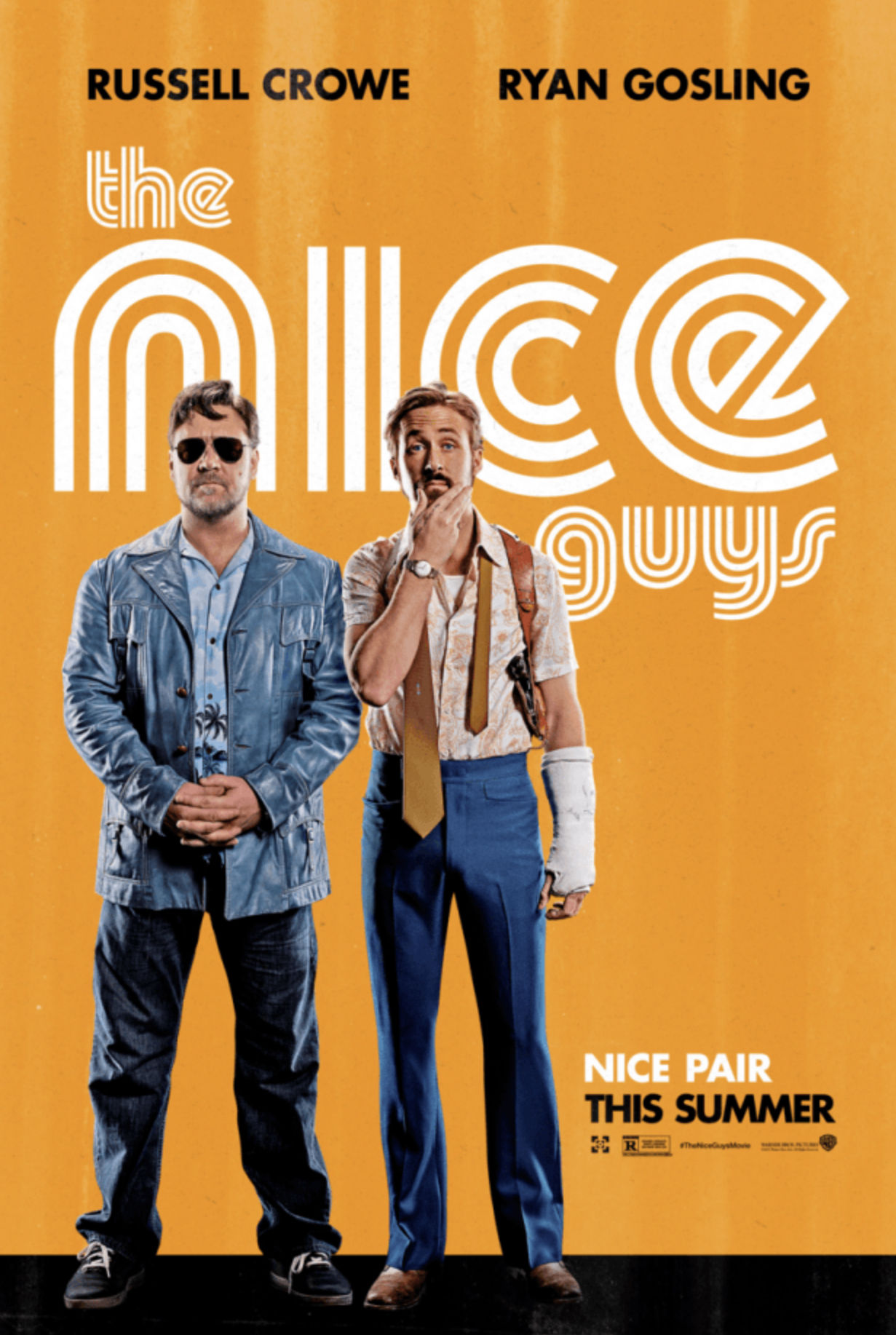
One of the best times I've had at the movies in recent years. It might not be perfect or blindingly original in all facets, but The Nice Guys is a hilarious entry into the oft-botched genre of R-rated buddy flicks.

The movie follows Holland March (Ryan Gosling), a private investigator who is put on the case of finding a missing young woman, Amelia, in the drug-fueled Sodom and Gomorrah that was 1977 Hollywood, California. The case itself bears several odd elements, made all the more challenging by the fact that March is not only an alcoholic but also oddly inept at his job. Fortunately for him, he is joined by the sober and much more capable muscle-for-hire Jackson Healy (Russell Crowe). The two find themselves trying to navigate the winding, bizarre trail that Amelia leaves through the Hollywood porn industry, justice department, and even the U.S. automotive industry.

Writers Shane Black and Anthony Bagarozzi fully embraced the neo-noir style and did it tremendous justice, while at the same time turning plenty of its familiar cliches on their ears. There are more than a few sequences which begin in very familiar fashion to crime movie lovers, but which take sly little comic turns. In a move gleefully similar to The Big Lebowski, making the "hero" detective a booze-addled goof creates plenty of opportunity for humor, and the movie capitalizes.  And the characters only enhance the gags. While March does have reasons for being so down on his luck, it doesn't lessen the hilarity of his missteps and posturing. He's the perfect pairing to the grizzled, no-nonsense Healy, and their dynamic is a blast to watch. Peppered throughout all of this are several great little sight gags which are among some of the best I've seen in some time.

Gosling and Crowe make the blend of tough and hilarious
look deceptively smooth and easy. They enhance Black's
already-great script to another level.
It is difficult to imagine better casting for March and Healy than Ryan Gosling and Russell Crowe. They play their characters to a tee, and left me with the same feeling that any successful buddy movie should leave - the desire to see more of them. There are a few minor characters that may not have completely fit the bill, but these were the few exceptions among the mostly-strong supporting cast.

As I write this review, the movie has been out for about two weeks and hasn't done exceptionally well at the box office. I do hope that it picks up, as I feel that this type of quality, R-rated comedy is a bit of a dying breed in movies. 

Saturday, May 28, 2016

Before I Die #565: Pepe le Moko

This is the 565th of the 1,172 movies on the "Before You Die" list which I'm gradually working through.

Director: Julien Duvivier

To an average modern viewer, Pepe le Moko would be a good movie. When taken in the context of its release and the overall history of film, it's an incredible movie.

Taking place roughly around the time it was made in 1936, Pepe le Moko centers on the title character, a thief who is hiding out in the famous Casbah area of Algiers, Algeria. Pepe is, in many ways, the classic romantic rogue - handsome and charming, with just enough integrity to inspire devotion from many who meet him. However, he is also possessed of a deep sadness, and this is where the movie was well ahead of its time. While it is certainly engaging to learn about Pepe's skills as a thief and his powerful charisma, it is the deeper exploration of his psyche which made this movie so groundbreaking.

The film wears the veneer of a chase movie. The police force in Algiers have been unable to catch the elusive Pepe, and the government of France, the colonizers of Algeria, send in officials to oversee a more rigorous pursuit. Despite warnings from local officers familiar with the difficulties of the situation, the French attempt to bulldog their way into finding the notorious thief. Shifting between the center and the periphery of the investigation is Slimane, a seemingly-lazy local officer possessed of deceptive intellect, knowledge, and patience. It is the slow burn of watching Slimane work the problem of apprehending Pepe that makes this movie so far ahead of its time. Whereas nearly all films of that time (and the majority of films even today) rely on the drama of strong characters constantly duelling each other in dynamic and eye-catching ways, Pepe le Moko is more measured and assured. It is this slower pace which allows us to truly think about what motivates Pepe, and it becomes clear that it is more than simply money and women.

This still gives just a taste of how tricky the maze of the
Casbah can be, especially to those unfamiliar with its
twists, turns, and many, many dark shadows. 
Pepe le Moko is also a film about place. The locale of the Casbah is spectacular. Filmed on location, the movie depicts a neighborhood which is a fascinating labyrinth of multi-storied buildings, winding stairways, and bodies packed into the well-worn structures. It's a perfect setting for the tale of a thief who both uses the maze to retain his freedom and feels its constrictive nature. Casablanca, as great as it is, never comes close to creating the sense of locale as Pepe le Moko.

The resolution of the story is just as impressive as anything else about the movie. It avoids all of the tropes and typical cliches of weaker films. This was a great movie that I'm glad to have finally watched, after reading about it for so many years.

That's 565 films seen, only 607 more to go before I can die...

Saturday, May 21, 2016

Before I Die # 564: The Big Heat (1953)

This is the 564th movie I've seen from the 1,172 movies on the "Before You Die" list that I'm gradually working my way through:

Director: Fritz Lang

Why was it that European directors were the ones to make so many of the greatest noir films - a genre distinctively American? Whatever the reason, The Big Heat provided me with my favorite moment when watching movies - discovering a great film about which I had previously known nothing.

Right from its opening, there is something unusual and captivating about this movie. We're looking over the shoulder of a man in a plush den of a comfy home. He looks at a letter which he has just sealed, and then he commits suicide. His wife runs downstairs. Instead of panicking, though, she calmly takes a moment, looks at the letter, ponders it, and then calls another man with whom she has a cryptic and sinister exchange. Within these few minutes, we get the sense that something very dark is happening here.

Once the wife does decide to call the police to report her husband's suicide, the story shifts its focus to Sergeant Dan Bannion, the detective assigned to the case . Bannion begins to unravel an unsavory chain of corruption and self-interest that tests his will and morality right to their cores. Bannion's tale becomes one of the most memorable crime tales from the classic age that I've ever seen.

The Big Heat is very often classified as noir, with good reason. While one could debate whether it satisfies all of the requirements of the varying definitions of noir, it clearly has much in common with the best of the genre. A vast, looming criminal organization and conspiracy. Not one but two femme fatales. A protagonist caught in the middle of a dangerous maze and desperately trying to solve one murder and prevent others. These can all be found in movies like Double Indemnity, Out of the Past, and other greats. What sets The Big Heat apart is that Bannion is not the disturbed protagonist of those other movies. He is actually a decent man who is trying desperately not to lose self control as he confronts moral corruption at every turn. As much as I love those other classic noir flicks, it was great to see a truly admirable character at the center of the proceedings.

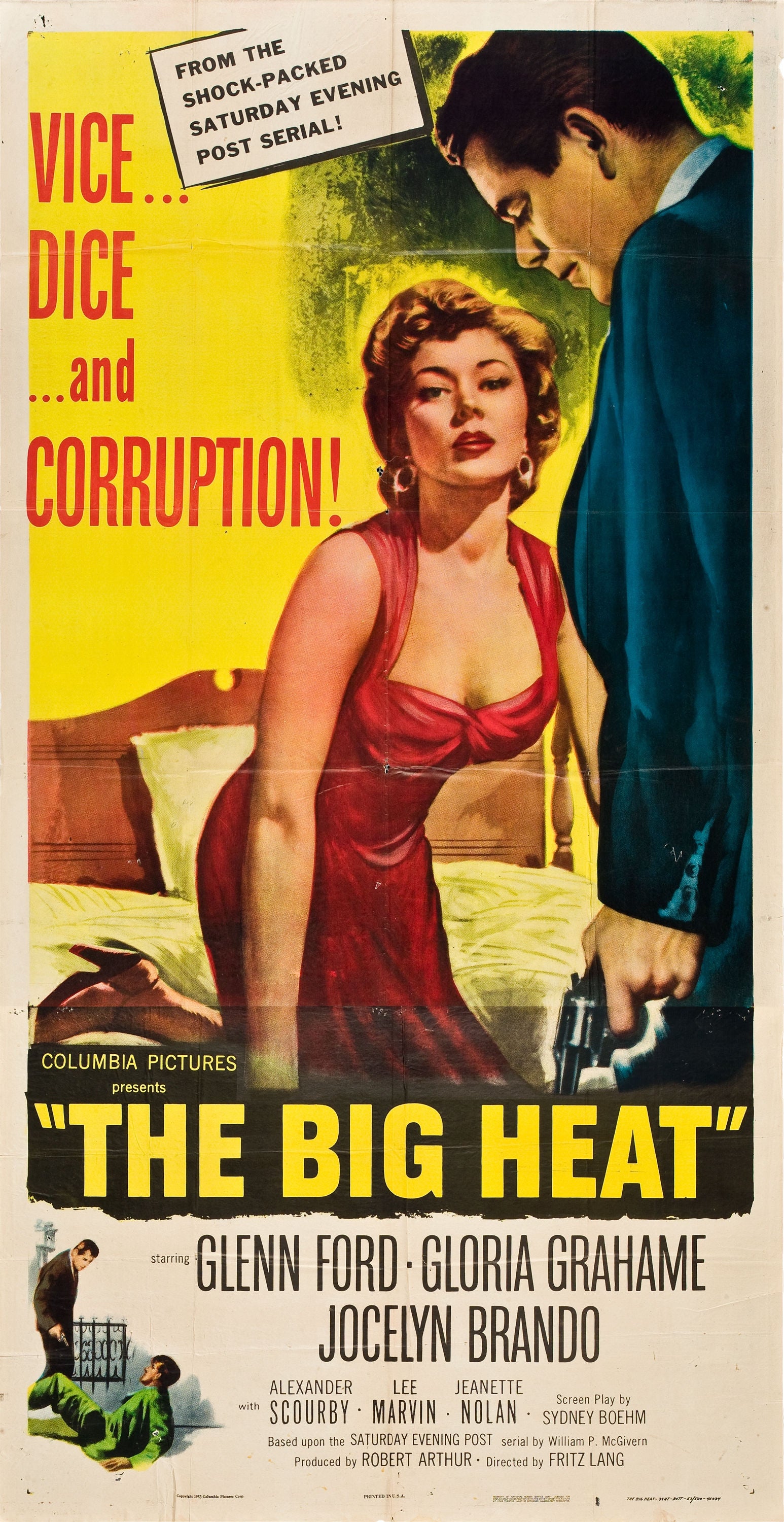
Yes, that's a young Lee Marvin on the left. His turn as the
sadistic Vince adds a truly sinister darkness that few films
in the 1950s were willing to include.
For a film released in 1953, this one was surprisingly dark in a few ways. Whereas other noir movies tend to create their own shadowy landscapes, both visually and psychologically, The Big Heat includes elements of the post-WWII "American Dream" which you might see in a Frank Capra movie. Early on, we get glimpses of Bannion's home life, complete with a loving wife and cute little daughter. Before too long, some horrific things shatter his little slice of heaven and send him down a rather dark path. On top of that, the actions taken by a few of the criminals are especially violent and brutal by 1950s movie standards. Though not nearly as visceral as more modern films, The Big Heat still packs an emotional punch with its exploration of the darker, unsavory aspects of personal and social corruption.

This movie is one that I put, if not exactly at, then very close to the same level as the other great noir movies of the '40s and '50s. I'll certainly go back and watch this one again every few years.

That's 564 films down, only 608 to go before I can die...

Sunday, May 15, 2016

New Release! Captain America: Civil War

No Spoilers Up Here

Directors: Anthony and Joe Russo

My viewing of this latest summer blockbuster was an experience quite unique for me. I can't recall ever seeing a movie in which my worst pre-conceived concern was realized, and yet its realization somehow resulted in my being more impressed with the movie.

Anyone who knows me or reads this blog with any regularity knows that I am a tremendous fan of the Marvel Cinematic Universe (MCU). I've watched each of the previous 12 movies multiple times, and I've seen every single one of the hundred-plus episodes of the MCU TV shows, many of them twice. Since the Universe expanded to unprecedented size, roughly two years ago, I've been concerned that the movies would be unable to tell their own stand-alone stories. This has actually come to pass, but Captain America: Civil War manages to handle the weight extraordinarily well.

Even a fervent fan of the MCU like me must admit that Civil War is not exactly friendly to new viewers. If someone has not seen, at the very least, Captain America: The Winter Soldier and Avengers: Age of Ultron, then there are many characters and storylines which will baffle. The movie assumes that viewers are familiar with not only the title character's origins and recent film exploits, but also has knowledge of no fewer than a half dozen other characters introduced in the last few films. Without that knowledge, Civil War will just be a blur of costumed super-people debating, fighting, and firing off some decent one-liners. At this point, this is simply an unavoidable consequence of the immensity and structure of the MCU.

If, on the other hand, a viewer has at least seen the aforementioned couple of movies, then they have enough context to thoroughly enjoy what is one of the most unique films in the MCU. Like The Winter Soldier, Civil War tackles themes which are much larger and relevant to the real world than simply stopping an evil villain from blowing up cities. This movie takes on the dilemma of how much freedom the world should grant individuals or groups who are possessed of devastating power. Should a person or group with the ability to cause mass destruction be sanctioned and forced into oversight? Or should they be granted the freedom to act independently, especially when it might allow them to more effectively protect others? These questions could just as easily be applied to dominant entities like powerful countries or corporations, not merely superpowered beings in a fantasy world. Civil War doesn't take easy ways out, either. There is plenty of gray area here, and it does not leave viewers with pat answers about who is right or wrong. In fact, there is a distinct possibility that you may come away thinking that the title hero was not completely in the right, which is quite novel for an MCU film.

Along with and connected to the morally ambiguous theme of unchecked power is an adversary who is quite unique to the MCU. To remain spoiler-free, I'll leave out the details, but I can say that it is a refreshing and challenging break from the rogues gallery mostly made up of thoroughly evil and megalomaniacal villains who have served as punching bags in nearly all other MCU movies. Just as unique is that the adversary takes a virtual backseat to the ethical quandaries which the heroes are thrust into.

As with The Winter Soldier, the action and pacing are all that one could ask for. More than any other MCU directors, the Russo brothers have proven to be immensely talented at providing rollicking action sequences that revive the true thrill that should come with blockbuster popcorn movies. Without slighting quieter, more somber moments, the movie offers plenty of small- and large-scale battles that are simply a blast to take in.

One of the smaller-scale fights, but this one between Iron Man
and the duo of The Winter Soldier and Captain America is just
as intense and entertaining as any of the larger ones. 
Perhaps more important to most viewers is not just how the fights look but who is doing the fighting, am I right? Well, there are plenty of the familiar faces which we fans have come to love in these movies. Pretty much every superguy and gal from the previous two movies shows up, with only a few exceptions. As expected, the actors are all tremendous, as many of them have been playing these parts for several years now. The two new additions to the MCU roll call are outstanding (I'll spare you their actual identities, on the off chance that you've somehow avoided the millions of advertisements which tease them). One of the rookies actually is a thematic and emotional keystone through much of the film's main story, without stealing the thunder of the primary players. It was a very deftly-managed balancing act.

Several MCU posts ago, I half-joked that the MCU should stop naming these movies by their title characters and start simply calling them "MCU 13", "MCU 14", and so on, with the subtitle indicate whether one or two main characters would be featured. Civil War further supported this suggestion, as it is as dependent on previous movies, and leads into future movies, as much as any film in the MCU thus far. Regardless, it provides plenty of engaging action, fun, and deeper themes to be all of the things that a dud like Batman v. Superman tried and failed to be. I'll be going to see this one at least one more time in theaters, and I'll be just as eager to see how the Russo brothers handle the epic Infinity Gauntlet movies coming out in 2018 and 2019.

Update: I've now watched the movie for a second time, and it holds up extremely well. In fact, I enjoyed it even more. There were a few minute points in exposition which did go some way towards answering a few of my niggling little questions. It also helped that I watched the movie in standard format this time, rather than the 3D which I watched initially. For me, 3D can sometimes be a tad disorienting. Without that, I was even better able to appreciate the action choreography.

Spoiler Commentary

Just a few thoughts that may give away a few plot point to those who haven't seen the movie yet. Fair warning.

While I like that the writers are willing to have characters experience change and develop in ways that we might not expect, I'm still having a hard time completely buying where Steve Rogers and Tony Stark came down on the Sokovia Accords. Even as recently as Age of Ultron, Stark was more than willing to act alone if he thought he needed to act quickly and avoid slow bureaucracy (his rogue actions resulting in first Ultron and then Vision). And Rogers was still, even towards the end of that movie, arguing how they needed to come to consensus on certain decisions. In Civil War, though, they completely switch sides. I will say that the writers do provide some support for each character's viewpoint, but it did feel a tad forced.

It was a lot of fun seeing some more creative use and expansion of Ant-Man's powers. Seeing him short-circuit the Iron Man armor from the inside and introduce the Giant-Man mode were the kinds of things that I'll pay to see on the big screen. I hope that the makers of Ant-Man and the Wasp can be equally inspired to show us some clever uses of Scott Lang's equipment.

Tom Holland looks like he'll make a great Spider-Man. A friend of mine and fellow comic book nerd told me how he's tired of the teenage Spider-Man, after the two recent takes on him, and he was ready for an older Peter Parker who could immediately hang with the other heavy hitters in the MCU. I see his point, but Holland did such a good job in Civil War that I think next year's Homecoming could be the best Spidey movie since the second Sam Raimi one back in 2004.

Chadwick Boseman was incredible. Simple as that. His performance in Civil War was all the advertising that 2018's Black Panther will need. 

Monday, May 9, 2016

Gangster Flick 3-Pack: Midnight Run (1988); Dinner Rush (2000); Infernal Affairs (2002)

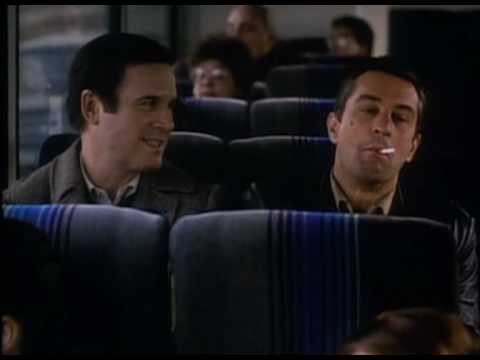
Ah, the days when an honest bounty hunter could smoke on a
train. And Robert De Niro still starred in good movies.
Midnight Run (1988)

Director: Martin Brest

Still a great genre-blending comedy that can help remind us all of what Robert De Niro was a decade before he decided to simply parody himself for massive paychecks.

Unlike nearly all of the gangster movies which I have been blogging about here, Midnight Run was one that I had seen a few times before. However, since I hadn't seen it in over 20 years and I remember thinking it great, I wanted to see it again. It was well worth it.

Robert De Niro plays Jack Walsh, a bounty hunter who is tasked with tracking down Jonathan "The Duke" Mardukas (Charles Grodin), a former Mafia accountant who has jumped bail. Once Walsh tracks him down, he must attempt to return the Duke to his bail bondsman while evading police, the FBI, a rival bounty hunter, and the Mafia, all of whom want the Duke either in jail or dead. As stressful as all of this is for Walsh, it sometimes pales in comparison to the ever-nagging Duke, a gentle but pestering chatterbox.

The chemistry between De Niro and Grodin is fantastic. The two actors take a decent script and turn it into gold. The exchanges between the cagey, foul-mouthed Walsh and the oddly empathetic Duke stack up with any road/buddy movie released in the 28 years since this movie hit theaters. Enhancing the entire movie is its stellar supporting cast. Made up from the likes of Joe Pantoliano, Yaphet Kotto, Dennis Farina, and other great character actors, the various pursuers of Walsh and the Duke are just as entertaining as the focal duo.

There is a brief detour into drama concerning Walsh's life as a former Chicago police officer which breaks the comedic tone of the movie a bit, but this is hardly a weakness. Midnight Run is still a great movie that I can see being just as great in another three decades. It's still just as funny and just as quotable as it was back when Robert De Niro was nearing the peak of his career's impressive second act.


Dinner Rush (2000)

Director: Bob Geralda

One of the more curiously unique gangster movies that I've watched, having more in common with a Robert Altman than a Martin Scorsese movie.

Dinner Rush takes place almost exclusively in one of Manhattan's hottest restaurants, which is owned by bookmaker Louis Cropa (Danny Aiello). Cropa's two sons work the kitchen: Udo is a brilliant but moody chef whose culinary skills have brought great acclaim to the eatery, while his brother Duncan is personable but a degenerate gambler. The three Cropas become involved in a wild maelstrom of an evening, with patrons including self-styled elite Manhattanites, a couple of mobster thugs, and a police detective, among others.

The movie combines many "New York" elements extremely well, creating a chaotic and exciting atmosphere in the restaurant that one would equate with "The City That Never Sleeps." A supremely arrogant art critic harangues the staff. A prominent food critic demands frustrating levels of attention. In the downstairs kitchen, the typical kinds of mania runs through the chefs and cooks as they try to keep up with the brisk pace of the orders. As if these typical Manhattan variables weren't enough, the various dramas in the lives of the Cropas catalyze the madness. Yes, the gangster thread is ever-present, but it is part of a larger, brilliant tapestry that could only be found in Manhattan. Director Bob Giraldi juggles everything with impressive skill over the film's tight 98 minutes.

It certainly helps that the acting and cinematography are fantastic. There are plenty of familiar faces among the cast, but also a good number of lesser-knowns who round out the ensemble. The dining area of the restaurant itself feels as warm and electric as you would hope, even amid the frantic bustling of the crowd. In contrast is the kitchen, which is given the claustrophobic and tense feel of a submarine in the middle of an attack. There is an upstairs/downstairs feel not unlike Gosford Park or similar shows.

It stands that Dinner Rush is resolved in a way atypical for a "gangster" movie, given that it is different in so many other ways. Suffice it to say that it is rather satisfying, and in keeping with the general tone of the rest of the picture. This is a somewhat hidden gem which plenty of people, not merely gangster movie fans, would appreciate.

Infernal Affairs (2002)


Directors: Wai-kung Lau and Alan Mak

An impressive Hong Kong crime movie with the primary misfortune of having a superior version made a few years later by an all-time great director.

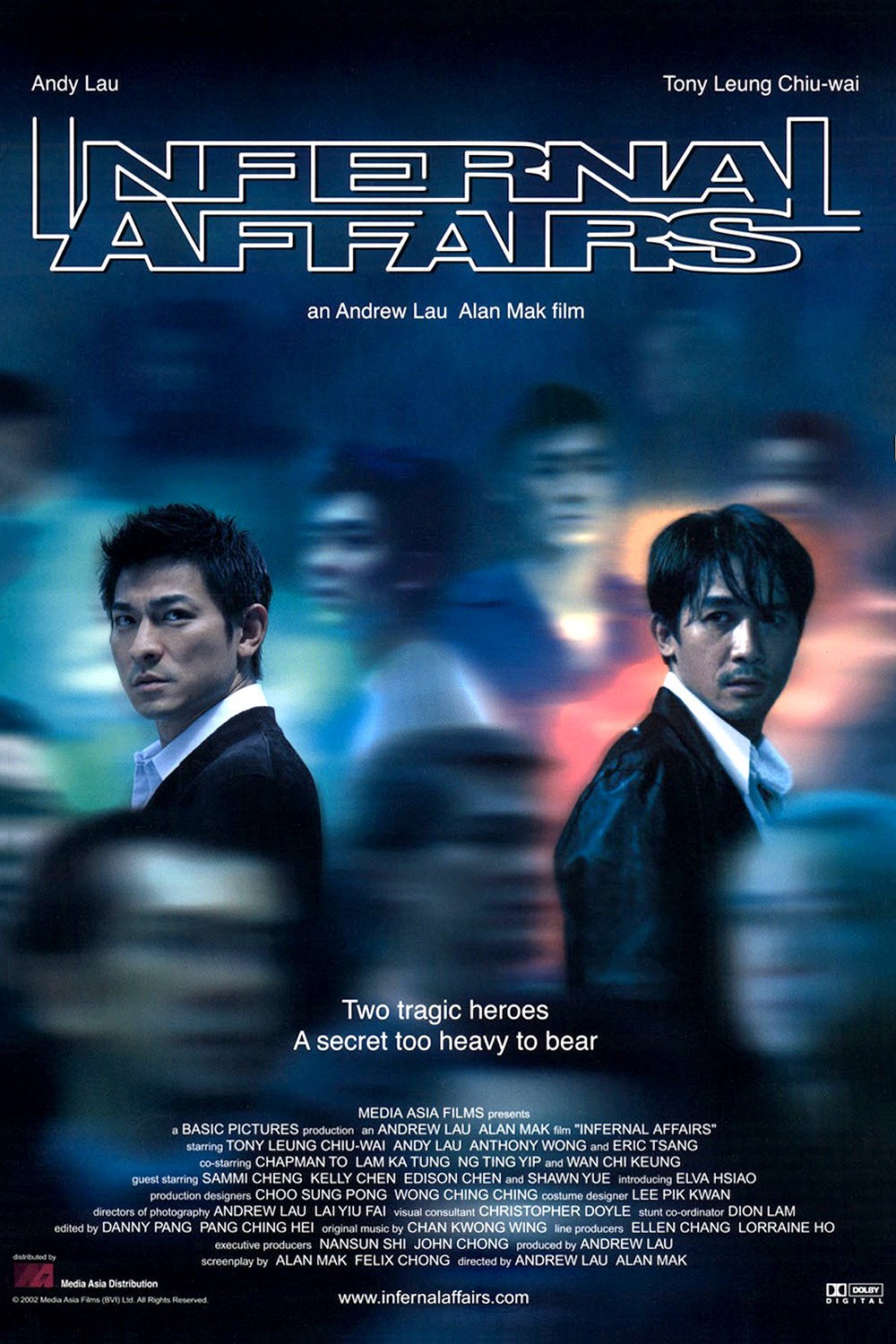
If you've seen The Departed, then you know the tale. A young man, Lau, who is part of the local organized crime gang is planted into the police force as a recruit. Simultaneously, Chan, a police cadet-in-training is sent into the crime world as a long-term undercover operative. Years later, the two moles close in on each other as the police close in on the crime boss responsible for much of the local gang activity. Rather than taking place in Boston, as you can imagine, Infernal Affairs takes place in Hong Kong.

This original movie really is impressive. It is a great premise, carried out extremely well. The reverse, double cat-and-mouse idea was a novel one for a cop-and-robber film, and directors Lau and Mak executed it in a tight way that maximizes the tension. There are several great scenes and devices which Martin Scorsese himself directly carried over into The Departed a few years later.

Scorsese's adaptation into The Departed exhibited several characteristics typical of his gangster movies. Rather than completely focus on one or two characters, he included a larger panorama for the story, complete with engaging and entertaining characters. Infernal Affairs, in contrast, really hones in on the moles Lau and Chan. Other characters, who received much more screen time and dialogue in Scorsese's version, were either absent or greatly minimized in this original movie. Normally, this would be completely fine, but compared to the strong and often hilarious characters in The Departed, one can't help but feel like Infernal Affairs is missing out on opportunities.

How much one enjoys this movie is likely to depend on familiarity with The Departed. If you are not terribly familiar with Scorsese's movie, or maybe saw it only one time many years ago, then you're likely to love Infernal Affairs. It is far easier to appreciate the original's merits and avoid harsh comparisons. Even if, like me, you have seen The Departed several times, it is easy to appreciate what a strong film Infernal Affairs is. 

Wednesday, May 4, 2016

New(ish) Releases (2015): Creed & Man Up

Creed

Director: Ryan Coogler

Very well-done chapter that lives up to its classic, original forebear.

One of the reasons I enjoyed Creed so much is that I knew very little about it going in. In that spirit, I won't reveal more than the basics. Michael B. Jordan plays Adonis Johnson, son of Apollo Creed, one of the greatest boxers in this fictional world, before he was killed in the ring. Adonis has rather atypical motivations for fighting, and he seeks out his father's former rival and friend, Rocky Balboa, in an attempt to find a trainer.

The story is presented and plays out with enough surprises to feel fresh. Yes, it hits many of the marks that you expect in a Rocky movie, but nothing comes off as stale. Thanks to some crisp writing and excellent direction, nothing feels overdone or sentimental. Director Ryan Coogler clearly has such a love and respect for Stallone's original film that he was able to draw inspiration from the very best parts of that iconic movie. The stakes to the title character feel very high on a personal, emotional level, and this carries through right until the end.

The fight scenes are done extremely well. In fact, I'm willing to say that they are the best of any Rocky movie, and among some of the best in boxing movie history. It's a sport that can be beautiful and brutal, in turns, and this is exhibited with great skill in the several fights carried out in the narrative.

Apparently there is a Creed 2 in the works, which might be a complete mess. Whatever happens with it, Creed is a great sports movie that I think even non-sports fans can appreciate.


Man Up

Director: Ben Palmer

Rom-coms are certainly not me genre. Man Up, however, is among the most enjoyable that I've ever seen.

This was an easier sell to me than most rom-coms, thanks to the presence of Simon Pegg and Lake Bell. Pegg is a well-known and highly respected quantity in the nerd world, where I often dwell. I also know Bell from her sly, hilarious writing and star role in 2013's In A World..., which looked at the odd and male-dominated niche world of movie trailer voice-over narrators. Man Up quickly repaid my faith, as Bell's character Nancy, a professional journalist, is very quickly established as a woman looking to overcome her reticence and skepticism to find romance. Her impish nature takes over when she decides to steal a blind date from a mildly pestering, overly cheerful young lady she meets on a train. When Nancy is mistaken for the young woman by Jack (Simon Pegg) at the train station, Nancy decides to roll with it. This is perhaps not the most imaginative of comic setups, but it more than suffices for this tale, which gets stronger as it unfolds.

As Jack starts to reveal more about his life, Nancy keeps up her charade, wavering between distaste and attraction towards Jack. Unlike most rom-coms, which tend to take place over several days, weeks, or even months, Man Up hits all of the genre's marks in an unhurried tale which covers about 4 or 5 hours. And it does it by taking some amusing left turns, as it reveals traits in both aspiring singles which are both admirable and off-putting, while sometimes quite dark. Both Nancy and Jack come off feeling more genuine than most rom-com characters I've seen, lending a mature tone I often find lacking. There is an exploration of the romantic versus the practical notions of companionship which, while not novel, is handled deftly enough to remain engaging. What I appreciated as much as as anything is that neither Jack nor Nancy is pigeonholed as "the woman" or "the man". Yes, each one exhibits a few of the traits ascribed to their sex by stereotypes, but each one also contradicts them in several ways through their words and actions.

Of course, what is a rom-com without the "com"? The humor in Man Up is steady and solid, running the gamut from effective sight gags to dry sarcasm, with a healthy dose of blue, R-rated dialogue for spice. In keeping with the theme of breaking certain stereotypes, each of the main pair give as good as they get. This is a balance that is very welcome in a class of movie which often plays things rather safe, in terms of breaking out of preexisting character types.

There is certainly not an abundance of romantic comedies which I would gladly watch again. Man Up just made that short list of mine.