Thursday, July 26, 2018

New Release! Ant-Man and the Wasp (2018) [Spoiler-Free Review]

I feel that it's highly appropriate that this
poster has Hope "The Wasp" van Dyne
front and center. In many ways, she owns

parts of this movie as much, or more, than
the Scott Lang character.
No Spoilers! Read On!!

Director: Peyton Reed

A light and entertaining follow-up to the original Ant-Man, and a drastically peppy apertif to the massively epic and ultimately grim Avengers: Infinity War from just a couple of months prior.

In the grand-scale Infinity War movie from this spring, which included nearly every single hero and villain from the ever-expanding, 18-film Marvel Cinematic Universe (MCU), there were only a couple of conspicuous absences. One of them was Scott Lang, a.k.a. "Ant-Man," (Paul Rudd) the cat burglar-turned-techno-hero who had last been seen in a massive underwater prison towards the end of 2016's Captain America: Civil War. At the start of this movie, we get the full explanation of where Lang has been for the last couple of years, right up to a few days before the events of Infinity War.

In short, Lang's now rather quiet life is interrupted by a strange experience which puts him back in contact with Dr. Hank Pym (Michael Douglas) and his daughter, Hope Van Dyne (Evangeline Lilly). Hank and Hope have been hiding from the law, secretly pursuing a lead to Hank's wife, the long-presumed dead Janet Van Dyne, a.k.a. "The Wasp." In their quest to see if Janet is still, indeed, alive they must dodge not only the federal authorities, but also contend with a mysterious figure known as "Ghost," (Hannah John-Kamen) as well as the greedy, amoral capitalist Sonny Burch (Walton Goggins).

This movie was very much in keeping with the original. It's light and fun, with more than a few really entertaining uses of movie magic to illustrate the shrinking and growing powers of Dr. Pym's astonishing technologies. Since the first movie was originally under the helm of Edgar Wright, I was never how much of the original I enjoyed because of Wright's ideas, rather than Peyton Reed, who was brought into oversee the actual film once Wright stepped away. I was pleased to see that, in this sequel, the humor and more personal scale are all still very much alive. This second film actually offers a little more of the fun back-and-forth between the smart-ass Lang and the cantankerous Hank. With Paul Rudd's instinct for comic timing paired with Michael Douglass's overall acting chops, it works like magic.

Blessedly, Luis is back. Even more blessedly, the writers
avoided the pitfall of overdoing a good thing. They used the
hilarious supporting character in just the right doses.
This is a good place to mention just how much I've grown to love Evangeline Lilly in these movies. Her portrayal of Hope Van Dyne was a real highlight of the first film for me, even though she was relegated to a support role who never got to show off her real fighting skills. In Ant-Man and the Wasp, though, she all but completely takes over. Her proficiency with the Pym particle technology, merely hinted at in the first movie, is now on full display. In short, she kicks serious ass. And unlike one or two of the other women who have been cast in MCU hero or villain roles, I completely buy Lilly as a tough-as-nails fighter.

All the other enjoyable elements of the first film are there. Fun supporting characters like the ever-affable Luis and others are used to good effect, without ever being overused. The plot moves along at a good pace, and the action never grows dull. The litmus test here is my wife, who tends to grow bored quickly with most movie action, but admitted that she actually found most of the action in this movie engaging and enjoyable. This was a testament to the creativity of the visual artists behind the movie.

Like the first Ant-Man, this is not a superhero movie that is going to redefine the genre or maybe even win over anyone who is categorically opposed to such films. It is, however, a fun popcorn movie that is blessedly self-contained. Even those who haven't seen most of the other MCU movies can jump right in and enjoy it, with only the first film being a suggested prerequisite. 

Tuesday, July 24, 2018

New Release! The Incredibles 2 (2018) [Spoiler-Free Review]

The Parr family, a.k.a. "The Incredibles." They deal with
the same problems as any standard family, along with using
their amazing abilities to stop evildoers.
No Spoilers! Read On!!

Director: Brad Bird

Though perhaps not the dazzling revelation of the first movie, The Incredibles 2 is another brilliant feather in the caps of the animation geniuses at Pixar Studios. And it satisfied this tremendous fan of the original movie quite nicely.

The story picks up only moments after the end of the first movie - with the super-powered Parr family about to square off against the subterranean villain "The Underminer," who emerges from underground to steal from several banks. The consequences of the ensuing fight reinforces the public's belief that "supers" (those with superhuman abilities) should still not be granted the legal right to use their powers in public. Enter Winston and Evelyn Deavor - a brother/sister pair of billionaires who are the heads of a massive communications company. Winston in particular is a longtime fan of superheroes and wants to use the Incredibles - Helen "Elastigirl" Parr, to be precise - to wage a positive public relations campaign to see supers granted license to publicly use their powers once again. Soon after this campaign is underway, a new villain - The Screenslaver - emerges with powerful hypnotizing technology which endangers anyone who sees it.

Helen "Elastigirl" Parr gets to be much more front-and-center
in the sequel. It's a highly effective shift from the original.
Back in 2004, I was completely blown away by the first movie. That year, it was hands-down the most fun I had at the movie theater. Pixar had already had several massive hit movies, with Monsters, Inc., the first two Toy Story movies, and Finding Nemo. But The Incredibles was something else, entirely. It was the first Pixar movie that showed a real sense of chic style and used a really fun fantasy/superhero premise that showed more sophistication than your typical family movie. The humor ran the gamut, and the action was pure joy to watch. While the sequel could never have been as novel as the original, it comes about as close to its predecessor in all other departments. The writing is still exceptionally sharp, the story is very much its own rather than just a retread of the successful elements of the first movie, and the action is as dazzling and inventive as one could hope for. Thanks to the freedom that animation provides and the wonderfully creative mind of writer and director Brad Bird, this movie follows the first in being one of the best superhero movies made - animated or otherwise.

I could nitpick a few things here and there, such as how the third act gets a little convoluted with characters and the finale isn't as impressive as the first movie. Still, there is a satisfactory resolution to everything. Anyone who has enjoyed superhero movies, Pixar movies, or simply fun action movies is bound to have fun with this one. 

Sunday, July 22, 2018

Idiot Boxing: Westworld season 2 (2018); Luke Cage season 2 (2018)

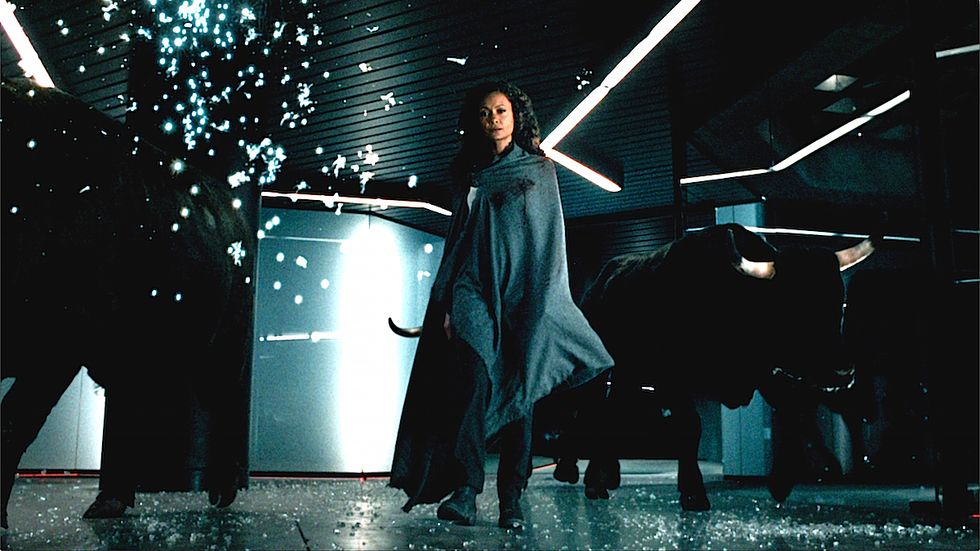
Maeve is one of a few of the "women" of Westworld who flex
their new-found muscles and freedom in season 2. 
Westworld, season 2 (2018)

I have no doubt that this season probably lost a certain number of the fans that it garnered in its first season. I wasn't one of those lost, and I loved this second season.

In the final bloodbath episode of season one, we see a certain number of the Westworld park's hosts (the artificial humans) become self aware and kick off a full-scale uprising. The real ignition point is Dolores's (Evan Rachel Wood) very public execution of park co-founder and co-creator Ford (Anthony Hopkins), all of which Ford himself had very meticulously orchestrated. Along with Dolores, the host Maeve (Thandie Newton) has become self-aware and even upgraded herself to allow certain freedoms and abilities - freedoms and abilities which she plans to use to find her daughter somewhere in the vast Westworld landscape. Roaming around in all of this is William "The Man in Black" (Ed Harris), the owner of the entire park who is madly searching for some mysterious finding which Ford has teased him with for decades.

Season two follows these threads in a very measured way, with Dolores and Maeve mustering allies, and William fighting through now-deadly hosts while on his obsessive quest to beat Ford at whatever game he feels the now-dead genius had created. Unlike the first season, it soon becomes apparent within the first episode or two that we are not in a linear narrative. There are flashbacks galore, as we start to learn things about Dolores's and the park's origins that deepen the mysteries surrounding the place which ostensibly is a massive, violent Disneyworld for adults to play out their wildest fantasies. These back stories are presented in parallel with the more "modern" tale, which is a skillful technique that show creators Nolan and Joy have used to great effect. This second season is no different. While this non-linear method seems to frustrate some viewers, I've always enjoyed the puzzle being presented in such fashion, as it can be stimulating to keep an eye out for little details that serve as narrative connectors and small revelations which build into greater ones.

Akecheta. Episode 8, which sees all of the bizarre changes in
the park from his very unique and touching perspective, was
my favorite of the season.
Aside from the twisting narrative, another element which probably led to some viewer frustration had to do with the character perspectives. At this point in the story, we are mostly following the hosts. For most of the first season, especially the first five or so episodes, it was all about the human guests and the revelation of the park itself. In this season, now that all of those basics have been established, the show delves much deeper into the cerebral, speculative fiction elements which had gained steam towards first season's end. We dig into the minds and natures of Dolores and Maeve, which is interesting enough. And the Bernard host is an entire mess of conflicts all by himself. But perhaps my favorite episode was focused solely on a character who only had a few brief cameos in season one - the Native American Akecheta (played brilliantly by Zahn McClarnon). This episode spins several things on their heads, and actually provides a certain emotional depth to the hosts which I had felt was slipping away a bit, even with Maeve's heart-felt quest to find her "daughter."

The season did have what I found to be a bit of a lull around episodes four and five, which brought Maeve and her crew into the neighboring park of Samurai World. Despite having a ton of potential and offering a few interesting scenes and characters, this little part of the story felt as if it took a bit too long to work through and ultimately didn't have a great impact on the overall tale. Fortunately, this came and went by the mid-point of the season. After that, I found that everything picked up, built, and resolved itself nicely.

So another good season. Apparently, a third is on the way, though not for another 18 months or more. That's fine with me. I look forward to re-watching the entire labyrinthine story again before getting the next chapter, which looks to further expand upon what has come before.
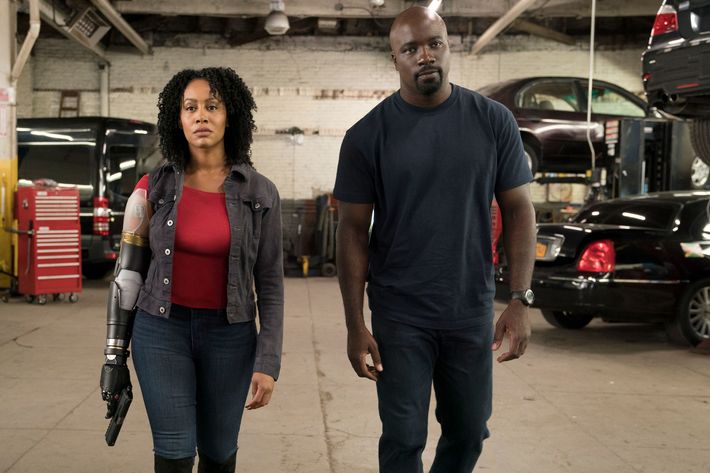

Misty Knight and Luke, ready to bring some justice to the
streets of Harlem once again.
Luke Cage, season 2 (2018)

Like much of its Netflix MCU brethren, season two of Luke Cage suffers a bit in a few areas, but is a solid entry into the canon. This is thanks to a compelling villain and a strong finish.

Following on the heels of its first season and the subsequent Defenders mini-series, season two of Luke Cage picks up with Harlem's bulletproof protector trying to settle into his role as neighborhood celebrity. As he deals with efforts to monetize his fame, a new threat emerges, as the mysterious Jamaican John "Bushmaster" McIver arrived in Harlem with a vicious streak and a mission of vengeance against Mariah Stokes/Dillard, the dirty politician much to blame for the first season's problems. As Mariah and her right-hand man Hernan "Shades" Alavarez seek to divest from the criminal underworld, Bushmaster start to make his presence known, using rather violent tactics and his own inexplicably enhanced strength and healing abilities, to go along with immense martial arts prowess. As this deadly islander hones in on Mariah and Shades, leading to escalating bloodshed in Harlem, Luke Cage inevitably gets involved.

As with nearly every Netflix MCU show thus far, this season of Luke Cage has a solid premise, several highly workable pieces in terms of character and plot, and some excellent acting. The main weakness is that it felt like about 7 or 8 good episodes worth of material stretched out over a 13-episode season. This led to a fair amount of overly drawn out and repetitive story loops that took much too long to progress, most of them involving characters trying to suss out their identities. The two most obvious were Misty Knight and Mariah Stokes/Dillard. By episode 9 or 10, they lock in, but for nearly the entire middle section of the season, the two storylines seem to flounder in ways that are sometimes dull and sometimes inorganic or illogical. They do come around, fortunately, by season's end.

The other weakness to me was dialogue which was inconsistent, which I felt in turn affected the performances of nearly all of the primary actors at times. There are no doubt some fun and tense exchanges between the several strong and fairly dynamic characters in this series, but more than a few of the conversations felt forced or clunky at times. It seemed as if the writers occasionally started with the idea of giving certain characters their "speech" or "preach" moments, and then shoehorned them into scenes, regardless of whether it fit the context or natural speech patterns established for the character.

Arguably the best aspect of season 2 was Bushmaster as one
of the primary villains. Mustafa Shakir's portrayal of the
lethal, vengeance-obsessed Jamaican was brilliant.
Those gripes aside, I liked the season. John Colter still makes a great Cage, and the returning cast from the previous season brought everything they had, especially Alfre Woodard as Mariah. Even when I wasn't crazy about how she was being written in certain scenes, Woodard acted the hell out of each and every one of them. And Mustafa Shakir and the imposing Bushmaster was a revelation for me. The towering Harlem native radiates all of the physical strength and burning rage demanded of his vengeance-obsessed character. And as his story is revealed over the season, Shakir shows some versatility to adapt to the story's demands. It helped that he does the Jamaican accent (not an easy one to pull off at all) so well that I initially thought that he might be native to that island, and he seemed to do many of the stunts and fight sequences himself. Bushmaster ended up being one of the best and most well-rounded arch villains in any of the MCU TV shows to date.

After pointing out the pacing problems in the middle of the season, I would be remiss not to say that the final few episodes of the run saved it from being an overall tepid one. After some rather slow and meandering plotting, all of the primary and secondary storylines come together quite well at the end. I was actually quite satisfied with how nearly every major character's arc concluded and where they ended up. The one exception was that of Matilda "Tilda" Stokes/Johnson. Hers was, throughout the season, a tale that never seemed to figure out what really made her who she was. There are several moments when it seems as if she's resolved something inside of her, only to reverse course not long after, for reasons that are not always clear. Her aside, I found the final two episodes of the season highly enjoyable, and this generally speaks well of a show.

So I'm on board for another season, which I imagine will be forthcoming. I do, however, repeat a familiar refrain - Netflix really needs to figure out how to fill out a 13-episode season; something they still haven't managed to do in 5 different MCU shows, across 8 different seasons. Either that, or go with 8-episode seasons, like they did with The Defenders. 

Thursday, July 5, 2018

New Release! Hereditary (2018) [Spoiler-Free Review]

No Spoilers. Read Away!!

Director: Ari Aster

An excellent horror movie that masterfully blends some of the very best elements of earlier classics of the horror genre.

The story begins with an obituary and funeral service for Leigh Graham, mother of Annie (Toni Collette). Leigh was, by Annie's account, a rather odd, sometimes reclusive, sometimes domineering figure who seemed to have strange plans and goals for her children and grandchildren. With her mother gone, Annie returns to her life as a  professional artist specializing in miniatures, particularly dioramas of homes, buildings, and the people within them. On the surface, Annie seems to have the things that many people would wish for - a beautiful home in a lush forested area, a loving husband, and two children, Peter (Alex Wolff) and Charlie (Milly Shapiro). However, things are far from ideal. Aside from Annie's mother's haunting influence on her life, Peter is a typically frustrated teenage boy, and Charlie is a 13-year old who is oddly detached and seemingly dealing with some sort of intellectual handicap. When horrific tragedy strikes the family, such a short time after Leigh's death, Annie can barely take it. As she tries to keep from losing her grip on sanity, strange things seem to begin happening to her and her family. These events even suggest some sort of horribly sinister conspiracy acting upon all of them.

Though clearly modern in its setting, scripting, and acting, this film is great classic throwback horror. While I'm not an aficionado of the genre, I feel that I've seen many of the classics; in particular, the grittier and more existentially horrifying films that started cropping up in the late 1960s. Hereditary takes the spirit of a film like Rosemary's Baby and updates it masterfully by adding in touches seen in more modern horror flicks like The Babadook. But while the shared elements are fairly obvious, and some of the visual scares are familiar, nothing felt like an outright ripoff. Writer and director Ari Aster does a brilliant job of taking familiar ingredients and working them into something that felt rather fresh and gets back to what I consider genuine horror in more of an H.P. Lovecraft or even Edgar Allen Poe vein. No, this movie doesn't contain some of the wildly fantastic elements of those noted horror writers, but Aster's philosophy of what makes a horror tale is clearly in tune with those early masters.

One of the many excellent aspects of this movie is how it manages to keep you guessing for much of its considerable length. While the movie certainly offers more than a few hints about what, exactly, is behind the dark chaos swirling around Annie, it doesn't fully tip its hand until the appropriate time. And even then, the final ten minutes are bound to shock most viewers - even ones who may have sussed out everything about the plot.

Steve looks over his peculiar daughter Charlie's drawings.
There are plenty of little allusions and pieces of fore-
shadowing all over this movie. But they don't become
clear until it's all steamrolling towards its dark climax.
The acting in this movie is top notch, as one might guess from seeing the top-billed cast. I won't be surprised if Collette isn't nominated for several major awards for this role, despite the movie being in a genre that historically does not get much recognition from the "marquee" award organizations. And the supporting cast is also excellent. Gabriel Byrne, the next most famous actor here, is appropriately muted, but their children played by Alex Wolff and Milly Shapiro are outstanding. It's actually rare to find such consistently excellent performances in such a dark horror movie, but Hereditary found and great cast and got the most out of them.

The visuals are great. They never utilize much in the way of dazzling special effects, but when visual flourishes are required, they are handled deftly. Sure, a few of the scares will seem very familiar to anyone who's ever seen a haunted house movie. But this movie adds elements of the eerie and psychological, adding extra impact to such scenes.

Fans of more graphic, sensational horror will probably see little to like in this movie, which is why I suspect that fan reception has been vastly more mixed that the glowing critical reception. It does ask for patience from its viewers, along with an appreciation for very slow-burn narratives. Being a fan of such things, I highly recommend it to others with similar tastes. 

Tuesday, June 26, 2018

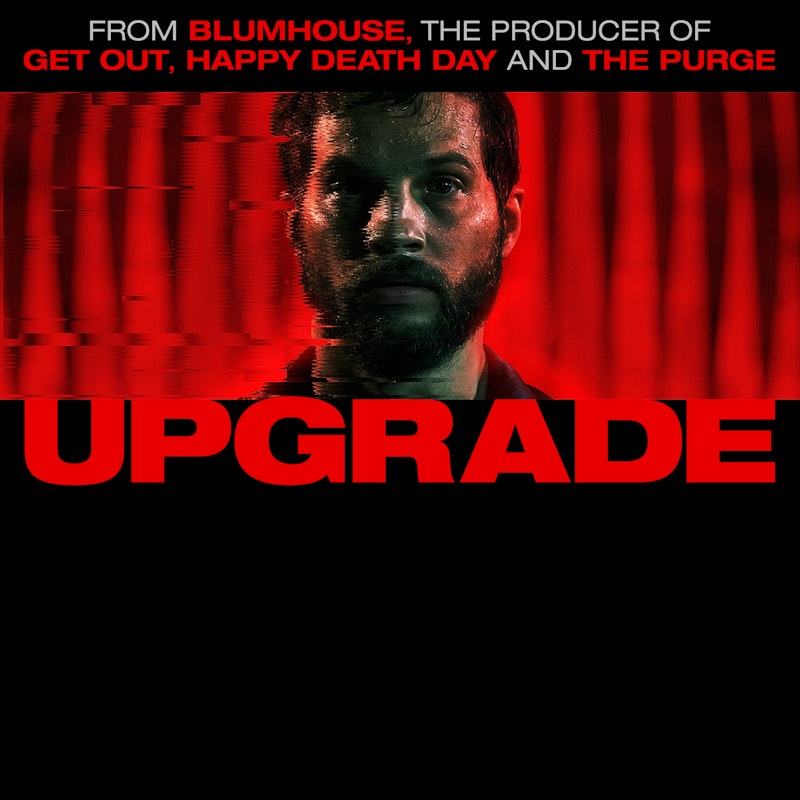
New Release! Upgrade (2018) [Spoiler-Free First Section]

Spoiler-Free Section. Read Away!!

Director: Leigh Wannell

Really glad I got a chance to see this one in the theater before it quietly vanished into the world of on-demand and at-home rentals. This was a fun, ripping sci-fi action yarn that actually had one or two nice little tricks up its sleeve.

Written and directed by Australian director Leigh Wannell, best known for horror films such as Saw and Insidious, Upgrade is a fairly striking departure. Taking place in a not-too-distant future where technology has become a part of underground bio-enhancements and weaponization, we follow Grey Trace, a self-professed "low tech" man who prefers rebuilding his 20th-century muscle cars with his bare hands, rather than rely on the conveniences of the hyper-smart technology found all around him. When a serious of unfortunate events finds Grey in possession of a cutting-edge tech implant called STEM, his entire existence starts being flung back and forth between his own mission of revenge and a larger, more mysterious conspiracy at work. As the dangers around Grey increase exponentially, the STEM implant continues to reveal shocking abilities that both thrill and terrify its owner, Grey.

My viewing experience of this movie was of the variety which are my favorite - knowing very little about a film, thus having almost no expectations, and being wonderfully entertained. No, it's not a mind-blowing, heady sci-fi classic on the Blade Runner scale, or even more modern greats like Ex Machina. Still, it taps into our culture's concerns about artificial intelligence and whips it into a movie that is plenty of fun for much of its length. And when the fun takes a dark "cautionary tale" turn, it gets even better.

The aesthetic of the movie goes for something akin to a slightly grittier, more cosmopolitan version of something in a sci-fi flick like the outstanding Looper from a few years ago - mostly familiar settings and technology, jazzed up in urban areas by dazzling incorporation of near-futuristic architecture and decoration. But just as much of the real action takes place in neighborhoods, bars, and rundown apartment complexes that would be right at home in the late-20th and early-21st centuries (Upgrade seems to take place sometime in the mid-21st century). It all lends a welcome verisimilitude to a genre that often goes overboard with hyper-polished facades and CGI.

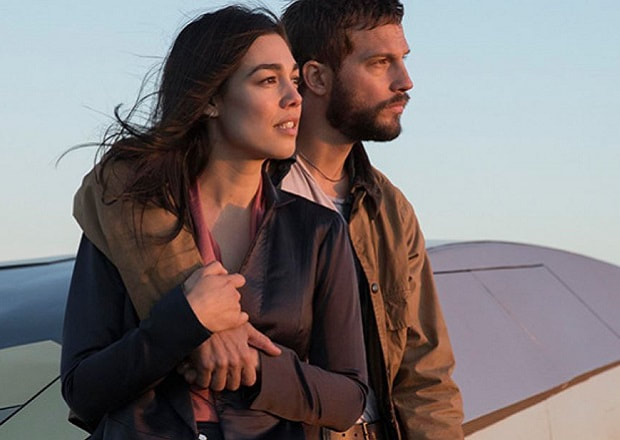
One of the few truly tranquil moments in the film. After this
early basking in the open air and sun, things get dark and
gritty in a hurry.
The action itself is often thrilling, entertaining, and highly kinetic. Utilizing a few different camera techniques, blessedly avoiding slow-motion, and calling for some really frenetic fight choreography, the movie taps into the "John Wick" type of action that I prefer to either the aforementioned slow-motion or the Paul Greengrass "shaky cam" style. Instead, director Wannell makes sure that we can see exactly what's going on, in real-time, presented at a riveting pace. There are a few pretty graphic deaths, but I never felt that it approached grotesque levels of gore - something which I don't particularly care for.

This was a thoroughly enjoyable movie that will have me checking to see what Leigh Wannell does in the future. While his preceding horror movies didn't grab me in any particular way, I'll be looking to see if he does anything as good as Upgrade in the action or sci-fi genres in the years to come.

Additional Thoughts After Another Viewing (July, 2020)

Just watched this one again, and it's still great. The efficiency of this film is amazing. It so quickly establishing everything it needs to, and it goes through several very distinct passages, without ever feeling terribly rushed. I'll continue going back and watching this one every few years.

Spoiler Section! You've Been Warned!!!

Just a few things on the details in the movie.

The "twist" of having Eron be behind Grey's paralysis and his wife's death was easy to see coming from a mile away. What I didn't see coming was that it was actually STEM behind it all. While this plotline has a bit of trouble holding up under very close scrutiny (how exactly did it coerce its own creator into doing its bidding over and over, etc.?), it manages to hold up just well enough not to scuttle the whole thing.

And STEM ultimately winning was a very dark twist that I really did not expect. The general tone for the movie up until the final ten or so minutes had been a tad more playful. Yes, the assault on Grey and his wife was pretty brutal, and the pain of his struggle with quadriplegia was palpable; but once he acquires STEM, the movie felt much more like a rousing 1980s action/revenge flick. It had ass-kicking, a bit of suspense, and even some decent one-liners and gags here and there. But when STEM has fully taken over and relegated Grey's consciousness to a distant corner of his mind and uses Grey's now-usurped body to walk away from everything, it was eerily reminiscent of the unsettling ending of Ex Machina. And I thought that all of this elevated Upgrade beyond being a simple popcorn flick. 

Friday, June 22, 2018

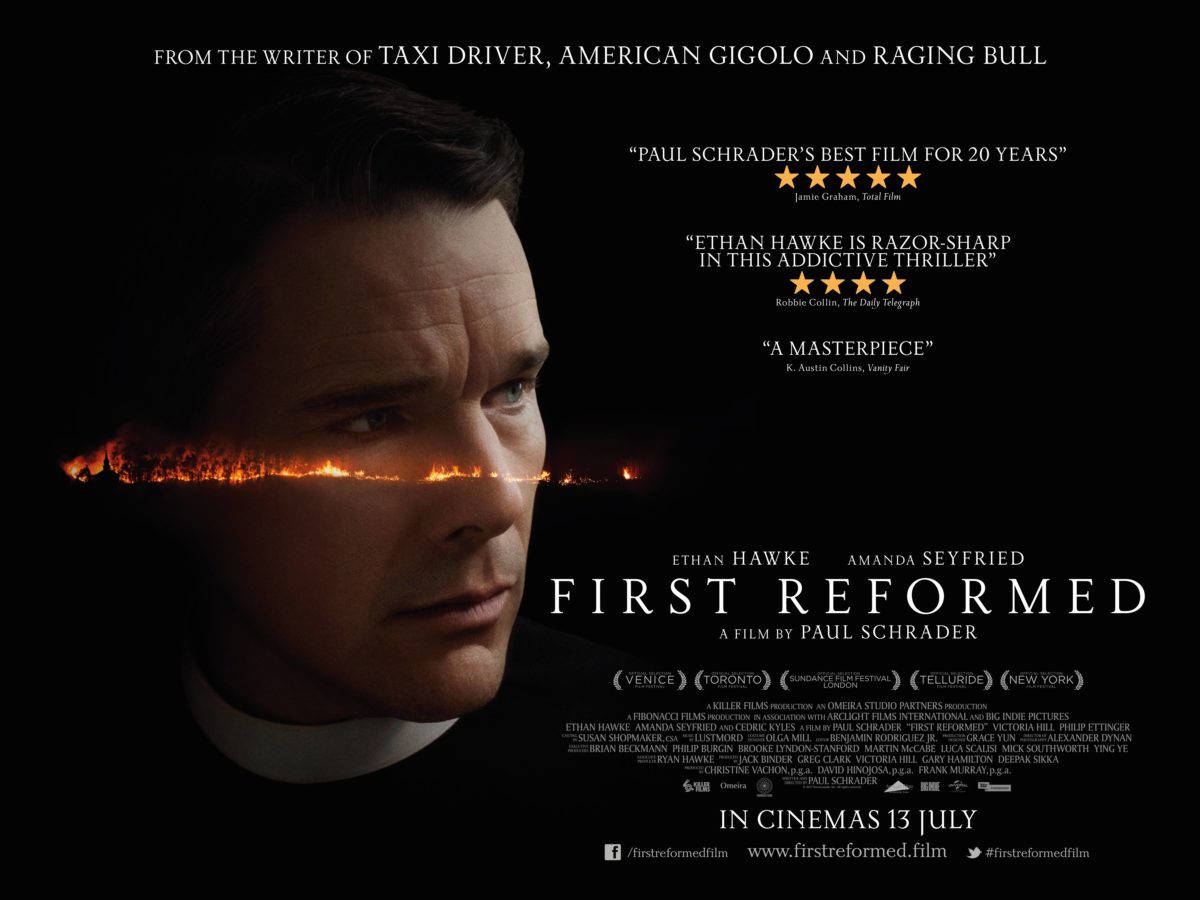
New Release! First Reformed (2018) [Spoiler-Free Review]

No Spoilers! Read Away!!

Director: Paul Schrader

An intense, disturbing gaze into a very troubled soul, but one that is mesmerizing much of the time.

First Reformed was written and directed by Paul Schrader, best known for writing Taxi Driver and co-writing Raging Bull. With his latest film, Schrader calls upon a primary theme of that earlier film - that of a deeply troubled and mentally fractured man whose anger at the world around him drives him into psychological crisis that may become a serious threat to those around him.

The story focuses on Reverend Toller (Ethan Hawke), a former military chaplain who is now the pastor of a tiny parish in upstate New York. Although his congregation consists of only a handful of people, the church building itself is of historical significance, being one of the oldest churches in the First Reformed denomination of Christianity. Due to its miniscule congregation, however, the church has recently been bought out by a nearby megachurch. One day, Reverend Toller is asked by a young parishioner, Mary (Amanda Seyfried), to speak to her husband. Her husband, Michael, is an ex-con and militant environmentalist whose rage at polluting energy companies seems on the verge of boiling over into violent action. Toller attempts to calm Michael, but the passionate young man seems to open up still-unhealed wounds within the Reverend, who himself is grappling with his own losses and guilt. As the tale unfolds, Toller grows angrier and more desperate for answers as to what is happening around him, and whether he should do something about it. And the nature of what that "something" is grows into its own frightening question.

This movie is often powerfully magnetic, with its very relevant themes of environmental destruction and humankind's blame and responsibility for its lasting effects. It is also a thought-provoking look at how a haunted person can latch onto very legitimate causes and use them to rationalize extremely frightening and even violent behavior. Some aspects of this movie feel oversimplified, such as the bombastic and bullying energy company CEO Edward Balq or the snarky Islamophibic teen at a discussion group. But most of the really important characters and interactions are highly nuanced and defy simple analysis. The despair-stricken Michael is obviously on the brink of a psychotic break, but much of his reasoning is sound. The megachurch pastor (Cedric "The Entertainer" Kyles) exhibits some of the unsavory characteristics of celebrity ministers, but he also lays out some sound observations and advice for the tormented Toller. The protagonist himself, Toller, is the most complicated of them all - being a man desperate to do the right thing, but a man who is steadily degenerating in several ways, raising questions with few easy answers.

The ending of the movie has stuck with me quite a lot, even a solid week after seeing the film. My initial reactions were those of bafflement and a bit of disappointment. After some time to ruminate on it, though, I realize that it is open to a bit of interpretation, and one of my own interpretations in much more satisfying than what is literally depicted on the screen.

Among the many pale and austere settings depicted in the film,
Rev. Toller's lined, anguished face reflects a soul attempting
to break out of a malaise of despair.
This movie has drawn many comparisons to Schrader's 1976 masterpiece, Taxi Driver, with good reason. Reverend Toller is a version of Travis Bickle, although one who is different in several important ways. Still, the most important traits of being tortured and desperate are obvious in both men, and Schrader's telling of their stories is as gripping as it is disturbing.

The visuals of the film are notable, shot in cold, often pale settings of winter in upstate New York. Done with slow precision, we get exteriors and interiors that often have a rather chilly, blank feeling, at times reflective and other times in contrast to the state of Reverend Toller's troubled soul. There is often something hypnotic about the slow pans and the stationary camera as it offers us tense conversations between Toller and others. It all creates a coherent look and tone to the entire movie, much to the film's benefit.

As with most movies of such dark subject matter, this isn't one that I will likely watch again any time soon. But it was enthralling to see it, and I suspect it will long stand as a great movie among those dealing with environmentalism and questions about religious and spiritual duty. 

Sunday, June 17, 2018

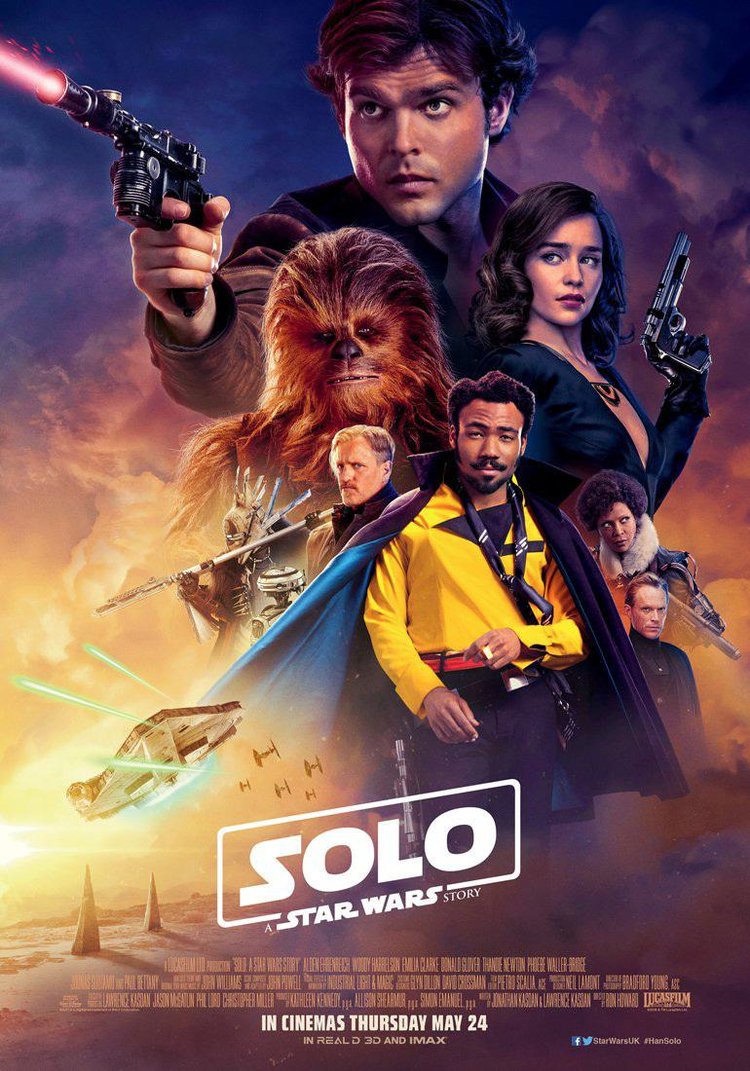
New Release! Solo (2018) [Spoiler-Free Review]

Spoiler-Free! Read on without Fear!!

Director: Ron Howard

Maybe it helped that I was going in with very modest expectations, in the wake of the lukewarm reception among critics and fans, but I enjoyed this movie a bit more than I had anticipated. It's not the best Star Wars movie, but I found it to be a solid, entertaining popcorn movie that uses its mythological resources efficiently.

The movie takes place roughly a dozen years before Star Wars: A New Hope Episode IV (a.k.a Episode IV, a.k.a "The original Star Wars movie"), offering us the main backstory of Han Solo, the infamous smuggler-turned-rebel as portrayed by Harrison Ford in the original trilogy. Picking up with a Han approximately 20 years old or so, played by Alden Ehrenreich, we follow his escape from his home planet of Corelia, where he and his girlfriend Qi-ra (Emilia Clarke) had grown up in oppressed poverty. Though Han nearly manages to get Qi'ra out with him, she is held back, leaving him no choice but to enlist in the army to escape capture at the hands of an ever-growing Empire. After three years as an infantryman, Han manages to latch onto a group of thieves led by Beckett (Woody Harrelson), and he begins to find his true calling as someone who operates well outside the law.

I was impressed by how well this movie hit its marks, without leaning too heavily on "Easter eggs" for fans or being overly familiar. The movie does a nice job telling some of the most well-known aspects of the legendary rogue - how he meets Chewbacca, how he gets the Millenium Falcon - but it doesn't try to explain all of it, as I suspect weaker writers would have done. I was fully expecting explanations for everything we associate with the original trilogy Han, right down to the signature white shirt and black vest. Fortunately, the father/son writing team of Lawrence and Jonathan Kasdan showed effective discretion in this area. Sure, it's a bit silly that many of the things we associate with Han all occur in Han's life within such a short span. But this didn't bother me much. I felt that enough new characters were introduced and that the plot hummed along well enough to be enjoyable.

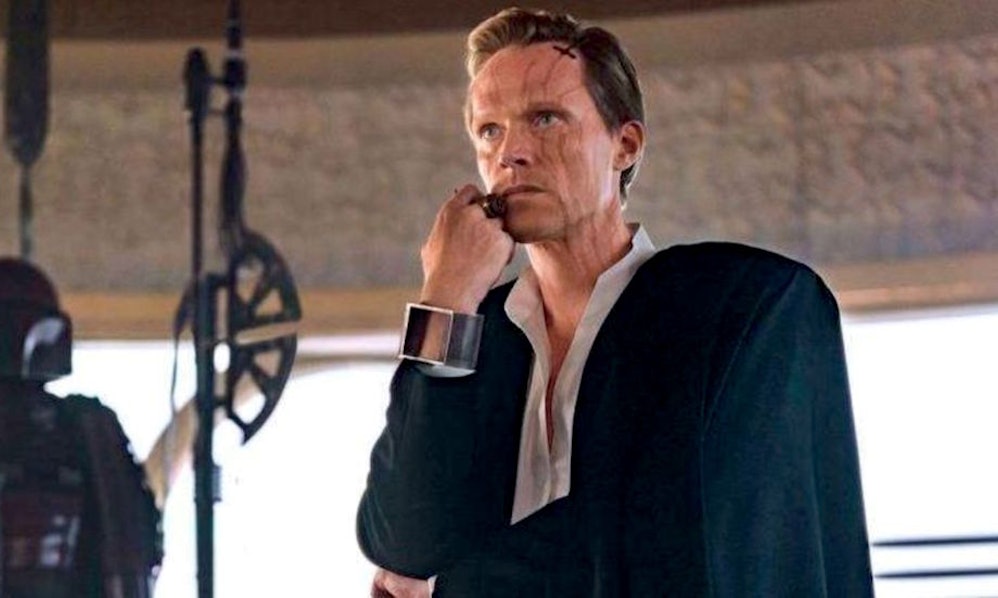
Paul Bettany was a clear strength in the film. The character
Dryden Vos and Bettany's portrayal were intense in a way
that I found highly enjoyable.
The acting was perfectly fine. Sure, it's a bit odd seeing Woody Harrelson in a Star Wars movie, but he was cast well as the cynical, gun-slinging thief Beckett. Donald Glover, who simply can't seem to miss these days, is nearly perfect as a young Lando Calrissian, and even smaller parts played by Thandie Newton and Emilia Clarke are handled well. Probably the most pleasant surprise for me was the performance of Paul Bettany as ganglord Dryden Vos. Surprising not because I didn't expect Bettany to be good, but simply because I didn't know he was in the movie. He plays a frighteningly intense, intelligent, and murderous adversary who, despite not being a classic "Sith" villain, is rather intimidating.

Solo is a film that, while not doing anything exceptionally well, does nearly everything pretty well, and doesn't have any major missteps. Though it's not as wildly entertaining as The Force Awakens, or as novel as Rogue One, it's more cohesive and consistent than The Last Jedi. It's one I'll gladly watch again in time, even if it's never going to be among the very best Star Wars movies.