Showing posts with label Paul Schrader. Show all posts

Sunday, February 16, 2020

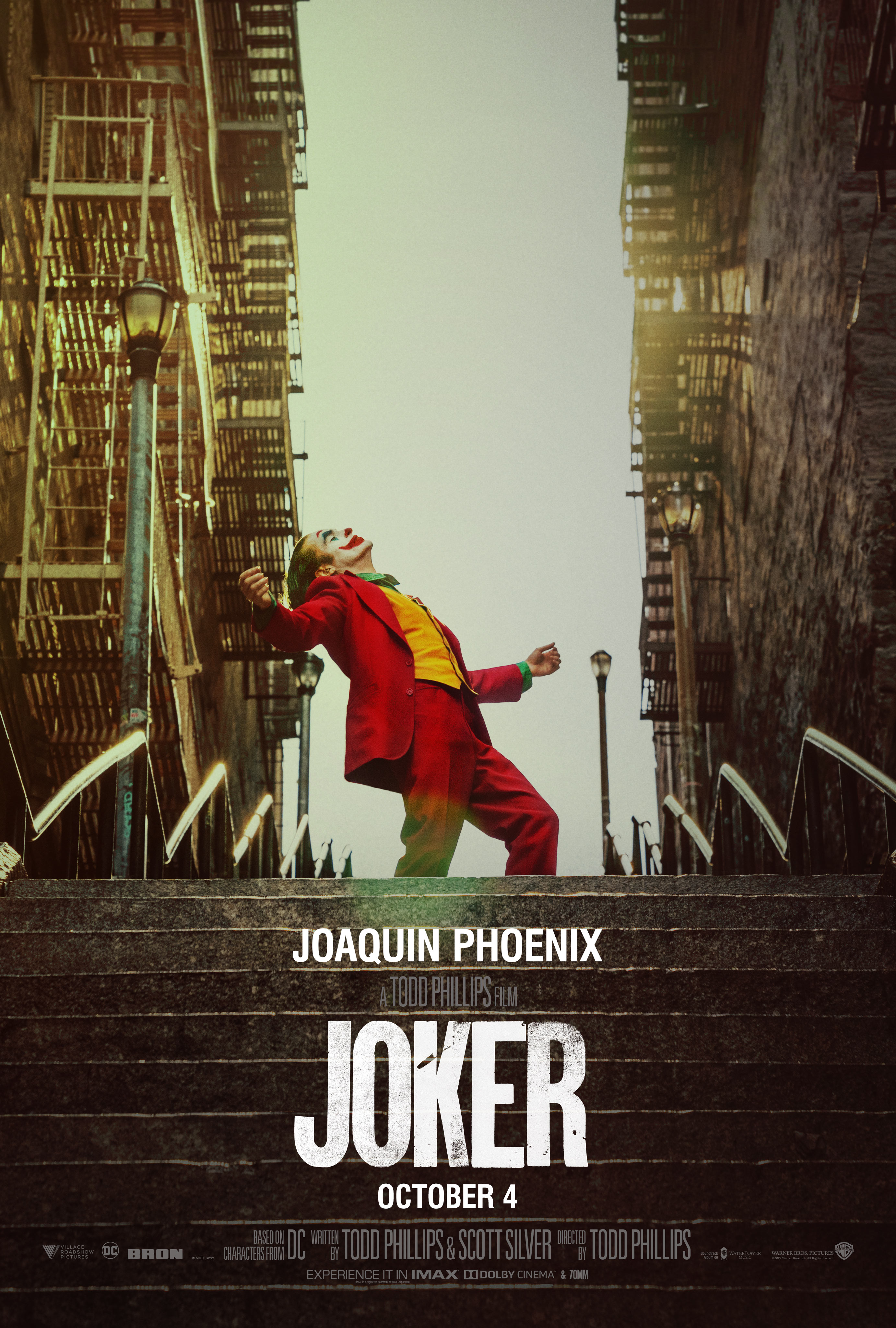
Joker (2019)

Director: Todd Phillips

Extremely well-done film that was compelling but grim enough to not demand a re-watch by me anytime soon.

Ostensibly offering a possible origin story for arch Batman villain "The Joker," Joker tells the story of Arthur Fleck (Joaquin Phoenix), a mentally troubled, severely down-on-his-luck man who is trying to find some place for himself in a grim and deteriorating city. Fleck is an aspiring stand-up comedian who lives at home with and cares for his invalid mother, while trying to make ends meet through menial clowning jobs around the depressed metropolis. In addition to generally being very awkward socially, he suffers from emotional swings and a condition which causes him to laugh hysterically and uncontrollably at random moments. When Fleck is bullied one night on a train, he lashes back and kills his tormentors, setting in motion a spiral into violence and true madness for not only Fleck but also the entire city.

More than any "comic book" movie I've seen, Joker has a very clear vision, and it is exceptionally dark. Writer and director Todd Phillips has himself admitted that he sort of hoodwinked Warner Bros studios by dressing up his movie as an origin story for one of the most famous villains in modern pop culture (in an interview on NPR, Phillips pointed out how the title of the movie is "Joker" and not "The Joker"). What he really offered was a brooding commentary on the state of modern U.S. society and its social ills. Fleck can easily be seen as one of the countless people afflicted with mental illness and carrying the burden of caring for unwell family members, but who have been abandoned by the world around them. Fleck and his mother have no other family, no friends, and early in the movie, Arthur's public assistance and medical care are stripped away from him, leaving him to deal with his myriad difficulties on his own. One doesn't have to look very far in the real world to see much of what is portrayed in Joker. The clarity and commitment to this theme distinguish this film from any other "comic book" movie that I can think of (and I've seen tons of them).

For a better comparison, one need only look at several of the grittier films by Martin Scorsese and Paul Schrader. Todd Phillips doesn't bother disguising the fact that he's drawing heavily from movies like The King of Comedy, Taxi Driver, or even the more recent First Reformed. All of these movies deal with angry men who are already teetering on the edge of sanity, and whom we see pushed off. Arthur Fleck is the latest version of a Rupert Pupkin, Travis Bickle, or Toller - people who are struggling to keep a toehold in society but fail in spectacular or violent fashion. What is impressive is not only that Phillips decided to draw from such dark inspirations for this kind of movie, but that he so clearly succeeded.
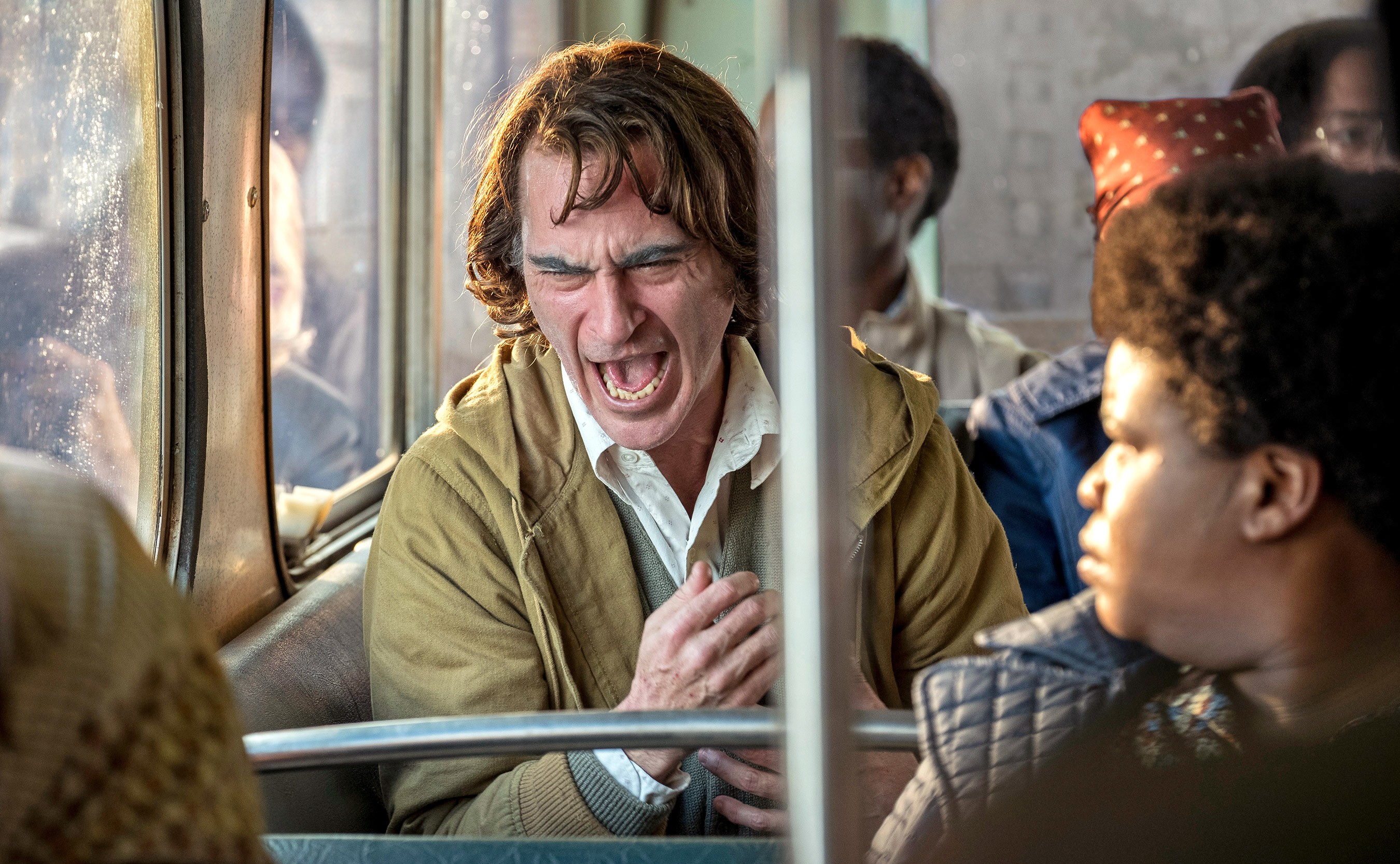
Arthur, in the middle of one of his uncontrollable and often
out-of-place bouts of laughter. As of now, Joaquin Phoenix is
the second actor to win Oscar Best Actor playing the
notorious villain of comic book origins.
By this time, I probably don't need to point out that Joaquin Phoenix's performance is brilliant (I write this only about a week after he won Best Actor for the role). It is truly a marvel, as painful as it is to take in. All of the supporting cast does a fine job as well, including Robert De Niro himself as an echo of the talk show host character played by Jerry Lewis in The King of Comedy. These performances, along with outstanding costume and set design, lighting, cinematography, and an Oscar-winning musical score, shape the story into something that really is a piece of art.

It must be said, though, that the movie is just as depressing as it sounds. Also in keeping with its inspirations and themes, this is not the easiest film to take. Yes, there are a few moments of dark and gallows humor in a few places, but for the most part this movie is one gut punch after another. And just like those aforementioned Scorsese and Schrader films, Joker is a great movie that I find too tough to take more than once in a very rare while. 

Friday, June 22, 2018

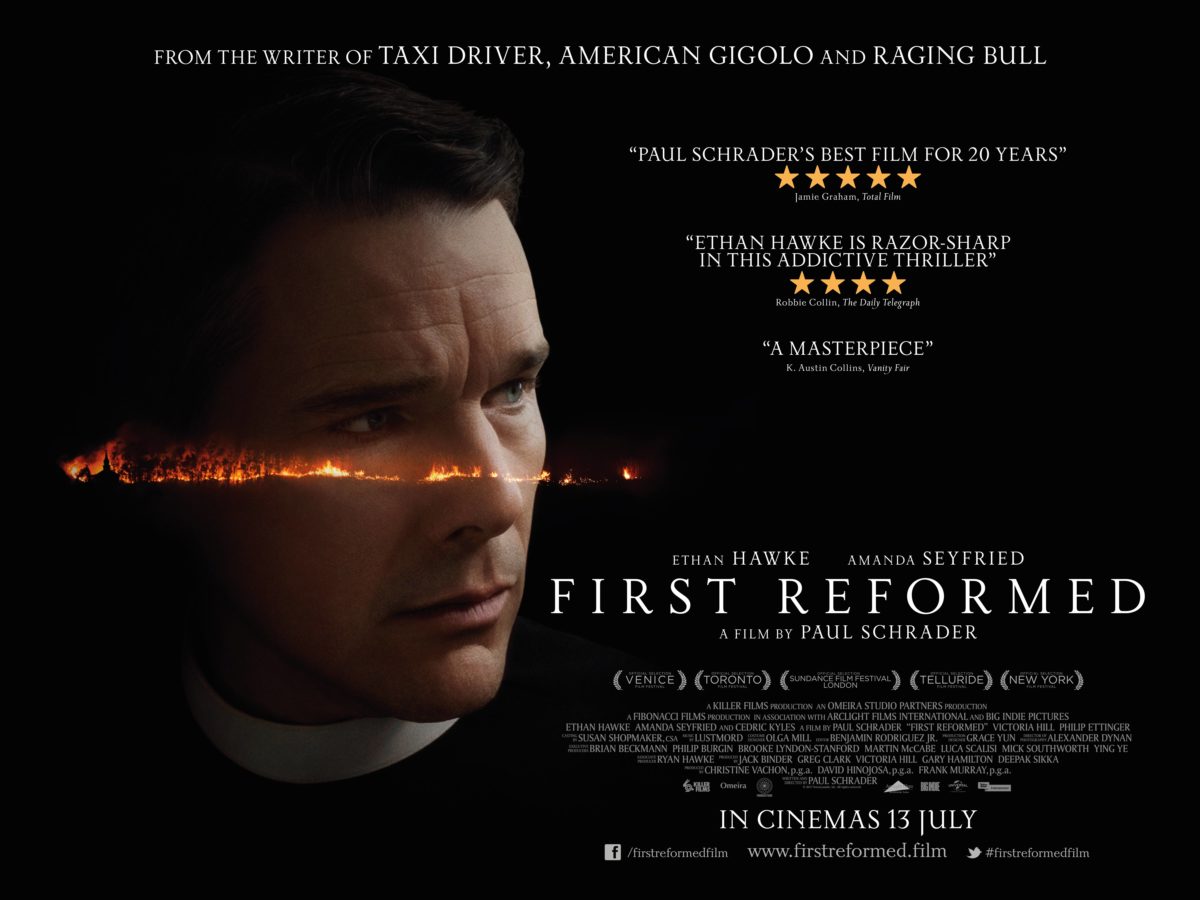
New Release! First Reformed (2018) [Spoiler-Free Review]

No Spoilers! Read Away!!

Director: Paul Schrader

An intense, disturbing gaze into a very troubled soul, but one that is mesmerizing much of the time.

First Reformed was written and directed by Paul Schrader, best known for writing Taxi Driver and co-writing Raging Bull. With his latest film, Schrader calls upon a primary theme of that earlier film - that of a deeply troubled and mentally fractured man whose anger at the world around him drives him into psychological crisis that may become a serious threat to those around him.

The story focuses on Reverend Toller (Ethan Hawke), a former military chaplain who is now the pastor of a tiny parish in upstate New York. Although his congregation consists of only a handful of people, the church building itself is of historical significance, being one of the oldest churches in the First Reformed denomination of Christianity. Due to its miniscule congregation, however, the church has recently been bought out by a nearby megachurch. One day, Reverend Toller is asked by a young parishioner, Mary (Amanda Seyfried), to speak to her husband. Her husband, Michael, is an ex-con and militant environmentalist whose rage at polluting energy companies seems on the verge of boiling over into violent action. Toller attempts to calm Michael, but the passionate young man seems to open up still-unhealed wounds within the Reverend, who himself is grappling with his own losses and guilt. As the tale unfolds, Toller grows angrier and more desperate for answers as to what is happening around him, and whether he should do something about it. And the nature of what that "something" is grows into its own frightening question.

This movie is often powerfully magnetic, with its very relevant themes of environmental destruction and humankind's blame and responsibility for its lasting effects. It is also a thought-provoking look at how a haunted person can latch onto very legitimate causes and use them to rationalize extremely frightening and even violent behavior. Some aspects of this movie feel oversimplified, such as the bombastic and bullying energy company CEO Edward Balq or the snarky Islamophibic teen at a discussion group. But most of the really important characters and interactions are highly nuanced and defy simple analysis. The despair-stricken Michael is obviously on the brink of a psychotic break, but much of his reasoning is sound. The megachurch pastor (Cedric "The Entertainer" Kyles) exhibits some of the unsavory characteristics of celebrity ministers, but he also lays out some sound observations and advice for the tormented Toller. The protagonist himself, Toller, is the most complicated of them all - being a man desperate to do the right thing, but a man who is steadily degenerating in several ways, raising questions with few easy answers.

The ending of the movie has stuck with me quite a lot, even a solid week after seeing the film. My initial reactions were those of bafflement and a bit of disappointment. After some time to ruminate on it, though, I realize that it is open to a bit of interpretation, and one of my own interpretations in much more satisfying than what is literally depicted on the screen.

Among the many pale and austere settings depicted in the film,
Rev. Toller's lined, anguished face reflects a soul attempting
to break out of a malaise of despair.
This movie has drawn many comparisons to Schrader's 1976 masterpiece, Taxi Driver, with good reason. Reverend Toller is a version of Travis Bickle, although one who is different in several important ways. Still, the most important traits of being tortured and desperate are obvious in both men, and Schrader's telling of their stories is as gripping as it is disturbing.

The visuals of the film are notable, shot in cold, often pale settings of winter in upstate New York. Done with slow precision, we get exteriors and interiors that often have a rather chilly, blank feeling, at times reflective and other times in contrast to the state of Reverend Toller's troubled soul. There is often something hypnotic about the slow pans and the stationary camera as it offers us tense conversations between Toller and others. It all creates a coherent look and tone to the entire movie, much to the film's benefit.

As with most movies of such dark subject matter, this isn't one that I will likely watch again any time soon. But it was enthralling to see it, and I suspect it will long stand as a great movie among those dealing with environmentalism and questions about religious and spiritual duty.