No Spoilers for either show. Read away!!
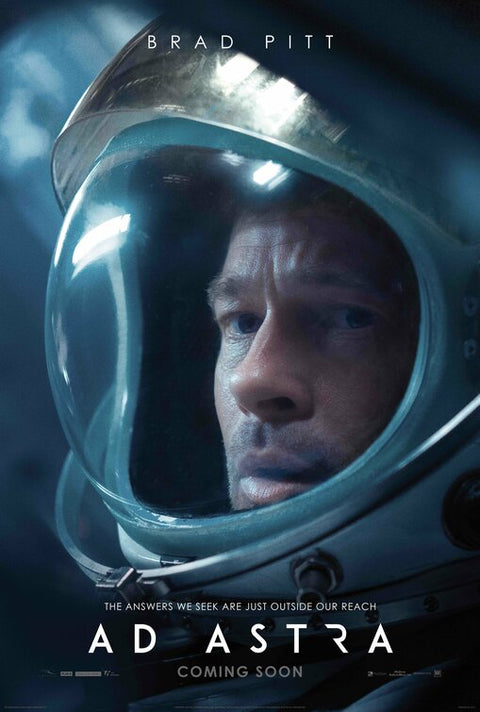
Ad Astra (2019)
Director: James Gray
A decent enough sci-fi flick with enough to keep a person tuned it, but not inventive enough to stand out very much.
In a not-too distant future, Brad Pitt plays Roy McBride, an astronaut called upon by the government to embark on a mysterious mission to the far reaches of the Solar System. Some sort of strange energy is emanating from a location there, and it threatens to destroy the entire system. As if that weren't enough, the government believes that the person behind the imminent catastrophe is the last astronaut sent to the area, none other than McBride's own father, H. Clifford (Tommy Lee Jones), long hailed as a national hero and icon.
The movie is a solid, space-faring sci-fi flick that does the sci-fi elements better than the emotional ones. Like the very best mission-to-space flicks - I'm thinking 2001, Interstellar, and Europa Report, among others - Ad Astra maintains a cool, meditative tone throughout, especially once the story brings Roy outside of the Earth's atmosphere. The vision of director and co-writer James Gray is an engaging one that seems grounded in a very believable possible future. There is a thrilling pursuit on the Moon, and a rather striking and eerie vision of what Mars might become, which offer some nice food for thought on how humans may be interacting with the nearest celestial bodies long before the century is over. Anyone who enjoys such topics and themes is bound to appreciate these aspects of the movie. And there is the greater mystery of what, exactly, is the threat in deep space to pull one along through Roy's journey farther from home.
The more personal story about Roy and his father? Not nearly as engaging. While Pitt and Jones play their roles perfectly well, the entire relationship never feels like it is offering anything that is novel or surprising. Right from the jump, it's clear that Roy's mission is as much about finding closure with his father, long-presumed dead. I suppose one could read a certain amount of symbolism into the narrative about an absent father's ability to mysteriously have the ability to annihilate one's world, but that's a bit of a stretch. Because Roy is a rather repressed individual (not uncommon for astronauts, who need the ability to subdue and overcome their own nerves), there is a certain detachment which runs through the film. Had there been a few more moments of vulnerability sprinkled in here or there, the film may have had a bit more emotional impact. As it was, though, there was only so much pathos to be found.
If you're like me, and enjoy good space-faring movies for their ability to inspire awe at the cosmos, then Ad Astra can give you that. If you're looking for the more human drama elements, though, this one may leave you wanting.
 El Camino (2019)
Director: Vince Gilligan
Compelling, entertaining, and satisfying sequel movie to the brilliant Breaking Bad TV show, which ended its outstanding run in 2013.
The sixty-odd episode run of Breaking Bad represented one of the very best TV shows of all time, created and run by Vince Gilligan. It saw the rise and eventual fall of high school chemistry teacher-turned-drug kingpin, Walter White, who used his genius for chemistry to concoct the most potent formula for crystal meth ever known. White, who had been diagnosed with terminal cancer, took this bizarre career shift in an effort to quickly earn enough money to support his family after his impending death. The problem was that, once White got a taste for the money and nefarious reputation which his recipe brought him, he found that he liked it. So much, in fact, that it sent him spiraling down darker and darker paths in order to maintain and grow his place in the drug-peddling world. By the end of the show's run, White had destroyed or alienated everything which he had once held dear; and although he found some measure of penance and rectification, he still died a tragic and lonely death.
White's partner through nearly his entire journey was Jesse Pinkman, a confused former student of his who had been dabbling lightly in the drug trade during his few years removed from high school. Pinkman, played brilliantly by Aaron Paul, while likable and funny in many ways, was always a lost soul, never knowing exactly who he was or what he wanted from life. As such, he was ripe to be pulled into the dark gravity of Walter White's drive and obsession. As White's decisions grew grimmer and more self-serving as the show progressed, Jesse felt more and more tied to him, despite his pangs of conscience and general reluctance to get so deeply involved in such dastardly deeds. In the show's finale, the last image we see of Jesse is him driving away from a white supremacist compound, where he had been brutally imprisoned and forced to cook meth for them for six straight months.
This is where El Camino picks up the story. In the hours immediately after the fiery end of Walter White, in which he freed Jesse, gunned down and killed all of his tormentors, and then died himself, Jesse has to elude the police as they look to put the pieces together of the entire bloodbath at the compound. A beaten and traumatized Jesse must seek out any friendly faces and places of sanctuary that he can, in an effort to not only escape capture and certain imprisonment, but also to truly decide who he is and what he wants to do with the rest of his life, should he even have one.
The movie is every bit as good as Breaking Bad was, even if it doesn't have the power of some of that show's most memorable moments (think Walter's showdown with Tuco or Gus Fring's death). El Camino certainly has a few great thriller sequences, with some fun twists of their own, but a two-hour movie is never going to be able to have the build-up necessary for the explosive moments that a longer-form TV show can offer. This movie does, however, make the most of its time, balancing Jesse's soul-searching and recovery from a horrific situation with the more cat-and-mouse elements that come from his scrambling away from his pursuers and towards an uncertain future.
The show is split roughly in half, with the tale alternating between the roughly 48-hours immediately after Jesse's escape and a series of flashbacks, some going way back into Breaking Bad's first season, when he and Walter White were just getting into the meth-cooking business together. We get to see scenes and moments never revealed during the original show, and they all make maximum use of the many open areas in the story, adding extra shading to certain familiar characters, some friendly and others downright evil. It all makes a great follow-up and addendum to the entire story.
I can't say enough about Aaron Paul as Jesse Pinkman. This film requires nearly every bit of the immense acting chops and range that he showed during Breaking Bad, and he seemed able to get right back into the character's head, despite having been away from it for a good six years. He exhibits, by turns, all of the terror, misplaced swagger, soul, and humor that he did at various points during the original story. Though Breaking Bad was mostly the story of Walter White, Jesse Pinkman was the soul and often the tragedy of the tale. Aaron Paul's ability to play the character with just the right type of vulnerability at just the right times is what elevated the show well above other drama/suspense/thriller fare.
Obviously, I can't recommend this movie highly enough for fans of Breaking Bad. If you haven't seen the show, then the movie won't make much sense to you. In fact, you should stay well away if you haven't watched the original show. It will mostly baffle. But feel free to use this as yet another endorsement from me to go ahead and start watching Breaking Bad. I've watched the entire series twice now, with a likely third time coming at some point in the future. It's brilliant, and El Camino only further enhanced the entire amazing show. Now, we just have to wait for the next season of Better Call Saul for more stories from this incredible tale that Vince Gilligan has created.
Ad Astra (2019)
Director: James Gray
A decent enough sci-fi flick with enough to keep a person tuned it, but not inventive enough to stand out very much.
In a not-too distant future, Brad Pitt plays Roy McBride, an astronaut called upon by the government to embark on a mysterious mission to the far reaches of the Solar System. Some sort of strange energy is emanating from a location there, and it threatens to destroy the entire system. As if that weren't enough, the government believes that the person behind the imminent catastrophe is the last astronaut sent to the area, none other than McBride's own father, H. Clifford (Tommy Lee Jones), long hailed as a national hero and icon.
The movie is a solid, space-faring sci-fi flick that does the sci-fi elements better than the emotional ones. Like the very best mission-to-space flicks - I'm thinking 2001, Interstellar, and Europa Report, among others - Ad Astra maintains a cool, meditative tone throughout, especially once the story brings Roy outside of the Earth's atmosphere. The vision of director and co-writer James Gray is an engaging one that seems grounded in a very believable possible future. There is a thrilling pursuit on the Moon, and a rather striking and eerie vision of what Mars might become, which offer some nice food for thought on how humans may be interacting with the nearest celestial bodies long before the century is over. Anyone who enjoys such topics and themes is bound to appreciate these aspects of the movie. And there is the greater mystery of what, exactly, is the threat in deep space to pull one along through Roy's journey farther from home.
The more personal story about Roy and his father? Not nearly as engaging. While Pitt and Jones play their roles perfectly well, the entire relationship never feels like it is offering anything that is novel or surprising. Right from the jump, it's clear that Roy's mission is as much about finding closure with his father, long-presumed dead. I suppose one could read a certain amount of symbolism into the narrative about an absent father's ability to mysteriously have the ability to annihilate one's world, but that's a bit of a stretch. Because Roy is a rather repressed individual (not uncommon for astronauts, who need the ability to subdue and overcome their own nerves), there is a certain detachment which runs through the film. Had there been a few more moments of vulnerability sprinkled in here or there, the film may have had a bit more emotional impact. As it was, though, there was only so much pathos to be found.
If you're like me, and enjoy good space-faring movies for their ability to inspire awe at the cosmos, then Ad Astra can give you that. If you're looking for the more human drama elements, though, this one may leave you wanting.
Director: Vince Gilligan
Compelling, entertaining, and satisfying sequel movie to the brilliant Breaking Bad TV show, which ended its outstanding run in 2013.
The sixty-odd episode run of Breaking Bad represented one of the very best TV shows of all time, created and run by Vince Gilligan. It saw the rise and eventual fall of high school chemistry teacher-turned-drug kingpin, Walter White, who used his genius for chemistry to concoct the most potent formula for crystal meth ever known. White, who had been diagnosed with terminal cancer, took this bizarre career shift in an effort to quickly earn enough money to support his family after his impending death. The problem was that, once White got a taste for the money and nefarious reputation which his recipe brought him, he found that he liked it. So much, in fact, that it sent him spiraling down darker and darker paths in order to maintain and grow his place in the drug-peddling world. By the end of the show's run, White had destroyed or alienated everything which he had once held dear; and although he found some measure of penance and rectification, he still died a tragic and lonely death.
White's partner through nearly his entire journey was Jesse Pinkman, a confused former student of his who had been dabbling lightly in the drug trade during his few years removed from high school. Pinkman, played brilliantly by Aaron Paul, while likable and funny in many ways, was always a lost soul, never knowing exactly who he was or what he wanted from life. As such, he was ripe to be pulled into the dark gravity of Walter White's drive and obsession. As White's decisions grew grimmer and more self-serving as the show progressed, Jesse felt more and more tied to him, despite his pangs of conscience and general reluctance to get so deeply involved in such dastardly deeds. In the show's finale, the last image we see of Jesse is him driving away from a white supremacist compound, where he had been brutally imprisoned and forced to cook meth for them for six straight months.
This is where El Camino picks up the story. In the hours immediately after the fiery end of Walter White, in which he freed Jesse, gunned down and killed all of his tormentors, and then died himself, Jesse has to elude the police as they look to put the pieces together of the entire bloodbath at the compound. A beaten and traumatized Jesse must seek out any friendly faces and places of sanctuary that he can, in an effort to not only escape capture and certain imprisonment, but also to truly decide who he is and what he wants to do with the rest of his life, should he even have one.
The movie is every bit as good as Breaking Bad was, even if it doesn't have the power of some of that show's most memorable moments (think Walter's showdown with Tuco or Gus Fring's death). El Camino certainly has a few great thriller sequences, with some fun twists of their own, but a two-hour movie is never going to be able to have the build-up necessary for the explosive moments that a longer-form TV show can offer. This movie does, however, make the most of its time, balancing Jesse's soul-searching and recovery from a horrific situation with the more cat-and-mouse elements that come from his scrambling away from his pursuers and towards an uncertain future.
 |
| Jesse, after cleaning himself up a bit, during one of several moments of desperation. Viewers of Breaking Bad may recognize the blurred outlines in the back of Skinny Pete and Badger, two of several familiar faces who appear in the film. |
I can't say enough about Aaron Paul as Jesse Pinkman. This film requires nearly every bit of the immense acting chops and range that he showed during Breaking Bad, and he seemed able to get right back into the character's head, despite having been away from it for a good six years. He exhibits, by turns, all of the terror, misplaced swagger, soul, and humor that he did at various points during the original story. Though Breaking Bad was mostly the story of Walter White, Jesse Pinkman was the soul and often the tragedy of the tale. Aaron Paul's ability to play the character with just the right type of vulnerability at just the right times is what elevated the show well above other drama/suspense/thriller fare.
Obviously, I can't recommend this movie highly enough for fans of Breaking Bad. If you haven't seen the show, then the movie won't make much sense to you. In fact, you should stay well away if you haven't watched the original show. It will mostly baffle. But feel free to use this as yet another endorsement from me to go ahead and start watching Breaking Bad. I've watched the entire series twice now, with a likely third time coming at some point in the future. It's brilliant, and El Camino only further enhanced the entire amazing show. Now, we just have to wait for the next season of Better Call Saul for more stories from this incredible tale that Vince Gilligan has created.