Showing posts with label Brad Pitt. Show all posts

Tuesday, July 7, 2020

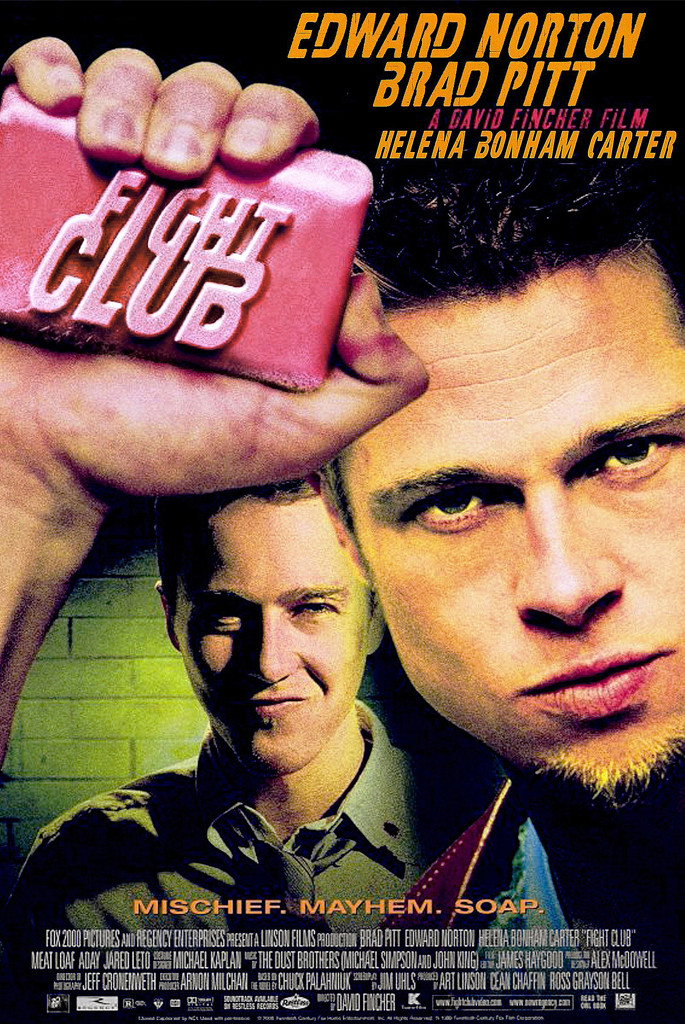
Fight Club (1999)

Director: David Fincher

Still a great, wild ride of a movie that showcases so many of director David Fincher's many strengths as a filmmaker. 

The movie, based on the novel of the same name by Chuck Palahniuk, follows an unnamed protagonist (Ed Norton) whose life has become such a drone that he is a virtual zombie. To paraphrase him, he is never fully awake but can never fully sleep. This continues until a chance meeting with Tyler Durden (Brad Pitt), a whip-smart renegade with the ultimate punk rock sensibility. Durden squats in an abandoned house, refuses to live by any of society's rules, and eventually convinces our protagonist to begin an underground fight club for men like themselves - disenfranchised and feeling like they've been sold a bill of goods by capitalist, consumer culture. Eventually, Durden molds this ostensible underground MMA group into something much more potent and frightening, with our anonymous main character being pulled along in ways that he can't even begin to imagine. 

I can't recall just how many times I've seen this movie, but it's easily in the double digits. I saw it a couple of time in theaters upon its release back in 1999, and would routinely go back to it for many years after. I'd gone quite a few years since a full rewatch, until reading Brian Raftery's recent book Best. Movie. Year. Ever., which catalogs the insane number of great films that came out in 1999. My enthusiasm fully stoked, I snapped up a cheap blu-ray copy of Fight Club and took it all in again. My thoughts about the film have evolved over two decades, but I still find it to be a satisfying, subversive, funny, and extremely well-crafted middle finger to large segments of the film industry. 

In those first years after the movie came out, like a lot of guys in the early and mid-twenties, I saw the Tyler Durden character as an icon of cool. He was a take-no-bullshit badass who just got things done, and seemed to be on the side of righteousness. To slightly paraphrase Durden himself, he looks like you want to look, f***s like you want to f***. He is smart, capable, and most importantly, free in all the ways that you are not. It's a great sales pitch to young men who are in desperate need of leadership, wherever that leadership takes them. Durden's appeal to "enlightened" macho violence is one that is still fully relevant today, with the immense popularity of "smart" MMA bros like Joe Rogan and similar "intelligent" Alpha males who have millions of devoted fans and followers. Chuck Pahlaniuk was onto something when he wrote the novel, and David Fincher was clearly aware of it.

If you need to illustrate the idea of self-destructive anarchy
having sex appeal, then Brad Pitt is a pretty good choice
as your spokesmodel.
What has changed, though, is the realization that being punk rock isn't really the hard part. And looking and sounding cool while doing isn't even the hard part. As calculating and slick as Tyler Durden is, his plan doesn't go beyond "blow stuff up." It's really a punk rock sensibility, which has a very strong appeal in the hands of such a charismatic character. When I watch Fight Club now, I can't help but wonder just how likely it is that Durden's master plan actually works, after the credits roll. Or whether he ends up being happy with Marla. Yes, Project Mayhem's bombs go off, destroying the headquarters of major credit card companies, essentially annihilating debt and giving everyone a fresh start. But will that actually work? And yes, Durden's fractured mind reunifies, and he seems to reconcile with Marla. But they're both clearly still very damaged people. Such grounded thoughts, though, are not what Fincher had in mind. He was looking to tell a raucous tale of a modern anarchist, and he gave us just that.

If the themes are what elevate the story well above just being a sweaty trek through underground fight clubs, then the film technique is what makes the whole show so wildly entertaining. You have three actors in Norton, Pitt, and Carter, who are as good as they've ever been. And the sharp writing is still absolutely hilarious. The look of the movie, along with the editing and cool-as-hell Dust Brother soundtrack bring it all together to give us a movie that's simply a blast to watch.

It's both fascinating and unsurprising that this movie fell on its face when it was released back in 1999. Up until then, there really hadn't been anything quite like it - an in-your-face, crotch-grabbing "screw you" to capitalism lightly disguised by a "pretty boy" actor in Pitt and "up and coming" fresh face in Norton. There were obviously people like me, who saw it in the theaters and loved the dark humor and the deeper themes and ideas, but most people were either baffled, disgusted, or just stayed well away from it. However, you might view Fight Club now - a worthy, dark satire; flawed attempt at profundity; or something else - I think most would agree that there's more than a little solid film technique happening, and that the movie had a serious impact on movies for years to come. 

Sunday, January 26, 2020

New(ish) Releases from 2019: Ad Astra and El Camino

No Spoilers for either show. Read away!!

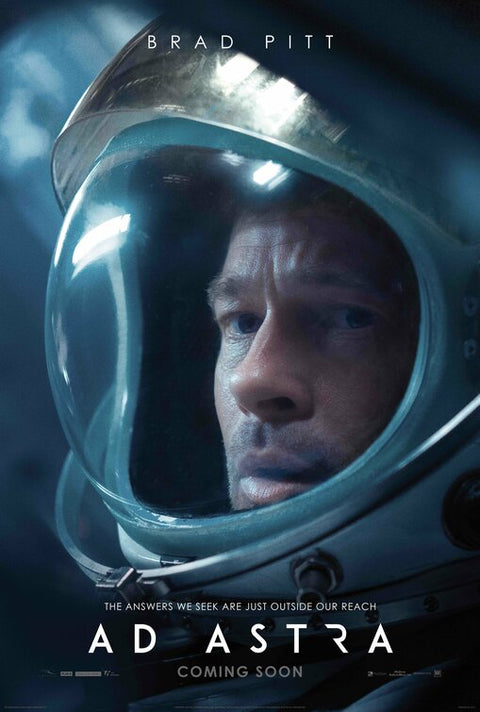
Ad Astra (2019)

Director: James Gray

A decent enough sci-fi flick with enough to keep a person tuned it, but not inventive enough to stand out very much.

In a not-too distant future, Brad Pitt plays Roy McBride, an astronaut called upon by the government to embark on a mysterious mission to the far reaches of the Solar System. Some sort of strange energy is emanating from a location there, and it threatens to destroy the entire system. As if that weren't enough, the government believes that the person behind the imminent catastrophe is the last astronaut sent to the area, none other than McBride's own father, H. Clifford (Tommy Lee Jones), long hailed as a national hero and icon.

The movie is a solid, space-faring sci-fi flick that does the sci-fi elements better than the emotional ones. Like the very best mission-to-space flicks - I'm thinking 2001, Interstellar, and Europa Report, among others - Ad Astra maintains a cool, meditative tone throughout, especially once the story brings Roy outside of the Earth's atmosphere. The vision of director and co-writer James Gray is an engaging one that seems grounded in a very believable possible future. There is a thrilling pursuit on the Moon, and a rather striking and eerie vision of what Mars might become, which offer some nice food for thought on how humans may be interacting with the nearest celestial bodies long before the century is over. Anyone who enjoys such topics and themes is bound to appreciate these aspects of the movie. And there is the greater mystery of what, exactly, is the threat in deep space to pull one along through Roy's journey farther from home.

The more personal story about Roy and his father? Not nearly as engaging. While Pitt and Jones play their roles perfectly well, the entire relationship never feels like it is offering anything that is novel or surprising. Right from the jump, it's clear that Roy's mission is as much about finding closure with his father, long-presumed dead. I suppose one could read a certain amount of symbolism into the narrative about an absent father's ability to mysteriously have the ability to annihilate one's world, but that's a bit of a stretch. Because Roy is a rather repressed individual (not uncommon for astronauts, who need the ability to subdue and overcome their own nerves), there is a certain detachment which runs through the film. Had there been a few more moments of vulnerability sprinkled in here or there, the film may have had a bit more emotional impact. As it was, though, there was only so much pathos to be found.

If you're like me, and enjoy good space-faring movies for their ability to inspire awe at the cosmos, then Ad Astra can give you that. If you're looking for the more human drama elements, though, this one may leave you wanting.


El Camino (2019)

Director: Vince Gilligan

Compelling, entertaining, and satisfying sequel movie to the brilliant Breaking Bad TV show, which ended its outstanding run in 2013.

The sixty-odd episode run of Breaking Bad represented one of the very best TV shows of all time, created and run by Vince Gilligan. It saw the rise and eventual fall of high school chemistry teacher-turned-drug kingpin, Walter White, who used his genius for chemistry to concoct the most potent formula for crystal meth ever known. White, who had been diagnosed with terminal cancer, took this bizarre career shift in an effort to quickly earn enough money to support his family after his impending death. The problem was that, once White got a taste for the money and nefarious reputation which his recipe brought him, he found that he liked it. So much, in fact, that it sent him spiraling down darker and darker paths in order to maintain and grow his place in the drug-peddling world. By the end of the show's run, White had destroyed or alienated everything which he had once held dear; and although he found some measure of penance and rectification, he still died a tragic and lonely death.

White's partner through nearly his entire journey was Jesse Pinkman, a confused former student of his who had been dabbling lightly in the drug trade during his few years removed from high school. Pinkman, played brilliantly by Aaron Paul, while likable and funny in many ways, was always a lost soul, never knowing exactly who he was or what he wanted from life. As such, he was ripe to be pulled into the dark gravity of Walter White's drive and obsession. As White's decisions grew grimmer and more self-serving as the show progressed, Jesse felt more and more tied to him, despite his pangs of conscience and general reluctance to get so deeply involved in such dastardly deeds. In the show's finale, the last image we see of Jesse is him driving away from a white supremacist compound, where he had been brutally imprisoned and forced to cook meth for them for six straight months.

This is where El Camino picks up the story. In the hours immediately after the fiery end of Walter White, in which he freed Jesse, gunned down and killed all of his tormentors, and then died himself, Jesse has to elude the police as they look to put the pieces together of the entire bloodbath at the compound. A beaten and traumatized Jesse must seek out any friendly faces and places of sanctuary that he can, in an effort to not only escape capture and certain imprisonment, but also to truly decide who he is and what he wants to do with the rest of his life, should he even have one.

The movie is every bit as good as Breaking Bad was, even if it doesn't have the power of some of that show's most memorable moments (think Walter's showdown with Tuco or Gus Fring's death). El Camino certainly has a few great thriller sequences, with some fun twists of their own, but a two-hour movie is never going to be able to have the build-up necessary for the explosive moments that a longer-form TV show can offer. This movie does, however, make the most of its time, balancing Jesse's soul-searching and recovery from a horrific situation with the more cat-and-mouse elements that come from his scrambling away from his pursuers and towards an uncertain future.

Jesse, after cleaning himself up a bit, during one of several
moments of desperation. Viewers of Breaking Bad may
recognize the blurred outlines in the back of Skinny Pete and
Badger, two of several familiar faces who appear in the film.
The show is split roughly in half, with the tale alternating between the roughly 48-hours immediately after Jesse's escape and a series of flashbacks, some going way back into Breaking Bad's first season, when he and Walter White were just getting into the meth-cooking business together. We get to see scenes and moments never revealed during the original show, and they all make maximum use of the many open areas in the story, adding extra shading to certain familiar characters, some friendly and others downright evil. It all makes a great follow-up and addendum to the entire story.

I can't say enough about Aaron Paul as Jesse Pinkman. This film requires nearly every bit of the immense acting chops and range that he showed during Breaking Bad, and he seemed able to get right back into the character's head, despite having been away from it for a good six years. He exhibits, by turns, all of the terror, misplaced swagger, soul, and humor that he did at various points during the original story. Though Breaking Bad was mostly the story of Walter White, Jesse Pinkman was the soul and often the tragedy of the tale. Aaron Paul's ability to play the character with just the right type of vulnerability at just the right times is what elevated the show well above other drama/suspense/thriller fare.

Obviously, I can't recommend this movie highly enough for fans of Breaking Bad. If you haven't seen the show, then the movie won't make much sense to you. In fact, you should stay well away if you haven't watched the original show. It will mostly baffle. But feel free to use this as yet another endorsement from me to go ahead and start watching Breaking Bad. I've watched the entire series twice now, with a likely third time coming at some point in the future. It's brilliant, and El Camino only further enhanced the entire amazing show. Now, we just have to wait for the next season of Better Call Saul for more stories from this incredible tale that Vince Gilligan has created. 

Sunday, August 11, 2019

New Release: Once Upon a Time...In Hollywood (2019)

Director: Quentin Tarantino

Tarantino's purest love letter to 1960s B-list action leading men and the stuntmen who helped make them, Once Upon a Time...In Hollywood is an expertly-crafted - if hardly urgent - piece of cinema.

Taking place over the course of several month during the first half of a semi-fictional 1969 Los Angeles. It follows fictional actor Rick Dalton (Leonardo DiCaprio) and his closest friend and stuntman fill-in Cliff Booth (Brad Pitt). Dalton is a former leading action star of B-level (or A-minus at best) movies, but his star has faded to the point that he is now playing lesser roles as arch villains in TV shows. Dalton's feelings of inadequacy are brought into even clearer focus when the house next to his is bought by arguably the hottest couple in Hollywood - the very real director Roman Polanski and his young, beautiful wife, actor Sharon Tate. While Dalton's personal story unfolds, a much more sinister situation - also based on real events - is brewing not far outside of L.A., where Charles Manson and his "family" of violent and devoted followers are hatching their plot to send a murderous message to the wealthy and glamorous of the nearby City of Angels.

It's been nearly a week since I watched Once Upon a Time...In Hollywood, and the more I dwell on it, the more I like it. Back when I saw Tarantino's The Hateful Eight, I wrote in my review about how I would love to see if Tarantino could tone himself down enough to do something a little more grounded, such as his underrated Jackie Brown back in 1997. Though this new movie certainly isn't as small-scale or grounded as that earlier picture, this one has far more authentic feeling and far fewer over-the-top, cartoonish elements to it than any movie he's done since then. Rather than the mythically simple and homicidal characters populating movies like The Hateful Eight or, to a lesser extent, Inglorious Basterds, this latest picture focuses on a character who evokes actual empathy and even sympathy, even if it is often done in humorous ways. Rick Dalton may not be the most admirable of people, but there is a genuine vulnerability to him which makes him different from nearly any Tarantino protagonist which I can think of.

The story itself is a rather fun "alternate history" re-imagining of the infamous Manson Family murders of Sharon Tate, her unborn child, and a family friend who happened to be staying at her and husband Roman Polanski's home while Polanski was away working. I also have to cite NPR film critic Justin Chang for articulating something which I only vaguely realized - that DiCarpio's Nick Dalton character can be seen as a version of Clint Eastwood, had Eastwood never really hit it big in Sergio Leone's "Man With No Name" spaghetti westerns of the mid-1960s. The result is a tale which, though obviously the stuff of pure fantasy in its liberties, is an extremely satisfying combination that probably only Quentin Tarantino could have even imagined combining in a movie.

Very much of the story is a buddy movie between Rick and Cliff,
and the chemistry between the two is endearing.
If you know anything about the cast, you shouldn't be surprised to be told that the acting is outstanding. Though most of the secondary characters play relatively limited roles, they all do them perfectly well. From Margot Robbie's turn as the wide-eyed, charming Sharon Tate to Mike Mo's performance as the iconic Bruce Lee, to all of the actors portraying the vicious little hippies at Charles Manson's eerie compound, everyone enhances the movie. Brad Pitt unsurprisingly nails his turn as straight-talking tough-guy Cliff Booth, even if the role doesn't require much of him beyond a certain easy swagger and smugness. Leonardo DiCaprio, though, has yet again proven to me that he has long gone far, far beyond the pretty boy, teeny-bopper idol whom we all saw back in the 1990s. He may spend a majority of his screen time giving us laughs with his desperation and depression over his fading stardom, but there are several wonderfully captivating sequences where he breaks down in anger or sadness, and DiCaprio completely sells every moment of it. I will all but guarantee that he will receive an Oscar nomination for this role, strong as it is.

There weren't many things that I didn't like about the movie, but a couple come to mind. One is simply that there were a few sequences that felt as if they were drawn out a bit too long. Not terribly so, but noticeably so. In particular, the moments when Cliff Booth shows up at the Manson Family compound, senses something amiss, and expresses his desire to sniff around a bit. There is certainly genuine tension built here, but at a certain point a few of the scenes felt as if they could have been trimmed a bit here or there. There were a few other moments such as this, but they hardly ruin the overall pace and fun of the film.

The only other "issue" I have with the movie is more of an observation that can be leveled at any Tarantino flick, and it is that there is no greater purpose to the film beyond being a love letter to a bygone era as well as a reminder of a brutally dark moment in U.S. history. Tarantino most likely would agree with me, but his films are never about more than watching strong, entertaining characters get mixed up with each other. There's never any greater message, deeper thoughts involved, or even any especially creative cinematic artistry. Tarantino is just exceptionally good at a variety of already-established film techniques, and he knows how to tell a ripping good story about amusing characters. In the sense that he knows how to find phenomenal cinematographers, costume designers, actors, and editors to bring his vibrant stories to life is a testament to how good a director he is, even if he offers very little in the way of intellectual or spiritual stimulation. Alas, it is a movie about movies, and that always plays well with critics and movie-lovers such as me.

I'll most likely go out to see this one again on the big screen, and I may even be able to convince my wife to join me. 

Sunday, February 12, 2017

Retro Trio: My Big Fat Greek Wedding (2002); The Assassination of Jesse James by the Coward Robert Ford (2007); Mud (2012)

My Big Fat Greek Wedding (2002)

Director: Joel Zwick

No, rom-com fans, I had never actually seen this one before now. While I won't say that I regret letting all these years pass without seeing it, I can certainly see why it was such a sleeper hit 15 years ago.

For those unfamiliar, the story follows Toula, a 30-year old, single Greek-American woman whose massive, boisterous family shares a stifling concern over her state of being a bachelorette. When Toula does find a man whom she loves, Ian, things get no easier due to the fact that he is not of Greek descent, a situation which Toula's grecophile family can hardly wrap their minds around. The rest of the movie is mostly a comedy of errors and culture clashes between Ian and Toula's smothering but warm family. Ian comes from a laughably quiet, poised family composed of only himself and his overly stoic WASP parents, whereas Toula's family is a virtual army of caring and passionate but nosy and noisy siblings, aunts, uncles, cousins, and family friends.

The movie is certainly fun enough, and I was pleasantly surprised at how efficiently the story is told. While it hits the standard marks expected of a rom-com, it often comes at them from different angles and never really belabors the more familiar points. One example is the self-improvement montage, where Toula decides to "go from drab to fab" by redoing her wardrobe, hair, and makeup. I feel that other movies emphasize these types of makeovers and scenes too much, but Greek Wedding offers it to us in a crisp, less-than-60 seconds sequence that makes its point and then moves on. This is one of several examples of strong pacing which keep things moving along, an essential element of good comedies.

The cast is a great asset, as well. The script is decent enough, and all of the actors get to show off their comic timing to great effect. Not every gag or line hits, but enough of them do to keep the movie worthwhile. I'll probably never be a person who goes out of my way to watch a rom-com like this, but I enjoyed this one, and I could see myself watching it again with my wife.

Side Note: My wife recently tried to watch the sequel which came out last year, and she barely made it to the 5-minute mark. She said it was that bad. Apparently it was just trotting out the same, 14-year old gags and was generally annoying to her. This begs the question, if the film makers wanted to just do a stale, unoriginal sequel as a cash grab, why wait 14 years to do it?


The Assassination of Jesse James by the Coward Robert Ford (2007)

Director: Andrew Dominik

A rather novel entry into the list of American Western movies, and one whose box office draw fell far short of its merits.

As the lengthy title suggests, the film focuses on the final few years and ultimate slaying of notorious 19th century outlaw Jesse James. Unlike most Westerns, though, this one eschews glamorizing the best-known characters or relying on fast-paced, action-based thrills. Instead, the movie is a slow meditation on the eerie expansiveness of the West, the warped and often despicable character of Jesse James, and the gradual erosion of Robert Ford's romanticization of the infamous thief and killer.

Using the source novel of the same name, the  movie tells of the relationship between the two title characters. Around the late 1870s, Jesse James (Brad Pitt) and his gang have all but ceased the robberies which made them known throughout the U.S. and even the world, but they still hold a mythical appeal in many places. Robert Ford (Casey Affleck) is a young Missourian who has long idolized James, and he finally gets his chance to be a member of his gang during one, mostly-unsuccessful, train robbery. James has family ties in the area, and he uses them to wrangle cousins and other hangers-on into his schemes, even if nearly all of them come to nothing. Ford, as one of these hopefuls, begins to see James for what he is - a mentally unstable, volatile, and sometimes murderous fiend. James is still able to be charming and charismatic at times, but they do not always cover up the far darker aspects of his nature. Over several years of acquaintance, Robert Ford eventually volunteers to kill James on behalf of the governor of Missouri, hoping that he will be hailed as a hero. Such is not necessarily the case, however, as many still incorrectly viewed James as a Robin Hood of the West. This leads many to see Ford as an underhanded scoundrel who merely killed a righteous outlaw for his own personal gain.

In several ways, this movie is not unlike Clint Eastwood's Unforgiven, in that it strips away the glamour often associated with the brutality and violence of the 19th century U.S. "Wild" West. The film does a brilliant job in depicting Jesse James as a charmer who can put his good looks and articulateness to his own selfish uses, while at the same time showing just how brutal and paranoid he is. The movie also takes the bold and effective mood of focusing more on Robert Ford and his growing disillusionment at James. Not relying on simple, pat turns of plot, the story is subtle and gradual with the erosion of Ford's romanticism of his boyhood hero. Ford is never vilified or hailed, per se, but is shown as a man who is almost helplessly swept up by powers and individuals who are simply stronger than he. When he does decide to take action for himself, seeing how it unfolds is a borderline tragedy.

The Wyeth-esque landscapes are often just as eerie as the
murderous outlaws that roam them.
The acting is outstanding. This was Casey Affleck's true breakout role as the confused Robert Ford, and it's no surprise that he has since garnered more praise for his leading roles in movies like Gone, Baby, Gone and Manchester by the Sea. Brad Pitt also turns in one of his more understated yet highly effective performances as the infamous Jesse James. The supporting cast is also stocked with strong actors, some easily recognizable such as Jeremy Renner and Sam Rockwell, and others less known.

As much as the story and acting, though, is the setting and cinematography. Like some of the greatest westerns, The Assassination of Jesse James uses the openness and quiet of the time and place to build an often eerie sense of loneliness. Compared to later and modern eras, time and space seemed to have a near-eternal quality that can be imposing, to say the least. When you consider how friends and neighbors in the area would routinely go weeks and months without seeing or hearing from each other, the isolation is daunting. When you add in the fact that an unpredictable, homicidal killer is stalking the plains, then you have the stuff of nightmares. Director Andrew Dominik uses this to great effect, along with the cinematography. Certain shots use grainy or fuzzy peripherals that enhance a sense of blurred perspective, which is in keeping with the distorted and shifting views of Robert Ford, a fractured character whose warped feelings towards James are at the heart of the film.

I may not feel the need to watch this movie again, but I now consider it among some of the very best Western films of all time. Highly recommended for those who enjoy creative film-making, and especially the Western genre.


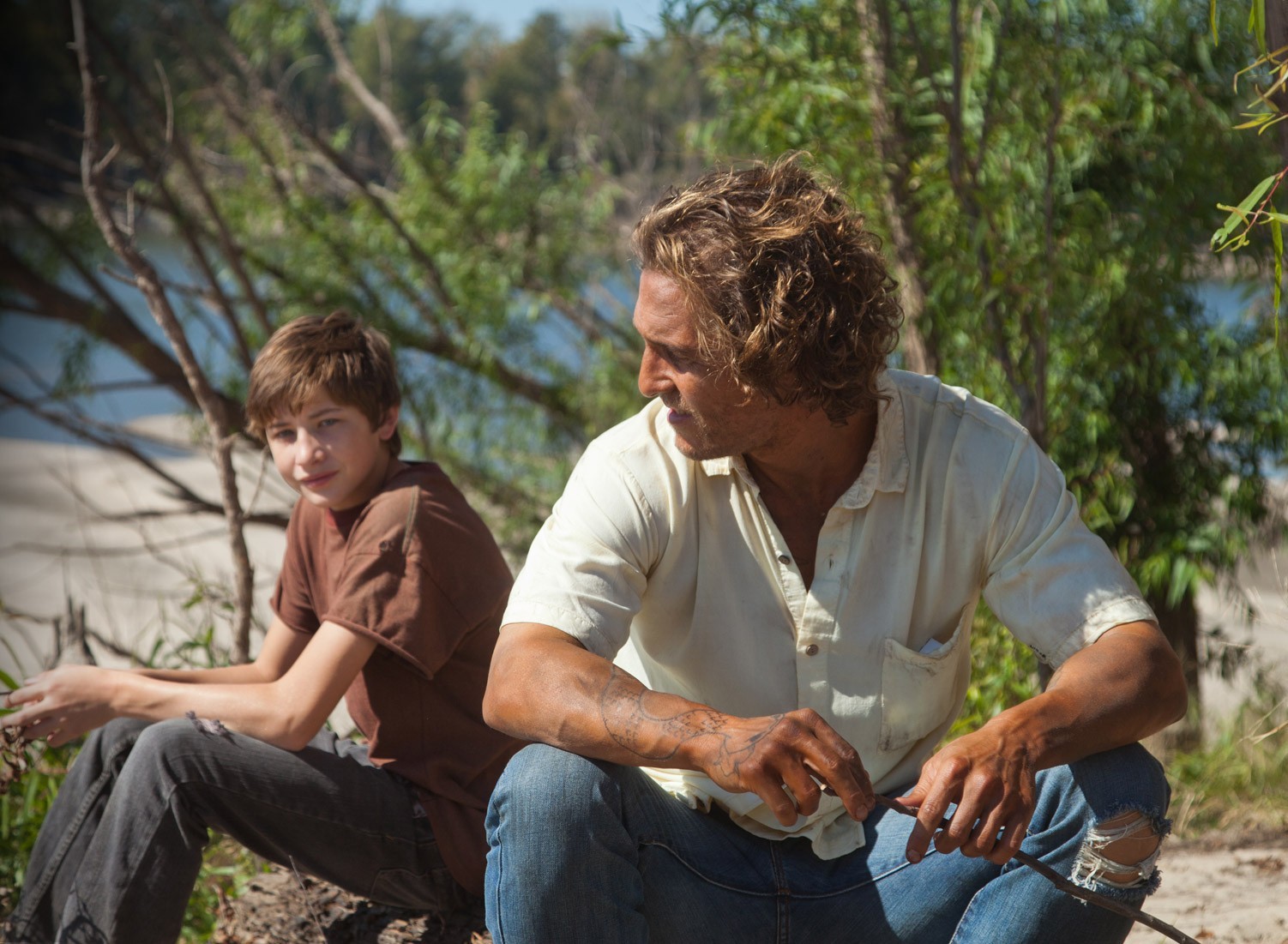
Ellis and Mud figuring each other out on the island. The
relationship between the two is the crux of the movie, although
their feelings towards others is just as important.
Mud (2012)

Director: Jeff Nichols

While it didn't meet my lofty expectations, Mud is a solid and compelling movie.

Taking place on a river in Arkansas, the movie follows two 14-year old local boys who discover an odd man (Matthew McConaughey) squatting on a small nearby island where the boys are looking to scavenge any flotsam and jetsam which the river has washed up. The man gives his name only as "Mud," and the boys take to running odd little errands for him on the Arkansas mainland, getting him food and bringing messages to a young woman to whom Mud has some mysterious dedication. The boys soon learn that local police are searching for Mud in connection with a murder in Texas. One of the boys, Ellis (Tye Sheridan), is a budding romantic who desperately wants to see Mud as a kindred spirit who has done unsavory things in the name of love. This becomes more and more difficult, however, as facts about Mud's past emerge. The tension cranks up wildly when a group of bounty hunters arrive in the area, looking to kill Mud on the orders of the murdered man's powerful and vindictive father.

This is now the third movie of director Jeff Nichols which I've seen, and it was his third film after his debut Shotgun Stories and the incredible follow-up Take Shelter. Mud is much more like the former, as it uses the setting of rural/suburban Arkansas to great effect, offering a very authentic sense of place and the people in it and telling a fairly straightforward story. Whereas Shotgun Stories was more toned-down, humanist drama, however, Mud uses elements from more popular genres like mystery, suspense, and action. The latter two elements actually weaken the film just a bit, in my view, mostly because they stand in rather stark contrast to the more genuine, emotional story of Ellis. Ellis's attempts to find love with an older girl in the area are the most touching and organic aspect of the entire movie. While it wouldn't have been enough to carry this film, it bears a genuineness that makes the more sensational and plot-driven elements feel a tad cheap.

Woven into the tale is the general sense of a childhood and youth being lost before our eyes. At the beginning of the movie, we learn that Ellis's parents are having marital difficulties. Though hardly the only reason, a major issue is that the family is almost certain to lose their house boat, which doubles as the source of his father's income as a fisherman. Ellis's desperation to flee from the disintegration of his parents' marriage, as well as their life on the river, plays a major part in why he becomes drawn to Mud. While not always completely subtle about these connections, the movie doesn't beat you over the head with it, and it does build some worthy cohesion between what could otherwise have been a very fragmented tale. This sort of cohesive storytelling seems to be a strength of Jeff Nichols, based on the three movies of his which I've seen.

I think that the only reason that I was slightly underwhelmed by this movie is that I saw it too long after it came out over four years ago. It was a well-received movie, to be sure, but it was also the true beginning of the "McConaughssaince," during which Matthew McConaughey reinvented himself as more than just an easy-going Texas dude with six-pack abs and a pretty face, cashing checks from rom-cam royalties. Within the next two years, he would receive tons of acclaim for his roles in Dallas Buyers' Club and especially True Detective, and even a few smaller cameo roles here and there. By the time I saw Mud, I had built this movie up in my mind to be an all-time great, which is unfair to expect of any film. Though it didn't (and perhaps couldn't) meet my unreasonable expectations, this is one that I can easily recommend to nearly anyone. There are a few flaws to be fussed over, but it is another solid effort from one of the U.S.'s best young filmmakers today. 

Tuesday, May 19, 2015

Retro Trio: A Fish Called Wanda (1988); The Man Who Knew Too Little (1997); Killing Them Softly (2012)

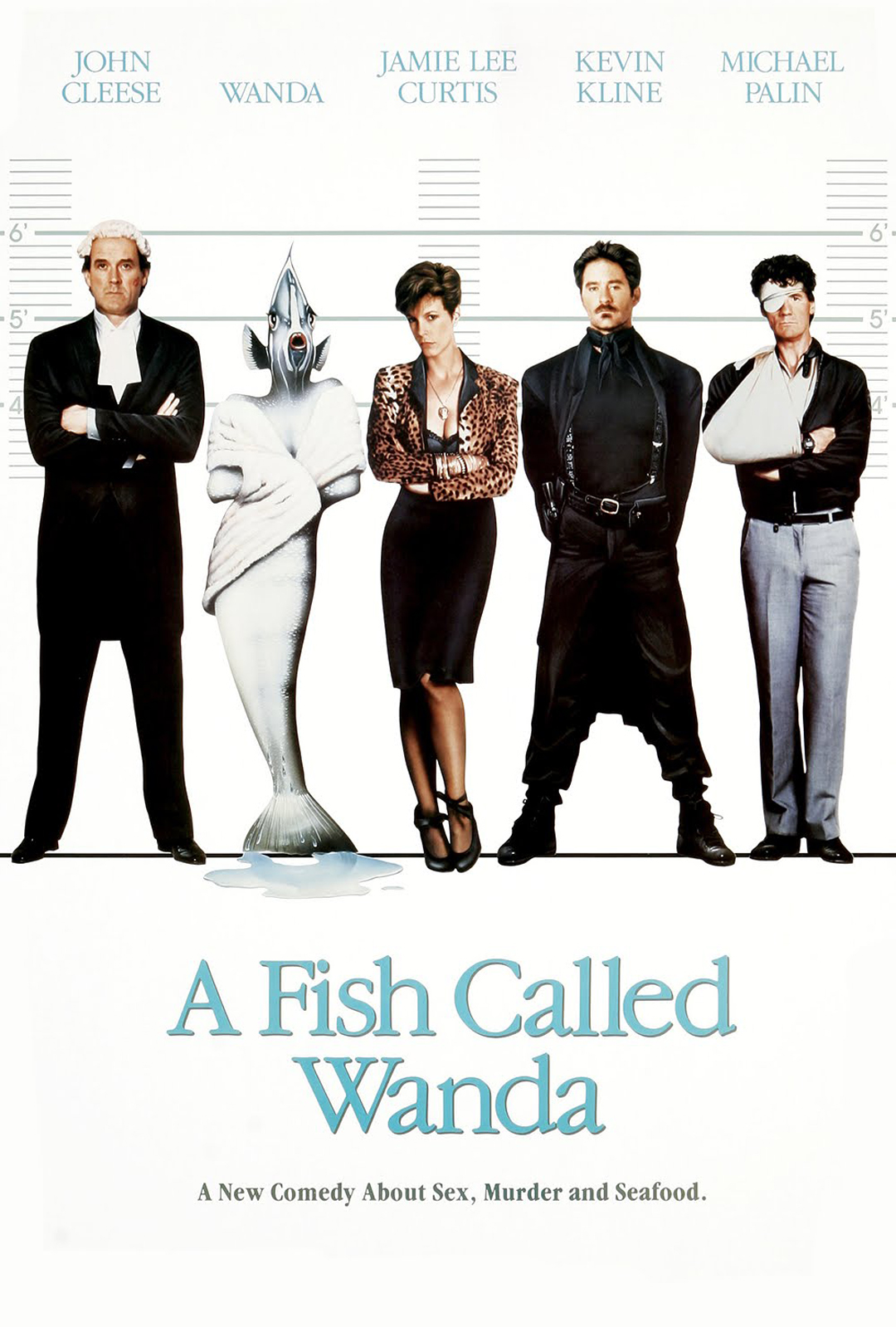
A Fish Called Wanda (1988)


Director: Charles Chrichton & John Cleese

A 1980s classic comedy that still has it.

I watched this movie plenty of times as a kid, but it had been at least 10 years since I last saw it. Though there are a few dated elements, in terms of the visuals, the dash of sappiness, and even a bit of the acting, A Fish Called Wanda is still a brilliant blend of British and U.S. humor.

For those who may not have seen it, the story mostly follows Wanda Gershwitz (Jamie Lee Curtis), a con woman who uses her beauty and wiles to horn in on a bank heist, with the intention of stealing the prized diamonds from the primary thieves. Using sex and emotional manipulation, she coldly plays every man involved - the mastermind George, the weapons man Otto (Kevin Kline), the stuttering henchman Ken (Michael Palin), and the repressed and unwitting lawyer Archie (John Cleese).

What allows the movie to stand the test of time rests on the script and the performances. The interactions between the more liberal and maverick Americans - Wanda and Otto - and their British cohorts are hilarious and eminently quotable. The standout scenes are typically between Otto and any of the English characters, whom he despises out of his own small-minded xenophobia and latent inferiority complex. Otto's supremely "ugly American" personifies every laughably obnoxious trait of U.S. travellers that has been the butt of jokes for decades, right up to the present.

Otto may not have been as memorable had it not been for an Academy Award-winning performance by Kevin Kline, which is a rare feat for a comedy film, but completely worthy. He often makes the movie, and his stand-offs with John Cleese's barrister Archie Leach and Michael Palin's Ken are perfection.

Great movie that is still great 25 years later, and will likely be great for decades to come.

The Man Who Knew Too Little (1997)

Director: Jon Amiel

A pretty fun, if not outstanding, little comedy.

I had never seen this one before, and I must admit that I could see why it was never hailed as a "great" comedy, despite having a great cast. The movie is a spoof on the spy thriller genre, following goofy American tourist Wallace Ritchie (Bill Murray) who goes to London and is unwittingly pulled into a plot between English and Russian forces to resurrect the Cold War status quo. Ritchie, however, is sucked into the entire affair, believing that he is the center of a popular television show on which the central "actor" is an average person who must play along with the professional actors around him, ad libbing along the way.

This premise isn't a bad one, as far as spoofs go, though the political elements do seem a few years too late for a film made in 1997. Even still, there was plenty of fodder for better political satire which went unused. That aside, there are plenty of solid setups for the comedic misunderstandings that drive the movie.

Instead of focusing more on the political humor, the film focused almost solely on its star, and one could do far worse than Bill Murray. Even when the dialogue or set-ups fall flat, Murray can carry a scene or an exchange with his hilarious deliveries, reactions, and physical comedy. It's easy to forget, given Murray's strengths with extremely dry and deadpan humor, that he can act the oblivious fool extremely well.

As a whole, though, the humor and goofiness wore thin by the third act. Despite being an obvious parody, the silliness level ramped up a little too high to remain effective. The grand finale scene consists of an overly long dance routine that borders on feeling interminable. And instead of leaving well enough alone and having Wally go on his merry way, we're left with him being recruited by the C.I.A. It was a bit too juvenile for my liking.

Had the script been a bit more clever and abandoned the more slapstick elements, this movie could very well have been a classic. As it is, it offers a few laughs, but doesn't warrant multiple viewings for me.

The social commentary is clumsy, but it
is curious enough to provoke thought.
Killing Them Softly (2012)

Director: Andrew Dominik

I was disappointed, but not necessarily because the movie is bad.

Killing Them Softly was released in 2012 and had a short and quiet run in theaters, despite solid critical acclaim. By the time of its video release, it had attained status as an "underrated film" and "sleeper pick" by critics in many quarters. With all of this "in the know" hype, I had very high hopes. The movie is quite good, but not without its flaws.

I will admit that the movie is fairly original, in terms of its grittiness and willingness to look at the more unglamorous aspects of criminality. The story takes place in a horribly bleak part of Boston, where a couple of dim, low rent street guys rob a high stakes poker game which includes members of the local mob. This sets off a chaotic attempt to assess blame and levy punishment, with noted hitman Jackie Cogan (Brad Pitt) brought in to sort the entire mess out.

The novelty of the story is that it does look at the disorganization and brutality of "organized" crime. The characters come off as extremely authentic, with all of their weaknesses on full display. Whether it's simple base greed, lust, or substance addiction, a viewer gets the sense that the grim and nasty picture painted for us is far closer to the reality than the more palatable portraits given us by more mainstream gangster movies. Instead of the ultra-slick, hyper-intelligent criminals, we see the sad, flawed, and ultimately doomed thugs and lowlifes who stand no real chance at getting what they want. Easily the most poised character is Jackie, who spends far more energy battling his disgust for the stupidity and indecision around him than on actually cleaning up the various messes created by foolish thugs and Jackie's waffling employers.

Jackie spends an awful lot of time in this kind of situation -
explaining a lot of harsh realities to dim or weak wanna-be
criminals. They provide much of the movie's power.
As far as the cleaning up of those messes, they do provide some excellent on-screen suspense and power. There are more than a few scenes that can effectively stun you with their impact. Unfortunately, there are also a few plot lines and scenes that seem to drag endlessly. The main one is the entire character Mickey, played by James Gandolfini in one of his final roles before his death. Mickey is an aging hitman who Jackie brings in to help him, but it soon becomes apparent that Mickey is a broken shell of what he once was. The point of Mickey's descent, though, is belabored so much that it is taxing to watch, and it almost resulted in my completely checking out of the film. Blessedly, it does end, and the main story picks back up in the movie's final 20 minutes.

A greater enigma hanging over the entire movie is the completely unsubtle social commentary. Right from the jump, we see dashes of political posters with Obama and Romney on them, in the throes of the 2008 presidential race. The blatantly obvious message is that the United States is in a state of free-for-all chaos, with our little crime story meant as a microcosm of the entire quagmire. It's not a terrible suggestion, but it could have been handled with far more deftness. It does, however, set up an absolutely classic final line to the movie, which may be one of the most memorable in all of crime cinema.

Killing Them Softly is, despite its weaknesses, a nice addition to the genre of crime films. It does stand apart from most of its ilk, and the performances are more than strong enough to carry a viewer through it. Definitely recommended to any fan of gangster movies. 

Tuesday, June 10, 2014

The Curious Case of Benjamin Button (2008)


(This movie is the 513th out of the 1,149 complete list of 'Films to See Before You Die,' which I am working my way through)

Director: David Fincher

Rapid, Spoiler-Free Summary

In New Orleans in 1919, just as the First World War ends, a young boy named Benjamin is born with a puzzling malady. Though a newborn infant, he has the physical decrepitude of a person well into his eighties. Over the ensuing eight-plus decades, Benjamin not only survives, but ages in reverse.

While undergoing his lifelong age reversal, Benjamin has travels and experiences many of the joys and sorrows of human life. He eventually goes off to faraway lands, becomes involved in World War II, discovers pleasures of the flesh, and falls in love. Though few of these experiences is especially unique, Benjamin's odd condition results in a very singular perspective for both him and those who are closest to him.

What Did I Think?

It's not a bad movie, but I'm not altogether sure what the point of it was. And this isn't what you want viewers of your movie to feel when you offer them two hours and forty-five minutes of story.

The idea of a protagonist who ages in reverse is certainly interesting enough. The mere concept begins to raise certain questions about how such a fantastic person would function and interact with others, and how such a condition would affect the perceptions of the inflicted and those who come to know him for long periods of time. We do, indeed get this in the movie right away, as the grotesquely aged newborn Benjamin is immediately abandoned by his father. As Benjamin advances into and through his childhood years, living at a retirement home under the care of the matronly young African American caretaker, the only people who seem to offer him any understanding are the extremely aged with whom he lives.

The 20-something year old Benjamin. The movie flirts
with some interesting themes as we see how people act
towards him, but it never plumbs the depths as much as
it could.
There's certainly a notion here to chew over - how one's physical appearance has much more influence over how others treat us than our words or even actions. Though Benjamin has the size, mental maturity, and behavior of a very young child, none outside of the home looks at him with anything but disgust. The end of the film offers and interesting counter-point to this, when the elderly-yet-childish-looking Benjamin returns to the very same retirement home. When taken together, these bookends of the film may offer the most profound statement that the story has to offer.

And yet, I felt that such poignant themes were lacking. After all, what is the point of having a character like Benjamin is you're not going to use his most distinguishing feature to do some social exploration? And make no mistake - his singular physical condition is his most distinguishing feature, and this is perhaps the biggest weakness of the movie. There's really not much personality to him. Once you get beyond what makes him "curious," you're just left with a plain old nice guy. Hardly anything to spend nearly three hours watching. Which brings me back to the question: if you're not going to imbue him with any outstanding personality traits, then you'd better use him as a foil to examine some more engaging topics. The movie doesn't either one with much imagination or depth.

Another, lesser, issue that I have with the movie stems from the nerdier part of my personality: the physiological aspect of Benjamin's condition. Many viewers probably wouldn't bother to spend energy on this, but I couldn't help question why, at the end of his life, he would shrink down to child-size. He wasn't born the size of a full-grown adult, so why would the reverse happen? Yes, I know that it's all pure fantasy, but I'm just looking for a little logical consistency.

On a much larger scale, is there any possible way that Benjamin would not have been taken away by military scientists to become a lab rat? He never makes much effort to hide his condition, and it's hard to imagine him just coasting through life without at least a visit from parties interested in a walking miracle who may hold the key to the fountain of youth. This is also never so much as mentioned or explored. Would it have killed someone to at least try and insert a touch of consideration for it?

It all comes out as very mediocre. The cinematography is highly polished, so the film is a pleasure to look at. The acting is solid, and the human emotions are sincere and exhibited well. These help carry along a lengthy movie that resulted in, to me, a subtle shoulder shrug.

(513 films down, 636 to go before I die.)