Showing posts with label Tony Curtis. Show all posts

Saturday, January 29, 2011

Film # 49: Some Like It Hot (1959)


Director: Billy Wilder

Initial Release Country: United States

Times Previously Seen: once (about 9 years ago)

Teaser Summary (no spoilers)

Pair of jazz musicians dress in drag and travel with all-girl band to flee gangsters. Shenanigans abound.

Uncut Summary (Full plot synopsis, spoilers included. Fair warning.)

Chicago, 1929. Joe (Tony Curtis) and Jerry (Jack Lemmon) are a couple of jazz musicians who play in a hot speakeasy run by notorious gangster “Spats” Colombo. That night is payday, and the two are working out how to pay back all of their many debts. Just as they bask in the appreciation of simply having a steady job, the police raid the club off of a tip from a local rat, “Toothpick” Charlie. Joe and Jerry see it coming and get out, but the police manage to shut down the place.

The next day, Joe convinces Jerry to put all of their money on a horse. The horse loses, and gone is the fellows' remaining cash, leaving them broke and jobless. They head to a talent agency, to no avail, finding only the tantalizing job for a bass fiddle and sax, their instruments, but for an all-girls group heading to Florida. Instead, they take a small gig on the far side of town. Joe even connives his way to borrowing a secretary's car to get there.

Early that same evening, the boys stroll into the garage to pick up their loaner car. While waiting for the tank to be filled, though, a pack of mafiosos storms in, led by Spats Colombo himself. They have Toothpick Charlie cornered there and gun him down, along with a half dozen other unlucky saps. Joe and Jerry witness it all and are about to join the recently deceased, but they luck out and escape the garage.

On the run, they decide to pose as women and join the all-girls band that they had heard about earlier that day. They adopt the names Josephine and Daphne, don some wigs and dresses, grab their instruments, and show up at the train station. On the train, they meet all of the other girls in the band, including the sultry Sugar Kane (Marilyn Monroe), the group's bombshell singer and ukulele player. Joe and Jerry have to fight their male urges amongst the scantily-clad women, especially the voluptuous, naive and vulnerable Sugar.

"Josephine" and "Daphne" sashay their way down the platform.

Once in Florida, Joe and Jerry seem to be in the clear, but only to an extent. While Jerry is eager to ditch the masquerade, Joe reminds him that Spats is likely looking in every jazz club in the country for them. They decide to remain Josephine and Daphne for a while longer, though it's starting to pose its own unique problems: Jerry has already had to fend off a grabby, though very wealthy suitor – the playfully lecherous Osgood Fielding III.

This also gives Joe the chance to weasel his way into Sugar's arms. He uses what he knows of her search for a rich man “with glasses” and takes on his second persona: the heir of the Shell Oil Corporation. Under this guise, he finds Sugar on the beach and she falls for it, hook, line and sinker. The two part ways, but Sugar is clearly starstruck.

Back at the hotel, Jerry receives a call from Osgood, who invites “Daphne” to an intimate evening on his yacht. Joe convinces Jerry to let him use Osgood's yacht to woo Sugar under his “Shell Oil” millionaire persona. Jerry reluctantly agrees to this as well as keeping Osgood busy on shore for the evening.

That evening, Joe's devious plan works to perfection. Jerry keeps Osgood occupied with an evening of romantic dancing while Joe works a cunning game of reverse psychology on Sugar. After ferrying her out to Osgood's yacht and pawning it off as his own, he weaves a tall tale about the freak death of a past love and how he is no longer able to feel love for any woman. Sugar, taking up the challenge to re-ignite his passions, kisses Joe repeatedly and clearly falls in love with his fictitious persona.

Sugar and "Shell Oil Junior" get further acquainted.

Back at the hotel in the morning, Joe returns from his evening of deception and snuggling with Sugar to find his pal Jerry in a bizarre daze. After a marathon evening of lively dancing, Osgood has proposed to him, and Jerry seems to actually be considering marrying the goofy old sod and extorting alimony checks from him after the inevitable annulment. Joe manages to snap Jerry out of this odd and felonious notion.

At the same time downstairs at the same hotel, one Spats Colombo has arrived for a meeting of mafia dons, all under the heading of a gathering of “Italian Opera” aficionados and presided over by head boss Little Bonaparte. Bonaparte has a serious bone to pick with Spats, as Toothpick Charlie had been a friend of his.

In the lobby, Joe and Jerry stumble across Spats, fortunately in disguise, but think that they've been discovered. They immediately hustle back to their rooms and pack for a hasty getaway. However, while clambering down the banister outside their room, they are spotted by Spats and his crew. A chase ensues, but the boys manage to elude capture by ducking under a banquet table. Unfortunately, the banquet is for the “Italian Opera” mobsters, including Spats. The banquet turns into a bloodbath as Bonaparte has Spats and his crew brutally gunned down. Joe and Jerry a discovered by Bonaparte, but the police arrive, allowing Joe and Jerry to slip away once again.

In the lobby, Joe and Jerry hide and overhear some of Bonaparte's goons explaining that they have all of the roads and public transportation routes out of town covered, in order to intercept Joe and Jerry. They realize that they can take Osgood's yacht to escape, and Jerry channels “Daphne” to make Osgood amenable. Osgood agrees, and the only order of business is for Joe to break away from Sugar without breaking her heart. He decides to once again use Osgood by sending Sugar some flowers and a diamond bracelet that Osgood had intended for “Daphne”. This initially crushes Sugar, but she decides to pursue her Shell Oil man as he flees to the shore with Joe and Osgood. She joins them on the boat just as they depart for Osgood's yacht. Joe finally comes clean to Sugar, dropping all masks, but she hardly bats an eye and accepts Joe, wholeheartedly.

Jerry, still dressed as Daphne and riding next to an elated Osgood, tries to let him down easily. Osgood is not so easily rebuffed, forcing Jerry to finally remove his wig and confess that he is, actually, a man. The euphoric Osgood misses not a beat and delivers the most timeless line of the film, saying, “Nobody's perfect.”

The love-struck Osgood and his muse, "Daphne"

Take 1: My Gut Reaction (Done after this most recent viewing, before any research)

Eh. Inconsistently entertaining.

Some Like It Hot has some really funny moments peppered into an underwhelming barrage of flat gags. The movie is clearly meant as a silly, screwball affair. From my reviews of earlier classic screwball comedies such as The Awful Truth, His Girl Friday and The Lady Eve, it should be clear that the genre is probably my second least favorite, with musicals taking the top spot. Some Like It Hot, however, eliminates the elements that I always despised, namely the focus on the rich and sophisticated class. By having the two main boobs (not counting Marilyn Monroe's) be average Joes (Josephines?), the condescension found in most screwballs is blessedly absent. Joe and Jerry are semi-lovable, if deceitful, morons who stumble their way through the movie. Unlike the typical “Cary Grant” protagonists of earlier screwballs, I found them far more amusing than annoying.

The humor is so intentionally silly that you can't help but laugh at times. This is mostly due to some great script work and top-notch comedic acting. While I couldn't care less for the endless gender humor (e.g. the fellas tripping in high heels, Jack Lemmon adjusting his fake breasts, et al), the interactions between Tony Curtis and Marilyn Monroe are priceless. Once Curtis adopts his “Shell Oil” persona, complete with a dead-on Cary Grant affectation, there are plenty of great moments between him and the laughably gullible Sugar Kane.

Here's some of the primo stuff, when Curtis and Monroe are hitting on all cylinders as "Shell Oil Junior" is trying to cunningly lure the dim-witted Sugar Kane into amore:


A personal side-note and observation: watching Marilyn Monroe in this movie is an interesting exercise, as a modern viewer. She was excellent at playing what amounts to a bimbo who is, in her own character's word, “not too bright.” More interesting to me, though, are the more subtle moments when she would be recounting past failures in love at the hands of abusive men. There are moments when, between sips of bootleg hooch, her eyes would narrow and her pain seemed eerily genuine. Knowing how Monroe's life played out and ended, I wondered just how much “acting” she was doing at these moments.

As funny as some of those moments are, there are plenty of duds to me. Nearly all of the supposedly funny moments with Spats Colombo and his gorillas were anything but. I got the sense that they almost didn't go far enough with the parody. All of the characters in the movie are meant to be cartoonish, but this concept was not fully realized with the gangsters, especially with their dialogue. Instead of being slyly ridiculous, their lines were merely hackneyed. Had some of the other characters' dialogue not been so sharp and clever, I might not have noticed, but compared to Curtis, Monroe, and Lemmon's lines, the writing for the gangsters seems a bit lazy.

One thing that distracted me a bit was the utter shallowness of the characterization, typified most by a lack of consistency. During the first portion of the film, Joe seems to be the slick-talking shyster and Jerry the level-headed, uptight straight man. Without warning, though, Jerry becomes the libidinous and irresponsible clown of the pair. Then, the voice of reason shifts back to Jerry's lips for the last part of the story. I know better than to ask for much character depth from such a goofy comedy, but a little bit of consistency would have been nice.

The plot is hardly worth mentioning. It was clearly just a device for setting up scenarios that, for mainstream Hollywood of the time, were probably rather risque. Having a bunch of nubile women scamper around in their underwear and bathing suits was probably titillating enough; the added element of Curtis and Lemmon's overtly lusty observations and comments almost certainly blazed new trails for popular sexual comedy. It goes without saying that having Marilyn Monroe's undulating curves and generously displayed cleavage, highlighted through Billy Wilder's direction, clearly sent the sex-o-meter into the red. Alas, in this day and age of Farrelly brothers and Judd Apatow flicks, such old-school fare is a relative lightweight.

Some Like It Hot is yet another movie which, if you know a little about cinema history, poses no mystery as to its lasting place in the annals of film. Still, it's another “classic” that I feel has faded to degrees in recent decades.

Take 2: Why Film Geeks Love This Movie (Done after some further research)

Some Like It Hot seems impervious to wear, as far as critics are concerned. Even now, it is ranked by the American Film Institute as the 22nd greatest American movie of all time, and THE best American comedy of all time. (I respectfully disagree.)

There are no real surprises as to what critics have loved about the movie, which are the same things that I found enjoyable: the sharp, farcical scenarios and dialogue and the timeless sensuality of Marilyn Monroe. Something that does surprise me is how many critics, including this original reviewer back in 1959, cite Jack Lemmon as turning in the strongest performance, for which he was even nominated for several awards. Lemmon was excellent, no doubt, but Tony Curtis provided me with far more laughs.

As he often does, Roger Ebert points out an interesting aspect – Monroe's ability to be such a sex-pot while remaining so genuinely innocent. He recounts the well-known (among hard-core film buffs, anyway) tales of the troubles with Monroe, including her trouble with the lines and the domineering presence of then-husband Arthur Miller. There's also the curious tale of Tony Curtis saying that kissing Marilyn Monroe was “like kissing Hitler.” Check out his review here.

Speaking of Monroe, something was confirmed for me that I made no mention of above – that she did, in fact, perform all of her own singing. I have to agree with the reviews that I read that state that she did outstanding work with them. She may not have been any kind of world-class vocalist, but she was certainly skilled enough to “sell” the lyrics, as Ebert put it. As a person who nearly always dislikes musical numbers in movies, I had absolutely no problems with any of them in Some Like It Hot.

Here's my favorite number from the movie:


Another point of note is that, due to its blatant sexuality, Some Like It Hot is credited as being one of several contemporaneous films that began to break down the Hays Production Code, the ratings code that had been in place for over two decades. In fact, it received a rating of “Condemned” by the “National Legion of Decency” back in '59. I have to think that that piqued the public's curiosity to no end. Fortunately, such Protestant ideals of art and censorship would be mostly shattered in another five or six years' time.

Considering that it's hailed as arguably the greatest closing line of all time, I have no choice but to finish up with this:


That's a wrap. 49 shows down, 56 to go.

Coming Soon: The World of Apu (1959):

The final installment of the Apu Trilogy. The second was an understated delight, and I'm intrigued to see how Satyajit Ray completed his tale of the thoroughly human Bengali boy.

Please be sure to pick up all empties on the way out.

Thursday, January 20, 2011

Film #48:Sweet Smell of Success (1957)


Director: Alexander Mackendrick

Initial Release Country: United States

Times Previously Seen: once (about 2 years ago)

Teaser Summary (No spoilers)

Unscrupulous press agent hustles through New York, stabbing backs to climb the social and professional ladder.

Uncut Summary (A full plot synopsis, spoilers and all. Fair warning)

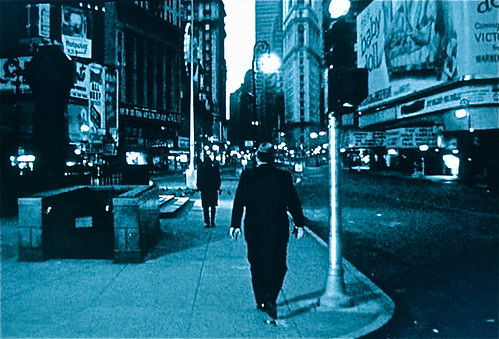
New York City, 1957. Sidney Falco (Tony Curtis) is the hustlingest press agent around. He's also a very minor player in the big city, but he's willing to try every dirty trick in the book to climb out of his self-described hole. At story's beginning, he has just been frustrated by his meal ticket, the immensely influential newspaper columnist and nationalist television pundit, J. J. Hunsecker (Burt Lancaster). Falco believed that one of his clients would be given a positive review in the day's paper, but Hunsecker has left it out.

Sidney scrambles to Hunsecker to find the reason for the snub. He learns that Hunsecker is ignoring Falco's clients because Falco has not yet performed a requested service for him; namely, breaking apart the relationship between Hunsecker's young sister, Susie (Susan Harrison) and an up-and-coming jazz guitarist, Steve Dallas (Martin Milner). Realizing that his career won't advance until the relationship is ended, Falco races to the night club where Dallas is playing.

"Match me, Sidney," says cock-of-the-walk Hunsecker (right) to the ambitious weasel, Sidney Falco.

At the club, Falco discovers that not only are Susie and Dallas still together, but that he has proposed marriage to her. Falco and Dallas have a confrontation during which Dallas accuses Falco of being a sneaky henchman for J.J. Hunsecker. The two part ways without blows, but only just.

When Falco relays the news to J.J., Hunsecker reiterates that Falco will get no meaningful work in the town unless he sabotages Susie and Dallas's relationship. Hunsecker also reveals his reason – that Susie is the only family that he has left, and he refuses to lose her to anyone else, especially not a jazz musician. Falco sets out again.

The first place he goes is to a rival columnist of Hunsecker's, Al Evans. He tries to get a smear piece run on Dallas, claiming he is a druggy and communist, by attempting to blackmail Evans. He threatens to reveal to his wife that Evans made advances on a cigarette girl at another club. The plan backfires, as Evans confesses the truth of the story to his wife, leaving Falco with nothing to show for it. Falco happens upon another rival columnist immediately after, the lusty Otis Elwell, who agrees to run the column if Falco can find him some female companionship. Falco obliges, pimping out the very cigarette girl that Evans had propositioned. The smear piece is run the next morning and Dallas' band is promptly fired by their night club.

On Falco's advice and to maintain the illusion that he is not behind the subterfuge, J.J. Hunsecker calls the night club the next morning. With Susie looking on, he vouches for Dallas and has him rehired. Falco's notion is that Dallas will never accept the charity, refuse to take the job, and the strain will divide Susie and Dallas. He's almost right, too.

Dallas shows up on the set of Hunsecker's television show, and the two have a confrontation that begins calmly but escalates into Dallas accusing Hunsecker and Falco of being totally devoid of morals. Susie watches the entire scene, and is terribly unnerved by everything. After Dallas leaves, Hunsecker tells Susie that she must not marry him, and she demurs. Seemingly, J.J. Hunsecker has obtained what he wanted. This, however, does not seem to be enough. He now wants Steve Dallas's career destroyed as punishment for casting aspersions as Hunsecker's character, claiming that an attack on him is an attack on his “60 million readers.”

Hunsecker and Falco deal with an increasingly agitated Steve Dallas (far right).

Later that night, Hunsecker directs Falco to plant marijuana on Dallas and call a crooked cop to make a bogus arrest. Falco initially balks at this vicious plan, but soon agrees on the promise that he will be allowed to write Hunsecker's column for a three month period while the man is away with his sister. Falco does the deed and Dallas is arrested.

Some time later, after he has had many a celebratory drink to toast his diabolical success, Falco is contacted by Hunsecker. He is told to get to his apartment right away. When Falco arrives at the Hunseckers', he finds Susie, who has heard of Steve's arrest and is wracked by grief to point of being suicidal. Falco coldly assures her that she is merely being immature and that it will pass. However, Susie nearly makes good on her threat by attempting to throw herself over the balcony. Falco stops her, and begins to calm her down.

Just then, Hunsecker arrives. He disavows Falco's claim that he was the one who had called him, and it soon becomes clear that Falco has been set up. Hunsecker has planned to have Falco framed for an attempted assault on Susie. Hunsecker begins to batter Falco, and eventually Falco blurts out how Hunsecker had arranged the frame on Dallas. Hunsecker relents just long enough for Falco to flee from the apartment, but Susie has heard everything.

The fighting over, Susie sadly packs her bag and leaves the apartment, but not before performing a final act of courage: she looks her domineering older brother straight in the eye, tells him that she would rather die than live with him, and that she pities him. Out on the street, Falco is captured by the police and arrested. Nearby, the immensely powerful J.J. Hunsecker watches helplessly as his young sister walks out of his life.

Comeuppance, I'd like you to meet Mister Sidney Falco...

Take 1: My Gut Reaction (Done after this most recent viewing, before any research)

This film confirms one thing: I'm a full-fledged United States citizen, all right.

Don't get me wrong. This is not some patriotic thing. I mean to say that, after watching several slower, meditative, humanistic films of a realistic bent, made in foreign lands, watching Sweet Smell of Success spoke to me loudly and clearly. It said, “You, my son, were raised on fast-moving, slick-looking movies about fast-moving, slick-looking characters, and by God, you'll always love them!”

Who am I to argue?

I watched this movie once about a few years ago and was ambivalent, but upon this recent viewing I have decided that I simply wasn't paying close enough attention. It's great. Sure, there may not be a probing, deeper message beyond the “greed kills” theme, but it has enough substance to match all of the flash that it has.

The story intrigued me plenty. Seeing the curtain pulled back on the press agent and publicity businesses is interesting enough. As most are well-aware, the news sleeps for no one, and anyone who's desperate to make their mark in the field had better be tireless. Sidney Falco is certainly that, which sets up that great dichotomy that, while not distinctly American, can probably be found in our films in greater numbers than anywhere – that obsession can lead to an inexhaustible work ethic but a complete absence of circumspection and self-reflection. Following Falco around from one seedy, shadowy locale and deed to another is fascinating. The tale only slows down a few times just long enough to catch your breath and try to keep up with the impassioned hustlers involved. Unlike longer, more measured films like Aparajito and Pyaasa, the time flew by while I watched this movie.

Greater than the plot itself are the characters. It's rare that not one but both main characters are unlikable in a movie. Sidney Falco is a self-obsessed monomaniac whose complete lack of compassion for others is only matched by his utter absence of ethics. His idol and partner-in-crime, J.J. Hunsecker, is the 1950s version of Rush Limbaugh or Glen Beck – a media mastodon who wraps himself in a flag and uses his power to raise up or cast down those he deems worthy, with extreme prejudice and without moral compunction. Seeing them try to manipulate the events around them and each other would be entertaining enough, but Susan Hunsecker turns out to be the final ingredient. She's really the only character who evolves and is sympathetic in the end, though she is not in the picture nearly as much as either Falco or her brother. Quite a storytelling trick, that.

Here's a great scene. It's the introduction of J.J. Hunsecker. Start it at 2:00. It takes a few dozen seconds to pick up the glacial intimidation that Lancaster emits:


As always, great characters can only truly shine through when put in the hands of great actors, and here we have a couple of “legends” in their prime. While I'm not a particular Tony Curtis fan, I have to say that he was spot on as the slimy Sidney Falco, complete with impish good looks and devilish wit and charm. Burt Lancaster, solid in everything I've seen him in, does a great turn as a powerful megalomaniac. Despite the dorky glasses that he sports, he uses his broad frame, clenched jaw and granite-cold eyes to bore holes into anyone he sees as lesser than himself. Which, in his view, is everyone.

The script is great. Co-adapted for the screen by the author of the source novella, Ernest Lehman, it crackles with all of the silver-tongued, noir-ish dialogue you would hope for from a tale of the New York media scumbag biz. There are plenty of quotable lines, not the least of which is the oh-so-revealing quip by Falco, “Don't do anything I wouldn't do. And that gives you a lot of leeway.” And he wasn't joking in the least. Sure, there are a few moments during which the script gets a little too clever for its own good, a la older screwball comedies, but this is rare, in my view.

Here's a clip of one Falco's particularly sleazy moments. Start from the beginning and watch for a few minutes. You may even see Falco's skin taking on a scaley quality:


The dialogue is noir-ish, but the cinematography is noir unfiltered. At this point, I'm sure that United Artists could have sprung for a color picture, but this film demanded black and white. This was essential to enhance the mood of the darkness, shadows, and looming gray facades and harsh, glaring lights of Manhattan and midnight. Falco is one of countless weasels who wants to be a big shot, and J.J. Hunsecker may be a big shot, but they're all gnats in the shadows of the city itself.

I'd watch this movie again in a heartbeat. It's one of those movies that sails along at such a fast clip that it virtually demands more than one viewing. Now that I know all of the twists and turns of Falco's ethical gymnastics, I can watch to enjoy the performances and nuances a little more.

Take 2: Why Film Geeks Love This Movie (Done after some further research)

Sweet Smell of Success was not received well by a test audience, which led producers to think that they had a severe flop on their hands. Apparently, Burt Lancaster physically threatened director Mackendrick after the initial test screening, thinking that he had sunk them. This, however, was premature. That first audience was apparently taken aback by seeing two established “good guys”, Lancaster and pretty-boy Curtis, as utter scoundrels. Once released to wider audiences, though, the high praise came flowing in. This is rather clear from this first review back in 1957 by TIME magazine. This review, along with nearly every other that I've read, cites the tight, “whiplash” dialogue as being the element that makes the movie so singular and worthy of respect.

This is probably the most well-rounded scene, in which all of the major characters go after each other. Start it at 4:00 to see the verbal showdown between Hunsecker, Falco, Dallas and Susie:


As is often the case, the story behind the story is interesting. The Hunsecker character was modeled on real-life New York gossip columnist Walter Winchell, who held sway in the big city for decades. Original novelette and co-screenwriter Ernest Lehman had been a columnist and used his experiences with press agents to build the tale.

The thrumming urgency of the plot and dialogue was very likely the product of the filming process. Lehman had become ill just before shooting, so Clifford Odets was brought on to finish the job. Instead of doing a two- or three-week quick polish, he dismantled much of the script and began reconstructing all of the relationships through the dialogue. It took several months – so long that filming began before Odets had completed the work. The result was that Odets was often finishing pages mere hours before the scenes were shot. I have to believe that this added to the built-in stress and tension in many of the scenes. There's a snippet of director Mackendrick's description of the process here.

Worth looking at more closely is the interplay between Falco and Hunsecker. Roger Ebert does a nice job breaking down their symbiotic relationship in his review here. Ebert actually suggests something else that others have also picked out – a possibly latent sexual interest by Hunsecker towards both his young sister and Sidney Falco. I suppose that this is fair, though it's hardly what makes the film truly entertaining.

Some modern critics point out that a few of the aspects of the film are dated: that 1950s version of the hip New York and the age of the all-powerful gossip columnist. Still, even those who point these things out concede that they do little to diminish the timeless strengths of the movie.

That's a wrap. 48 shows down, 57 to go.

Coming Soon: Some Like It Hot (1959)

From one Tony Curtis movie to another. One with Jack Lemon and Marilyn Monroe, to boot. This one is invariably put in every critic's “top 10 American comedies list”. I watched it some years ago, and have never felt a desire to watch again. Well, I was surprised in my re-viewing of film #47, so I should go into this one hoping for the best.

Please be sure to pick up all empties on the way out.