Showing posts with label Ed Norton. Show all posts

Tuesday, July 7, 2020

Fight Club (1999)

Director: David Fincher

Still a great, wild ride of a movie that showcases so many of director David Fincher's many strengths as a filmmaker. 

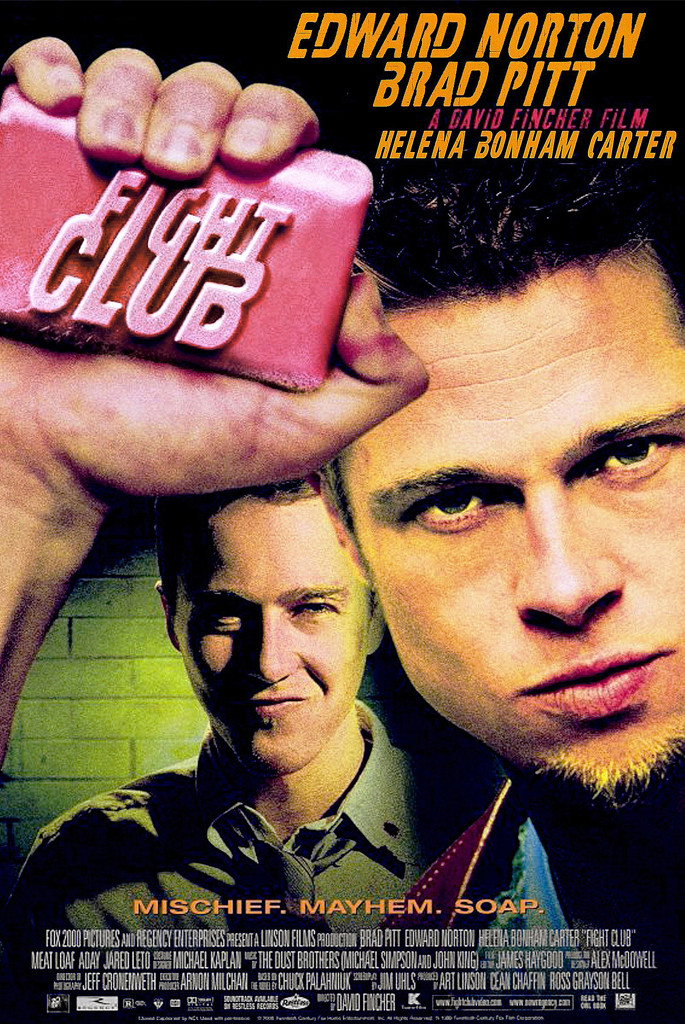
The movie, based on the novel of the same name by Chuck Palahniuk, follows an unnamed protagonist (Ed Norton) whose life has become such a drone that he is a virtual zombie. To paraphrase him, he is never fully awake but can never fully sleep. This continues until a chance meeting with Tyler Durden (Brad Pitt), a whip-smart renegade with the ultimate punk rock sensibility. Durden squats in an abandoned house, refuses to live by any of society's rules, and eventually convinces our protagonist to begin an underground fight club for men like themselves - disenfranchised and feeling like they've been sold a bill of goods by capitalist, consumer culture. Eventually, Durden molds this ostensible underground MMA group into something much more potent and frightening, with our anonymous main character being pulled along in ways that he can't even begin to imagine. 

I can't recall just how many times I've seen this movie, but it's easily in the double digits. I saw it a couple of time in theaters upon its release back in 1999, and would routinely go back to it for many years after. I'd gone quite a few years since a full rewatch, until reading Brian Raftery's recent book Best. Movie. Year. Ever., which catalogs the insane number of great films that came out in 1999. My enthusiasm fully stoked, I snapped up a cheap blu-ray copy of Fight Club and took it all in again. My thoughts about the film have evolved over two decades, but I still find it to be a satisfying, subversive, funny, and extremely well-crafted middle finger to large segments of the film industry. 

In those first years after the movie came out, like a lot of guys in the early and mid-twenties, I saw the Tyler Durden character as an icon of cool. He was a take-no-bullshit badass who just got things done, and seemed to be on the side of righteousness. To slightly paraphrase Durden himself, he looks like you want to look, f***s like you want to f***. He is smart, capable, and most importantly, free in all the ways that you are not. It's a great sales pitch to young men who are in desperate need of leadership, wherever that leadership takes them. Durden's appeal to "enlightened" macho violence is one that is still fully relevant today, with the immense popularity of "smart" MMA bros like Joe Rogan and similar "intelligent" Alpha males who have millions of devoted fans and followers. Chuck Pahlaniuk was onto something when he wrote the novel, and David Fincher was clearly aware of it.

If you need to illustrate the idea of self-destructive anarchy
having sex appeal, then Brad Pitt is a pretty good choice
as your spokesmodel.
What has changed, though, is the realization that being punk rock isn't really the hard part. And looking and sounding cool while doing isn't even the hard part. As calculating and slick as Tyler Durden is, his plan doesn't go beyond "blow stuff up." It's really a punk rock sensibility, which has a very strong appeal in the hands of such a charismatic character. When I watch Fight Club now, I can't help but wonder just how likely it is that Durden's master plan actually works, after the credits roll. Or whether he ends up being happy with Marla. Yes, Project Mayhem's bombs go off, destroying the headquarters of major credit card companies, essentially annihilating debt and giving everyone a fresh start. But will that actually work? And yes, Durden's fractured mind reunifies, and he seems to reconcile with Marla. But they're both clearly still very damaged people. Such grounded thoughts, though, are not what Fincher had in mind. He was looking to tell a raucous tale of a modern anarchist, and he gave us just that.

If the themes are what elevate the story well above just being a sweaty trek through underground fight clubs, then the film technique is what makes the whole show so wildly entertaining. You have three actors in Norton, Pitt, and Carter, who are as good as they've ever been. And the sharp writing is still absolutely hilarious. The look of the movie, along with the editing and cool-as-hell Dust Brother soundtrack bring it all together to give us a movie that's simply a blast to watch.

It's both fascinating and unsurprising that this movie fell on its face when it was released back in 1999. Up until then, there really hadn't been anything quite like it - an in-your-face, crotch-grabbing "screw you" to capitalism lightly disguised by a "pretty boy" actor in Pitt and "up and coming" fresh face in Norton. There were obviously people like me, who saw it in the theaters and loved the dark humor and the deeper themes and ideas, but most people were either baffled, disgusted, or just stayed well away from it. However, you might view Fight Club now - a worthy, dark satire; flawed attempt at profundity; or something else - I think most would agree that there's more than a little solid film technique happening, and that the movie had a serious impact on movies for years to come. 

Monday, February 25, 2019

Retro Trio: The Wrestler (2008); The People vs. Larry Flynt (1996); Finding Dory (2016)

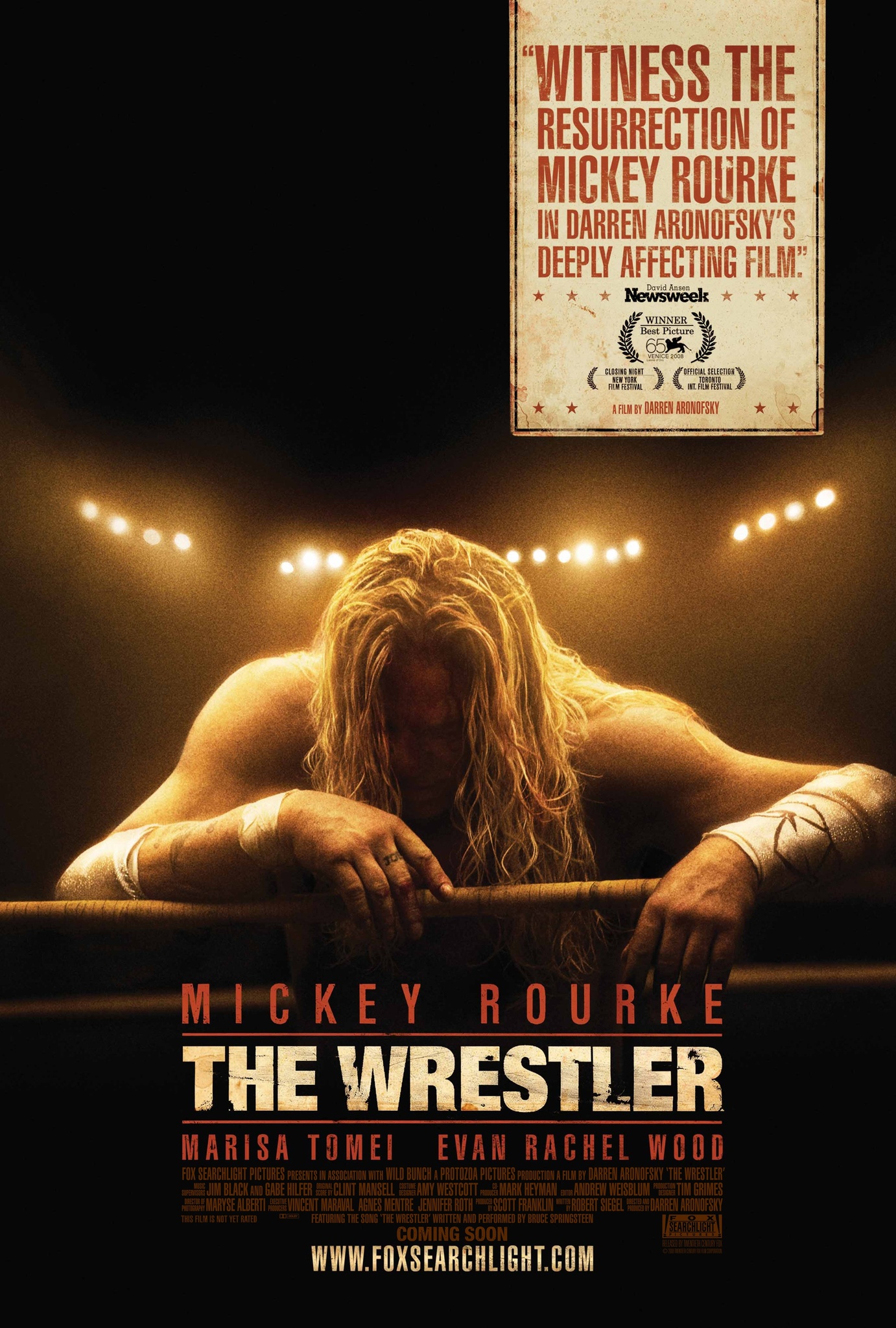
The Wrestler (2008)

Director: Darren Aronofsky

I fell in love with this movie back before I even started this blog, so I never did a review of it. I recently rewatched it with my wife, who hadn't seen it. She was impressed, and I was reminded of why I saw it twice in the theaters ten years ago.

The movie is a documentary-style following of fictional professional wrestler Robin Ramzinski, whose wrestling moniker is Randy "The Ram" Robinson, played by Mickey Rourke. Set roughly around the late '00s, Randy is a wrestler well past his prime. In the late 1980's, he was on top of the wrestling world, watched and adored by hundreds of thousands of pro wrestling fans. Now, however, he is struggling mightily. Working as a mover in a grocery store and barely able to afford rent for his broken down mobile home, Randy still puts his meager disposable income into staying in shape and wrestling in small, local events. Though still respected by the younger generation of wrestlers and old-school fans of the medium, Randy is only hanging on thanks to his legacy and a steady dose of steroids and other risky supplements. After he suffers heart attack, he begins to rethink the wrestling life. He decides to hang up his bright green tights and try to rebuild his broken life. He begins to reconnect with his estranged daughter (Evan Rachel Wood), starts working a steadier job at the deli counter in the grocery store, and seeks to deepen his relationship with a stripper (Marisa Tomei) who is, herself, questioning her line of work. But just as Randy seems to be getting his emotional life back in order, old, self-involved habits rear their heads and send him spiraling back to isolation. He ultimately retreats back to the one place he felt comfortable - the ring, even though it will likely cost him his life.

When one hasn't watched a movie in a decade, it is easy to wonder if it will be as entertaining or engaging as the original viewing. Despite being a devoted fan of Darren Aronofsky, this same question ran through my mind before this recent viewing. But it was just as good as I remembered. Even more surprisingly, my wife really liked it, and she has very little interest in pro wrestling. This is due to the movie's dual focuses: the fascinating and often hidden culture and world around pro wrestling, and the brilliant character study of Randy "The Ram."

Shot in documentary style, the feel of the movie wonderfully authentic, and thanks to an Academy Award-winning performance by the battered Mickey Rourke, it is easy to see what exactly makes the Randy character tick. He is not an overly complex man - his love of wrestling and the glory that being in the ring provides supersedes everything else - but within about 100 minutes of movie time, you get to understand this through his various relationships, moments of triumph, and his mistakes.

This has thus far been easily the most accessible film by Aronofsky, whose other films have taken on grand, cerebral, spiritual themes (sometimes all three). From his first movie Pi to his most recent mother!, the Brooklyn-born filmmaker loves going big, thematically, and sometimes even visually, such as with films like The Fountain or Noah. With The Wrestler, he showed that he is equally skilled with small-scale, personal stories grounded very much in the real world. Even if that "real world" involves grown men wearing fluorescent spandex and pretending to fight in a boxing ring.


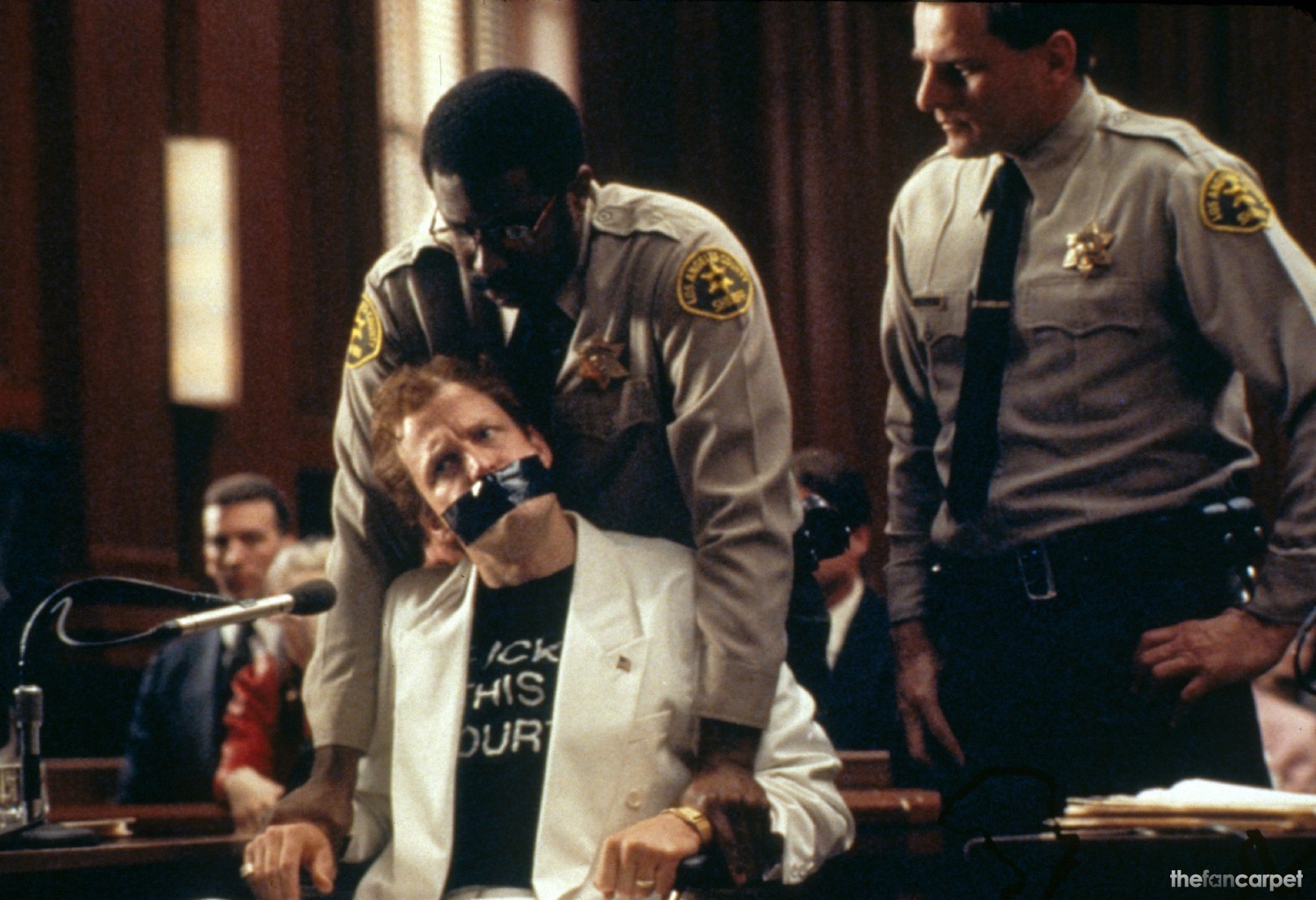
The ever-outspoken Larry Flynt, being gagged and bound
in court after repeated outbursts and (often successful)
attempts to show up the judge.
The People vs. Larry Flynt (1996)

Director: Milos Foreman

This movie still holds up phenomenally well, these twenty-plus years after its release.

The People vs. Larry Flint is a fictionalized biopic that chronicles key moments in the life of Larry Flint (Woody Harrelson), the founder and CEO of Hustler magazine - a periodical that started in the 1970s and depicted women in various states of undress and in compromising positions of variously scandalous natures. Flint was a self-made multi-millionaire who started in the strip club business but saw his wealth expand exponentially when his Hustler magazine very quickly became a publishing hit. He also became a target of the newly-emerging "Moral Majority" group founded by televangelist Jerry Falwell and like-minded preachers and their followers. These groups often sued Flint and tried everything they could to shut down his publishing operation, which they saw as corrupting the country. Flint became a rather unlikely and thoroughly uncouth champion of free speech, often taking the government and various powerful groups to court over his right to publish his magazine. He was also paralyzed from the waist down after a failed assassination attempt, and his wife Althea (Courtney Love) suffered a slow and fatal spiral into drug overdose.

I hadn't watched this movie for probably over twenty years, and I was pleasantly surprised at how the quality still shines through on every level. No, I don't find Larry Flint a particularly admirable person for his systematic profiteering off of the blatant sexualization of women in his magazines. But this is the very type of contradiction that the movie addresses - simply because you don't admire a person should not be a reason to silence their right to say and publish what they wish, provided that all involved are consenting adults. It's easy for most people to generally agree on the right to free speech when it comes to political views (though that's taken a hit lately) or general opinions about fairly innocuous topics. But what about when it comes to something that more than a few people find highly objectionable, like pornography? The U.S., as progressive as it is in many ways, has long had a strong Puritanical streak running through it, and sexual prudishness is one of the ways that it has manifested itself. The story of Larry Flint, his legal disputes, and the uproar that they caused is a fascinating case study in what, exactly, free speech represents and protects. These themes are where the real meat and depth of this movie come from.

Even beyond the more meaningful tale of Flint's battles, which actually went all the way to the Supreme Court, the movie is highly entertaining. Larry Flint always cut a very colorful, if crass, character, and he is written and played with great verve by the oft-underrated Woody Harrelson. When you add in the excellent supporting performances by Courtney Love and Ed Norton, you get top notch acting to go along with the other strengths of the film.

I probably won't need to watch this movie again any time soon, but I still highly recommend it to any who have never seen it, or haven't seen it in many years.

And now, from a biopic about a smut-monger to a family-friendly movie about an amnesiac fish...

The folks at Pixar have "cute" down to a science, as
evidenced by the young, large-eyed Dory and her doting
parents.
Finding Dory (2016)

Directors: Andrew Stanton and Angus McLane

The wife and I finally got around to checking this one out, and we enjoyed it.

The story follows Dory, the blue tang fish from Finding Nemo, as she sets off on a quest for her long-lost parents. Along the way, we viewers learn that Dory's famous forgetfulness is a condition that she was born with, and is the reason that she first wandered off from her parents years before she met Nemo and his father Marlon.

Dory's quest takes her back to a massive public aquarium, where she rediscovers several old friends from her time there - a near-sighted whale shark, a beluga whale with damaged echo location, and a few others - who try to help Dory find the trail back to her parents. One of the greatest helpers is a new friend, Hank, a clever, camouflaging octopus with a missing limb.

If you sense a pattern here, you're right. Finding Dory is very much about how those with disabilities can overcome them and succeed at something. It's a welcome message, and one that is handled well, if not always in the subtlest of ways. What impressed me most about this movie is how it truly does stand on its own, without relying on the tremendous success and impact of its predecessor, the early Pixar hit, Finding Nemo. Although several characters from that instant classic animated film appear in the picture, this movie has its own themes, primary characters, and unique plot. And it does bear plenty of the trademark Pixar visual creativity, with some great gags and use of the brilliant color palates at their disposal.

Finding Dory is a very satisfying sequel, even if there is a touch of the saccharine to its ending. It continues the tradition of Pixar movies that have displayed wonderful humor with themes relevant to everyone from age five through a hundred. 

Sunday, December 11, 2016

Retro Trio: High Heels (1991); Starred Up (2013); The Painted Veil (2006)

High Heels (1991)

Original Spanish Title: Tacones Lejanos

Director: Pedro Almodovar

This was the latest in my little trip through the films of renowned Spanish director Pedro Almodovar. I found High Heels yet another early example of his unique voice and masterful skill as a film-maker.

The story focuses on Rebeca Giner (Victoria Abril), a young Spanish TV news anchor with some very complex, and occasionally lethal, ideas and relationships with men in her life. As a very young girl, Rebeca knowingly drugged her boorish step-father so that he would fall asleep at the wheel and die in an accident. Rather than being out of some mere urge to kill, her purpose was to free up her mother, Becky (Marisa Paredes), to take an acting job which her husband was preventing her from accepting. Oblivious to her daughter's hand in the death, Becky leaves her daughter behind and goes to Argentina to begin the acting career which is her dream.

A strange but amusing dance number thrown into the
proceedings ensures that we never take things too seriously,
even when things take a few rather dark turns.
Flash forward twenty years. Rebeca is a TV news anchor, and her mother has long since become a world-famous actress. Rebeca's mother returns to Madrid upon hearing that her daughter has married a former lover of hers, another rather loutish older man not unlike the father-in-law whom Rebeca drugged two decades earlier. When he is found dead several weeks after Becky's return, the mother and daughter become the prime suspects in an investigation headed by bloodhound judge Juez Dominguez (Miguel Bose). The associates of the two women include a colorful bunch, including several transvestites.

While the murder-mystery elements may, on the surface, make this seem like a fairly typical whodunit, this is an Almodovar movie. And being one of his earlier films, there is a range of humor, from virtual slapstick right through to the most pitch black, running through the proceedings. As with the other four films that I've seen of his, this one deals heavily with themes of personal identity and the feeling of loss and absence. Much of the movie can be very amusing, as there are more than a few absurd situations and interactions. But at the heart of it are universal emotions revolving around relationships between parents and children, spouses, and lovers. The movie bears many of the familiar hallmarks of the other Almodovar films I've seen, but once again is completely its own story.

Now having seen five of his movies, it seems to go without saying that the movie looks incredible. I've already described my impressions of the visuals in Almodovar's movies, so suffice it to write that High Heels is no different. This, in conjunction with all of the other merits of the film, simply solidify my admiration for the man as a film-maker. It's truly amazing stuff.


Starred Up (2013)

Director: David Mackenzie

I am now officially a fan of David Mackenzie. I watched Starred Up after seeing and loving Mackenzie's neo-Western film Hell or High Water. Based on that movie and this 2013 offering, I am willing to go see whatever his next few projects are, out of hand.

Starred Up is a prison drama focused on Eric Love, an extremely violent 19-year old convict who has aged out of the juvenile system and has been moved into an adult maximum security penitentiary. It also happens to be the very same prison which houses his convict father, Neville, who has been serving a life sentence since Eric was a small child. In less than a few hours after processing, Eric gets into a brutal fight with another inmate and in placed in solitary. Soon after release, he has another serious scrap with the guards. Just as the guards are ready to pummel him, though, a prison counselor sees all that is going on and taps Eric to take part in a discussion/therapy group which he runs. The guards reluctantly agree, and Eric is all but forced to attend the group.

The movie is an astounding, if highly disturbing, look at violence, masculinity, and how a young man grapples with trying to harness them to not just survive but also grow as a human. There are many extremely intense scenes, of both a physical and psychological nature. The young and hyper-pugnacious Eric is our fractured looking glass into the strict hierarchy of the lethally stratified federal prison system (the movie takes place in England, but it is easy to apply the environment to nearly any maximum security prison in the world). Watching Eric rein in his fury at his father and nearly everyone else around him in order to first survive and then to find some modicum of growth is as fascinating as it is disturbing. The setting and themes are not for the faint of heart, grim as they are, but there is real humanity sitting just beneath the surface of the entire movie.

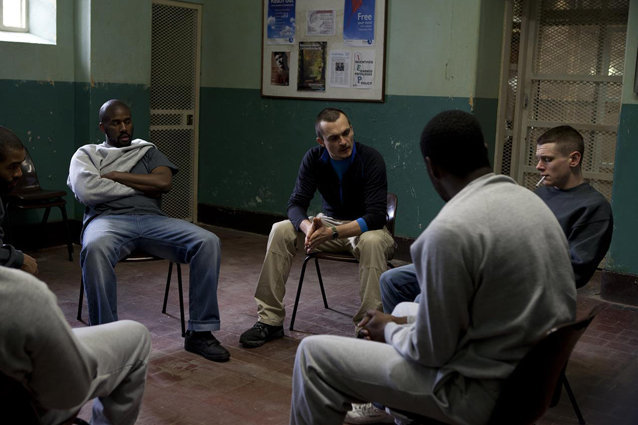
The group therapy sessions are arguably the best scenes in
this great movie. You can almost see the waves of violent
aggression emanating from these guys, as well as their
immense struggle to deal with it all.
The acting is outstanding. The only actor whom I recognized was the incredible Sam Mendelson, who does a brilliant job as Eric's hard-as-nails father, Neville. All of the others, although not familiar to me, were amazing. Jack O'Connell is ferocious as Eric, and Rupert Friend is equally brilliant as the counselor Oliver Baumer. Not to be outdone are all of the men who are part of the therapy group. It is during these group meetings that we get some of the most powerful scenes. Some of these do not even involve words, but rather a palpable tension arising from extremely violent men wrestling with themselves and each other on a level that goes far beyond physical struggles.

Being a movie that was clearly going for an authenticity which few prison movies approach, Starred Up does not offer a rosy conclusion. It does, however, offer the satisfaction of having seen something that reveals some profound aspects of human nature, and it offers us all a hard look at what incarceration means. It is the type of movie that, even if I don't feel the need to see it again, I would recommend nearly everyone watch at least once.


The Painted Veil (2006)

Director: John Curran

The wife and I decided to go "full nerd" recently and read the same classic English novel before watching the film adaptation of it. The novel was The Painted Veil by W. Somerset Maugham, an author whose other novels I've loved. My wife had seen the movie already, but I was coming at it from the novel first.

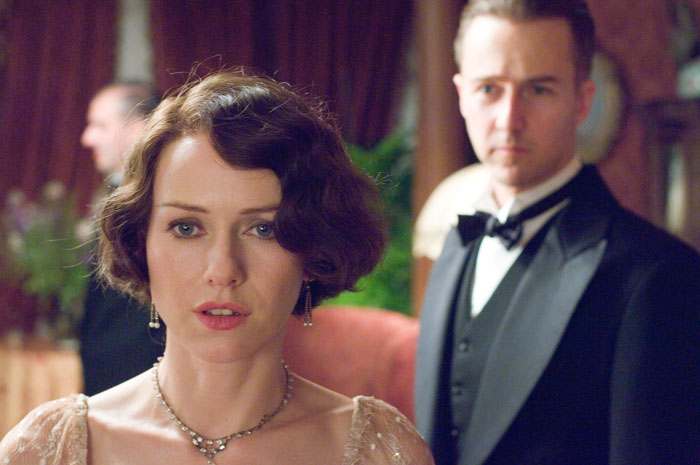
The movie stays true to most of the spirit of the novel, set in the 1920s, in which Kitty (Naomi Watts), a young socialite Englishwoman, marries Walter Fane (Ed Norton). Walter is a rather dry but civil bacteriologist who takes her to Hong Kong where he does research. Soon after their arrival, Kitty grows bored with her new husband and begins an affair with an attractive up-and-comer in the British colonial government. Walter discovers the affair just as he accepts an assignment to go to a cholera-ravaged area deeper into the Chinese countryside. Under threat of a messy and public divorce, Walter forces Kitty to accompany him. While terrified that her husband wishes her death from the cholera epidemic, Kitty sees no other option but to accept and go with him. Amid the cholera-infected area, Walter and Kitty find themselves among great suffering of the native population, and they meet several other Westerners who are there for their own reasons.

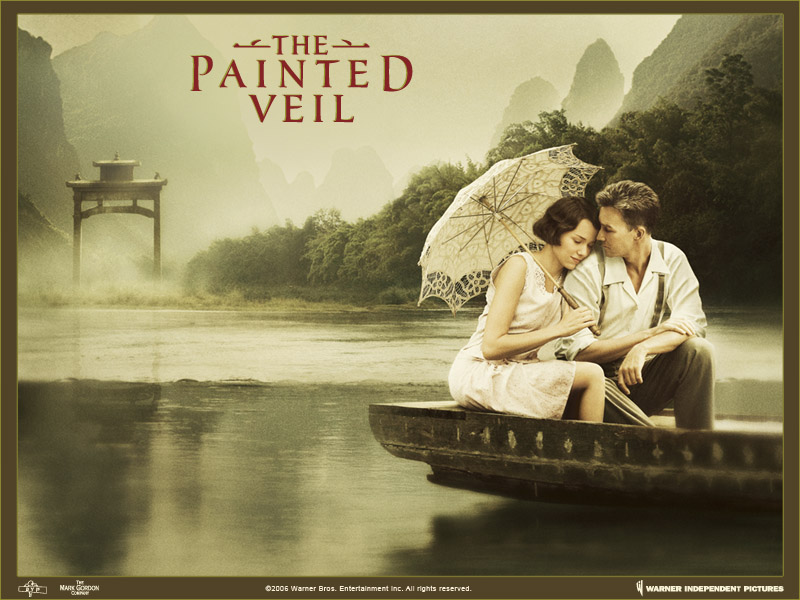
Kitty and Walter - two people who probably weren't right for
each other from the start, but whose shared struggles among
the cholera epidemic lead them to grow themselves and their
respect for each other.
This film adaptation hits nearly all of the strongest, most poignant notes of Maugham's brilliant novel. The relationship between Walter and Kitty grows increasingly deeper and more complex once they are among the cholera epidemic. And while lesser writers would have milked this situation for no end of sentimentality and trite reconciliations, Maugham was far too experienced and skilled an author to travel such beaten paths. When reading the novel, I was constantly surprised at how the story unfolded and how the characters developed. And the unexpected turns are not merely inserted for the sake of surprise. They feel quite organic, and they touch upon the messy nature of human desires and our ability to alter and expand our perspectives. The movie retains many of the novel's subtler turns of character, which only increases its value. To be sure, a few things are simplified and given slightly tidier resolutions, but this is to be expected from most commercially-minded films. In the case of this movie, they don't greatly diminish the overall tale.

Beyond the clear strengths of story and character, the movie is visually stunning. The cinematography captures the beauty of the Chinese countryside, as well as the exquisite beauty of the period's buildings and clothing. Cinematographer Stuart Dryburgh has plenty of dazzling movies and TV shows to his credit, and this one may be his crown jewel. An added technical merit is, unsurprisingly, that the acting is excellent. Naomi Watts and Ed Norton are typically great, as are all of the supporting cast.

I'd recommend this movie to nearly anyone, just as I'd recommend that anyone read the novel first. While readers who deeply love the novel may be a bit disappointed in what the film changes or omits, I don't feel that there are any crippling alterations or omissions. Both are first-rate pieces of art, and they make for great comparisons to each other.